I remember standing in front of my bathroom mirror after a professional cleaning, feeling like I finally had that movie-star glow. My teeth looked straight, the alignment felt perfect, and I was genuinely proud of my reflection. Then, I pulled out my phone for a quick selfie to capture the moment. My heart sank. In the photo, my jaw looked slightly crooked, my front teeth seemed strangely large, and my smile lacked the symmetry I’d just been admiring. I actually panicked and started researching why your smile looks asymmetrical after dental work, convinced something had gone wrong during my last visit. It wasn’t until I spoke with a photographer friend that I realized the “problem” was the glass in my hand, not the enamel in my mouth. Today, we are going to debunk the selfie lie and show you exactly how to get a photo that actually matches the person you see in the mirror.
Stop Hating Your Selfie Smile
Let’s be real: the bathroom mirror is usually our best friend, but the smartphone camera can feel like a bitter rival. This discrepancy happens because of a phenomenon called lens distortion. Most front-facing cameras use a wide-angle lens designed to cram a lot of background into a small frame. When you hold that lens just a foot or two from your face, it exaggerates whatever is closest to it. Usually, that is your nose and your front teeth. I made the massive mistake early on of thinking I needed expensive procedures because my teeth look shorter than they used to in pictures. I was ready to jump into a consultation for veneers for perfect results before I understood that my camera was simply squashing my features. In fact, a study published in JAMA Facial Plastic Surgery found that selfies taken from 12 inches away can make the nasal base appear 30% wider. That same distortion applies to your dental arch, often making it look narrower or more uneven than it is in real life.
Does my phone camera actually hate my face?
It feels personal, doesn’t it? But the truth is, we are more used to our mirrored reflection—which is a flipped version of reality. When you see a non-mirrored photo, your brain flags tiny natural asymmetries as “wrong.” Combine that with the focal length of a tiny lens, and you have a recipe for a self-confidence crisis. If you want to dive deeper into the technical side of things, checking out some cosmetic dentistry secrets to boost your confidence can help you distinguish between a real dental issue and a digital fluke. Have you ever felt like your phone was playing tricks on you, making you want to delete every photo from a night out? You aren’t alone, and it’s time to stop letting a $10 lens dictate how you feel about your oral health. We’re about to break down the lighting and distance hacks that finally bridge the gap between the mirror and the screen.
Kill the Distortion with the Arm-Length Rule
The first step to fixing a “camera-broken” smile is understanding that proximity is your enemy. Think of your phone camera like a funhouse mirror; the closer you get, the more it warps the center of the frame. To combat this, you need to extend your arm fully. I once spent an entire afternoon obsessing over a photo where my lateral incisors seemed to vanish, leaving me wondering if I needed to research veneers vs crowns to fix a “gap” that didn’t exist. The reality was just a bad angle. By pushing the camera away, you reduce the ‘fisheye’ effect that makes your nose look huge and your dental arch look cramped.
Zoom In to Keep Your Features in Proportion
Most people make the mistake of using the default 1x lens and cropping the photo later. Instead, use the 2x or 3x telephoto lens if your phone has one. This is one of those cosmetic dentistry secrets to boost your confidence that photographers use all the time. A longer focal length compresses the face, making your jawline appear more natural and your teeth sit in their proper perspective. When I first tried this, moving three feet back and zooming in, my smile finally matched the mirror. It was a revelation—I wasn’t aging rapidly or losing enamel; I was just finally seeing a flat, accurate representation of my face.
Let the Sun Do the Contouring for You
Lighting can create “phantom” dental issues. If the light comes from the side, it creates shadows in the spaces between your teeth, making them look gapped or crooked. To get it right, always face your light source directly. Natural sunlight from a window is the gold standard. It fills in the natural grooves of the teeth, showing off the work you put in with family dentistry tips for a lifetime of healthy smiles. If you’re in a dark room, even a cheap ring light can prevent that “missing tooth” look caused by overhead shadows. I remember a party photo where a ceiling light made it look like I had a chipped molar; I spent the whole next day checking for damage before realizing it was just a shadow.
How to Know if You Actually Need a Dentist’s Help
Sometimes, no amount of lighting or zooming can hide a real structural issue. If you notice that your teeth consistently look “collapsed” or missing in photos regardless of the angle, it might be time to look into modern restorative options. For example, dental implants 2025 innovations have made it possible to restore a full, symmetrical smile with more comfort than ever before. Unlike a camera trick, these solutions provide a permanent fix for the symmetry you’re looking for. If you’ve noticed your teeth look shorter as you get older in every single reflection and photo, it’s a sign that the issue isn’t the lens—it’s natural wear that might benefit from professional attention.
Compare Your Mirror Reflection to Your Non-Mirrored Self
Your brain is wired to love the flipped version of you. Use an app to “un-flip” your mirror reflection and get used to seeing your face the way others do. This helps desensitize you to the small asymmetries we all have. If you still feel like something is off, consulting with a pro about cutting-edge techniques in cosmetic dentistry can give you clarity on whether you’re dealing with a digital illusion or a genuine opportunity to enhance your oral health.
Let’s dig deeper into a nuance most influencers won’t tell you: absolute symmetry is the ‘uncanny valley’ of dentistry. When I was looking for veneers for perfect results, I thought I wanted every tooth to be a mirror image of the other. But here’s the contrarian truth: human beauty thrives on ‘dynamic asymmetry.’ If your smile is too perfect, it screams ‘fake’ under any lighting. Professional artists know that cutting-edge techniques in cosmetic dentistry actually involve mimicking the tiny, natural rotations and translucent edges of real teeth.
Stop Chasing the Uncanny Valley of Perfection
The ‘oops’ factor I see most often is the obsession with the shade of white while ignoring the architecture of the gums. You can get the most expensive veneers vs crowns, but if your gum line is uneven, the result will always look ‘off’ in high-definition photos. In fact, a study in the International Journal of Periodontics & Restorative Dentistry highlights that the ‘pink aesthetic’—your gums—is just as critical as the ‘white aesthetic’ for a natural look. This is why understanding why your gums look receding even if you have good hygiene is crucial before you invest in porcelain. If the foundation isn’t symmetrical, the teeth never will be.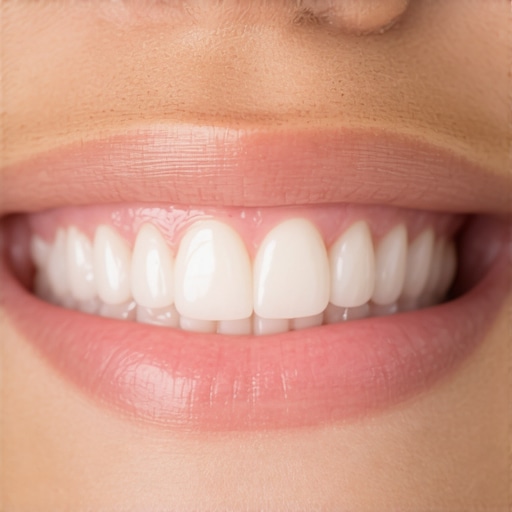
Why Your Gums Dictate Your Smile’s Real Age
Another trap is focusing solely on the front six teeth. This is a common mistake in ‘budget’ cosmetic packages. Real expert-level work considers the entire ‘smile corridor.’ If you only fix the front, your premolars can look like they are receding into the shadows, making your arch look narrow and aged. It’s better to have a slightly less ‘white’ smile that is structurally sound across the board than a bright white front that looks like a sticker. Have you ever noticed how some smiles look ‘hollow’ in photos? That’s usually why. Professional care isn’t just about the visible surface; it’s about the health of the underlying structure, which is why how a simple sinus lift makes dental implants possible for more people is such a vital topic for long-term facial volume.
Is your implant supposed to feel like a real tooth?
This is the million-dollar question for anyone looking into how dental implants reshape your oral health in 2025. The truth is, it shouldn’t feel exactly the same, and that’s a good thing. Natural teeth have a periodontal ligament that acts like a shock absorber, while an implant is fused directly to the bone. This means you lose some ‘proprioception,’ or the sense of how hard you’re biting. It’s an advanced nuance, but it’s why the reason your dental implant crown feels tighter than the others is often a normal part of the integration process. Don’t fall into the trap of thinking a procedure is a ‘set it and forget it’ solution. Even the most advanced dental implants 2025 innovations require a commitment to the same family dentistry tips for a lifetime of healthy smiles you’d use for natural teeth. Have you ever fallen into this trap of over-obsessing about a tiny detail only to realize it was part of a bigger picture? Let me know in the comments.I’ve spent a significant amount of time and money on my teeth, and the last thing I want is to see that investment literally go down the drain because of poor upkeep. It’s not just about brushing anymore; it’s about the specific equipment and the science behind the maintenance. I personally swear by a high-end water flosser, but I only ever use it on the lowest setting. Why? Because high-pressure water can actually detach the delicate gum tissue from the base of a restoration. When you are dealing with dental implants 2025 innovations, you want to preserve that seal at all costs. I’ve found that using a specialized tip is the trick to flossing around a bulky dental bridge or implant without causing irritation.
The Exact Gear I Use Every Morning
One tool I won’t go a day without is a non-abrasive paste with a low RDA value. RDA stands for Relative Dentin Abrasivity, a scale used by the American Dental Association to measure how much a toothpaste wears down your enamel and porcelain. Many ‘whitening’ pastes on the market have an RDA over 100, which is essentially like using sandpaper on your smile every morning. I look for something under 70 to ensure I am safely cleaning a dental implant without scratching the post or dulling the shine of my veneers. If you’ve ever wondered why your mouth feels sticky after using certain mouthwashes, it’s often because of high alcohol content drying out your tissues. I switched to a pH-balanced, alcohol-free rinse to keep my gums healthy and my breath fresh without the ‘chemical’ sticky feeling.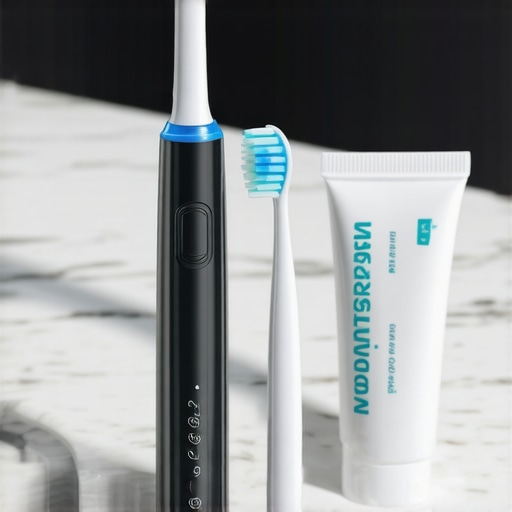
How can I keep these results looking fresh for decades?
Long-term success is 90% what you do while you sleep. If you have spent money on veneers for perfect results, a custom nightguard is your best friend. Without it, the force of your jaw can cause microscopic fractures. This is often why your veneers feel tight when you wake up in the morning—your jaw has been under immense pressure all night. I predict that in the very near future, we will see ‘smart guards’ equipped with bio-sensors that track your clenching habits in real-time, sending data directly to your phone. For now, the best strategy is consistent professional check-ups. Whether you are monitoring how to tell if your dental implant is healing at the right speed or just ensuring your bite hasn’t shifted, seeing a pro twice a year is non-negotiable. I even keep a small dental kit in my travel bag to handle a loose tooth in an adult after an injury or unexpected snag while on the road. My top tip for you today? Check the RDA value of your current toothpaste. If it’s not listed on the box, look it up online—it’s the easiest way to stop accidentally scrubbing away your beautiful dental work.
The Truth About Why Your Eyes Cheat You in Pictures
After years of obsessing over every pixel, I realized three things that changed my perspective on oral health forever. First, a camera lens is a flat witness to a 3D miracle; it rarely captures the depth and warmth of a real-life smile. Second, your veneers transformation unlocking your best smile yet is about how you feel in a room, not how you look in a 2D thumbnail. Finally, perfection is the enemy of character. Those tiny natural variations are what make you, you.
- Your brain is biased toward the mirror—don’t trust a digital flip.
- Distance is your best friend to avoid lens warping.
- Healthy gums are the silent heroes of every great photo.
A Few Essentials That Make Maintenance Much Easier
I’ve curated a small list of things that helped me transition from a dental patient to a dental advocate. I trust these because they prioritize longevity over quick fixes. If you’ve ever had to manage the metallic taste after a new dental crown, you know that the right aftercare products make all the difference in comfort. I recommend a pH-balanced mouthwash to prevent acidity and a soft-bristled electric brush with a pressure sensor. This helps avoid the accidental damage that causes why your smile looks different after getting a new dental bridge due to gum recession or irritation.
The Future of Your Best Smile Begins Today
Whether you are just starting your journey or maintaining a decade of work, remember that cosmetic dentistry is a tool to amplify your natural joy, not a mask to hide it. Don’t be afraid to take that selfie, but take it with the knowledge of how light and distance work. You’ve put in the effort to keep your teeth healthy; now it’s time to let that confidence shine through every frame. Have you ever noticed your smile looks completely different in a mirror compared to a tagged photo on social media? Let me know your experiences below!