I will never forget that first drive home after my big cosmetic appointment. I kept flipping the sun visor down, staring into the mirror at every stoplight, trying to figure out why my face looked… tilted. On paper, the teeth were white and straight. But as soon as I grinned, it felt like the left side of my mouth was winning a race the right side had not even started. I felt ungrateful and, frankly, a bit crazy. I had spent a lot of money on cosmetic dentistry secrets to boost your confidence, yet I was hiding my mouth more than before I walked into the clinic.
If you are sitting there right now, obsessing over a midline that looks three millimeters to the left or a canine that seems longer than its twin, I get it. It is exhausting. You expected a transformation, and instead, you got a puzzle that does not quite fit together. Today, we are going to break down exactly why your smile looks asymmetrical after dental work and how to tell if it is a temporary adjustment or a functional error that needs fixing.
Pinpoint the Real Reason Your Midline Looks Off
One of the biggest mistakes I made early on was focusing entirely on the porcelain. I thought the material was the problem. It turns out, our brains are remarkably sensitive to what experts call a ‘canted’ smile. According to the American Academy of Cosmetic Dentistry, even a 1-degree tilt in the incisal plane (the biting edge of your teeth) can be perceived as an aesthetic failure by the patient, even if the individual teeth look perfect. Sometimes, the issue is simply that your new veneers feel bulky against your lips, which physically prevents your facial muscles from moving symmetrically when you laugh.
I spent two weeks convinced my dentist had just ‘eyeballed’ the length wrong. In reality, my facial muscles were overcompensating for the new height of my restorations. It is a common hurdle when choosing the best option for your smile between crowns and veneers; if the lab work does not account for your natural lip line, the result looks ‘off’ the moment you move your face. Have you ever had that sinking feeling after leaving the dentist where you love the color but hate the ‘flow’ of your new look?
Is that tiny bit of asymmetry actually worth the stress?
You might be wondering if you are just being ‘difficult’ or if your friends are right when they say ‘it looks fine!’ Here is the neighborhood truth: if you feel it, it is real. A common mistake that makes porcelain veneers look like piano keys is ignoring the natural, slightly asymmetrical gum line that makes a human smile look real. If your dental work is too symmetrical, it can actually make your face look more lopsided by comparison. We need to look at the mechanics of your bite and how those new surfaces interact with your jaw to find the real culprit.
Before you call your dentist in a panic, you need to understand ‘neuromuscular ghosting.’ Your brain has spent decades mapping your old bite, and when you suddenly change the landscape with porcelain, your muscles do not get the memo immediately. They try to find the old resting spots, which can pull your lips into a lopsided shape. I remember clearly after my second set of temporaries; I was convinced my right side was hanging lower. I spent an hour in front of a ring light, poking at my gums, only to realize my jaw was simply ‘guarding’ a spot that felt new. It was a classic case of why your new veneers feel bulky against your lips, causing a temporary muscle spasm that mimicked a crooked smile.
Give Your Face Fourteen Days to Adapt
The golden rule in cosmetic dentistry is the two-week wait. During this time, your proprioception—your body’s internal GPS for your mouth—recalculates. If you are still noticing a tilt after this period, the issue might be functional rather than just sensory. Think of your bite like a four-legged chair; if one leg is just a fraction of a millimeter too long, the whole thing wobbles. In your mouth, a ‘high spot’ on a new restoration can force your jaw to shift sideways to find comfort, creating a visual asymmetry. This is particularly common when choosing the best option for your smile if the final restorations are not perfectly balanced against your opposing teeth.
Spot the Difference Between Aesthetic Tilt and Functional High Spots
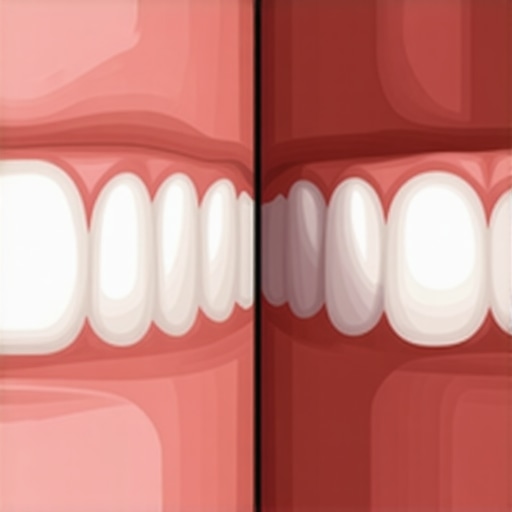
To figure out what is really going on, try the ‘clench and grin’ test. Bite down firmly and look in the mirror. Does the midline look centered? Now, relax your jaw slightly and smile naturally. If the asymmetry only appears when you move, it is likely a muscle or lip-positioning issue. However, if the teeth themselves look like they are running downhill even when your jaw is closed, you may have a canted incisal plane. This happens when the laboratory does not align the edges of the teeth with your pupils or the horizon line of your face. It is a common hurdle in a veneers transformation unlocking your best smile yet, as it requires the dentist to provide a ‘facebow’ record to the lab to ensure the teeth aren’t built on a slant.
Why Your Jaw Might Be the Hidden Culprit
Sometimes the dental work is technically perfect, but your jaw joints are reacting to the change. If you notice that why your jaw clicks more when you are chewing on one side, your facial muscles might be pulling unevenly. When I had my work done, I didn’t realize I was clenching my teeth at night because they felt ‘different.’ This made my masseter muscles swell on the left side, making my whole lower face look wider and my smile look tilted. It wasn’t the porcelain; it was the inflammation. Addressing the bite balance often solves this, but you have to be vocal about where the ‘heaviness’ feels most prominent.
Use the Three Point Mirror Check
To give your dentist actionable feedback, stop looking at your teeth in isolation. Stand back three feet from the mirror and check three specific points: the ‘V’ of your upper lip (the Cupid’s bow), the center of your chin, and the space between your two front teeth. If those three do not line up, you can specifically ask for a midline adjustment. If you feel your teeth look like ‘piano keys’ because they are too uniform, you might be seeing the mistake that makes porcelain veneers look like piano keys, which is a lack of natural embrasures (the tiny triangular spaces between teeth). These gaps actually help frame the smile and can be adjusted to create the illusion of symmetry even if your bone structure is slightly off. If the overall arch feels too cramped, you may need to discuss how to fix a smile that feels too narrow or small to fill out the ‘buccal corridors’ at the corners of your mouth.
Most people assume that a ‘perfect’ smile is perfectly symmetrical. This is the biggest myth in cosmetic dentistry. In my experience, when patients ask for a mirror-image result, they end up with what I call the ‘mannequin mouth.’ The truth? Natural beauty thrives on micro-asymmetry. According to a study published in the Journal of Prosthetic Dentistry, slight variations in tooth position and shade are what actually signal ‘health’ and ‘vitality’ to the human brain. If every tooth is a carbon copy of its neighbor, you fall straight into the reason your porcelain veneers look opaque and fake. It is about creating a ‘balanced’ smile, not a ‘math-perfect’ one.
Why does my new tooth look shorter than the rest?
One of the most frustrating nuances involves the gum line, especially with implants. You might notice why your dental implant crown looks shorter than other teeth, and your first instinct is to blame the dental lab. However, the ‘oops’ factor here is often the ’emergence profile’—the way the restoration transitions from the bone through the gum tissue. If your dentist does not manage the soft tissue correctly, the tooth can look ‘tucked in’ or stunted. This is a common hurdle when navigating dental implants 2025 innovations that redefine comfort and durability. It is not just about the titanium screw; it is about how the gum ‘hugs’ the porcelain. 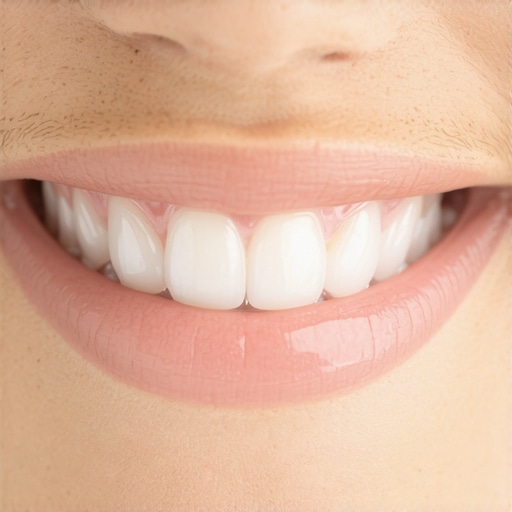 Let us talk about a trap that many fall into: the ‘over-prep’ disaster. Some practitioners shave down healthy enamel to create a perfectly straight line, ignoring the fact that your natural teeth have a specific ‘path of insertion.’ This often results in the reason your veneers feel thicker than your natural teeth. You end up with a smile that looks straight but feels like you are wearing a mouthguard. If you are choosing the best option for your smile, always ask about ‘minimal prep’ options. Preserve as much of your natural architecture as possible to avoid that heavy, bulky sensation that makes your lip hang unevenly. The hidden nuance of family dentistry tips for a lifetime of healthy smiles often gets lost in the rush for a ‘Hollywood’ look. Real expertise lies in harmonizing the new work with your existing facial structure, not fighting against it. Have you ever felt like your dental work was technically ‘correct’ but visually ‘wrong’? Did you fall into the trap of chasing perfection only to miss the mark on character? Let me know in the comments—I would love to hear how you handled the adjustment period or if you are still trying to solve the puzzle.
Don’t let a high-end smile go to waste
Once the numbing wears off and the final restorations are bonded, the real work begins. It is easy to assume that because porcelain cannot get cavities, you are off the hook. But the truth is, the longevity of your investment depends entirely on the health of the underlying tissue and bone. I have seen stunning work fail within five years because the patient treated their veneers like bulletproof armor instead of high-precision instruments. If you want a veneers transformation unlocking your best smile yet to actually last until 2045, you need a maintenance kit that goes beyond the basic drugstore toothbrush.
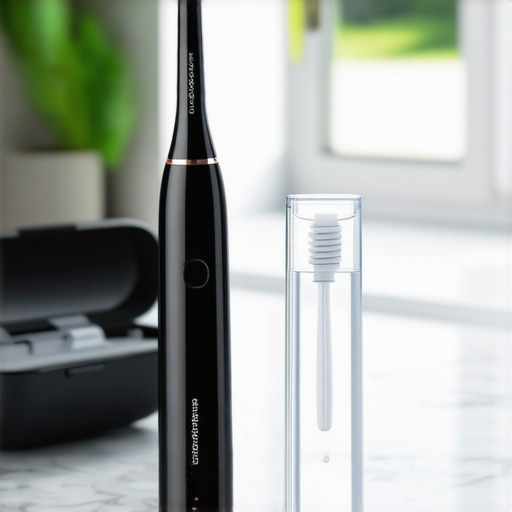
My personal go-to is a sonic toothbrush with a pressure sensor. This is crucial because many of us over-compensate for the ‘new’ feeling by brushing too hard, which can lead to gum recession at the margin of the veneer or crown. When this happens, you might notice why your porcelain veneers feel gritty to your tongue near the gumline. I also swear by a water flosser. While traditional floss is great, a high-pressure stream can reach the deep pockets around a titanium post that a string simply cannot touch. Learning how to safely clean a dental implant without scratching the post is the difference between a lifetime of stability and a costly failure.
What does it take to keep these results for twenty years?
Consistency is your best friend, but so is the right chemistry. I avoid any toothpaste with high RDA (Relative Dentin Abrasivity) values. Many ‘whitening’ pastes use silica to scrub stains, but on porcelain, they act like sandpaper, dulling the luster over time. Instead, look for gel-based formulas. If you are a caffeine addict like me, you don’t have to quit, but you do have to be strategic. I follow the ‘rinse-immediately’ rule for my morning brew, and I’ve shared more on how to keep your teeth white while drinking black coffee daily to ensure your natural teeth still match your bright restorations.
Looking ahead, the landscape of maintenance is shifting toward biological integration. I predict that by 2030, we will see ‘smart’ night guards embedded with biosensors that track your bite force in real-time, alerting you via smartphone if you are clenching hard enough to chip your porcelain. We are already seeing the future of dental implants cutting edge techniques in cosmetic dentistry focusing on surface topographies that encourage faster bone growth. According to a landmark study in the Journal of Clinical Periodontology, patients using power toothbrushes with oscillating-rotating technology showed significantly lower levels of plaque around implants compared to those using manual methods. This proves that the tools you choose are not just luxuries; they are preventative medicine.
The way how dental implants reshape your oral health in 2025 involves a holistic approach. It is about protecting the bone density around the site and ensuring your bite remains balanced. If you feel even a tiny ‘click’ or shift, do not wait for your six-month checkup. Small adjustments now prevent major fractures later. I highly recommend trying the ‘Oxygenated Irrigation’ method: mix a capful of non-alcohol antimicrobial rinse into your water flosser reservoir once a week. This deep-cleans the microscopic gap where the restoration meets the gum, keeping the area sterile and healthy. Follow these expert tips for perfect results, and your smile will remain as vibrant as the day it was seated.
The Unspoken Realities of the First Thirty Days
One of the hardest lessons I had to learn wasn’t about the porcelain itself, but the psychological adjustment. First, the ‘Mirror Trap’ is real. Your brain is hyper-focused on the change, and for the first week, you will likely find flaws that don’t exist. I tell my patients to avoid looking in the mirror for more than sixty seconds at a time during the first ten days. Second, lighting is everything. What looks like a ‘canted’ smile in a fluorescent-lit bathroom will often look perfectly natural in sunlight. Finally, remember that your lips are like a curtain; as the swelling subsides, the ‘stage’ will look different every morning.
Tools That Protect Your Long-Term Investment
Maintaining a high-end smile requires more than just a quick brush. I recommend the following toolkit to keep your result pristine: First, a pressure-sensing electric toothbrush to prevent gum recession. Second, a pH-neutral mouthwash that won’t etch the surface of your restorations. Third, a high-quality water flosser. #IMAGE_PLACEHOLDER_E# If you have any metal components, you must learn how to safely clean a dental implant without scratching the post to prevent bacterial buildup. These small investments ensure that how dental implants reshape your oral health in 2025 stays a positive experience for decades to come.
Walk Into Your Next Chapter With Confidence
It is perfectly normal to feel a bit of ‘buyer’s remorse’ during the first week of a major change. But remember why you started this journey. Whether you were seeking cosmetic dentistry secrets to boost your confidence or needed functional repairs, the end goal was a version of you that smiles without hesitation. Trust the process, give your muscles time to relax, and soon the asymmetry you are worried about today will be a distant memory. Your smile is a living, breathing part of you—let it be imperfectly perfect. Have you ever felt like your smile looked ‘wrong’ in the mirror right after a procedure? Let me know in the comments below.