I remember the exact moment I saw my reflection in the bathroom mirror after my first dental bridge was cemented. I didn’t see the radiant, confident person I expected. Instead, I saw a stranger with a mouth that looked… crowded. My upper lip felt like it was resting on a shelf, and my reflection looked completely foreign. It was a visceral gut-punch. I’d spent weeks anticipating this change, only to feel like my face had been subtly, yet fundamentally, altered. If you are sitting there right now, staring at your own reflection and wondering if you made a massive mistake, I want you to take a deep breath. You aren’t crazy, and you definitely aren’t alone. Today, we are going to dive into why this happens and how we can get you back to feeling like yourself again.
Why Your Face Might Feel Like a Stranger’s Mirror Image
When a bridge is designed, it doesn’t just replace missing teeth; it changes the architecture of your entire lower face. One of the biggest mistakes I made early on was being too polite during the temporary phase. I didn’t want to be ‘that’ patient, so I stayed silent even when I felt something was slightly off. I learned the hard way that a bridge that is even half a millimeter too thick can drastically change your lip support. It is a phenomenon similar to the mistake that makes porcelain veneers look like piano keys, where the restoration lacks the natural contours of real teeth. This lack of ‘negative space’ can make your smile look like a solid white block, which reflects light differently than your natural enamel. If you notice that your smile looks asymmetrical after dental work, it is often because the laboratory didn’t perfectly match the buccal corridor—the dark space at the corners of your mouth. According to the American Academy of Cosmetic Dentistry, proper facial aesthetics depend on the ‘Golden Proportion,’ and if your new bridge disrupts this balance, your brain will signal that something is ‘wrong’ before you can even pinpoint what it is. Have you ever caught your reflection and felt that instant wave of regret?
Does this new look actually fade over time?
You might be worried that you are stuck with this look forever. The truth is that while your brain needs time to adapt to the new sensory input (proprioception), structural issues won’t just ‘settle’ on their own. If the bridge is physically pushing your lip out, that is a design choice, not a healing phase. While you are waiting for your follow-up, it is vital to keep everything pristine. If the worst happens, make sure you know how to properly store a dental bridge if it falls out at home. Taking a proactive approach to your veneers transformation or bridge work means understanding that you are the ultimate boss of your own face. We need to talk about why the shade might be throwing you off and why your bite feels like it belongs to someone else.
Take Charge of the Final Contouring
To fix a bridge that feels “off,” you have to move past the idea that the dentist is always right about how you *feel*. They see the x-rays; you live with the face. The first step is identifying the specific point of interference. Stand in front of a mirror and say the words “fifty-five.” If your lower lip hits the bridge prematurely, the incisal edge is likely too long or tilted too far forward. This is the same mechanical issue people face when they realize why your new veneers feel bulky against your lips. The ceramic shouldn’t act as a barrier to your natural movement. If the structure is fundamentally sound but the aesthetics are skewed, you might be dealing with a lab error rather than a clinical one.
Stop Your Lip from Catching on the Ceramic
Lip support is a delicate balance of volume. If the lab technician added too much porcelain to the front of the bridge, it pushes your upper lip out, making your philtrum—the groove above your lip—look flat or stretched. I once sat in a specialist’s chair for three hours because I refused to leave until the “bulk” was gone. I felt like a nuisance, but the result was worth the awkwardness. We used a simple “pinch test” where I smiled as wide as possible and then relaxed; if the lip “snagged” on the bridge, we knew we needed more reduction. This is a critical part of cosmetic dentistry secrets to boost your confidence because if you don’t feel comfortable, you won’t smile naturally. 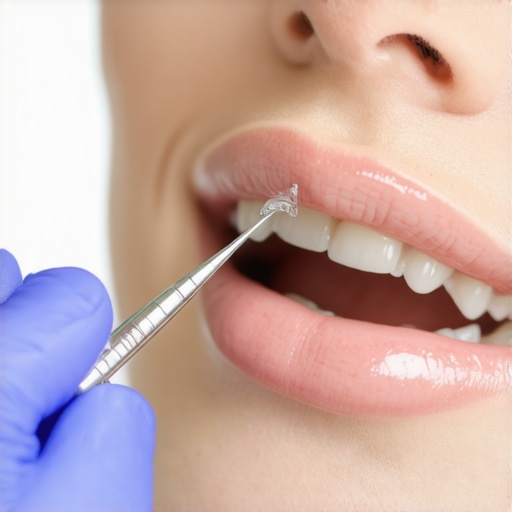
The 15-Minute Adjustment That Saves Your Smile
Don’t assume a total replacement is the only answer. Often, a “chairside adjustment” with a fine diamond bur can reshape the porcelain enough to restore your facial symmetry. This process is much like choosing between veneers vs crowns choosing the best option for your smile; it is all about the preparation of the material. A skilled dentist can thin out the “bulge” at the gumline or shorten an edge that is disrupting your bite. If you feel a “thud” when you close your teeth, your bridge is likely high in the occlusion. This imbalance doesn’t just feel weird; it can lead to the hidden reason your dental bridge feels loose during meals. Small, incremental changes are better than one massive grind, so prepare for a few visits to get it perfect.
Test Your Speech to Reveal Hidden Design Flaws
Phonetics are the ultimate lie detector in dentistry. If the bridge is too thick on the tongue side, you will notice a slight lisp or a “wet” sound when you speak. This happens when the air flow is restricted by the new appliance. You should also check the hygiene access. If the bridge is too “boxy” near the gums, you will find that the trick to flossing around a bulky dental bridge or implant becomes nearly impossible. A bridge should feel like a part of your anatomy, not a foreign object wedged into your jaw. During my own adjustment, I realized that by slightly rounding the “shoulders” of the bridge teeth, my tongue finally had the room it needed to hit the roof of my mouth naturally for “S” sounds.
When we talk about cosmetic dentistry, most people think about a shade guide or a digital mockup. But here is the contrarian truth: a smile that is technically ‘perfect’ in a mirror is often a failure in the mouth. Most patients believe that absolute symmetry is the goal, but in my experience, chasing a ‘mirror image’ left-to-right is exactly what leads to the mistake that makes porcelain veneers look like piano keys. Real teeth have micro-asymmetries—subtle rotations and variations in translucency—that catch the light. If your bridge or veneers look like a flat, white wall, it is because they lack the organic ‘chaos’ of nature. I have seen countless patients come in wanting the whitest shade possible, only to realize that a shade BL1 on a forty-year-old face looks like a neon sign rather than a healthy smile.
Avoid the Emergence Profile Trap
The biggest ‘oops’ factor in advanced restorative work is something your dentist might not mention by name: the emergence profile. This is the angle at which the tooth exits your gum line. If a bridge is too bulbous right at the base, it creates a shelf that traps plaque, leading to the sensation of why your gums look receding even if you have good hygiene. This is a clinical trap because the work might look great in a photo, but it is a biological ticking time bomb. According to a landmark study in The Journal of Prosthetic Dentistry, improper emergence angles are a leading cause of localized gingivitis around expensive restorations. If you feel a constant ‘pressure’ at the gum line, it isn’t just you ‘getting used’ to the bridge; it is likely a design flaw that is suffocating your soft tissue.
Why Does Your New Crown Feel Tighter Than the Others?
It is common to feel a sensation of crowding immediately after a seat, but if that pressure persists for more than 48 hours, you need to look at the interproximal contacts. When choosing between veneers vs crowns choosing the best option for your smile, people often overlook how these restorations interact with neighboring teeth. If the contact point—the place where the teeth touch—is too low or too broad, it can actually shift your entire arch. This is why the reason your dental implant crown feels tighter than the others is often due to the lab technician over-contouring the ceramic to prevent food impaction. While well-intentioned, this ‘over-tightness’ can cause headaches and jaw tension that feel completely unrelated to your teeth.
The Secret to Long-Term Structural Success
We are entering a new era where how dental implants reshape your oral health in 2025 is less about the metal post and more about the precision of the final ceramic. The nuance that separates a ‘good’ dentist from a ‘master’ is their ability to listen to your phonetics and your bite over your Pinterest board. These cosmetic dentistry secrets to boost your confidence aren’t about buying the most expensive material; they are about the 15-minute adjustment that ensures your jaw rests in a neutral position. Have you ever fallen into this trap where you prioritized ‘white’ over ‘functional’ and regretted it later? Let me know in the comments below!
Once you’ve successfully navigated the contouring and the initial shock of your transformation, the focus shifts to a single goal: longevity. I’ve seen patients treat their new veneers transformation like a set of fine china—too afraid to use them—while others treat them like a Swiss Army knife. Neither is ideal. The reality of family dentistry tips for a lifetime of healthy smiles is that your restorations are only as strong as the foundation and the maintenance routine you build around them. I personally swear by the ‘low-abrasion’ rule. Many popular toothpastes are essentially liquid sandpaper, which can micro-scratch the glaze of your porcelain over time, leading to a dull finish that stains more easily than your natural teeth.
How do I maintain my dental bridge or veneers over time?
Maintenance is less about hard scrubbing and more about precision. I highly recommend investing in a high-quality water flosser with a specialized ‘ortho’ or ‘bridge’ tip. If you have a bridge, you know that the space under the pontic—the fake tooth—is a magnet for debris. Relying on traditional floss can be frustrating, but the pressurized stream of a water flosser flushes out bacteria that manual tools simply can’t reach. This is essential for preventing the inflammation that causes why your gums look receding even if you have good hygiene. Additionally, I’ve found that using GUM Soft-Picks is far more effective and less traumatic for the delicate gingival tissue around a bridge than the old-school plastic threaders. These tools ensure that the trick to flossing around a bulky dental bridge or implant becomes a seamless part of your night, rather than a chore you skip.
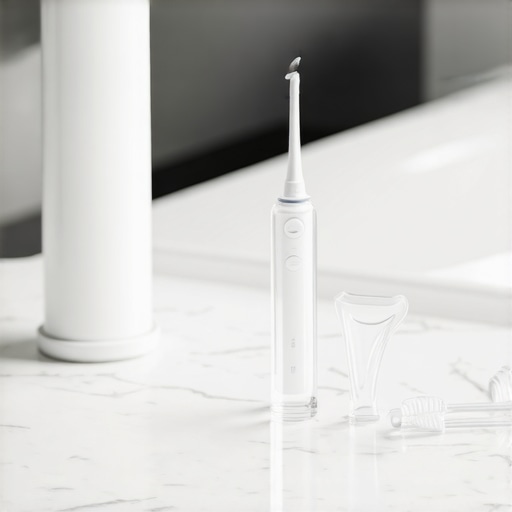
Beyond the tools, you need an insurance policy against your own subconscious. Bruxism—or night grinding—is the number one killer of cosmetic dental work. Even the strongest zirconium or lithium disilicate can’t withstand the hundreds of pounds of pressure your jaw exerts while you sleep. If you find why your veneers feel tight when you wake up in the morning, it’s a massive red flag that you are clenching. I recommend a custom-fabricated occlusal guard. Don’t settle for the ‘boil-and-bite’ versions from the drugstore; they lack the precise ‘balanced occlusion’ needed to protect a complex bridge. In fact, Dr. Gordon Christensen of Clinicians Report has often noted that a poorly fitted nightguard can actually increase muscle activity, making the problem worse rather than better.
Looking ahead, the landscape of restoration is changing rapidly. I predict that by late 2025, we will see ‘smart’ crowns equipped with micro-sensors that alert your phone if they detect abnormal pressure or early signs of bacterial acid production. We are already seeing dental implants 2025 innovations that redefine comfort and durability through 3D-printed scaffolds that mimic bone density. This technology ensures that how dental implants reshape your oral health in 2025 is more predictable than ever before. My advice? Don’t wait for a crisis. Audit your morning routine tomorrow—swap one high-abrasion habit for a precision tool like a water flosser—and see how much better your bite feels by next week.
The Hard Lessons That Fixed My Smile Forever
Reflecting on my journey, I’ve realized that the ‘perfect’ dental work isn’t what you see in a magazine; it’s what you forget is even in your mouth. First, I learned that silence is the enemy of a good result. If you feel a tiny snag during the trial phase, speak up immediately because that snag can turn into a source of chronic irritation once permanently cemented. Second, I discovered that my brain needed to catch up with my body. It takes about two weeks for your neural pathways to stop signaling ‘foreign object alert,’ but if the physical bulk is there, no amount of time will fix a design flaw. Finally, I realized that cosmetic dentistry secrets to boost your confidence often involve embracing small imperfections rather than chasing a computer-generated symmetry that looks unnatural in the real world.
Gear That Actually Works for Complex Dental Work
Maintaining a veneers transformation or a complex bridge requires more than just a standard toothbrush. I personally trust a high-pressure water flosser because it reaches the areas under a pontic that traditional floss simply shreds against. I also recommend keeping a digital ‘smile diary’—take a photo every morning in the same light for seven days. This helps you and your provider see if your lip is actually settling or if the ceramic is truly too bulky. For those looking at long-term options, staying informed on the future of dental implants cutting edge techniques in cosmetic dentistry can give you the vocabulary to ask for the latest, most biocompatible materials that mimic the light-reflecting properties of real enamel.
#IMAGE_PLACEHOLDER_E#
Take the First Step Toward Your Perfect Fit
You don’t have to live with a smile that feels like a costume. Whether you are dealing with the initial shock of a new appliance or you are considering how dental implants reshape your oral health in 2025, remember that you are the primary stakeholder in your own health. Small chairside adjustments can lead to massive shifts in your daily comfort and self-esteem. If you have been waking up and noticing why your veneers feel tight when you wake up in the morning, it is a sign that your bite needs a professional audit to protect your investment. Don’t be afraid to advocate for yourself; a truly successful procedure ends with you feeling like yourself again, just with a little extra sparkle. If you have questions about your specific fit or want to explore more options, you can always contact us for expert guidance. Have you ever felt like your new teeth were ‘bullying’ your lips or changing the way you speak? Let me know your experience in the comments below!