I remember standing in front of my bathroom mirror a few years back, getting ready for a first date. I wanted everything to be perfect, so I took a massive swig of that bright blue, high-intensity mouthwash. I swished until my eyes watered, thinking that the intense burn was a surefire sign of a job well done. But five minutes later, I wasn’t feeling fresh. My tongue felt like it was coated in a thin layer of rubber cement, and my lips were literally sticking to my teeth every time I tried to smile. It was embarrassing, uncomfortable, and frankly, a little gross. Have you ever felt that bizarre, tacky film after a routine rinse and wondered what on earth went wrong?
That Gluey Sensation You Never Asked For
We use mouthwash to achieve that pristine, ‘just-left-the-dentist’ feeling, but sometimes the chemistry in the bottle has other plans. When your mouth feels sticky, it’s usually not because you’re dirty; it’s because your mouth’s delicate ecosystem is reacting to a harsh ingredient. This often happens because many traditional rinses are designed to kill bacteria with a sledgehammer approach, ignoring how they affect your natural saliva. If you’ve noticed why your breath smells bad even after using expensive mouthwash, you’re already seeing the cracks in the ‘more is better’ philosophy of oral care. Today, I want to pull back the curtain on why this happens and help you find a rinse that actually makes your mouth feel like a mouth again.
Is expensive mouthwash actually worth the hype?
It’s easy to get cynical and think that every bottle in the dental aisle is just flavored water with a fancy label. You might even fear that these products are doing more harm than good. I’ll be the first to admit that for a long time, I bought the most expensive, ‘pro-clinical’ bottles assuming they were safer. My big mistake? I didn’t look at the alcohol content. High-alcohol rinses are notorious for this sticky aftermath. According to research published by the National Center for Biotechnology Information (NCBI), alcohol-based mouthwashes can cause significant oral mucosa dehydration, which strips away the lubricating proteins in your saliva. When those proteins are gone, the remaining fluid becomes thick and tacky. I’ve learned the hard way that a higher price tag doesn’t always mean a better balance for your oral health.
The Culprits Hiding in Your Bathroom Cabinet
The stickiness usually boils down to two things: dehydration and residue. Some mouthwashes contain surfactants—essentially detergents—to help disperse flavor oils. If these aren’t rinsed away or if they react poorly with your saliva, they leave a film. This is a different sensation than why your mouth feels sticky even after drinking plenty of water, which is usually a systemic hydration issue. Here, the mouthwash is the direct trigger. I’ve found that switching to alcohol-free versions or those with a neutral pH can stop that ‘glue-mouth’ feeling instantly. It’s about working with your body, not against it, which is one of those cosmetic dentistry secrets to boost your confidence that nobody tells you until you ask. Have you ever had to re-brush your teeth just to get rid of the film your mouthwash left behind? You aren’t alone, and you definitely don’t have to settle for it.
Give Your Toothpaste Time to Settle
The biggest mistake I ever made was thinking of mouthwash as the ‘rinse cycle’ for my teeth. In reality, most toothpaste brands contain fluoride that needs at least thirty minutes to bind to your enamel. When you dump a capful of liquid in there immediately after brushing, you’re not just washing away the fluoride; you’re creating a chemical slurry. This reaction between the surfactants in your paste and the astringents in the rinse is a prime suspect for that gummy residue. If you’ve ever wondered why your teeth feel fuzzy only hours after cleaning them, it’s often because this ‘sludge’ has settled onto your enamel like a magnet for plaque. I started waiting until after my morning commute to use mouthwash, and the difference in mouth-feel was night and day.
Banishing the Detergent Film for Good
You need to become an amateur chemist when reading labels. Many commercial rinses use Sodium Lauryl Sulfate (SLS) to create a foaming action that feels ‘active,’ but in the mouth, SLS is a known irritant that can dry out the mucous membranes. When your tissues dry out, they slough off in tiny, invisible pieces that mix with your saliva to create a thick, ropey texture. This is also a common reason why your gums are peeling after you switched toothpastes or rinses. It’s essentially a mild chemical burn that leaves a tacky byproduct behind. Switch to a formula that lists ‘essential oils’ or ‘xylitol’ as the active agents instead of heavy detergents. 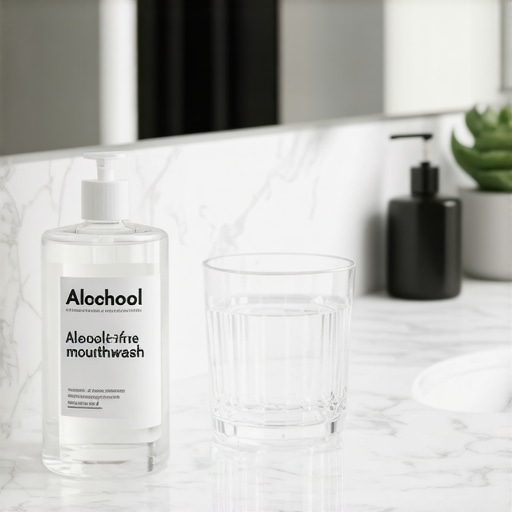
The Alcohol-Free Switch That Saved My Smile
I used to be a ‘burn’ devotee. If it didn’t hurt, I didn’t think it was working. But that burn is actually the sound of your saliva’s protective proteins being annihilated. Saliva is your mouth’s natural lubricant; without it, your lips and cheeks stick to your teeth like Saran Wrap. I remember one specific week where I was prepping for a big presentation and over-using a high-alcohol rinse. By Wednesday, my mouth felt so dry and sticky I could barely speak without a clicking sound. I felt like I had that weird real reason your mouth feels dry when you are nervous, except it lasted all day. Swapping to a non-alcoholic, pH-balanced rinse restored my natural moisture levels and eliminated the stickiness almost instantly. This kind of habit adjustment is just as important as following family dentistry tips for a lifetime of healthy smiles because it preserves your mouth’s biological balance.
Keep Your Restorations Smooth and Clean
If you have dental work, this stickiness can feel even more pronounced. Materials like porcelain or composite can hold onto the film left by cheap mouthwashes longer than natural enamel does. This is often the reason your veneers feel thicker than your natural teeth; it’s not the ceramic itself, but a layer of dried-out rinse proteins stuck to the surface. If you’re dealing with why your breath smells like vinegar and how to fix it, avoid the temptation to over-rinse with harsh chemicals. Instead, focus on mechanical cleaning and gentle, hydrating rinses that don’t leave a ‘coating’ behind. When I first got my crowns, I made the mistake of using a whitening rinse that turned my mouth into a sticky mess, making my expensive dental work feel ‘off’ for weeks until I just simplified my routine.
It’s a common misconception that once you invest in cosmetic dentistry, your maintenance levels can drop. I’ve heard people say, ‘It’s porcelain, it can’t decay!’ While technically true for the material, the underlying structure is more vulnerable than ever. In my experience, high-intensity mouthwashes are the silent killers of expensive restorations. The same drying agents that make your mouth feel like a desert can cause the gingival tissue to recede prematurely, exposing the margins of your work. This is one of those cosmetic dentistry secrets to boost your confidence: the best smile isn’t just about the work you get done, but how you protect the tissue around it.
Why Implants Aren’t the ‘Bulletproof’ Fix Everyone Claims
A study published in the Journal of Oral Implantology highlights that the success of dental implants in 2025 and beyond depends heavily on the health of the peri-implant mucosa. If you’re using harsh detergents that strip away protective biofilms, you’re inviting inflammation. This is the ‘Oops’ factor most patients miss: they treat their implants like power tools rather than living tissue. Unlike natural teeth, implants lack the complex sensory feedback of a ligament, meaning you might not feel the irritation caused by a ‘gluey’ mouthwash until the inflammation has reached the bone level.
Why does my dental implant feel heavier than my natural teeth?
It sounds like science fiction, but many patients report that their dental implant feels heavy in your jaw bone or even sensitive to pressure changes. This is usually due to the lack of a periodontal ligament—the ‘shock absorber’ natural teeth have. Without it, every vibration and chemical change in your mouth is transmitted directly to the bone. If your mouthwash is causing inflammation or leaving a thick residue, that ‘heavy’ feeling often intensifies. Knowing how to safely clean a dental implant without scratching the post is vital because even microscopic scratches from harsh cleaning agents can harbor the very bacteria that lead to failure. 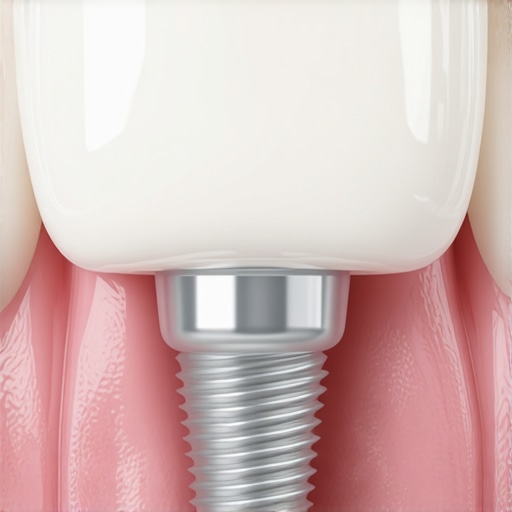
The Hidden Danger of Detergents on Restorative Work
In the world of family dentistry tips for a lifetime of healthy smiles, we often overlook how these ‘sticky’ residues affect different age groups. For instance, kids with new permanent teeth might find the sensation of a film much more distressing than an adult would. Similarly, if you’ve recently undergone a veneers transformation, that tackiness can be mistaken for a failed bond, leading to unnecessary anxiety. The nuance here is that high-end porcelain is extremely resilient, but the interface where it meets your tooth is not. When choosing between veneers vs crowns, remember that the adhesive used is often the most sensitive part of the equation. Aggressive alcohol-based rinses can, over years, degrade the bond strength at the microscopic level or cause the gums to pull back, revealing the ‘dark line’ we all want to avoid. Have you ever fallen into this trap of thinking ‘stronger is better’ for your dental work? Let me know in the comments.
Stop Using Your Toothbrush Like a Scrubber
After I spent a small fortune on my front four teeth, I realized my old drugstore habits were a liability. I needed a routine that felt like a surgical preservation plan rather than a daily chore. I eventually switched to a high-end sonic toothbrush with a built-in pressure sensor, and it changed everything. According to research in the Journal of Clinical Periodontology, sonic technology disrupts biofilm more effectively than manual brushing without the risk of mechanical abrasion. This is crucial because you don’t want to dull the high-polish finish of a veneers transformation by scrubbing like you’re cleaning a grout line. I’ve found that letting the vibrations do the work keeps the margins of my dental work invisible and my gums perfectly pink.
The Essential Toolkit for Long-Term Success
For my implants, I’ve ditched traditional string floss for a water flosser with a specialized ‘Plaque Seeker’ tip. If you’ve ever worried about how to safely clean a dental implant without scratching the post, this tool is non-negotiable. Traditional floss can sometimes catch on the abutment or, worse, leave tiny microscopic shreds of wax behind that harbor bacteria. A pulsating water stream flushes the peri-implant pocket without any physical friction. I also recommend keeping a hydroxyapatite-based paste in your rotation; unlike abrasive whitening pastes, it helps remineralize your natural teeth while keeping your porcelain looking luminous. If you’re a fan of Malbec or espresso, knowing the secret to getting red wine stains off your veneers is mostly about immediate rinsing and using these non-abrasive tools to maintain the surface integrity. 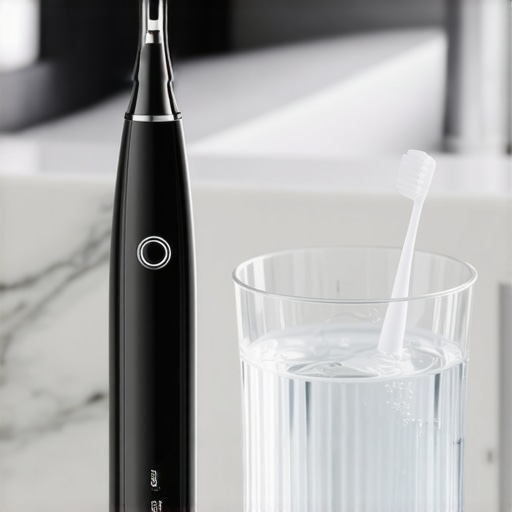
How do I maintain my dental work for the next twenty years?
Longevity is a game of consistency and bio-compatibility. I personally use a ‘mouth mirror’ once a week to check the lingual sides of my teeth for any signs of recession or film buildup. It sounds obsessive, but catching a slight change in gum height early can save a crown or an implant later. Following family dentistry tips for a lifetime of healthy smiles means treating your restorations as part of your living anatomy, not just ‘parts’ that were installed. I’ve seen that the most successful patients are the ones who treat their six-month cleanings as a professional inspection rather than just a polishing session. This proactive mindset is exactly how dental implants reshape your oral health in 2025—they force you to become more in tune with your body’s biological signals.
What the Future of Toothbrushing Looks Like
I predict that within the next five years, we won’t just be ‘brushing’; we’ll be monitoring. We are already seeing the emergence of the future of dental implants and cutting-edge techniques that include smart sensors embedded in the crown to detect early-stage inflammation before you ever feel pain. Your toothbrush will likely sync with your phone to analyze the pH levels of your saliva in real-time, telling you exactly when your mouth is too acidic for your enamel’s safety. Until those gadgets are on every shelf, the best thing you can do is simplify. My advanced tip for you tonight? Swap your traditional high-sulfate toothpaste for a pH-neutral, SLS-free gel. Your gums—and your expensive cosmetic work—will thank you for the relief from chemical stress. Try it for just one week and notice how much smoother your teeth feel when you wake up.
Hard Truths from My Years in the Dental Aisle
After years of trial and error, I realized that the ‘squeaky clean’ feeling I was chasing was actually the sound of my mouth’s defenses being stripped away. Here are the biggest takeaways from my journey toward a balanced oral ecosystem:
- The ‘Burn’ is a Warning, Not a Win: That intense tingling from high-alcohol rinses is actually a sign of your mucosa dehydrating. It creates the very stickiness you’re trying to avoid by clumping your salivary proteins.
- Timing is the Invisible Variable: If you rinse immediately after brushing, you create a chemical slurry between your toothpaste and mouthwash. Giving your fluoride 30 minutes to settle is the single easiest way to stop the gummy film from forming.
- Restorations Require Respect: If you’ve invested in veneers transformation, your mouthwash choice matters even more. Harsh chemicals can age the bonding agents faster than natural wear and tear ever would.
- Your Saliva is Your Best Friend: Instead of replacing your natural saliva with blue liquid, choose products that support its production. Saliva is what keeps your breath fresh and your teeth smooth, not the perfume in a bottle.
What My Medicine Cabinet Actually Looks Like Now
I’ve moved away from the neon-colored bottles and toward a more curated, biological approach. These are the staples I trust to keep my mouth feeling like a mouth:
- PH-Balanced, Alcohol-Free Rinse: Look for formulas containing Xylitol. It doesn’t just freshen breath; it actively starves the bacteria that cause stickiness without drying out your tissues. It’s one of those cosmetic dentistry secrets to boost your confidence that actually works.
- The Sonic Toothbrush with a Light Touch: I use a sonic brush with a pressure sensor to ensure I’m not scrubbing away the protective layers of my enamel or my veneers vs crowns. Gentle vibration is always better than manual force.
- The Water Flosser with a Specialized Tip: For anyone with implants, this is a game-changer. Knowing how to safely clean a dental implant without scratching the post becomes effortless when you use water pressure instead of abrasive tools.
- Hydroxyapatite-Based Paste: This is a non-abrasive alternative to whitening pastes that helps rebuild the tooth surface, which is vital if you want to avoid that fuzzy feeling hours after cleaning.
Take Back Control of Your Oral Ecosystem
Your mouth isn’t a kitchen counter that needs to be bleached; it’s a living environment that thrives on balance. By moving away from harsh detergents and alcohol-heavy formulas, you can eliminate that tacky, uncomfortable film and finally enjoy the lasting freshness you deserve. Whether you are following family dentistry tips for a lifetime of healthy smiles or maintaining a complex dental implant in 2025, your routine should feel refreshing, not restrictive. Have you ever noticed your mouth feeling like a desert or a glue trap after your morning mouthwash? Let me know your experience in the comments below!