It started as a tiny, nagging twitch right below my ear. I’d spend forty-five minutes catching up with my sister, and by the time I hit the end-call button, I couldn’t even take a bite of my sandwich. My face felt like it was stuck in a vice. One afternoon, the tension was so sharp I actually had to massage my cheeks just to speak clearly again. It is a bizarre, unsettling sensation when your own body decides it is finished with the conversation before you are. If you have ever felt that dull, throbbing tightness or a stiffening in your jaw after a long gossip session, you are not alone, and you are probably not broken. Today, I am going to share exactly why this happens and how I finally stopped the ache from ruining my social life.
Stop Cradling Your Phone Like a 90s Sitcom Character
We often hear about text neck, but nobody warns you about phone jaw. I used to make the massive mistake of cradling the phone between my shoulder and my ear while I tried to type or fold laundry. I thought I was being a productivity ninja, but I was actually wrecking my alignment. That constant, lopsided tension is a recipe for a muscular disaster. When you hold that position, your masseter muscles—the heavy lifters of your jaw—stay in a state of semi-contraction for way too long. Sometimes, the reason your jaw feels locked is as simple as postural fatigue, but it can quickly spiral. I learned the hard way that this habit can lead to frequent headaches that linger long after you hang up. According to the National Institute of Dental and Craniofacial Research, TMJ disorders affect over 10 million Americans, and many cases are aggravated by simple repetitive strains like this. Have you ever noticed your teeth clenching tighter the more intense the conversation gets?
Is this just a temporary cramp or something worse?
It is easy to dismiss a bit of stiffness as a fluke, but if you notice that your jaw pops when you finally open it to eat, your body is sending you a signal. I ignored my symptoms for months until the dull ache became a daily guest at my dinner table. You do not necessarily need a major procedure, but you do need to understand the mechanics of your bite. If your teeth are already slightly out of alignment, that long-duration muscle strain from a phone call acts like a catalyst for inflammation. We are going to look at the specific stretches that saved me and why switching to a headset might be the best dental health move you ever make.
Reset Your Jaw with These Immediate Movements
To get that vice-like grip to let go, you have to retrain your resting position. My favorite trick is the ‘N’ stretch. You simply say the letter ‘N’ and hold your tongue against the roof of your mouth, just behind your front teeth. This naturally forces your jaw to drop and your teeth to separate. I remember doing this during a particularly stressful budget meeting last year. Every time I felt my teeth start to grate together, I’d silently shape that ‘N’ with my tongue. By the time I hung up, my face didn’t feel like a bruised apple for the first time in months. This is much like how to manage the dull ache after your braces are adjusted; it’s about gentle, consistent repositioning rather than using force to pry your mouth open. 
Practice the N-Position Throughout the Day
The ‘N’ position isn’t just for when you are on the phone. It should be your default setting. If your teeth are touching right now while you read this, you are putting unnecessary pressure on your joints. Most people don’t realize that the only time your teeth should touch is when you are chewing. If you struggle with this, the reason your jaw aches every time you wear your aligners or even just sitting at your desk might be because you’ve lost the habit of a ‘freeway space’—that tiny gap of air between your upper and lower teeth.
Use Moist Heat to Soften Tight Muscles
When your jaw feels like it’s frozen in a semi-open position, skip the ice pack. Moist heat is far more effective at penetrating the thick masseter muscle. I used to keep a small microwaveable bean bag at my desk. Ten minutes of warmth on my cheeks after a long call acted like a reset button. This prevents the muscle from seizing up and helps avoid the connection between frequent headaches and grinding your teeth that many of us face after a high-stress conversation. Heat increases blood flow, which flushes out the lactic acid buildup from clenching.
Change Your Environment to Save Your Smile
If you are still holding a glass slab to your ear for hours, you are fighting a losing battle. Switching to a Bluetooth headset or even using speakerphone isn’t just a tech upgrade; it’s a medical necessity. When your arm is up and your head is tilted, your nerves get pinched and your muscles shortened. I bought a cheap pair of wireless earbuds and the difference was night and day. My shoulders dropped three inches and my jaw finally felt like it belonged to me again.
Stop Clenching During Heated Conversations
We often clench as a physical reaction to emotional stress. During one particularly difficult call with a client, I realized I was biting down so hard my ears were ringing. Now, I use a physical cue. I keep a small sticker on my computer monitor that reminds me to check my bite. Checking in with yourself can prevent you from needing cosmetic dentistry secrets to boost your confidence later on due to chipped or worn-down teeth. Sometimes the muscle fatigue is just a symptom of a deeper bite issue. Incorporating family dentistry tips for a lifetime of healthy smiles into your routine often means catching these alignment shifts before they become chronic pain. Think of your jaw like a hinge on a door—if the hinge is even slightly crooked, the wood is going to scrape every time you open it.Everyone tells you that getting veneers is the ultimate shortcut to a perfect smile, but there is a nuance most people miss: it is actually a delicate dance with your gum line. I have seen so many people rush into the chair only to end up with what we call ‘chicklet teeth.’ The mistake that makes porcelain veneers look like piano keys usually isn’t the color—it is the lack of negative space and biological width. If the porcelain is pressed too hard against your gingival tissue, your gums will eventually retreat in protest, leaving you with a dark line that no amount of brushing can fix. Then there is the ‘shade trap.’ We all want that Hollywood white, but real teeth aren’t solid blocks of color. If you go too bright, you will find the reason your porcelain veneers look opaque and fake is a total lack of translucency at the biting edges. When you are how to pick the right shade for your new porcelain veneers, you have to consider how they will look in natural light versus the harsh LEDs of a dental office. Otherwise, you will be the person whose teeth glow like neon signs in a dark restaurant. 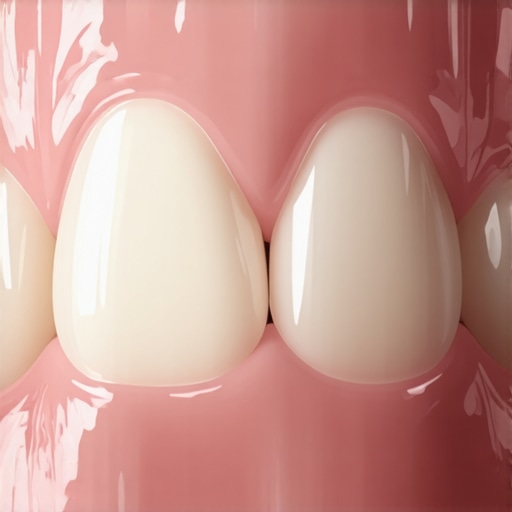 What about the ‘indestructible’ implant? A common myth is that once the metal is in the bone, you are done for life. However, dental implants are subject to ‘peri-implantitis’—essentially gum disease for titanium. A study published in the International Journal of Implant Dentistry highlights that long-term success is heavily dependent on the quality of the soft tissue seal around the post, not just the bone density itself. If that seal is weak, you might start noticing the red flags that your dental implant is being rejected before you even realize there is a structural problem.
Why does my dental implant feel like a foreign object when the weather changes?
It sounds like an old wives’ tale, but the reason why your dental implant area is sensitive to cold weather or pressure changes is actually rooted in the way metal conducts temperature faster than natural bone. This is a level of detail most clinics won’t mention during the initial consultation. You might even find that your dental implant feels tight when you wake up, which is often a physical manifestation of nocturnal clenching—that same jaw tension we discussed earlier. The biggest ‘oops’ factor I see is assuming cosmetic dentistry secrets to boost your confidence are purely about aesthetics. In reality, your bite—the way your teeth actually meet—is the foundation. If you change the shape of your teeth with veneers but do not address a misaligned bite, those expensive porcelain shells will eventually crack under the pressure. Have you ever fallen into this trap of prioritizing looks over function? Let me know in the comments.
The Drugstore Habit That is Secretly Destroying Your Enamel
I didn’t invest thousands in my mouth just to watch it crumble because I was lazy with a piece of string. The reality is that once you have high-end restorations, the standard oral care routine you learned in second grade simply isn’t enough. I personally stopped using traditional abrasive toothpastes the second I understood the truth about the durability of composite vs porcelain veneers. Standard pastes contain silicas that act like sandpaper on your polish. Instead, I switched to a non-abrasive gel with a neutral pH. This is non-negotiable because maintaining that glass-like finish on your veneers is what prevents them from picking up stains. If you are a caffeine addict like me, knowing how to maintain your white smile after a coffee habit is about more than just brushing; it is about the chemistry of your saliva. I now use a specialized alkaline mouth rinse after every latte to neutralize the acidity before it can etch the porcelain surface.
How do I maintain these high-end results for the long haul?
Maintenance is a game of precision, not power. I swear by my water flosser, but I only use it on the lowest setting around my implant. High-pressure water can actually detach the delicate gum seal—known as the ‘biological width’—that protects the bone from bacteria. Research by Dr. Nikos Mattheos from the University of Hong Kong has shown that this soft tissue seal around an implant is significantly more vulnerable than the ligament around a natural tooth. This is why learning how to safely clean a dental implant without scratching the post is the difference between a thirty-year success and a five-year failure. I also use interdental brushes coated in a tiny bit of chlorhexidine gel once a week to specifically target the ‘sulcus’ or the pocket where the restoration meets the gum. 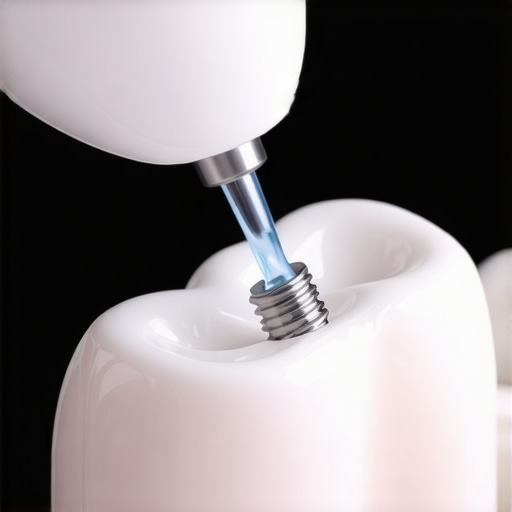
Bio-Integrated Diagnostics Are the Future of Your Mouth
We are rapidly moving away from reactive dentistry and into a world of constant monitoring. I predict that by 2030, the ‘smart crown’ will be mainstream. Imagine a veneer that has a micro-sensor embedded in the porcelain that can detect changes in your saliva’s acidity or the presence of specific pathogens before a cavity even forms. This is not science fiction; it is the natural evolution of how dental implants reshape your oral health in 2025 and beyond. We are already seeing implants that can release antimicrobial agents locally if they detect inflammation. This kind of tech will integrate seamlessly with family dentistry tips for a lifetime of healthy smiles, making the dreaded dental drill a relic of the past. Your phone might one day alert you that your implant site is ‘warming up’—a sign of early infection—long before you feel a single throb.
Take the Red Dye Challenge Tonight
If you want to truly master your maintenance, you need to see what you are missing. My advanced tip for anyone serious about their cosmetic work: buy a pack of plaque-disclosing tablets. Chew one after you think you’ve finished your nightly routine. You will likely be shocked to see vibrant red streaks along the edges of your veneers or under your bridge. It is a humbling experience, but it is the only way to calibrate your technique. Once you identify those blind spots, you can adjust your angles and ensure your investment stays pristine. Give it a shot tonight and see if your ‘clean’ smile is actually as spotless as you think.
Lessons From the Trenches of Total Smile Rehabilitation
Reflecting on my journey, the most profound realization was that aesthetics are secondary to function. I once thought that getting the perfect look was the finish line, but I quickly learned that even the most beautiful work is vulnerable if the underlying bite is off. If you are debating between veneers vs crowns choosing the best option for your smile, remember that longevity depends on how your jaw moves, not just how the teeth look in a mirror. Another lightbulb moment was realizing that ‘dental fatigue’ isn’t just in the teeth; it is a full-craniofacial experience. If you ever feel like your dental implant feels heavy in your jaw bone, it is often your muscles crying out for a postural reset rather than a failure of the hardware itself.
My Personalized Kit for Pain-Free Mornings
I have narrowed my daily maintenance down to three non-negotiables that keep my smile feeling as good as it looks. First, I use a high-quality water flosser on a gentle setting to protect the biological width of my restorations. Second, I’ve replaced my harsh, whitening pastes with a pH-neutral gel to maintain the glaze on my porcelain. Finally, I’ve embraced the tech side of the future of dental implants cutting edge techniques in cosmetic dentistry by using a night guard that is digitally calibrated to my specific bite path. These tools aren’t just gadgets; they are the insurance policy for my dental investment.
Your Path to a Tension-Free Smile
Taking control of your jaw health and your appearance is one of the most empowering things you can do for your self-esteem. Whether you are looking for how to fix a smile that feels too narrow or small or simply trying to survive a long phone call without a headache, the secret is consistent, mindful care. Embrace the process, listen to what your body is telling you, and don’t be afraid to invest in the high-quality cosmetic dentistry you deserve. Your future self will thank you for the comfort and the confidence. Have you noticed that your jaw tension peaks during specific times of the day, like during your commute or stressful meetings? Let me know in the comments below!