I remember sitting in my car, clutching the steering wheel, and catching a glimpse of my reflection in the rearview mirror. My heart sank. My brand-new veneers didn’t look like the radiant, healthy teeth I’d dreamed of; they looked like a row of flat, white piano keys. It was a visceral moment of regret. I had spent thousands of dollars, yet I felt like a cartoon character. If you’ve ever looked at your smile and felt like your teeth were just a bit too ‘solid’ or wondered why they glowed strangely under office lights, you aren’t alone. We’re going to dig into why this happens and how you can ensure your smile looks like it belongs to a human, not a mannequin.
Have you ever felt like your new smile was a little too obvious to everyone in the room? Drop a comment below and let me know if you’ve struggled with that ‘fake’ feeling.
That Heartbreaking Moment My New Smile Looked Like Plastic
The biggest mistake I made early on—and it’s one I see all the time—was obsessing over a single shade of white. I told my dentist I wanted the brightest smile possible, thinking that was the secret to cosmetic dentistry secrets to boost your confidence. But I ignored the most important factor: translucency. Natural teeth aren’t blocks of chalk. They are layered, complex, and slightly see-through at the edges. When a lab uses cheap porcelain or applies too much opaquing agent to hide a dark underlying tooth, the result is a flat, lifeless look. According to the American Academy of Cosmetic Dentistry, natural enamel is semi-translucent, meaning light travels through it and reflects off the dentin layer underneath. If your veneers are too thick or made of low-quality materials, they block that light entirely. This is often the reason your veneers look different in sunlight compared to indoor lighting. I learned the hard way that a beautiful smile requires a balance of light and shadow, not just a bucket of white paint. If your restorations feel ‘off,’ it might be because they lack those subtle imperfections that make teeth look real. You might even find that your veneers feel bulkier than your natural teeth, which only adds to that artificial sensation.
Do Veneers Always Have to Look Like Fluorescent Chicklets?
The short answer is a resounding no, but getting it right requires a partnership between you and your provider. Many people fear that any dental work will look ‘done,’ but the reality is that high-end porcelain can mimic the exact light-scattering properties of your original enamel. It’s all about the preparation and the artistry of the lab technician. Before you commit to a full set, you need to understand how to pick the right shade for your new porcelain veneers, looking at more than just the brightness. We also have to consider the truth about the durability of composite vs porcelain veneers, as the material choice heavily dictates how much light can pass through. If your current smile feels like a wall of white, don’t lose hope—there are specific steps we can take to fix the opacity and bring back that natural spark.
Test Drive Your Smile Before It Is Permanent
Think of getting veneers like buying a custom-built car. You wouldn’t just look at a brochure and hand over your credit card; you would want to sit in the seat and feel the steering wheel. In cosmetic dentistry, this is called a diagnostic wax-up or a ‘trial smile.’ Your dentist should create a temporary version of your veneers out of acrylic that you can wear for a few days. This step is non-negotiable if you want to avoid the ‘fake’ look. During my own dental journey, I initially skipped this, assuming the digital renders were enough. The result was a smile that didn’t fit my facial movements. When I finally insisted on a physical mock-up, I realized the edges were too sharp, making me look aggressive. By wearing the trial version, you can see how the teeth interact with your lips and check for issues like a lisp or discomfort. If you are already past the trial and something feels wrong, you might be noticing that your veneers feel bulkier than your natural teeth, which usually stems from a lack of proper contouring during this planning phase.
Check the Incisal Halo and Edge Transparency
Natural teeth have a specific feature called an incisal halo—a thin, slightly more opaque line at the very tip of the tooth, surrounded by a translucent zone. If your veneers are one solid color from the gum line to the tip, they will look like plastic. When you are looking at your porcelain samples, hold them up to a window. Light should pass through the bottom third of the tooth. This transparency is what prevents that ‘glow-in-the-dark’ effect under fluorescent office lights. If the lab uses high-quality materials, they can mimic the way light scatters, which is a major factor in the truth about the durability of composite vs porcelain veneers; porcelain simply handles light better over time. 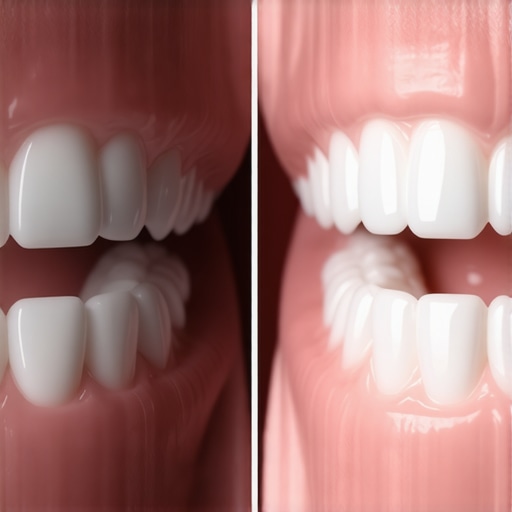
Look Beyond the Brightest White on the Chart
The most common trap is choosing ‘Bleach 1’ or the whitest shade available without considering your skin tone or the whites of your eyes. A natural smile is rarely monochromatic. Your canine teeth are naturally a half-shade darker than your front incisors, and the necks of the teeth (near the gums) are more saturated than the tips. To get this right, you must understand how to pick the right shade for your new porcelain veneers by looking at multi-layered porcelain that incorporates these gradients. I once worked with a patient who was adamant about having perfectly white teeth, but because they had a warmer skin tone, the teeth ended up looking blue-grey in shadows. We fixed this by adding ‘warmth’ to the underlying layers. This depth is essential because why your teeth look darker in certain lighting conditions is often a result of how the internal pigment reflects light.
Balance the Proportions of Your Arch
Sometimes the teeth look fake not because of the color, but because they are too wide or too narrow for your face. If the dentist doesn’t account for the ‘buccal corridor’—that dark space at the corners of your mouth when you smile—the result can look like a wall of teeth. Learning how to fix a smile that feels too narrow or small often involves subtly widening the arch with the veneers or crowns. For those missing teeth entirely, even how dental implants reshape your oral health in 2025 focuses heavily on these aesthetic proportions to ensure the implant-supported tooth doesn’t look like an island in your mouth. Always ask for ‘surface texture’—tiny ridges and valleys on the face of the veneer—which break up light reflections and make the porcelain look like real enamel rather than a polished mirror. To ensure you are on the right track, follow transform your smile with veneers: expert tips for perfect results and always ask to see the lab’s previous work on similar cases.
While most patients enter my office asking for a mirror-image, perfectly symmetrical set of teeth, I often have to share a hard truth: perfection is the ultimate tell of artificial work. In nature, no two teeth are identical. If your dentist creates a ‘carbon copy’ of your right side onto your left, you end up with a robotic look that people can’t quite place but instinctively know is fake. This is what we call ‘dynamic asymmetry.’ Have you ever fallen into this trap of chasing absolute perfection? Let me know in the comments below.
Stop Chasing the Identical Left and Right
In my experience, the most successful restorations incorporate micro-variations in tooth length and rotation. When you look at the reason your smile looks lopsided in your recent photos, it might actually be a natural characteristic that should be subtly preserved, not erased. When we aim for 100% symmetry, we lose the personality of your face. A study published in the Journal of Esthetic and Restorative Dentistry highlights that the ‘biologic width’—the distance between the base of the gum sulcus and the top of the bone—is the most ignored variable in cosmetic failure. If the lab pushes the porcelain too deep into this space, your body reacts with chronic inflammation. This is often why your gums look dark red around a specific dental crown even if you brush and floss religiously. It is an ‘oops’ factor that many high-volume clinics miss because they focus on the tooth rather than the tissue.
Can Your Gums Actually Handle the Stress of High-End Porcelain?
This is the question most people forget to ask. We spend so much time debating veneers vs crowns: choosing the best option for your smile, but we forget the ‘pink frame’—the gums. If you have thin gum biotypes, a heavy porcelain edge will cause recession almost immediately. You might start noticing the reason your gums are receding around one specific tooth is actually due to the mechanical stress of the restoration being too bulky. This is especially true for implants. While we celebrate dental implants 2025: innovations that redefine comfort and durability, the underlying bone health remains the gatekeeper. If you ignore the biology, no amount of ‘cutting-edge’ tech will save the result. Often, the reason your dental implant surgery requires a bone graft is precisely to prevent that future ‘sunken’ or grey-ish appearance at the gum line that screams ‘dental work.’
The Trap of Over-Contouring Your Teeth
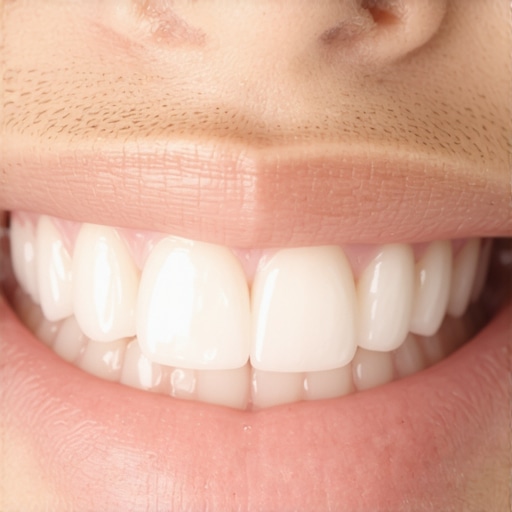
One of the biggest mistakes in cosmetic dentistry is making the teeth too ‘fat.’ To avoid drilling away natural enamel, some providers offer ‘no-prep’ veneers. While this sounds great in a brochure, it often leads to a result where the teeth stick out too far from the gums. This is precisely why your veneers feel bulkier than your natural teeth. It creates a shelf that traps bacteria and makes the lip look pushed out. True expertise lies in knowing when to remove just a fraction of a millimeter of enamel to ensure the porcelain sits flush with your original tooth structure. This ensures the restoration looks like it is emerging from your gums, not sitting on top of them like a plastic cap.
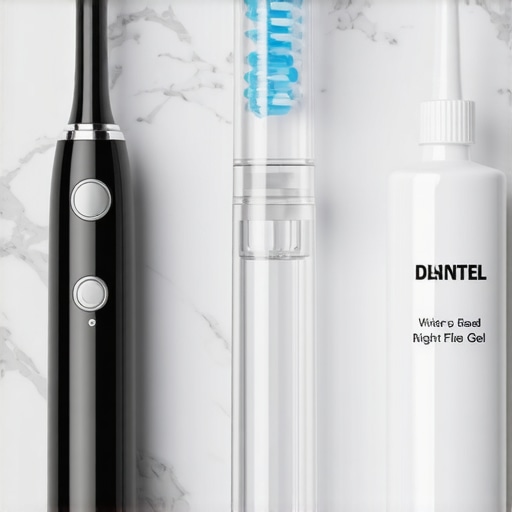
Once you’ve moved past the initial shock of a new smile and landed on a look that actually feels like you, the real work begins. I often tell my patients that getting veneers transformation: unlocking your best smile yet is only half the battle; the other half is the maintenance protocol you commit to the moment you leave the chair. I used to think a regular toothbrush and some floss were enough, but when you have thousands of dollars of high-end porcelain in your mouth, you need a specialized toolkit. For me, the game-changer was switching to a high-quality sonic toothbrush with a pressure sensor. Why? Because many people over-scrub their gums trying to keep their new teeth clean, which is often the signs your receding gums are caused by your toothbrush rather than the dental work itself. By using a sensor-based brush, you ensure you aren’t wearing down the delicate margin where the porcelain meets your natural tooth.
Stop Your Midnight Grind from Ruining Your Porcelain
The biggest threat to your cosmetic investment isn’t coffee or wine—it’s your own jaw. I learned this the hard way after waking up with a tiny chip in my lateral incisor. Most of us carry stress in our jaw, and the sheer force of nocturnal grinding can exert over 200 pounds of pressure per square inch. According to a study published in the International Journal of Oral & Maxillofacial Implants, mechanical overload is a leading cause of prosthetic failure in both crowns and implants. This is why I now swear by a custom-molded occlusal guard. Don’t settle for the ‘boil-and-bite’ versions from the drugstore; they are often too bulky and can actually shift your bite. A laboratory-processed guard is slim, fits like a second skin, and acts as an insurance policy for your smile. If you are debating veneers vs crowns: choosing the best option for your smile, remember that both require this protective layer if you have any history of bruxism.
How do I maintain my cosmetic work over time?
Maintenance is less about deep cleaning and more about the chemistry of what you put in your mouth. I always recommend switching to a non-abrasive, low-RDA (Relative Dentin Abrasivity) toothpaste. Many whitening toothpastes use silica particles that act like sandpaper on porcelain, eventually stripping away that beautiful factory polish and making your teeth look dull. You should also integrate the benefit of using a water flosser with your braces or restorations into your nightly routine. A water flosser can reach into the tight ’embrasures’—those tiny triangular spaces between teeth—where traditional floss might struggle or even snag. This is vital for preventing why your gums look dark red around a specific dental crown due to trapped bacteria. For those with a full set of implants, understanding how dental implants reshape your oral health in 2025 means realizing that specialized interproximal brushes are your best friend for keeping the metal-to-tissue interface pristine.
The Future of Smile Maintenance Involves Digital Twins
I predict that in the next five years, we will move away from ‘reactive’ dentistry and into ‘predictive’ monitoring. We are already seeing the rise of AI-integrated apps that sync with your toothbrush to track gum recession in real-time. Imagine your phone alerting you that your left canine margin has shifted 0.2mm before you even see it in the mirror. This level of family dentistry tips for a lifetime of healthy smiles will allow us to catch issues like the reason your gums are receding around one specific tooth before it requires a surgical fix. If you want to stay ahead of the curve, I highly recommend asking your dentist for a high-resolution 3D scan today—even if your teeth are perfect—to serve as a ‘digital twin’ baseline for the future. Take a look at your current toothpaste: if the first three ingredients include ‘hydrated silica’ or ‘calcium carbonate,’ swap it for a gentle gel formula this week. Your porcelain will thank you for it.
Hard Truths I Learned from My Own Dental Journey
Reflecting on my transformation, I’ve realized that the most expensive lesson wasn’t the price of the porcelain, but the value of the details. First, translucency is your best friend. If the light doesn’t pass through the edges, you’ll always feel like you’re wearing a mask. Second, don’t be afraid of a tiny bit of enamel preparation; it’s often the only way to ensure a veneers transformation: unlocking your best smile yet doesn’t result in bulky, unnatural-looking teeth. Lastly, I learned that the goal isn’t ‘new’ teeth—it’s ‘better’ versions of your teeth. Keeping a hint of your original character, like a slight natural curve, makes the work invisible to others.
My Personal Toolkit for Guarding Your Investment
Once you have invested in your smile, you need to treat it like fine art. I personally use and recommend a few specific tools to keep everything pristine. I swear by a high-end water flosser; it’s the most effective way to manage the benefit of using a water flosser with your braces or porcelain work. For daily cleaning, I use a low-abrasive gel toothpaste because it protects the polish. I also suggest reading up on the safest way to whiten teeth with sensitive enamel if you want to touch up your natural bottom teeth to match your new top veneers. Finally, don’t forget a custom-fit guard—learning how to clean your night guard without damaging the material is just as important as wearing it every single night to prevent porcelain fractures.
Take the Leap Toward the Smile You Deserve
Stepping into the world of cosmetic dentistry can feel like a high-stakes gamble, but when you focus on artistry over artificiality, the result is life-changing. You don’t have to settle for a cookie-cutter look that feels foreign. By partnering with a lab that understands light, texture, and biology, you can walk out with a smile that looks as though you were born with it. Remember that family dentistry tips for a lifetime of healthy smiles apply just as much to high-end restorations as they do to natural teeth. Your path to confidence starts with a single, well-informed choice.
Have you ever worried that your veneers might look too bright or like ‘piano keys’ in certain lighting? Share your thoughts or fears in the comments below—I’d love to help you navigate them.