I still remember the cold sweat I broke into when I felt that first weird wiggle in my jaw just three weeks after my procedure. I had spent months researching how dental implants reshape your oral health in 2025, so I assumed my journey would be nothing but smooth sailing and perfect selfies. But there I was, staring into a magnifying mirror, wondering if my body was trying to evict the very thing meant to fix my smile. I made the classic mistake of waiting; I told myself the dull ache was just my imagination, but your gut (and your gums) usually knows better. We are going to walk through exactly what you need to look for so you don’t end up in the same panic I did.
When the Normal Healing Process Crosses the Line
Recovery isn’t always a walk in the park, but there is a massive difference between the standard post-op blues and a true rejection. If you are noticing that your recovery is regressing rather than progressing, you need to pay attention. For instance, why your dental implant site feels warm during healing is a question I get asked a lot—usually, a little warmth is fine right after surgery, but if it starts weeks later, we have a problem. According to the American Association of Oral and Maxillofacial Surgeons, while implants boast a 95-98% success rate, failure often stems from early infection or a lack of bone integration. My biggest blunder was ignoring a persistent, throbbing heat because I didn’t want to be “that patient” who calls for every little sting. Trust me, your dentist would much rather see you for a false alarm than for an emergency extraction.
Is that tiny bit of movement really a dealbreaker?
In short: yes. A healthy implant should feel like it is part of your skeleton, not like a loose baby tooth. If you notice even a microscopic shift, it’s a sign that osseointegration—the process where your bone grows around the titanium—isn’t happening. This can be caused by various factors, including the impact of smoking on your dental implant success rate, which can significantly hinder your body’s ability to heal. Have you felt any clicking or shifting when you chew lately? Tell me in the comments or reach out to your specialist immediately if you have. Sometimes, why your dental implant feels loose but looks fine is down to a simple loose healing cap, but you can’t afford to guess.
We also need to talk about the visual cues. If you start seeing why your dental implant is showing a tiny dark line or if your gums look angry and recessed, your body might be signaling a struggle. It’s not just about the pain; it’s about the structural integrity of your investment.
Map Your Sensations Before Calling the Clinic
When you feel something is off, don’t just stew in anxiety; start a systematic check of the area. I treat my mouth like a crime scene when I suspect a dental issue. First, identify the exact nature of the discomfort. Is it a sharp sting, a dull throb, or perhaps why your dental implant area feels tingly or numb? Nerve issues feel very different from bone integration failures. An implant is essentially a high-tech anchor in your jaw, much like a lag bolt in a piece of sturdy oak. If the wood is rotting—or in our case, if the bone density is insufficient—the anchor won’t hold. This is often why some patients find the reason your dental implant surgery requires a bone graft is actually the key to long-term stability. If you feel a ‘zapping’ sensation when you bite down, your implant might be sitting too close to a nerve branch, which requires immediate professional adjustment.
How to Tell if the Problem is the Screw or the Tooth
One of the most confusing parts of this process is figuring out what exactly is moving. Your dental implant consists of three parts: the titanium post (the screw), the abutment (the connector), and the crown (the fake tooth). Sometimes, the post is rock solid, but the crown has simply come loose on its hinges. Think of it like a loose doorknob on a perfectly sturdy door. You need to learn how to tell if your dental crown is loose or just sensitive before you assume the whole implant is failing. I once spent a whole weekend convinced my implant was falling out, only to find out it was a minor issue with the top piece. If you can wiggle the tooth part with your tongue but the base feels firm, you might just need to know how to handle a loose healing cap on your dental implant or have the crown recemented. It’s a five-minute fix versus a multi-month surgery.
Run the High-Resolution Flashlight Test
Visual cues are your best friend when words fail to describe the pain. Get a high-powered flashlight and a magnifying mirror. Look for the ‘halo’ effect—a dark or greyish circle right at the gum line. I remember a specific Tuesday when I noticed my gums looked slightly higher on one side. I used my phone’s macro lens to take a photo every morning for four days. By day four, the side-by-side comparison clearly showed the gum was receding, making it look like why your dental implant crown looks shorter than other teeth because the base was becoming exposed. This visual evidence was what finally got me an emergency squeeze-in appointment. If the tissue around the metal looks purple, shiny, or bleeds when you barely touch it, your body is fighting an uphill battle against bacteria. Don’t wait for the pain to become unbearable; your ‘mouth-to-camera’ documentation is the best data you can give your dentist.
While the mechanical stability of an implant is the foundation, most patients fail to realize that the ‘cosmetic’ finish is where the true complexity begins. We often treat restorative work like a home renovation where you just pick a paint color and walk away, but your mouth is a dynamic, living environment. One of the biggest myths I encounter is the belief that ‘whiter is always better.’ I have seen countless people insist on the highest bleach shade available, only to realize later that their smile looks like a row of flat, opaque piano keys rather than natural teeth. To avoid this, you really need to understand how to pick the right shade for your new porcelain veneers so they reflect light just like your original enamel did. Have you ever fallen into the ‘whiter is better’ trap or felt like a restoration looked a bit too fake? Let me know in the comments.
Stop chasing the brightest white possible
A common trap is ignoring how your new teeth will interact with your natural ones. If you are only getting two or four veneers, choosing a shade that is five levels brighter than the rest of your mouth will create a jarring ‘neon sign’ effect. This is a classic ‘oops’ factor. Furthermore, if the preparation of the tooth isn’t handled with extreme precision, you might find yourself wondering why your veneers feel bulkier than your natural teeth. In my experience, the best cosmetic work is the kind that nobody—not even your closest friends—notices as being ‘work.’ It should simply look like you have great genes. These cosmetic dentistry secrets to boost your confidence aren’t just about the color; they are about the texture and translucency of the material used.
Why does your bite matter more than the material itself?
This is the question that separates a standard procedure from an expert restoration. You can buy the most expensive porcelain in the world, but if your bite is misaligned, you will crack it within months. A 2023 study in the Journal of Prosthodontic Research confirms that ‘functional overload’—the stress caused by improper tooth contact—is a primary driver of ceramic failure. This is often where the debate of the truth about the durability of composite vs porcelain veneers becomes relevant. If you are a heavy grinder, porcelain is tougher, but composite might be easier to repair. Before you commit, you must evaluate veneers vs crowns: choosing the best option for your smile based on how much tooth structure you have left. 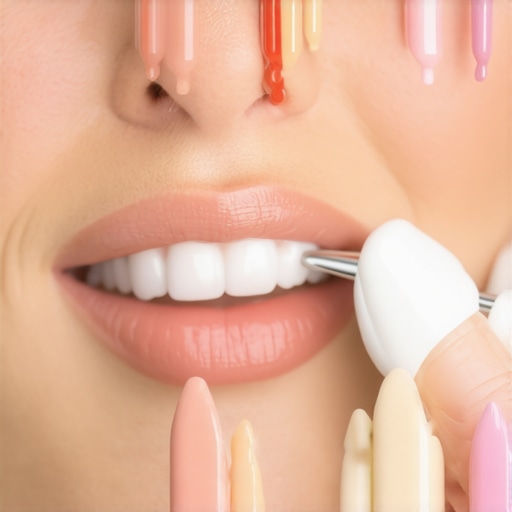
Veneers vs. Crowns: Pick the right armor for your teeth
The nuance many people miss is that a veneer is only as strong as the tooth behind it. If your tooth is already compromised or has large fillings, a crown provides a 360-degree ‘helmet’ of protection that a veneer simply cannot. To truly transform your smile with veneers, your dentist must first ensure your underlying bite and jaw health are ready for the load. Ignoring this step is the fastest way to turn a dream smile into a recurring dental bill.
I used to think that once the porcelain was bonded, the work was over, but I was wrong. The real challenge is keeping those margins—the tiny gap where your restoration meets your gum—absolutely pristine. Personally, I swear by a professional-grade water flosser with a specialized tip. If you have ever wondered about the benefit of using a water flosser with your braces, the same logic applies to veneers and implants; it flushes out biofilm from under the edges where a traditional toothbrush simply cannot reach. This prevents the dreaded ‘grey line’ from forming. I also never go to bed without my custom-fitted night guard. If you use one, you absolutely need to know how to clean your night guard without damaging the material to avoid bacterial buildup that could cause gum inflammation around your new work.
How do I maintain my new smile over the next decade?
Maintenance starts with diagnostic precision. I always ask my clinician if they are using advanced imaging during my check-ups. For instance, the reason your culpeper dentist uses cbct scans instead of regular x-rays is to get a three-dimensional view of how your implant is sitting in the bone, which is vital for spotting early signs of failure before they become painful. We are also entering an era where the future of dental implants-cutting edge techniques in cosmetic dentistry includes bioactive surfaces that actually encourage bone growth. I predict that by 2030, we will see ‘smart’ implants with sensors that can alert your smartphone if they detect chemical markers of early infection or bone loss.
If you want your family dentistry tips for a lifetime of healthy smiles to actually work, you have to treat your restorations like a luxury car—routine maintenance is not optional. According to the ISO 14801 technical standard for dynamic fatigue testing of endosseous dental implants, these components are designed for extreme durability, but they rely entirely on your biological health to remain stable. My top advice for you today? Grab a high-powered flashlight tonight and do a ‘margin check’ in the mirror. If you see any cloudiness or food traps around the base of your expertly placed veneers, do not wait for your six-month cleaning; call your office immediately for a professional scaling. Taking ten minutes once a week to inspect your own dental work is the single best way to ensure your investment lasts thirty years instead of five.
What Nobody Tells You About the First Six Months
One thing I learned the hard way is that your brain needs time to ‘adopt’ a new implant. For weeks, I found myself asking why your dental implant feels tight when you wake up, only to realize my jaw was just adjusting to the new structural reality. Also, remember that light is your best critic; the reason your veneers look different in sunlight isn’t because they are failing, but because high-quality porcelain mimics natural translucency. Lastly, don’t let a minor setback like a lisp discourage you—I had to research why your clear aligners are making you lisp even after a week just to remind myself that my tongue was simply learning new boundaries. Your patience is just as vital as the surgeon’s skill.
My Personal Survival Kit for a High-End Smile
To keep your investment pristine, I highly recommend three specific things. First, prioritize advanced imaging; the reason your culpeper dentist uses cbct scans instead of regular x-rays is to catch bone issues before they become visible on the surface. Second, grab a specialized cleaning kit; knowing how to clean your night guard without damaging the material will prevent chronic inflammation around your new work. Finally, if you’re mixing new work with old, understand how to pick the right shade for your new porcelain veneers to ensure a seamless blend that doesn’t look like an ‘afterthought’.
#IMAGE_PLACEHOLDER_E#
Your Future Smile is Worth the Precision
Stepping into the world of the future of dental implants can feel like a high-stakes gamble, but with the right monitoring and maintenance, it’s the most rewarding gift you can give yourself. You aren’t just buying teeth; you’re reclaiming your ability to laugh, eat, and speak without a second thought. Take it one day at a time, keep your flashlight handy, and trust the process. Have you ever felt a tiny shift in your mouth and panicked that something was wrong? Tell me about your experience in the comments below!