I spent months scrolling through before-and-after photos, dreaming of that perfect Hollywood glow. But the second I stepped out of the clinic and ran my tongue across my front teeth, I didn’t feel like a star; I felt like I had accidentally glued porcelain chiclets to my mouth. It was a visceral, panicky realization. I had invested so much in unlocking my best smile yet, only to find myself wondering if I’d made a massive mistake. My lips felt like they were struggling to close over these new additions, and my speech felt just a tiny bit ‘off.’ If you are sitting there right now, frantically googling why your new teeth feel like armor plating, take a deep breath. You aren’t losing your mind, and your dentist probably didn’t mess up. You’re just experiencing the reality of dental architecture.
Your Brain is Playing Tricks on Your Tongue
The human mouth is an incredible piece of engineering, but it is also a total drama queen when it comes to change. Our tongues are hypersensitive sensors, capable of detecting a difference as small as 0.1 millimeters—that is literally thinner than a single sheet of printer paper. When you work with a professional to transform your smile with veneers, you are introducing a foreign material into a space that has been exactly the same size for decades. Early in my dental journey, I made the classic mistake of opting for a ‘no-prep’ approach because I was terrified of losing my natural enamel. I didn’t realize that without proper contouring, the ceramic had nowhere to go but outward, which is a common reason why your veneers feel bulkier than your natural teeth. It takes time for your neural pathways to stop sending ’emergency’ signals to your brain every time you swallow.
Will I ever stop feeling them in my mouth?
It is the biggest fear every cosmetic patient has: the worry that this ‘heavy’ feeling is permanent. According to the Journal of the American Dental Association, the adaptation period for new dental restorations typically spans between two to six weeks. During this time, your brain undergoes a process called habituation, where it eventually decides that the new thickness is the ‘new normal’ and stops reporting it as a problem. I remember hitting day ten and suddenly realizing I hadn’t thought about my teeth for three whole hours. It was a massive relief. Have you ever had that ‘foreign object’ feeling after a dental visit and felt like it would never go away? We’re going to dig into how to tell the difference between a normal adjustment period and a genuine fit issue.
Check Your Bite Before You Panic
Before you call your dentist in a cold sweat, you need to perform a few self-checks to determine if your discomfort is mental or mechanical. The most critical factor is your occlusion—how your upper and lower teeth meet. When you close your mouth, do your back teeth touch simultaneously on both sides? If you feel one specific tooth hitting before the others, that is not something you can simply get used to; it is a clinical misalignment. I remember sitting on my couch on day three, clicking my teeth together like a rhythmic nutcracker. I realized my left canine was hitting just a fraction of a second before the rest. This tiny discrepancy made the entire set feel like a heavy, foreign shield. A quick trip back to the clinic for a thirty-second adjustment changed everything. If you are struggling with the overall proportions, you might be trying to how to fix a smile that feels too narrow or small, but over-correcting can lead to that ‘bulky’ sensation.
Run the Tongue Test for Rough Edges
Your tongue is the ultimate snitch. It will find every microscopic ledge or bit of dried cement. Sometimes, the reason why your porcelain veneers feel gritty to your tongue is simply leftover bonding resin that didn’t get polished off during the final step. This grit creates an illusion of thickness because your tongue is constantly snagging on it. Use your tongue to map out the edges of each veneer. If you feel a sharp ‘catch’ near the gumline or between the teeth, it is time for a professional polish. In the world of cosmetic dentistry secrets to boost your confidence, the final finishing is just as important as the placement itself. 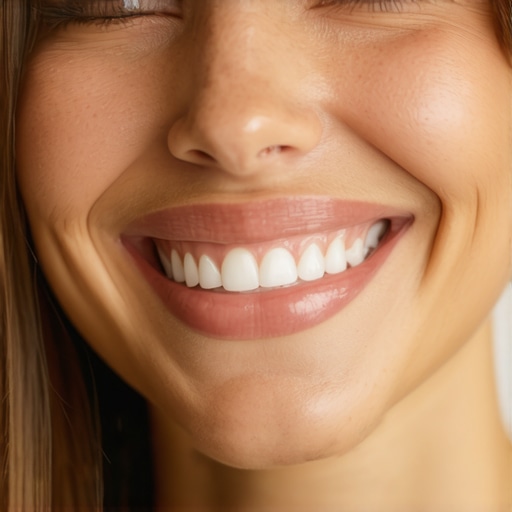
Retrain Your Lip Muscles
Your lips have spent your entire life resting against a specific tooth structure. When you change that structure, even by a millimeter, the muscles have to relearn their ‘resting’ position. Think of it like wearing a new pair of high-end leather boots; they are stiff at first and might even cause a bit of a literal ache until the material softens and molds to your movement. If you find yourself lisping on ‘S’ or ‘V’ sounds, it is because your lip is hitting the edge of the veneer sooner than it expects. To fix this, I spent a weekend reading out loud to my dog. It sounds ridiculous, but vocalizing complex sentences forces your facial muscles to calibrate to the new architecture of your mouth.
Evaluate the Light and Texture
You might notice that the reason your veneers look different in sunlight compared to bathroom lighting is due to the translucency of the ceramic. If they feel ‘thick’ visually, it might be an issue of opacity. When I first got mine, I was obsessed with the shade. I spent hours learning how to pick the right shade for your new porcelain veneers only to realize that the ‘feeling’ of the teeth is often tied to how they look in the mirror. If you believe they look like chiclets, your brain will interpret the sensation as bulk. Understanding the truth about the durability of composite vs porcelain veneers can also help you relax, knowing that porcelain is specifically designed to mimic the thinness of natural enamel while providing superior strength. If the sensation of ‘heaviness’ is accompanied by a dull throb, you should investigate why your gums throb when you lay down at night, as this could indicate minor inflammation from the procedure rather than a problem with the veneers themselves.
I spent months scrolling through before-and-after photos, dreaming of that perfect Hollywood glow. But the second I stepped out of the clinic and ran my tongue across my front teeth, I didn’t feel like a star; I felt like I had accidentally glued porcelain chiclets to my mouth. It was a visceral, panicky realization. I had invested so much in unlocking my best smile yet, only to find myself wondering if I’d made a massive mistake. My lips felt like they were struggling to close over these new additions, and my speech felt just a tiny bit ‘off.’ If you are sitting there right now, frantically googling why your new teeth feel like armor plating, take a deep breath. You aren’t losing your mind, and your dentist probably didn’t mess up. You’re just experiencing the reality of dental architecture.
Your Brain is Playing Tricks on Your Tongue
The human mouth is an incredible piece of engineering, but it is also a total drama queen when it comes to change. Our tongues are hypersensitive sensors, capable of detecting a difference as small as 0.1 millimeters—that is literally thinner than a single sheet of printer paper. When you work with a professional to transform your smile with veneers, you are introducing a foreign material into a space that has been exactly the same size for decades. Early in my dental journey, I made the classic mistake of opting for a ‘no-prep’ approach because I was terrified of losing my natural enamel. I didn’t realize that without proper contouring, the ceramic had nowhere to go but outward, which is a common reason why your veneers feel bulkier than your natural teeth. It takes time for your neural pathways to stop sending ’emergency’ signals to your brain every time you swallow.
Will I ever stop feeling them in my mouth?
It is the biggest fear every cosmetic patient has: the worry that this ‘heavy’ feeling is permanent. According to the Journal of the American Dental Association, the adaptation period for new dental restorations typically spans between two to six weeks. During this time, your brain undergoes a process called habituation, where it eventually decides that the new thickness is the ‘new normal’ and stops reporting it as a problem. I remember hitting day ten and suddenly realizing I hadn’t thought about my teeth for three whole hours. It was a massive relief. Have you ever had that ‘foreign object’ feeling after a dental visit and felt like it would never go away? We’re going to dig into how to tell the difference between a normal adjustment period and a genuine fit issue.
Check Your Bite Before You Panic
Before you call your dentist in a cold sweat, you need to perform a few self-checks to determine if your discomfort is mental or mechanical. The most critical factor is your occlusion—how your upper and lower teeth meet. When you close your mouth, do your back teeth touch simultaneously on both sides? If you feel one specific tooth hitting before the others, that is not something you can simply get used to; it is a clinical misalignment. I remember sitting on my couch on day three, clicking my teeth together like a rhythmic nutcracker. I realized my left canine was hitting just a fraction of a second before the rest. This tiny discrepancy made the entire set feel like a heavy, foreign shield. A quick trip back to the clinic for a thirty-second adjustment changed everything. If you are struggling with the overall proportions, you might be trying to how to fix a smile that feels too narrow or small, but over-correcting can lead to that ‘bulky’ sensation.
Run the Tongue Test for Rough Edges
Your tongue is the ultimate snitch. It will find every microscopic ledge or bit of dried cement. Sometimes, the reason why your porcelain veneers feel gritty to your tongue is simply leftover bonding resin that didn’t get polished off during the final step. This grit creates an illusion of thickness because your tongue is constantly snagging on it. Use your tongue to map out the edges of each veneer. If you feel a sharp ‘catch’ near the gumline or between the teeth, it is time for a professional polish. In the world of cosmetic dentistry secrets to boost your confidence, the final finishing is just as important as the placement itself.
Retrain Your Lip Muscles
Your lips have spent your entire life resting against a specific tooth structure. When you change that structure, even by a millimeter, the muscles have to relearn their ‘resting’ position. Think of it like wearing a new pair of high-end leather boots; they are stiff at first and might even cause a bit of a literal ache until the material softens and molds to your movement. If you find yourself lisping on ‘S’ or ‘V’ sounds, it is because your lip is hitting the edge of the veneer sooner than it expects. To fix this, I spent a weekend reading out loud to my dog. It sounds ridiculous, but vocalizing complex sentences forces your facial muscles to calibrate to the new architecture of your mouth.
Evaluate the Light and Texture
You might notice that the reason your veneers look different in sunlight compared to bathroom lighting is due to the translucency of the ceramic. If they feel ‘thick’ visually, it might be an issue of opacity. When I first got mine, I was obsessed with the shade. I spent hours learning how to pick the right shade for your new porcelain veneers only to realize that the ‘feeling’ of the teeth is often tied to how they look in the mirror. If you believe they look like chiclets, your brain will interpret the sensation as bulk. Understanding the truth about the durability of composite vs porcelain veneers can also help you relax, knowing that porcelain is specifically designed to mimic the thinness of natural enamel while providing superior strength. If the sensation of ‘heaviness’ is accompanied by a dull throb, you should investigate why your gums throb when you lay down at night, as this could indicate minor inflammation from the procedure rather than a problem with the veneers themselves. 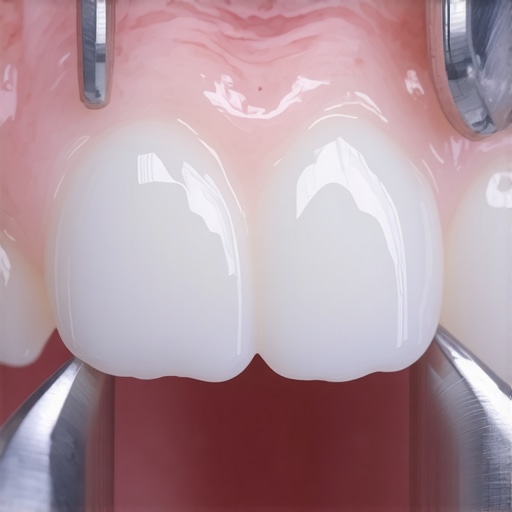
Why Perfect Symmetry Is the Fastest Way to a Fake Smile
The most common mistake people make—and I fell for it too—is demanding a symmetrical, ultra-white smile. We assume that straight, identical teeth represent the pinnacle of beauty. However, in the world of high-end cosmetic dentistry, we focus on biomimetic principles. A study published in the Journal of Esthetic and Restorative Dentistry suggests that natural smiles contain inherent irregularities. When you eliminate every tiny rotation or variation in edge translucency, you end up with the reason your porcelain veneers look opaque and fake. This lack of depth makes the teeth feel like a solid block of plastic in your mind, reinforcing that ‘heavy’ sensation. Real expertise involves adding micro-textures that reflect light just like natural enamel.
The Invisible Risk of Taking Too Much Enamel
There is a dangerous trap in the ‘prep’ phase. To avoid the teeth feeling bulky, some might be tempted to over-shave the natural tooth. However, bonding strength is highest when the veneer is attached to enamel, not the underlying dentin. If your dentist over-preps, you aren’t just risking why porcelain veneers sometimes cause sensitivity to cold drinks; you are compromising the longevity of the restoration. In more complex cases, you should evaluate veneers vs crowns which is right for your smile rather than forcing a veneer onto a tooth that requires more coverage. A crown might actually feel more natural because it balances the structural load differently. If you are ever unsure if a restoration is actually failing, knowing how to tell if your dental crown is loose or just sensitive can save you a lot of middle-of-the-night anxiety.
Can you ever go back to your original teeth after veneers?
This is the question that keeps patients up at night. For the vast majority of cases, the answer is no. Because the enamel is altered to create a flush fit, the process is permanent. This is why the precision of the initial design—and even using cutting-edge techniques in cosmetic dentistry for planning—is so vital. If you find yourself regretting the size or shape during the first week, don’t rush into a replacement. Your brain needs to finish its ‘software update’ first. Have you ever fallen into this trap where you second-guessed a major cosmetic change immediately? Let me know in the comments.
Once that initial feeling of ‘bulkiness’ finally fades and your brain accepts your new smile as part of your identity, the real work begins: preservation. I used to think that because porcelain doesn’t decay like natural enamel, I could slack off on my hygiene routine. I was wrong. A high-end smile is an investment that requires a specific maintenance protocol to prevent the underlying structures from failing. If you follow standard family dentistry tips for a lifetime of healthy smiles, you are off to a good start, but cosmetic work demands more precision.
Guard Your Porcelain Against the Midnight Grind
The number one killer of expensive veneers and crowns isn’t coffee or wine; it’s bruxism—the unconscious grinding of your teeth at night. According to technical documentation from Ivoclar Vivadent regarding their IPS e.max lithium disilicate materials, while these ceramics are incredibly strong (boasting a flexural strength of 500 MPa), they are still susceptible to fatigue failure if subjected to constant shearing forces. I learned the hard way that the connection between frequent headaches and grinding your teeth is often the first warning sign that you are putting your new teeth at risk. A custom-fitted night guard is your insurance policy. If you use one, make sure you know how to clean your night guard without damaging the material, as bacteria buildup can irritate the very gums that frame your beautiful new work.
How do I maintain my cosmetic dental work over time?
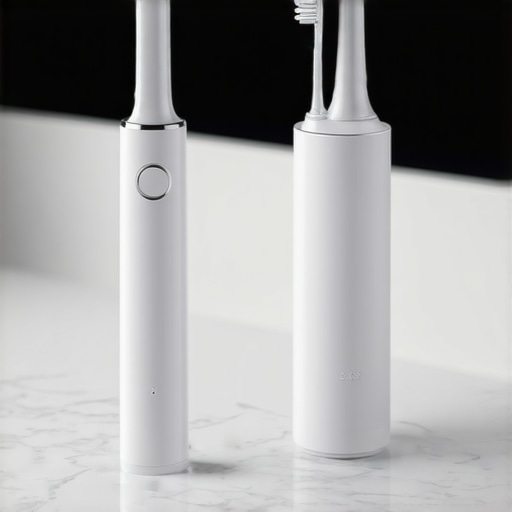
Maintenance is about protecting the ‘margin’—the tiny line where the veneer or crown meets your natural tooth. This is the only place where a cavity can still form. I recommend switching to a high-oscillation electric toothbrush, like the Oral-B iO series, which uses micro-vibrations to clean the gumline without the abrasive scrubbing that can lead to recession. You should also be looking toward the future of care; for instance, dental implants 2025 innovations that redefine comfort and durability suggest that we are moving toward bioactive materials that actually help integrate with your jawbone, making long-term maintenance even more successful.
Why Your Water Flosser Is Not Optional Anymore
Traditional string floss is great, but when you have multiple units of veneers or a bridge, it is easy to miss the microscopic gaps. I personally swear by the Waterpik Aquarius. The pressurized stream flushes out the ‘biofilm’ that builds up at the margins of your restorations. While many people discuss the benefit of using a water flosser with your braces, the same logic applies to cosmetic dentistry: it reaches where manual tools cannot. I predict that within the next five years, we will see ‘smart’ water flossers that use AI to map your mouth and ensure 100% coverage of your dental work. For now, my best advice is this: If you haven’t had your bite checked since your final placement, call your clinic today and ask for a ‘T-Scan’ or a digital occlusion check. It is the single best way to ensure your investment lasts for twenty years instead of five.
I spent months scrolling through before-and-after photos, dreaming of that perfect Hollywood glow. But the second I stepped out of the clinic and ran my tongue across my front teeth, I didn’t feel like a star; I felt like I had accidentally glued porcelain chiclets to my mouth. It was a visceral, panicky realization. I had invested so much in unlocking my best smile yet, only to find myself wondering if I’d made a massive mistake. My lips felt like they were struggling to close over these new additions, and my speech felt just a tiny bit ‘off.’ If you are sitting there right now, frantically googling why your new teeth feel like armor plating, take a deep breath. You aren’t losing your mind, and your dentist probably didn’t mess up. You’re just experiencing the reality of dental architecture.
Your Brain is Playing Tricks on Your Tongue
The human mouth is an incredible piece of engineering, but it is also a total drama queen when it comes to change. Our tongues are hypersensitive sensors, capable of detecting a difference as small as 0.1 millimeters—that is literally thinner than a single sheet of printer paper. When you work with a professional to transform your smile with veneers, you are introducing a foreign material into a space that has been exactly the same size for decades. Early in my dental journey, I made the classic mistake of opting for a ‘no-prep’ approach because I was terrified of losing my natural enamel. I didn’t realize that without proper contouring, the ceramic had nowhere to go but outward, which is a common reason why your veneers feel bulkier than your natural teeth. It takes time for your neural pathways to stop sending ’emergency’ signals to your brain every time you swallow.
Will I ever stop feeling them in my mouth?
It is the biggest fear every cosmetic patient has: the worry that this ‘heavy’ feeling is permanent. According to the Journal of the American Dental Association, the adaptation period for new dental restorations typically spans between two to six weeks. During this time, your brain undergoes a process called habituation, where it eventually decides that the new thickness is the ‘new normal’ and stops reporting it as a problem. I remember hitting day ten and suddenly realizing I hadn’t thought about my teeth for three whole hours. It was a massive relief. Have you ever had that ‘foreign object’ feeling after a dental visit and felt like it would never go away? We’re going to dig into how to tell the difference between a normal adjustment period and a genuine fit issue.
Check Your Bite Before You Panic
Before you call your dentist in a cold sweat, you need to perform a few self-checks to determine if your discomfort is mental or mechanical. The most critical factor is your occlusion—how your upper and lower teeth meet. When you close your mouth, do your back teeth touch simultaneously on both sides? If you feel one specific tooth hitting before the others, that is not something you can simply get used to; it is a clinical misalignment. I remember sitting on my couch on day three, clicking my teeth together like a rhythmic nutcracker. I realized my left canine was hitting just a fraction of a second before the rest. This tiny discrepancy made the entire set feel like a heavy, foreign shield. A quick trip back to the clinic for a thirty-second adjustment changed everything. If you are struggling with the overall proportions, you might be trying to how to fix a smile that feels too narrow or small, but over-correcting can lead to that ‘bulky’ sensation.
Run the Tongue Test for Rough Edges
Your tongue is the ultimate snitch. It will find every microscopic ledge or bit of dried cement. Sometimes, the reason why your porcelain veneers feel gritty to your tongue is simply leftover bonding resin that didn’t get polished off during the final step. This grit creates an illusion of thickness because your tongue is constantly snagging on it. Use your tongue to map out the edges of each veneer. If you feel a sharp ‘catch’ near the gumline or between the teeth, it is time for a professional polish. In the world of cosmetic dentistry secrets to boost your confidence, the final finishing is just as important as the placement itself.
Retrain Your Lip Muscles
Your lips have spent your entire life resting against a specific tooth structure. When you change that structure, even by a millimeter, the muscles have to relearn their ‘resting’ position. Think of it like wearing a new pair of high-end leather boots; they are stiff at first and might even cause a bit of a literal ache until the material softens and molds to your movement. If you find yourself lisping on ‘S’ or ‘V’ sounds, it is because your lip is hitting the edge of the veneer sooner than it expects. To fix this, I spent a weekend reading out loud to my dog. It sounds ridiculous, but vocalizing complex sentences forces your facial muscles to calibrate to the new architecture of your mouth.
Evaluate the Light and Texture
You might notice that the reason your veneers look different in sunlight compared to bathroom lighting is due to the translucency of the ceramic. If they feel ‘thick’ visually, it might be an issue of opacity. When I first got mine, I was obsessed with the shade. I spent hours learning how to pick the right shade for your new porcelain veneers only to realize that the ‘feeling’ of the teeth is often tied to how they look in the mirror. If you believe they look like chiclets, your brain will interpret the sensation as bulk. Understanding the truth about the durability of composite vs porcelain veneers can also help you relax, knowing that porcelain is specifically designed to mimic the thinness of natural enamel while providing superior strength. If the sensation of ‘heaviness’ is accompanied by a dull throb, you should investigate why your gums throb when you lay down at night, as this could indicate minor inflammation from the procedure rather than a problem with the veneers themselves.
Why Perfect Symmetry Is the Fastest Way to a Fake Smile
The most common mistake people make—and I fell for it too—is demanding a symmetrical, ultra-white smile. We assume that straight, identical teeth represent the pinnacle of beauty. However, in the world of high-end cosmetic dentistry, we focus on biomimetic principles. A study published in the Journal of Esthetic and Restorative Dentistry suggests that natural smiles contain inherent irregularities. When you eliminate every tiny rotation or variation in edge translucency, you end up with the reason your porcelain veneers look opaque and fake. This lack of depth makes the teeth feel like a solid block of plastic in your mind, reinforcing that ‘heavy’ sensation. Real expertise involves adding micro-textures that reflect light just like natural enamel.
The Invisible Risk of Taking Too Much Enamel
There is a dangerous trap in the ‘prep’ phase. To avoid the teeth feeling bulky, some might be tempted to over-shave the natural tooth. However, bonding strength is highest when the veneer is attached to enamel, not the underlying dentin. If your dentist over-preps, you aren’t just risking why porcelain veneers sometimes cause sensitivity to cold drinks; you are compromising the longevity of the restoration. In more complex cases, you should evaluate veneers vs crowns which is right for your smile rather than forcing a veneer onto a tooth that requires more coverage. A crown might actually feel more natural because it balances the structural load differently. If you are ever unsure if a restoration is actually failing, knowing how to tell if your dental crown is loose or just sensitive can save you a lot of middle-of-the-night anxiety.
Can you ever go back to your original teeth after veneers?
This is the question that keeps patients up at night. For the vast majority of cases, the answer is no. Because the enamel is altered to create a flush fit, the process is permanent. This is why the precision of the initial design—and even using cutting-edge techniques in cosmetic dentistry for planning—is so vital. If you find yourself regretting the size or shape during the first week, don’t rush into a replacement. Your brain needs to finish its ‘software update’ first. Have you ever fallen into this trap where you second-guessed a major cosmetic change immediately? Let me know in the comments.
Once that initial feeling of ‘bulkiness’ finally fades and your brain accepts your new smile as part of your identity, the real work begins: preservation. I used to think that because porcelain doesn’t decay like natural enamel, I could slack off on my hygiene routine. I was wrong. A high-end smile is an investment that requires a specific maintenance protocol to prevent the underlying structures from failing. If you follow standard family dentistry tips for a lifetime of healthy smiles, you are off to a good start, but cosmetic work demands more precision.
Guard Your Porcelain Against the Midnight Grind
The number one killer of expensive veneers and crowns isn’t coffee or wine; it’s bruxism—the unconscious grinding of your teeth at night. According to technical documentation from Ivoclar Vivadent regarding their IPS e.max lithium disilicate materials, while these ceramics are incredibly strong (boasting a flexural strength of 500 MPa), they are still susceptible to fatigue failure if subjected to constant shearing forces. I learned the hard way that the connection between frequent headaches and grinding your teeth is often the first warning sign that you are putting your new teeth at risk. A custom-fitted night guard is your insurance policy. If you use one, make sure you know how to clean your night guard without damaging the material, as bacteria buildup can irritate the very gums that frame your beautiful new work.
How do I maintain my cosmetic dental work over time?
Maintenance is about protecting the ‘margin’—the tiny line where the veneer or crown meets your natural tooth. This is the only place where a cavity can still form. I recommend switching to a high-oscillation electric toothbrush, like the Oral-B iO series, which uses micro-vibrations to clean the gumline without the abrasive scrubbing that can lead to recession. You should also be looking toward the future of care; for instance, dental implants 2025 innovations that redefine comfort and durability suggest that we are moving toward bioactive materials that actually help integrate with your jawbone, making long-term maintenance even more successful.
Why Your Water Flosser Is Not Optional Anymore
Traditional string floss is great, but when you have multiple units of veneers or a bridge, it is easy to miss the microscopic gaps. I personally swear by the Waterpik Aquarius. The pressurized stream flushes out the ‘biofilm’ that builds up at the margins of your restorations. While many people discuss the benefit of using a water flosser with your braces, the same logic applies to cosmetic dentistry: it reaches where manual tools cannot. I predict that within the next five years, we will see ‘smart’ water flossers that use AI to map your mouth and ensure 100% coverage of your dental work. For now, my best advice is this: If you haven’t had your bite checked since your final placement, call your clinic today and ask for a ‘T-Scan’ or a digital occlusion check. It is the single best way to ensure your investment lasts for twenty years instead of five.
#IMAGE_PLACEHOLDER_E#
The Hard Lessons I Learned While Adjusting to My New Smile
Looking back at my own transformation, there are a few things I wish someone had whispered to me while I was still in the dental chair. First, the ‘bulk’ is often a phantom sensation; your lips are simply relearning their borders. Second, don’t judge your results in a magnifying mirror at 2 AM—the light is never right. Finally, if you chose veneers vs crowns choosing the best option for your smile correctly with your doctor, the fit is likely perfect, even if your brain is screaming otherwise. I also learned that the first week is about patience, not perfection. If you find yourself accidentally biting your lip because the edges feel unfamiliar, knowing how to treat a cut on your tongue or cheek can save you from a lot of unnecessary soreness during the transition.
Tools That Made My Post-Veneer Life Much Easier
I didn’t realize how much the right equipment would change my confidence level. I recommend these specific items for anyone who just invested in their smile: A Digital Bite Analysis (ask your dentist for a T-Scan to catch tiny misalignments), Non-Abrasive Polishing Paste (professional-grade is best for porcelain), and a trusted professional to talk to. If something truly feels sharp or misplaced, just contact us for a quick check-up. Peace of mind is worth more than a week of worry.
Believe in the Power of Your New Smile
The journey to a perfect smile isn’t just about what happens in the clinic; it’s about the emotional shift that happens when you finally stop hiding. That heavy, bulky feeling is just the weight of change. Once it lifts—and I promise it will—you’ll find that you’re not just smiling more, you’re living more. This is about unlocking your best smile yet and stepping into a version of yourself that radiates confidence. Don’t let a few days of ‘weirdness’ steal the joy of your transformation. Have you felt that strange ‘foreign object’ sensation after your dental work, or did you adapt right away? Let me know your experience in the comments below!