I’ll never forget the first time I stepped out of the dental office and into a bright, cloudless July afternoon. I had just finished my veneers transformation and felt like a Hollywood star—until I caught my reflection in a shop window. Under the harsh glare of the sun, my teeth didn’t look like the pearly whites I’d seen in the office mirror. They looked eerily flat, almost like they were glowing with a strange, bluish tint. I panicked. Had I just spent thousands of dollars to look like I was wearing a cheap mouthguard?
Why Sunlight Exposes the Secrets of Your Smile
It’s a heart-sinking moment when you realize your perfect teeth look different depending on whether you’re in a dimly lit restaurant or at a backyard barbecue. The truth is, achieving perfect results with veneers isn’t just about the shade of white you pick; it’s about how that material handles light. Natural teeth are incredibly complex. They aren’t just solid white blocks; they are translucent, meaning light doesn’t just bounce off the surface—it travels into the tooth. When I first started my journey with cosmetic dentistry secrets, I made the classic rookie mistake of choosing the brightest, most opaque option available. I thought whiter is better, but that’s actually the mistake that makes your teeth look too white and fake. I didn’t account for the fact that natural enamel has a property called opalescence. According to research published in the Journal of Dentistry, natural human enamel exhibits a unique light-scattering effect that can change its perceived color and depth based on the light source—something many basic porcelain materials fail to mimic perfectly.
Are my veneers supposed to look this fake?
You might be sitting there, looking in the mirror and wondering if you’ve been sold a lie. You aren’t crazy, and your dentist probably isn’t bad. The issue usually lies in metamerism—a fancy word for when colors look identical under one light source but completely different under another. If your veneers lack the proper depth and translucency, the sun will reveal every bit of that artificiality. Have you ever noticed your teeth looking off the moment you step outside? I’d love to hear if you’ve had that same grocery store window realization that I did. Today, we’re going to break down exactly why this happens and what you can do to ensure your smile looks natural from sunrise to sunset. We will also look at why some people find that porcelain veneers sometimes cause sensitivity in these high-light environments when you’re out enjoying a cold drink. It’s time to stop hiding your smile when the sun comes out.
Force Your Dentist to Step Outside the Office
To fix the “glowing” problem, you have to break the rules of the dental chair. Most offices use cool-toned LED overhead lights. These are great for seeing cavities, but they are the enemy of color matching. I learned this the hard way during my second attempt at a smile makeover. Before we bonded anything permanently, I asked for a “try-in” paste. I grabbed a mirror, walked right past the receptionist, and stood in the direct afternoon sun in the parking lot. It felt ridiculous, but it was the only way to see if the teeth looked like chiclets or actual bone. If you don’t do this, you’re essentially buying a car without ever seeing it outside the showroom floor. The sun reveals depths that office lights hide, so if your dentist refuses to let you see the trial smile in natural light, that’s a major red flag.
The Translucency Trick That Mimics Real Enamel
You need to talk to your dentist about the difference between opacity and translucency. Think of your natural tooth like a piece of frosted glass, while many cheap veneers are like a sheet of white paper. Light should be able to sink into the tooth and scatter, not just hit a wall and bounce back. This is where transforming your smile with veneers becomes an art form. If the material is too dense, you get that flat, “denture” look that screams “cosmetic surgery” from a mile away. Ask for high-translucency porcelain, specifically layered feldspathic porcelain if your tooth structure allows it. This material allows the natural color of your underlying teeth to play a role in the final look, creating a “live” appearance rather than a sterile one. 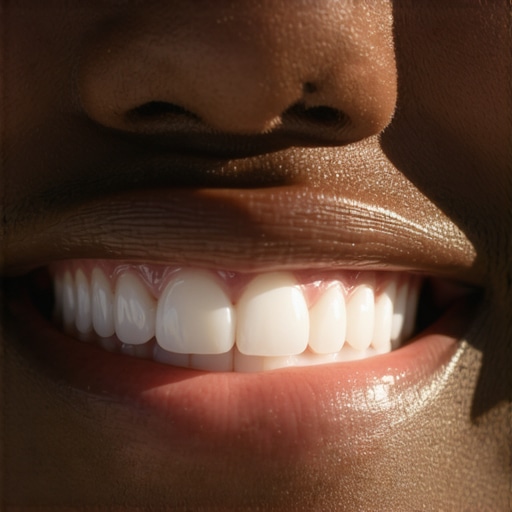
Why You Might Need a Crown Instead of a Veneer
Sometimes the sun exposes your veneers because the underlying tooth is too dark, causing the dentist to use a thicker, more opaque porcelain to hide the stain. This is often the mistake that makes your teeth look too white and fake because the thickness kills the natural light play. In these cases, you should compare veneers vs crowns. A crown allows for more 360-degree depth and can sometimes hide a dark stump better while still allowing the edges to remain translucent. If your current veneers feel bulkier than your old teeth, it’s a sign they were forced to be too thick to mask the shade underneath. A thinner crown can often achieve a more harmonious integration with your gum line and light reflection.
The Secret Language of the Master Ceramist
Your dentist doesn’t actually make your teeth; a lab technician does. To get that sunlight-ready look, you need a master ceramist who understands “incisal characterization.” This is the fancy way of saying the edges of your teeth should be slightly clear, just like a real tooth. If you notice the reason your porcelain veneer feels rough on the back or look too “squared off” at the bottom, they haven’t been finished with the detail required to fool the sun. Your dentist needs to take a “stump shade”—the color of your tooth after it’s been prepped—and send that to the lab. Without that data, the technician is essentially painting in the dark. Demand to see photos of the lab’s previous work in outdoor settings, not just “before and after” shots taken with a heavy flash.Most people tell their dentist they want a perfectly symmetrical smile because it sounds like the gold standard of beauty. But in my experience, the secret to cosmetic dentistry secrets that actually fool people in the real world is embracing subtle asymmetry. Nature is rarely perfectly balanced. If your left central incisor is a micro-millimeter different from your right, it actually looks more organic. Research from the International Journal of Esthetic Dentistry suggests that “controlled disharmony” is often more attractive to the human eye than mathematical perfection because it removes the robotic feel of many restorations.
Stop Chasing the Mirror-Image Myth
When you see a smile that looks too good to be true, it’s usually because it lacks the tiny imperfections that signify life. If you are going through a veneers transformation, ask your ceramist to vary the heights of the gingival margins slightly. This prevents the teeth from looking like a single, solid block of white plastic. Another common trap is ignoring the “black triangle”—those small gaps that appear near the gum line as we age. Many patients try to close these by making the veneers extra wide at the top, which results in a “shovel-head” look that is a dead giveaway for artificial work. 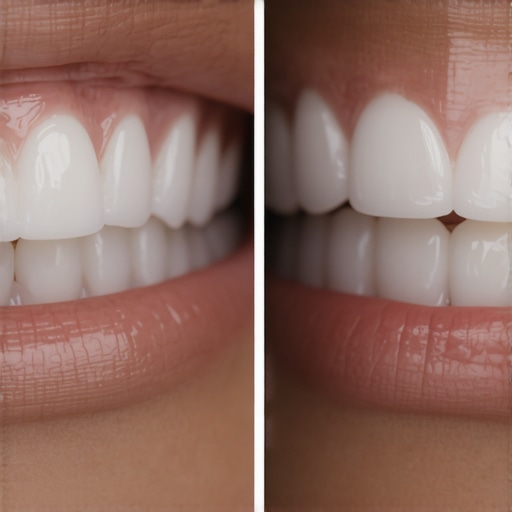
The Bone Loss Barrier is Often a Myth
Let’s talk about the transition from surface-level cosmetics to structural changes like implants. I see a lot of people panic when they hear they need a bone graft, thinking it’s a failure of their biology or an unnecessary upsell. In reality, the reason your dental implant surgery requires a bone graft is often about aesthetics just as much as stability. Without sufficient bone volume, the gum tissue sinks, creating a dark shadow at the top of the tooth. This is often the reason your teeth look grey instead of yellow or white in the sun—it isn’t the material of the tooth, but the shadow cast by the receding tissue.
Will my existing bone loss disqualify me from the latest implant tech?
Many believe that if they’ve had a missing tooth for years, they’ve missed the boat on a high-end smile. The truth about getting dental implants if you have existing bone loss is that modern techniques, like those seen in how dental implants reshape your oral health in 2025, allow for zygomatic implants and specialized grafting that can rebuild almost any smile. Have you ever fallen into this trap of thinking you’re just not a candidate for a better smile? Let me know in the comments. Whether you are looking at veneers vs crowns or full structural replacements, the goal is always to mimic the complexity of what nature intended.Once you’ve achieved that natural look, the real challenge begins: keeping it. I used to think that because porcelain doesn’t decay like a real tooth, I could slack off on my routine. Huge mistake. Porcelain is strong, but the interface where the veneer meets your natural tooth is the front line of defense against bacteria. If you want a veneers transformation to last fifteen years instead of five, you have to treat it like high-performance machinery.
How do I keep my new smile working for the long haul?
The biggest threat isn’t coffee or wine—it’s pressure. Most of us carry stress in our faces, and I quickly realized that I needed to learn how to stop clenching your jaw during the workday because micro-fractures in porcelain are almost impossible to repair. I personally swear by a custom-fit occlusal guard. Don’t buy the boil-and-bite versions from the drugstore; they are too bulky and can actually shift your bite. A laboratory-fabricated guard is slim and protects those expensive edges while you sleep. Just make sure you know how to clean your night guard without damaging the material, as bacteria buildup on the plastic can transfer right back to your gums.
Ditch the Manual Floss for an Oral Irrigator
When it comes to implants, the game changes. You aren’t just worried about cavities; you’re worried about peri-implantitis—an inflammatory disease that can lead to bone loss around the implant. While I love traditional floss for natural teeth, I’ve found that a high-quality water flosser is non-negotiable for anyone with restorative work. It flushes out the ‘bio-burden’ in the tiny gaps that a string simply cannot reach. This is a core part of family dentistry tips for a lifetime of healthy smiles. According to a study published in the Journal of Clinical Periodontology, subgingival air-polishing with glycine powder—a tool many modern hygienists use—is significantly more effective at removing biofilm from implant surfaces than traditional metal curettes, which can actually scratch the delicate abutment. 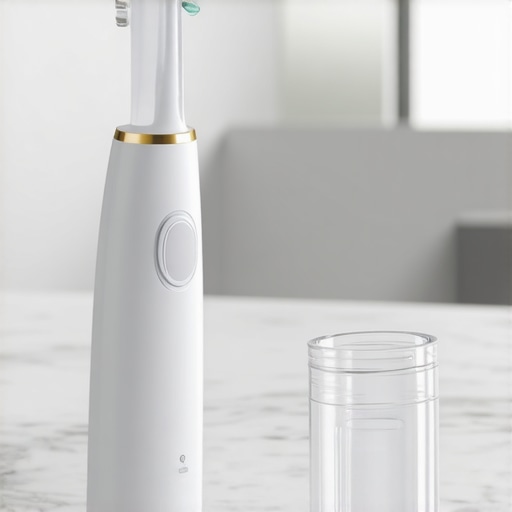
The Future of Your Smile is Digital and Preventive
Looking ahead, the world of dental implants 2025: innovations that redefine comfort suggests we will soon see smart-implants that can monitor pH levels in the mouth to alert you to infection before you even feel pain. Until then, you need to be your own advocate. I recommend using a non-abrasive, low-RDA (Relative Dentin Abrasivity) toothpaste. Many whitening pastes are essentially liquid sandpaper and will dull the polish of your veneers over time, making them more prone to picking up stains. If you’re a caffeine addict like me, check out how to maintain your white smile after a coffee habit without scrubbing away your expensive porcelain. My top tip: Try using a pH-neutralizing mouth rinse after every meal to keep the oral environment stable. This simple habit prevents the acid erosion that often leads to the gum recession that exposes the edges of your restorations.
The Hard Lessons That Saved My Smile From Looking Like Plastic
I’ve spent years navigating the world of high-end dentistry, and if there is one thing I wish I’d known earlier, it’s that the best teeth are the ones nobody notices. My “aha” moment came when I realized that a veneers transformation isn’t a one-day event; it’s a collaborative art project. First, never settle for a shade that looks good in a dark room—if it doesn’t pass the “natural light test” in the parking lot, it is likely too opaque for real-world wear. Second, your gums are the frame for your dental “artwork.” If you don’t prioritize periodontal health, even the most expensive porcelain will look out of place as the tissue recedes. Finally, always ask about the lab technician’s specific experience with cutting-edge techniques in cosmetic dentistry to ensure they can handle complex light-scattering effects that mimic human bone rather than acrylic.
The Daily Essentials That Protect Your Porcelain Investment
You’ve invested time and money into your look, so don’t let basic maintenance fail you. I personally rely on a few specific tools to keep everything pristine. I always recommend a high-quality water flosser; it’s the only way to truly reach the margins of your restorations without causing micro-trauma to the gum line. For those looking into more permanent structural fixes, knowing if you are a candidate for immediate load implants can save you months of waiting, provided you have the right home-care toolkit ready to prevent infection. I also suggest keeping a low-abrasive toothpaste on hand—anything with a high RDA score will eventually strip the factory polish off your teeth, making them look dull. If you are ever unsure about a specific product, it’s best to contact us or your local specialist to verify it won’t damage the bonding agent. #IMAGE_PLACEHOLDER_E#
Step Into the Sun With Certainty
The journey to a perfect smile can feel overwhelming, but remember that you are the CEO of your own oral health. Whether you are weighing the best option for your smile or simply trying to maintain what you have, the power is in the details. Don’t be afraid to ask the “annoying” questions or demand a second look under the sun before the final cement is applied. Your confidence is worth the extra effort. A successful veneers transformation is about more than just aesthetics; it’s about the freedom to laugh, eat, and speak without a second thought. Have you ever felt like your dental work looked completely different in a grocery store mirror than it did in the dentist’s chair? Let me know your experience in the comments below!