I’ll never forget the Tuesday morning I leaned into my bathroom mirror and realized something was deeply wrong. I wasn’t just imagining it; my upper left canine looked significantly longer than its neighbor. While the rest of my smile looked perfectly fine, that one tooth was exposing a yellowish, sensitive root that felt like a neon sign for oral neglect. I panicked, assuming I needed full-blown cosmetic dentistry or that I was somehow falling apart at thirty. It turns out, localized recession is way more common than I thought, and usually, it’s a signal your mouth is trying to send you about a very specific habit or anatomical quirk. Today, we’re going to figure out exactly why that one spot is giving you trouble and how you can stop the retreat before it turns into a permanent gap in your smile.
That Panic Moment When Your Tooth Looks Longer Than the Rest
When I first noticed my gum line pulling back, I did what everyone does: I started scrubbing that spot even harder. I thought I could clean my way out of the problem. That was my first big mistake. It turns out, I was actually accelerating the damage. Whether you are worried about how it looks or you’re feeling a sharp zing every time you sip cold water, focusing on a single tooth is actually a bit of a detective mission. We need to look at everything from your bite alignment to how you hold your toothbrush. Many people think gum issues only happen if you skip the dentist for years, but even those of us who are diligent about family dentistry tips for a lifetime of healthy smiles can run into this. It’s often not about dirty teeth; it’s about mechanical stress. Have you ever looked in the mirror and felt like one tooth was just… different? Tell me in the comments, because I felt like I was the only one.
Is gum recession actually reversible or just a marketing myth?
Here is the cold, hard truth that I had to learn the hard way: gum tissue doesn’t just grow back like a scraped knee. According to the American Academy of Periodontology, once that tissue is gone, it’s usually gone for good without surgical intervention. This is why catching the cause—right now—is so critical. I used to think I could just use a special toothpaste and regrow my gums. I was wrong. But while you can’t always grow it back, you can absolutely stop it from getting worse and, in some cases, use veneers to unlock your best smile yet if the aesthetic change bothers you.
Stop Blaming Your Age for That One Receding Spot
The most likely culprit isn’t just getting older. It’s often how you’re physically treating that specific area. For me, it was a scrubbing habit. I’m right-handed, and I was unknowingly putting way more pressure on that left canine than any other tooth. You might need to learn how to tell if your gum recession is caused by brushing too hard before you do more damage. Other times, it’s a single tooth that’s slightly out of alignment, taking the brunt of the force every time you chew. If you’ve ever wondered why your gums are receding only on your bottom teeth or a specific top tooth, it usually comes down to trauma—either from your brush or your bite. Setting the stage for a fix starts with identifying if your bite is the bully in this scenario.
Check Your Grip Before You Lose More Tissue
The first thing I did after my bathroom mirror epiphany was buy the stiffest toothbrush I could find. I thought I needed to ‘scrub away’ the recession. It was like trying to fix a scratch on car paint with a wire brush. If you notice a single tooth retreating, look at how you hold your brush. Most of us use a ‘clenched fist’ grip that applies several pounds of pressure—way more than the delicate gum tissue can handle. Think of your gums like a silk scarf; you wouldn’t use a heavy-duty scrub brush on it. I eventually learned that light, circular motions are the only way to go. If your brush looks like a frazzled explosion after a month, you are pressing too hard. You might even notice that your gums bleed every time you try a new electric toothbrush because you’re still applying that old manual-pressure habit to a tool that’s designed to do the work for you. 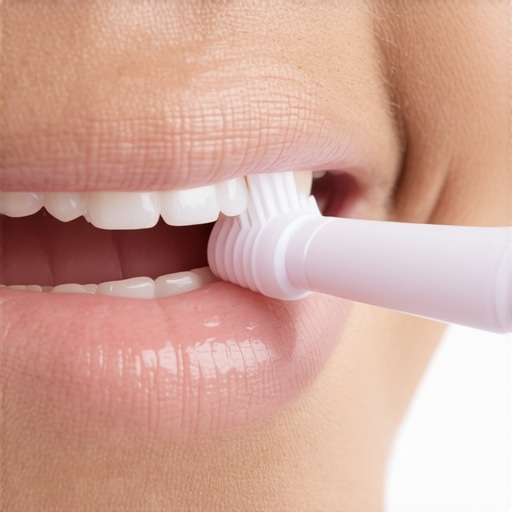
Identify if Your Bite is the Silent Bully
Sometimes the problem isn’t your brush; it’s physics. When I finally sat in the dentist’s chair, they had me bite down on a piece of blue carbon paper. It turned out my upper left canine was hitting its bottom neighbor just a millisecond before the rest of my teeth. This ‘premature contact’ acts like a jackhammer on the tooth’s support system. Over time, the bone retreats to get away from the stress, and the gum follows. If you find yourself needing to learn how to stop clenching your jaw during the workday, you might be amplifying this localized trauma without realizing it. A tooth under constant ‘occlusal’ stress is like a fence post being wiggled back and forth; eventually, the ground around it (your gums) starts to give way.
Choose the Right Fix for Your Specific Damage
If the recession has moved past the point of simple prevention and you’re staring at a gap or a very yellow root, you have to weigh your restorative options. For some, the damage is purely cosmetic. I initially looked into veneers vs crowns choosing the best option for your smile because I wanted that uniform look back. Veneers can act like a prosthetic mask for the tooth, covering the exposed root and bringing the ‘gum line’ visually back into alignment. However, if the recession is a symptom of a deeper issue—like a tooth that’s structurally failing due to long-term neglect or trauma—you might need to look at how dental implants reshape your oral health in 2025. Implants are the ‘gold standard’ for when a tooth can no longer be saved, but for most localized recession, you can often fix a small gap between teeth without using braces by using composite bonding or minor gum grafting. The goal is to stabilize the area before you lose the tooth entirely. I spent months worrying about it, but the fix was actually much faster than the time I spent panicked in front of the mirror.I used to think that as long as my teeth were white, they were healthy. That’s the first ‘oops’ factor I fell for, and it’s a trap that many of us in the dental world call ‘the cosmetic camouflage.’ We get so focused on the shade of our teeth that we ignore the foundation. Most people assume that if their smile looks bright, the gums must be fine, but I’ve seen perfectly white teeth literally falling out because the structural support was ignored. If you are noticing that one tooth is retreating, the biggest mistake you can make is the ‘wait and see’ approach. I’ve learned that the danger of wait and see for a loose dental bridge or a receding gum line is that by the time it actually hurts, you’ve likely lost a significant amount of bone.
Don’t Fall for the ‘Wait and See’ Trap
Most people believe gum recession is a slow, steady process that gives you years of warning. In my experience, it’s more like a cliff—everything looks fine until you hit a tipping point where the tooth suddenly feels loose. If you’re looking at how dental implants reshape your oral health in 2025, you’re already thinking ahead, but the goal is always to save the natural tooth first. A common myth is that recession is always caused by poor hygiene. However, a meta-analysis published in the Journal of Clinical Periodontology highlights that ‘thin gingival biotypes’—basically having naturally thin gum tissue—are significantly more prone to recession regardless of how well you brush. This means your genetics might have given you a smaller margin for error than your neighbor.
Why Your Genetics Might Be the Real Culprit
When I finally stopped blaming my toothbrush and looked at the anatomy, everything clicked. Sometimes, the root of the problem is hidden beneath the surface. This is why the reason your culpeper dentist uses cbct scans instead of regular x-rays is so critical; it’s the only way to see the actual thickness of the bone supporting that one specific tooth. If you try to fix a recession problem with just a cosmetic cover-up, you might end up with the mistake that makes your teeth look too white and fake without actually addressing the bone loss underneath. 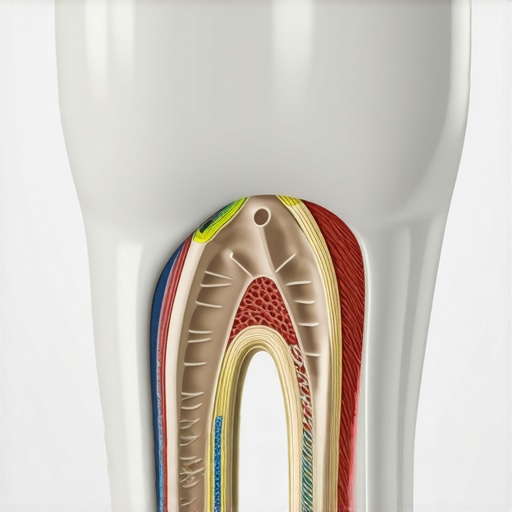
Can you really get an implant if your jaw bone has already started to shrink?
This is the advanced question I get most often. The short answer is yes, but it’s not as simple as a ‘plug and play’ procedure. You need to understand the truth about getting dental implants if you have existing bone loss. Modern techniques like bone grafting and sinus lifts have changed the game, but they require a level of precision that standard x-rays just can’t provide. Even after a successful implant, things can feel different. For instance, some patients are surprised by why your dental implant is sensitive to heat but not cold, which is a nuance of how the metal post conducts temperature differently than a natural root. Have you ever fallen into the trap of ignoring a ‘minor’ dental change only to have it turn into a bigger issue? Let me know in the comments.
Ditch the Manual Brush Before You Do More Damage
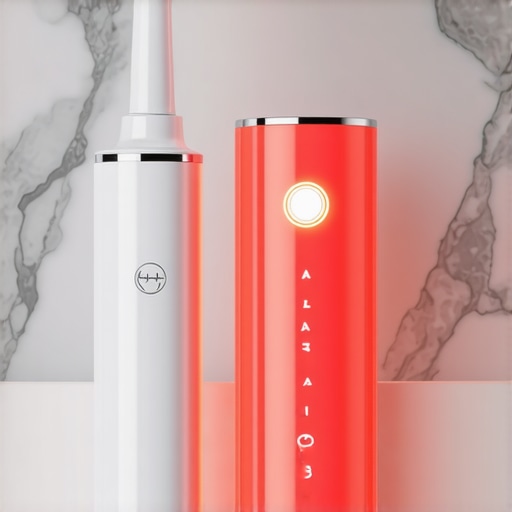
Once I realized my localized recession was a mechanical issue, I didn’t just need to brush better—I needed better tech. I transitioned to a brush with a built-in pressure sensor. Specifically, I look for models that use a visible light indicator. When you press too hard, the brush glows red. It’s a simple biofeedback loop that retrains your brain. If you’ve struggled with why your gums bleed every time you try a new electric toothbrush, it’s usually because you haven’t let the tool do the work. According to clinical reports from the Cochrane Library, powered toothbrushes—especially those with oscillating-rotating technology—reduce plaque and gingivitis more effectively than manual brushing in both the short and long term.
The One Tool That Saves Your Veneers from Failing
If you’ve invested in veneers to unlock your best smile yet, your biggest enemy isn’t sugar; it’s the junction where the porcelain meets your natural tooth. Traditional floss can sometimes feel like it’s ‘catching’ on the edge of a veneer. I personally switched to a high-pressure water flosser. It flushes out the ‘pocket’ without the mechanical tugging that can irritate sensitive margins. This is especially vital if you’re deciding between veneers vs crowns which is right for your smile, as both restorations require pristine gum health to last the promised fifteen to twenty years.
How do I keep my dental work looking brand new for decades?
Maintenance isn’t just about cleaning; it’s about protection. If you’re a night-time grinder, that localized recession we talked about will return, even after a gum graft. I wear a custom-fitted night guard every single night. It’s a non-negotiable insurance policy for your teeth. You have to learn how to clean your night guard without damaging the material, or you’ll just be reintroducing bacteria to your mouth every evening. I use a dedicated sonic cleaner with a non-abrasive tablet—it’s the only way to get into the microscopic pores of the acrylic. If you’re constantly wondering how to stop clenching your jaw during the workday, a night guard acts as a reset button for your facial muscles.
The Future of Your Forever Smile
Looking ahead, the way we handle family dentistry tips for a lifetime of healthy smiles is shifting toward predictive AI. In the next few years, I expect we will see smart toothbrushes that don’t just tell you if you’re pressing too hard, but actually map your recession in an app and alert your dentist. We are already seeing dental implants 2025 innovations that redefine comfort and durability, including bioactive surfaces that actually encourage bone to bond faster. My advanced tip for you: Next time you’re at the pharmacy, look for a ‘disclosing solution.’ It’s a purple dye that shows exactly where you’re missing with your brush. Use it once a week for a month, and I guarantee your gum health will transform because you’ll finally see the ‘invisible’ spots you’ve been ignoring for years.
Three Hard Truths About My Own Dental Journey
Looking back at my panic in the bathroom mirror, I realized that localized recession was a wake-up call I actually needed. First, I had to accept that my gums weren’t ‘dirty’—I was simply loving them to death with a stiff brush. Second, I learned that cosmetic dentistry secrets to boost your confidence aren’t just about looks; they are about restoring function that prevents further bone loss. Finally, I stopped searching for ‘magic’ regrowth serums. Gum tissue is like a fine rug; once the fibers are worn away, you need a specialist to weave them back together. If you’re currently in that ‘wait and see’ phase, please know that time is rarely on your side when it comes to soft tissue.
My Personal Toolkit for Guarding Against Further Recession
I’ve completely overhauled my routine to ensure my smile stays stable. Here are the three things I genuinely trust and why: 1. Disclosing Tablets: These aren’t just for kids. Using a purple dye once a week showed me exactly where I was missing plaque around my receding tooth. 2. A High-Quality Water Flosser: It provides a deep clean without the risk of ‘sawing’ into my delicate gum line with string floss. 3. Custom Night Guards: If you want to protect your investment, especially if you’ve looked into transform-your-smile-with-veneers-expert-tips-for-perfect-results, a night guard is the only way to stop the ‘silent bully’ of nighttime clenching. I also recommend checking the American Academy of Periodontology for evidence-based guides on surgical options.
#IMAGE_PLACEHOLDER_E#
Your Smile Doesn’t Have to Stay on the Retreat
It is incredibly easy to feel defeated when you notice your gum line shifting, but you have more power than you think. Whether you need to adjust your brushing pressure or explore family dentistry tips for a lifetime of healthy smiles, the key is consistency. You don’t have to live with sensitivity or a lopsided smile forever. Modern treatments can stabilize and even restore what you’ve lost, so don’t be afraid to reach out and contact us to discuss your specific case. Your oral health is a marathon, not a sprint, and every small change you make today protects your teeth for the decades to come.