I remember staring into my daughter’s mouth at 2 AM with a dim flashlight, my heart racing as I saw a patch of gums so red and swollen it looked like a tiny bruise. I panicked. I’m a total sucker for worst-case scenarios, and in that moment, I was convinced she had a massive infection. In my early days of navigating family dentistry tips for a lifetime of healthy smiles, I made the classic rookie mistake: I assumed redness always meant a crisis. I almost dragged her to the emergency room before realizing she was actually sleeping peacefully between bouts of fussing. If you are looking at your child’s mouth right now and seeing that angry, inflamed tissue right where a new tooth is trying to peek through, take a deep breath. Today, we are going to dive into why this happens, when you actually need to worry, and how to bring some peace back to your household.
My Midnight Scaredy-Cat Moment with a Red Gum
The first time I saw that localized redness, I didn’t have the context of how to soothe your childs gums during the teething stage. I just saw inflammation and thought ‘pain.’ But here is the reality: a tooth literally has to break through living tissue to make its debut. That redness is often just the result of the tooth putting pressure on the capillaries in the gum, causing blood to pool or flow more heavily to the area. It’s essentially a localized inflammatory response. I once spent hours researching why your child has a gap between their two front teeth when I should have been focused on the immediate comfort of their gums. Don’t be like me. Understanding that the body is simply reacting to the ‘trauma’ of a tooth erupting can save you a lot of gray hairs. According to the American Academy of Pediatrics, mild localized redness and swelling are standard “eruptive changes” as the tooth pierces the tissue, and it rarely indicates a systemic infection unless accompanied by high fever or other symptoms.
Is This Actually a Dangerous Infection?
I know what you’re thinking: ‘But it looks so angry! Are we sure it’s not an abscess?’ This is the biggest skepticism parents have. We’ve been conditioned to think red equals bad. However, unless the area is oozing pus, or your child has a fever over 101°F, that redness is likely just a sign that the tooth is close to the surface. Sometimes, you might even see a ‘teething hematoma,’ which is a bluish-purple bump, but even that is usually just a bit of blood trapped under the surface. If you’ve ever dealt with how to handle your childs first dental emergency safely, you know the difference between a real emergency and a natural process. Have you ever stayed up way too late worrying about a weird spot in your kid’s mouth only to find a tooth there the next morning? Tell me I’m not the only one who has done this!
Put the Cold to Work the Right Way
When the tissue is that angry red color, it is basically crying out for a lower temperature to constrict those swollen capillaries. Think of it like an athlete icing a sprained ankle. I used to think a cold pacifier was enough, but you really need something that can hold the chill for more than thirty seconds. My go-to move—and honestly, the most effective of all the family dentistry tips for a lifetime of healthy smiles I have gathered—is the frozen washcloth.
The Frozen Knot Trick
I once bought every expensive silicone teether on the market, but my daughter, Mia, would just throw them. One afternoon, when her gums were so red they looked purple, I took a clean, organic cotton washcloth, soaked it in filtered water, and tied a tight knot in one corner. I popped it in the freezer for twenty minutes. The texture of the cloth provided a grip she couldn’t get from plastic, and the knot allowed her to apply targeted pressure right on the source of the irritation. If you are looking for how to soothe a toddlers gums without using medication, this is the gold standard. It is messy, and you will have a wet baby, but it works better than any gel I have ever tried.#IMAGE_PLACE_HOLDER_B#
Counter-Pressure is Your Secret Weapon
It sounds counterintuitive to press on something that hurts, but firm pressure actually interrupts the pain signals being sent to the brain. Think of it like when you stub your toe and your first instinct is to grab it and squeeze. You are not ‘fixing’ the toe, but the pressure overwhelms the nerves so they cannot focus on the throb.
Safe Ways to Apply Pressure
You can use a clean finger to gently massage the area in a circular motion. If the tooth is very close to the surface, you might even feel a little ‘clink’ against your fingernail. This is the stage where knowing how to soothe your childs gums during the teething stage becomes less about theory and more about endurance. While you are at it, keep a close eye on the rest of their oral health; for instance, many parents worry about cosmetic issues too early, like why your child has a gap between their two front teeth, but during the ‘red gum phase,’ focus entirely on comfort.
Does Red Always Mean a Real Emergency?
The panic usually sets in when the redness spreads. If the irritation is limited to the spot where the tooth is erupting, you are likely in the clear. However, if you see the redness migrating toward the cheek or if the swelling makes it hard for the child to swallow, that is when you pivot. I always tell my friends that learning how to handle your childs first dental emergency safely is not just about knowing what to do for a knocked-out tooth; it is about knowing when a ‘normal’ biological process has taken a wrong turn into an infection. If you see a pimple-like bump on the gum, that is not teething; that could be a fistula or an abscess, and you need a professional opinion immediately.While those early teething days feel like the biggest hurdle, they are just the first step in a much longer journey. As our kids grow—and as we look at our own smiles in the mirror—the stakes for maintaining that health get higher. Most people believe that the ultimate goal of high-end dental work is to achieve perfectly symmetrical, brilliant white teeth. However, in the professional world of aesthetics, absolute symmetry is actually the enemy of beauty. Real teeth have character, subtle color gradients, and varying textures. When you aim for ‘perfect’ blocks of white, you often fall into the mistake that makes your teeth look too white and fake. This is what we call the ‘monochrome trap,’ and it is a common nuance many parents miss when pursuing family dentistry tips for a lifetime of healthy smiles. A study published in the Journal of Prosthodontic Research highlights that porcelain translucency and the way it mimics human enamel is far more important than the actual shade of white you choose. If you ignore the ‘incisal halo’—that slight transparency at the very edge of your teeth—the restoration will never look natural.
Why ‘Perfect’ White Teeth Often Look Fake
The most common ‘oops’ I see isn’t a lack of hygiene; it’s a lack of understanding about how light interacts with dental materials. I have seen countless people spend thousands on a veneers transformation unlocking your best smile yet only to realize their teeth look like pieces of chiclet gum in photos. This happens when the material is too opaque. Natural enamel is translucent, allowing light to penetrate and bounce back. When you are looking into cosmetic dentistry secrets to boost your confidence, always ask your provider about layered porcelain. Layering different shades of ceramic is what creates depth. Have you ever fallen into the trap of thinking ‘whiter is always better’? Let me know in the comments! 
Why do your veneers look different when you step outside?
You might love your new look in the bathroom mirror, but notice the reason your veneers look different in sunlight is due to a phenomenon called metamerism. This occurs when materials change color based on the spectrum of light hitting them. High-end cosmetic work requires testing the shade in multiple lighting environments before final cementation. Another advanced nuance involves the thickness of the material. I’ve heard many patients complain about why your veneers feel bulkier than your natural teeth, which usually stems from ‘no-prep’ veneers being placed over existing enamel without enough reduction. It’s a delicate balance between preserving tooth structure and avoiding a ‘thick’ smile.
Don’t Let Bone Loss Kill Your Dental Implant Dreams
The same level of nuance applies to restorative work. Many people assume that if they lose a tooth, they can just ‘get an implant’ whenever they are ready. However, the jawbone is a ‘use it or lose it’ organ. If you wait too long, you might face the truth about getting dental implants if you have existing bone loss. Without the stimulation of a tooth root, the bone begins to resorb, meaning there is no foundation left to hold a titanium post. This is precisely the reason your dental implant surgery requires a bone graft in many cases. Understanding the future of dental implants cutting edge techniques in cosmetic dentistry means realizing that we aren’t just replacing teeth; we are managing the entire architecture of your face. Whether it is a baby’s first red gum or an adult’s first implant, the secret is always in the details that most people ignore.
I used to think that once you paid for high-end dental work, the hard part was over. I assumed a porcelain finish was basically a suit of armor for my mouth. Boy, was I wrong. If you don’t adjust your daily routine, you are essentially throwing your investment into a blender. Maintaining that work requires more than just showing up for a cleaning twice a year; it requires specific tools that address the unique chemistry of dental ceramics and titanium. I personally swapped my traditional string floss for a high-pressure water flosser the moment I learned that traditional flossing can sometimes be difficult around the base of an implant. If you’ve noticed why your dental implant crown feels slightly wiggly when you bite, it is often because of tiny amounts of plaque buildup that lead to inflammation in the surrounding tissue, not a failure of the screw itself.
The Two Gadgets I Actually Use Every Morning
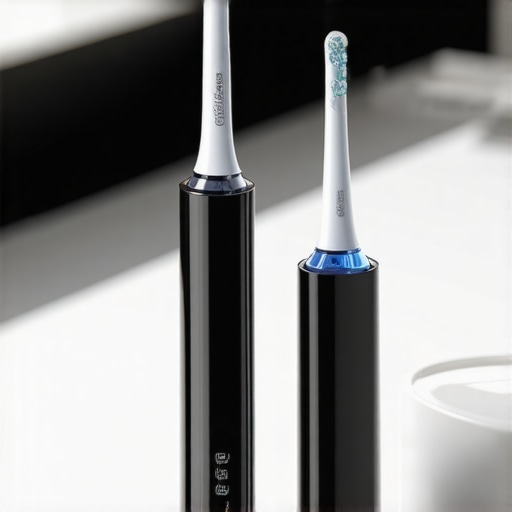
I don’t believe in buying every dental gimmick on the market, but there are two things I will never live without: a sonic toothbrush with a pressure sensor and a water flosser. The pressure sensor is non-negotiable. Many of us are ‘aggressive brushers,’ and that habit is the fastest way to wear down the margins of your restorations. When you brush too hard, you risk gum recession, which is the reason your gums are receding around one specific tooth. I use a sonic brush because the micro-vibrations break up biofilm without me needing to scrub like I’m cleaning a grout line. It prevents that annoying sensation of the reason your porcelain veneer feels rough to your tongue, which is often just microscopic scratches from abrasive pastes or hard bristles.
How can I keep my dental work from failing prematurely?
The secret is managing the ‘biofilm’ that forms at the junction where your tooth meets the veneer or implant. I follow the ‘3-2-1 rule’: three minutes of cleaning, two times a day, with one specialized tool (like an interdental brush or water flosser). According to the International Journal of Implant Dentistry, mechanical cleaning is the single most important factor in preventing peri-implantitis, a condition that can lead to implant loss if left unchecked. You have to be meticulous. If you’ve ever wondered why your dental implant feels like it is vibrating slightly, it’s a sign that the connection needs a professional check-up. Maintenance isn’t just about aesthetics; it’s about structural integrity. For those of us juggling family dentistry tips for a lifetime of healthy smiles, teaching these maintenance habits to our kids early on saves them a world of trouble later.
Stop Using Gritty Toothpaste Immediately
One of the biggest mistakes I see—and one I made myself—is using whitening toothpaste on porcelain. Most whitening pastes contain silica or other abrasives that ‘scour’ the surface of your teeth. While natural enamel can handle some of this, porcelain can lose its luster over time. This is where the truth about charcoal toothpaste and your tooth enamel becomes so critical; those trendy black pastes are essentially liquid sandpaper for your veneers. Instead, look for a non-abrasive gel with a low RDA (Relative Dentin Abrasivity) score. This keeps the surface smooth and prevents it from picking up stains later.
AI-Generated Smiles Are Coming Faster Than You Think
Looking ahead, the future of maintaining our smiles is becoming increasingly digital. I predict that by 2030, we will all have ‘digital twins’ of our mouths stored in the cloud. We are already seeing dental implants 2025 innovations that redefine comfort and durability, including smart implants that can detect early signs of infection before you even feel pain. We are moving toward a world where the future of dental implants cutting edge techniques in cosmetic dentistry will allow for 3D-printed bone scaffolds that grow with you. It’s an incredible time for oral health technology. If you are serious about your smile, go check your toothpaste tube right now—if the first ingredient is an abrasive, toss it and switch to a gentle gel today!
What I Finally Realized About the Dental Quick Fix Trap
Looking back at that 2 AM panic over a red gum, I see it was the start of my real education in oral health. The biggest lesson? Patience pays off more than a frantic ER run. I’ve learned that whether you are managing a toddler’s first tooth or a transform your smile with veneers expert tips for perfect results journey, skipping the details is where the costs mount up. Don’t chase ‘perfection’ at the expense of biology; for instance, pushing for the whitest shade possible is a one-way ticket to a smile that looks like plastic. Real beauty in dentistry is found in the imperfections—the slight translucency and the way light dances off the surface.
Another hard truth: You cannot ‘set and forget’ dental work. I used to think implants were invincible, but learning how dental implants reshape your oral health in 2025 taught me that the bone around that metal post needs just as much love as a natural root. If you ignore the foundation, the whole structure eventually fails. Always prioritize the health of the tissue over the sparkle of the crown.
The Gear That Actually Saved My Smile Investment
I’ve wasted hundreds on charcoal pastes and ‘miracle’ whiteners before realizing they were doing more harm than good. My daily toolkit is now lean and effective. First, throw away anything that feels gritty. If you want to keep your work looking new, use a gel with a low RDA score. Second, I cannot recommend a high-quality water flosser enough, especially if you have bridgework. It reaches the areas string floss simply can’t touch without snagging. Third, if you ever feel something is ‘off,’ don’t wait for the next scheduled cleaning—reach out and contact us or your local specialist immediately. Early intervention is the difference between a simple adjustment and a full replacement.
Take Control of Your Oral Narrative Today
From the first angry red bump in your child’s mouth to the advanced decisions of cosmetic dentistry secrets to boost your confidence, you are the primary advocate for your family’s health. The fear of the unknown often keeps us from making the best choices, but once you understand the ‘why’ behind the redness or the ‘how’ of the implant, the panic disappears. You have the tools and the knowledge to ensure a lifetime of healthy, radiant smiles. Don’t be afraid to ask the hard questions during your next visit. Have you ever stayed up worrying about a weird spot in your kid’s mouth only to find a tooth there the next morning, or are you currently weighing the pros and cons of an implant? Let me know your experience in the comments below!