I remember sitting at brunch last Sunday, minding my own business with a piece of particularly crusty sourdough toast. Everything was fine while I was actually chewing, but the second I let go of the bite? Zing. It felt like an electric shock shooting straight into my jaw. I froze. I tried to bite down again—nothing. But when I released? There it was again. For weeks, I convinced myself I was just being dramatic or that my teeth were just sensitive to the cold air. I even spent a late night scrolling through guides on how to handle a cracked tooth until you reach the dentist, yet I still didn’t book an appointment. It’s a bizarre, specific sensation that can drive you absolutely mad because it’s so inconsistent. If you are feeling that sharp, momentary wince every time you lift your teeth off a piece of food, you aren’t imagining it, and you certainly aren’t alone. Today, we are going to pull back the curtain on why this happens and what you need to do before a small ‘zing’ turns into a massive headache. [image_placeholder]
Stop Ignoring the Rebound Pain
When I first started noticing this, I made a classic mistake: I assumed that because the pain didn’t linger, it wasn’t serious. I figured if it were a real problem, it would throb all night. That’s a dangerous game to play with your oral health. This specific type of discomfort is often tied to ‘Cracked Tooth Syndrome.’ When you bite down, you’re putting pressure on the tooth segments, which might stay together. But when you release that pressure, the segments shift or flex, allowing fluid to move within the microscopic tubules of your dentin. This movement is what triggers that sharp nerve response. If you’ve ever wondered why your dental implant crown feels slightly wiggly when you bite, you know that any unexpected movement in the mouth is a signal that something is structurally ‘off.’ Ignoring this flex in a natural tooth is how I ended up needing a full crown instead of a simple filling. Depending on the depth of the crack, your dentist might discuss veneers vs crowns choosing the best option for your smile to stabilize the tooth and prevent the fracture from reaching the root. Have you ever felt that sharp ‘zing’ and just hoped it would go away if you started chewing on the other side of your mouth?
Is this actually a dental emergency?
You might be tempted to wait until your next cleaning, but that’s a risky move. According to the American Association of Endodontists, cracked teeth are notoriously difficult to diagnose because the fractures are often invisible to the naked eye and don’t always show up on traditional X-rays. This means by the time you can actually ‘see’ the crack, the damage might be significantly more advanced. The reality is that your tooth is flexing like a rubber band that is about to snap. While it might not feel like an emergency this very second, it is a ticking clock. My early mistake was thinking I could ‘tough it out’ with a little extra salt-water rinse, but structural integrity isn’t something you can fix with home remedies. We need to look at the real-world steps to protect your smile before that hairline fracture decides to go the distance.
Track the zing to save your tooth
I once spent a month keeping a literal ‘bite diary’ on my phone because I couldn’t figure out which tooth was the traitor. I noticed the sharp pain only happened when I ate something dense, like a bagel or a thick steak. By the time I actually got into the chair, I could tell my dentist exactly which side of the tooth felt like it was splitting. This saved us twenty minutes of guesswork and likely saved me from a root canal. If you are feeling that rebound pain, start noting the triggers. Is it heat, cold, or just the physical release of pressure? Sometimes, you might even notice why your teeth throb immediately after you finish a long run, which can be a sign that blood pressure and clenching are aggravating a hairline fracture you didn’t know existed.
Try the targeted bite test
You can perform a low-tech version of a diagnostic test at home using a clean, small wooden stick or even a cotton roll. Bite down gently on the object with one specific tooth at a time, then release quickly. If the pain only occurs upon the release, you’ve likely isolated the fracture. This is the same logic a professional ‘Tooth Slooth’ uses to pinpoint which cusp is flexing. Doing this early helps you avoid the steps to take if you lose a filling during dinner because a fractured tooth is significantly more unstable than a simple lost filling.
Demand better diagnostic imaging
A standard 2D X-ray is great for finding cavities, but it is often useless for seeing a vertical crack that runs front-to-back. This is where modern technology changes the game. You should ask your provider about 3D imaging, as the reason your culpeper dentist uses cbct scans instead of regular x-rays is to see the tooth in slices. This allows them to see the depth of the crack before they ever pick up a drill. 
Choose the right structural reinforcement
Once the crack is found, you have to decide how to keep the tooth from splitting like a log. Think of a crown as a protective helmet for your tooth. It holds the pieces together so they can’t flex when you chew. In some cosmetic cases involving the front teeth, you might compare the truth about the durability of composite vs porcelain veneers to see if a more conservative approach can stabilize the enamel. However, if the crack has moved toward the pulp, a crown is almost always the safer bet for long-term survival.
Address the root cause of the pressure
Most cracks aren’t accidents; they are the result of years of wear. If you wake up with a sore jaw, there is a high chance there is the connection between frequent headaches and grinding your teeth. Without a custom night guard, you will eventually crack the new crown or veneer just like you did the original tooth. It’s like fixing a dent in a car but never teaching the driver how to use the brakes.
When the tooth cannot be saved
In the unfortunate event that the crack has traveled below the gum line and into the root, the tooth becomes a liability for infection. At this stage, extraction is often the only way to stop the pain and protect your jawbone. Modern family dentistry has made this transition much easier, and you can look into how dental implants reshape your oral health in 2025 to see how we can now replace a fractured tooth with a permanent, non-decaying alternative that looks and feels completely natural.One of the biggest misconceptions I see in modern practice is the idea that cosmetic dentistry is merely a ‘mask’ for structural pain. Many people assume that if a tooth has a hairline fracture, a veneer will simply ‘glue’ it back together. But here is the nuanced truth: if the underlying cause—like a misaligned bite or chronic clenching—is not addressed, that expensive porcelain will eventually fail. I have seen countless patients choose veneers because they were perceived as less invasive than a crown, only to realize the truth about the durability of composite vs porcelain veneers is that longevity depends entirely on the mechanical foundation. 
Stop chasing the whitest shade on the rack
I have seen too many people fall for the ‘Hollywood White’ trap. They walk into a clinic demanding the brightest shade possible, only to realize later that they have made the mistake that makes your teeth look too white and fake. Real teeth possess a natural translucency and a subtle gradient that brightens toward the biting edge. If your restoration does not account for how light passes through the material, your smile will look like a row of opaque blocks rather than a living part of your face. When consulting with a professional, you should always look at how to pick the right shade for your new porcelain veneers with a focus on your unique skin tone and the natural ivory of your remaining teeth.
What happens if I do not have enough bone for an implant?
This is a question I receive frequently from those who have waited several years after an extraction. Many assume they are simply ‘not a candidate’ for permanent solutions anymore. However, the reason your dental implant surgery requires a bone graft is often to restore the structural volume necessary to support the titanium post. Even if you have been told ‘no’ in the past, dental implants 2025 innovations that redefine comfort and durability have introduced techniques like zygomatic implants or advanced grafting materials that make restoration possible for almost everyone. The ‘trap’ here is assuming that bone loss is a permanent disqualifier. Research by Dr. Pascal Magne, a pioneer in biomimetic dentistry, emphasizes that the goal of any restoration should be to mimic the original biomechanics of the tooth. If you lack the bone to support the load, the implant will not just fail; it can jeopardize the health of your entire jaw.
Veneers must do more than just look pretty
The hidden nuance that most patients miss is occlusion—the specific way your teeth meet when you chew. If a dentist applies a veneer to a cracked tooth without analyzing your ‘bite path,’ you are essentially placing a glass shield in front of a hammer. Every time you eat, you are micro-fracturing that work. This is why 3D scans and functional analysis are non-negotiable for anyone serious about their long-term oral health. Have you ever fallen into the trap of choosing the ‘prettier’ option over the structurally sound one? Let me know in the comments.
Stop using ‘whitening’ pastes on your veneers
If you have just invested in a full set of porcelain or composite restorations, your first instinct might be to buy the most aggressive whitening toothpaste on the shelf to ‘protect’ the color. This is a massive mistake. Most commercial whitening pastes rely on high Relative Dentin Abrasion (RDA) values to scrub away surface stains. While natural enamel can handle a bit of grit, your veneers are essentially high-grade glass or resin. Using abrasive paste is like cleaning a fine crystal vase with a scouring pad. I personally switched to a specialized low-abrasivity gel with an RDA under 70 to ensure I don’t create microscopic scratches that eventually trap bacteria and dull the finish. You might notice why your teeth feel sensitive after using whitening strips or abrasive pastes, and it’s usually because you’re stripping away the very protective layers you need. Instead, focus on how to maintain your white-smile after a coffee habit by using a non-abrasive routine that preserves the glaze of the porcelain.
The specific flossing routine for titanium posts
When it comes to dental implants, the rules of the game change entirely. Unlike a natural tooth, an implant doesn’t have a periodontal ligament; it’s a direct connection between metal and bone. This means the gum seal around the implant—the ‘peri-implant seal’—is your only line of defense against infection. I recommend my patients use a water flosser on a medium setting (around level 4 or 5) rather than high pressure, which can actually break that delicate seal. If you have ever felt why your dental implant feels like it is vibrating slightly, it could be a sign of early inflammation or ‘peri-implantitis’ caused by improper cleaning. For those with the secret to flossing when your teeth are tightly crowded, I suggest using specialized ‘thick-to-thin’ spongy floss that expands to grab biofilm around the implant neck without scratching the titanium. 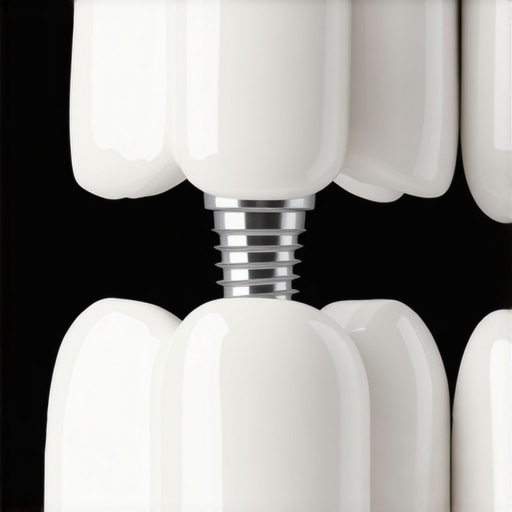
How do I keep my restorations looking brand new for years?
Longevity in family dentistry tips for a lifetime of healthy smiles often boils down to one piece of hardware: the occlusal guard. If you are clenching your jaw, no amount of ‘expert’ bonding will save you. I use a digital scanner (like the iTero) to create a guard that is precise to the micron. This is far superior to the ‘boil-and-bite’ versions which can actually shift your teeth over time. According to research published by Dr. Gordon Christensen in the Clinicians Report, using a hard-acrylic guard is the single most effective way to prevent the chipping of veneers and crowns. Looking forward, I predict that by 2030, the future of dental implants cutting edge techniques in cosmetic dentistry will include ‘smart’ crowns with embedded sensors that alert your phone if you’re clenching too hard or if there is a spike in bacterial acidity. We are moving toward a world where your teeth can literally tell you when they’re in trouble before you ever feel a ‘zing.’ For now, your best bet is staying consistent with dental implants 2025 innovations that redefine comfort and durability and avoiding the common trap of skipping your professional cleanings. Go check your toothpaste tube right now—if the first three ingredients include ‘Hydrated Silica,’ consider swapping it for a gentler alternative to save your investment.I remember sitting at brunch last Sunday, minding my own business with a piece of particularly crusty sourdough toast. Everything was fine while I was actually chewing, but the second I let go of the bite? Zing. It felt like an electric shock shooting straight into my jaw. I froze. I tried to bite down again—nothing. But when I released? There it was again. For weeks, I convinced myself I was just being dramatic or that my teeth were just sensitive to the cold air. I even spent a late night scrolling through guides on how to handle a cracked tooth until you reach the dentist, yet I still didn’t book an appointment. It’s a bizarre, specific sensation that can drive you absolutely mad because it’s so inconsistent. If you are feeling that sharp, momentary wince every time you lift your teeth off a piece of food, you aren’t imagining it, and you certainly aren’t alone. Today, we are going to pull back the curtain on why this happens and what you need to do before a small ‘zing’ turns into a massive headache. [image_placeholder]
Stop Ignoring the Rebound Pain
When I first started noticing this, I made a classic mistake: I assumed that because the pain didn’t linger, it wasn’t serious. I figured if it were a real problem, it would throb all night. That’s a dangerous game to play with your oral health. This specific type of discomfort is often tied to ‘Cracked Tooth Syndrome.’ When you bite down, you’re putting pressure on the tooth segments, which might stay together. But when you release that pressure, the segments shift or flex, allowing fluid to move within the microscopic tubules of your dentin. This movement is what triggers that sharp nerve response. If you’ve ever wondered why your dental implant crown feels slightly wiggly when you bite, you know that any unexpected movement in the mouth is a signal that something is structurally ‘off.’ Ignoring this flex in a natural tooth is how I ended up needing a full crown instead of a simple filling. Depending on the depth of the crack, your dentist might discuss veneers vs crowns choosing the best option for your smile to stabilize the tooth and prevent the fracture from reaching the root. Have you ever felt that sharp ‘zing’ and just hoped it would go away if you started chewing on the other side of your mouth?
Is this actually a dental emergency?
You might be tempted to wait until your next cleaning, but that’s a risky move. According to the American Association of Endodontists, cracked teeth are notoriously difficult to diagnose because the fractures are often invisible to the naked eye and don’t always show up on traditional X-rays. This means by the time you can actually ‘see’ the crack, the damage might be significantly more advanced. The reality is that your tooth is flexing like a rubber band that is about to snap. While it might not feel like an emergency this very second, it is a ticking clock. My early mistake was thinking I could ‘tough it out’ with a little extra salt-water rinse, but structural integrity isn’t something you can fix with home remedies. We need to look at the real-world steps to protect your smile before that hairline fracture decides to go the distance.
Track the zing to save your tooth
I once spent a month keeping a literal ‘bite diary’ on my phone because I couldn’t figure out which tooth was the traitor. I noticed the sharp pain only happened when I ate something dense, like a bagel or a thick steak. By the time I actually got into the chair, I could tell my dentist exactly which side of the tooth felt like it was splitting. This saved us twenty minutes of guesswork and likely saved me from a root canal. If you are feeling that rebound pain, start noting the triggers. Is it heat, cold, or just the physical release of pressure? Sometimes, you might even notice why your teeth throb immediately after you finish a long run, which can be a sign that blood pressure and clenching are aggravating a hairline fracture you didn’t know existed.
Try the targeted bite test
You can perform a low-tech version of a diagnostic test at home using a clean, small wooden stick or even a cotton roll. Bite down gently on the object with one specific tooth at a time, then release quickly. If the pain only occurs upon the release, you’ve likely isolated the fracture. This is the same logic a professional ‘Tooth Slooth’ uses to pinpoint which cusp is flexing. Doing this early helps you avoid the steps to take if you lose a filling during dinner because a fractured tooth is significantly more unstable than a simple lost filling.
Demand better diagnostic imaging
A standard 2D X-ray is great for finding cavities, but it is often useless for seeing a vertical crack that runs front-to-back. This is where modern technology changes the game. You should ask your provider about 3D imaging, as the reason your culpeper dentist uses cbct scans instead of regular x-rays is to see the tooth in slices. This allows them to see the depth of the crack before they ever pick up a drill.
Choose the right structural reinforcement
Once the crack is found, you have to decide how to keep the tooth from splitting like a log. Think of a crown as a protective helmet for your tooth. It holds the pieces together so they can’t flex when you chew. In some cosmetic cases involving the front teeth, you might compare the truth about the durability of composite vs porcelain veneers to see if a more conservative approach can stabilize the enamel. However, if the crack has moved toward the pulp, a crown is almost always the safer bet for long-term survival.
Address the root cause of the pressure
Most cracks aren’t accidents; they are the result of years of wear. If you wake up with a sore jaw, there is a high chance there is the connection between frequent headaches and grinding your teeth. Without a custom night guard, you will eventually crack the new crown or veneer just like you did the original tooth. It’s like fixing a dent in a car but never teaching the driver how to use the brakes.
When the tooth cannot be saved
In the unfortunate event that the crack has traveled below the gum line and into the root, the tooth becomes a liability for infection. At this stage, extraction is often the only way to stop the pain and protect your jawbone. Modern family dentistry has made this transition much easier, and you can look into how dental implants reshape your oral health in 2025 to see how we can now replace a fractured tooth with a permanent, non-decaying alternative that looks and feels completely natural.One of the biggest misconceptions I see in modern practice is the idea that cosmetic dentistry is merely a ‘mask’ for structural pain. Many people assume that if a tooth has a hairline fracture, a veneer will simply ‘glue’ it back together. But here is the nuanced truth: if the underlying cause—like a misaligned bite or chronic clenching—is not addressed, that expensive porcelain will eventually fail. I have seen countless patients choose veneers because they were perceived as less invasive than a crown, only to realize the truth about the durability of composite vs porcelain veneers is that longevity depends entirely on the mechanical foundation.
Stop chasing the whitest shade on the rack
I have seen too many people fall for the ‘Hollywood White’ trap. They walk into a clinic demanding the brightest shade possible, only to realize later that they have made the mistake that makes your teeth look too white and fake. Real teeth possess a natural translucency and a subtle gradient that brightens toward the biting edge. If your restoration does not account for how light passes through the material, your smile will look like a row of opaque blocks rather than a living part of your face. When consulting with a professional, you should always look at how to pick the right shade for your new porcelain veneers with a focus on your unique skin tone and the natural ivory of your remaining teeth.
What happens if I do not have enough bone for an implant?
This is a question I receive frequently from those who have waited several years after an extraction. Many assume they are simply ‘not a candidate’ for permanent solutions anymore. However, the reason your dental implant surgery requires a bone graft is often to restore the structural volume necessary to support the titanium post. Even if you have been told ‘no’ in the past, dental implants 2025 innovations that redefine comfort and durability have introduced techniques like zygomatic implants or advanced grafting materials that make restoration possible for almost everyone. The ‘trap’ here is assuming that bone loss is a permanent disqualifier. Research by Dr. Pascal Magne, a pioneer in biomimetic dentistry, emphasizes that the goal of any restoration should be to mimic the original biomechanics of the tooth. If you lack the bone to support the load, the implant will not just fail; it can jeopardize the health of your entire jaw.
Veneers must do more than just look pretty
The hidden nuance that most patients miss is occlusion—the specific way your teeth meet when you chew. If a dentist applies a veneer to a cracked tooth without analyzing your ‘bite path,’ you are essentially placing a glass shield in front of a hammer. Every time you eat, you are micro-fracturing that work. This is why 3D scans and functional analysis are non-negotiable for anyone serious about their long-term oral health. Have you ever fallen into the trap of choosing the ‘prettier’ option over the structurally sound one? Let me know in the comments.
Stop using ‘whitening’ pastes on your veneers
If you have just invested in a full set of porcelain or composite restorations, your first instinct might be to buy the most aggressive whitening toothpaste on the shelf to ‘protect’ the color. This is a massive mistake. Most commercial whitening pastes rely on high Relative Dentin Abrasion (RDA) values to scrub away surface stains. While natural enamel can handle a bit of grit, your veneers are essentially high-grade glass or resin. Using abrasive paste is like cleaning a fine crystal vase with a scouring pad. I personally switched to a specialized low-abrasivity gel with an RDA under 70 to ensure I don’t create microscopic scratches that eventually trap bacteria and dull the finish. You might notice why your teeth feel sensitive after using whitening strips or abrasive pastes, and it’s usually because you’re stripping away the very protective layers you need. Instead, focus on how to maintain your white-smile after a coffee habit by using a non-abrasive routine that preserves the glaze of the porcelain.
The specific flossing routine for titanium posts
When it comes to dental implants, the rules of the game change entirely. Unlike a natural tooth, an implant doesn’t have a periodontal ligament; it’s a direct connection between metal and bone. This means the gum seal around the implant—the ‘peri-implant seal’—is your only line of defense against infection. I recommend my patients use a water flosser on a medium setting (around level 4 or 5) rather than high pressure, which can actually break that delicate seal. If you have ever felt why your dental implant feels like it is vibrating slightly, it could be a sign of early inflammation or ‘peri-implantitis’ caused by improper cleaning. For those with the secret to flossing when your teeth are tightly crowded, I suggest using specialized ‘thick-to-thin’ spongy floss that expands to grab biofilm around the implant neck without scratching the titanium.
How do I keep my restorations looking brand new for years?
Longevity in family dentistry tips for a lifetime of healthy smiles often boils down to one piece of hardware: the occlusal guard. If you are clenching your jaw, no amount of ‘expert’ bonding will save you. I use a digital scanner (like the iTero) to create a guard that is precise to the micron. This is far superior to the ‘boil-and-bite’ versions which can actually shift your teeth over time. According to research published by Dr. Gordon Christensen in the Clinicians Report, using a hard-acrylic guard is the single most effective way to prevent the chipping of veneers and crowns. Looking forward, I predict that by 2030, the future of dental implants cutting edge techniques in cosmetic dentistry will include ‘smart’ crowns with embedded sensors that alert your phone if you’re clenching too hard or if there is a spike in bacterial acidity. We are moving toward a world where your teeth can literally tell you when they’re in trouble before you ever feel a ‘zing.’ For now, your best bet is staying consistent with dental implants 2025 innovations that redefine comfort and durability and avoiding the common trap of skipping your professional cleanings. Go check your toothpaste tube right now—if the first three ingredients include ‘Hydrated Silica,’ consider swapping it for a gentler alternative to save your investment.
Hard Truths I Learned Before Choosing My Last Restoration
I used to think a tooth was either “fine” or “broken,” but the gray area in between is where most of us live. After years of navigating my own dental journey, I realized that ignoring a minor wince today often leads to a major surgery tomorrow. If you’re currently weighing veneers vs crowns which is right for your smile, remember that the “right” choice is always the one that preserves the most natural structure. I also learned that cosmetic dentistry secrets to boost your confidence aren’t just about shade guides; they’re about the peace of mind that comes with a stable, functional bite. Lastly, never underestimate the power of a second opinion when your gut—or your jaw—tells you something is off.
My Personal Daily Defense Kit for Long-Term Success
To keep my own smile in top shape, I rely on a few non-negotiables. First, I only use non-abrasive gels to protect my enamel and any porcelain work. Second, I’m a firm believer in the “Rule of Soft”—using a soft-bristled brush even when I want to scrub. For those who have already made the leap into a veneers transformation unlocking your best smile yet, I highly recommend investing in a professional-grade occlusal guard. I also follow the American Dental Association’s guidelines and keep a close eye on family dentistry tips for a lifetime of healthy smiles to ensure I’m not missing new preventive techniques.
Your Path to a Worry-Free Smile
Taking the first step toward a healthier mouth can feel daunting, especially if you’ve been living with the fear of a “zing” for months. Whether you are looking at the potential of how dental implants reshape your oral health in 2025 or simply want to fix a minor cosmetic flaw, remember that you deserve to eat and smile without hesitation. Modern dentistry is no longer just about fixing holes; it’s about restoring your quality of life. Don’t let a tiny crack dictate your diet or your confidence any longer. Have you ever experienced that weird “rebound pain” when biting down on something soft? Let me know in the comments how you handled it!