It was three in the morning, and I was staring at the ceiling, wondering why my mouth was suddenly keeping time with my heartbeat. Every ‘thump-thump’ felt like a tiny hammer hitting my upper jaw. I’d spent the whole day feeling perfectly fine, but the moment I crawled into bed, the throbbing started. It’s a frustrating, visceral experience that makes you feel like your own body is betraying your sleep. I remember one specific night where I convinced myself I just needed more water, only to find out later that I was ignoring a brewing issue that almost cost me a tooth. It was a classic ‘neighborly advice’ moment I should have given myself: don’t ignore the pulse. We’re going to get to the bottom of why your mouth turns into a percussion instrument the second you get horizontal and how you can actually get some rest tonight. I know the panic that sets in when the house is quiet and your mouth starts yelling. It feels urgent and terrifying. But usually, there is a very logical, very fixable reason for it. [IMAGE_PLACEHOLDER]
Why Gravity Is Your Gums’ Worst Enemy at Night
When you stand or sit up, your heart has to work against gravity to get blood to your head. But when you lie down? That blood rushes to your face with much less resistance. If you have any inflammation—whether it’s from common family dentistry issues or something more specific like receding gums around one tooth—that increased blood pressure makes the area feel like it’s exploding. According to the American Dental Association, postural changes increase blood flow to the head, which can significantly heighten the sensation of dental pain or pressure. I once made the mistake of thinking my veneers transformation meant I was immune to gum issues, but the truth is, the health of your supporting tissue is everything. If those gums are even slightly irritated, gravity will announce it the second you try to sleep. It’s not just in your head. Well, it is in your head, but the pain is very real. Your blood is literally pounding against sensitive nerves. This is often why a throbbing sensation feels so much worse at 2 AM than it did at 2 PM.
Is this really just a minor annoyance?
It’s easy to dismiss it as ‘just one of those things,’ but your gums shouldn’t have a heartbeat. One mistake I made early on was assuming that if it didn’t hurt during the day, it wasn’t a real problem. I was wrong. Often, this nighttime throb is your body’s early warning system for things like a hidden cavity or even a sinus infection mimicking dental pain. Sometimes, you might even notice a weird bump on your gum that you never saw in the mirror. Have you ever stayed awake half the night wondering if you should call the dentist or just take another ibuprofen? Tell me I’m not alone in that late-night Google spiral! It’s a scary feeling when you’re alone in the dark, but we are going to walk through how to identify the cause. Is it a genuine emergency or just your body’s way of saying you need a professional cleaning? We’ll find out together.
Prop Yourself Up to Drop the Pressure
The very first thing you need to do is stop lying flat. If your head is level with your heart, you are basically inviting a flood of blood to irritate those dental nerves. Think of it like a pressurized cabin; just as you would learn how to handle a throbbing toothache when you are on a plane, you have to manage the pressure changes in your own bed. Grab two or three extra pillows and stack them so your head is significantly higher than your chest. I once tried to tough it out on a single flat pillow during a bout of gum inflammation, and the pain felt like a rhythmic hammer against my skull. The second I sat up against the headboard, the intensity dropped by half. It is a simple mechanical fix that buys you sleep by using gravity to your advantage.#IMAGE_PLACE_HOLDER_B#
Check for Structural Failures Under the Hood
If the throbbing is localized to one specific spot, you might have a mechanical failure rather than a systemic one. Take a clean finger and gently tap the teeth in the area. If one tooth sends a sharp jolt through your jaw, you are likely dealing with a crack or a failing restoration. I once ignored a slight wiggle in a back molar during a friend’s wedding rehearsal, only to have the whole thing erupt in pain by midnight. Knowing the steps to take if you lose a filling during dinner can be a lifesaver, but even if the filling is still there, it might be leaking. If you have older dental work, remember that the danger of wait and see for a loose dental bridge or crown is that bacteria can seep underneath, causing an abscess that throbs specifically when blood flow increases in the evening.
Test the Temperature Before You Reach for Ice
Before you slap an ice pack on your face, figure out what the nerve is reacting to. Take a sip of room-temperature water. If that hurts, it is a sign of a very angry nerve. If cold water provides relief for a few seconds but then the throb returns even harder, you might have pulpitis, where the nerve inside the tooth is inflamed. I once spent four hours rotating ice packs only to realize the cold was making the surrounding muscles cramp up, adding a tension headache to my toothache. If you keep family dentistry tips for a lifetime of healthy smiles in mind, you know that tracking whether cold or heat triggers the throb helps your dentist diagnose the issue in minutes rather than guessing.
Clean Out the Hidden Pockets of Pain
Sometimes the throb isn’t the tooth at all, but debris trapped in the gum line. This creates a localized infection that acts like a tiny, angry balloon under your tissue. Use warm salt water to rinse aggressively. If you wear appliances, make sure they aren’t the culprit; learning how to clean your night guard without damaging the material is vital because a dirty guard can harbor bacteria right against an already inflamed gum. If you have newer restorations and feel a strange sensation, such as why your dental implant feels like it is vibrating slightly, it might be a sign of minor inflammation in the surrounding tissue rather than a problem with the metal. Avoid digging with sharp objects; stick to gentle flossing and salt water to lower the bacterial load until you can get into the dental chair tomorrow morning.
Stop Assuming Your Implants Are Invincible
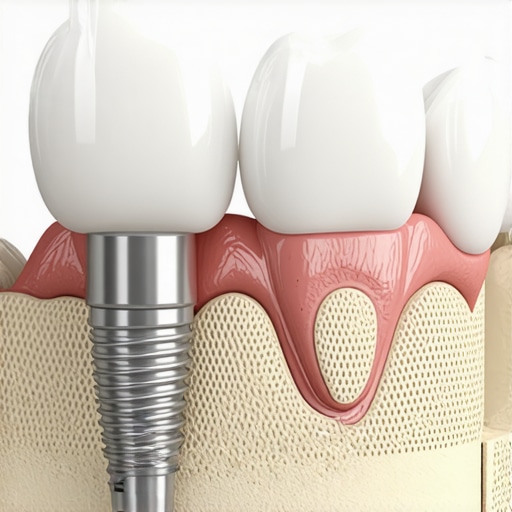
Most people think that once they get a dental implant, their oral hygiene days are over because titanium can’t decay. In my experience, this is the most dangerous trap you can fall into. While the implant itself won’t get a cavity, the bone around it is actually more susceptible to a specific type of inflammation called peri-implantitis because it lacks the natural ligament barrier that real teeth possess. Unlike a natural tooth, an implant doesn’t have the same “early warning” nerve system to tell you when something is wrong. By the time it feels “off,” the issue might be quite advanced. If you’ve been told the reason your dental implant surgery requires a bone graft is simply for aesthetics, you’re only getting half the story. It’s about creating a robust foundation that can withstand the mechanical forces of chewing over decades, especially if you have existing bone loss. It’s a nuance that separates a short-term fix from a lifelong restoration.
Are Your New Veneers Actually Hiding a Developing Problem?
Let’s talk about the nuances of a cosmetic transformation. Everyone wants that Hollywood brightness, but there’s a sophisticated “oops” factor that many patients miss until they’re looking in the mirror at home. There is a specific mistake that makes your teeth look too white and fake, and it usually involves choosing a shade that has zero translucency. Real teeth have layers and depth; they aren’t solid white blocks. If your veneers aren’t designed with that anatomical depth, they end up looking like opaque porcelain stickers. I’ve seen so many people frustrated because the reason your veneers look different in sunlight than they did in the office is because the material lacks those natural light-reflecting properties. Furthermore, if the preparation isn’t perfect, you might find why your veneers feel bulkier than your natural teeth is due to an over-contoured margin, which can actually trap more plaque than your original smile ever did.
Don’t Let ‘Maintenance-Free’ Marketing Fool You
Have you ever felt a strange, rhythmic sensation when you talk or chew? Sometimes patients mention why your dental implant feels like it is vibrating slightly. This isn’t just a quirk of the metal; it’s often a sign that the crown isn’t perfectly seated or that the internal screw is beginning to fatigue. If your dental implant crown feels slightly wiggly when you bite, don’t wait for it to pop off. Even a fraction of a millimeter of movement creates a “pumping action” that draws bacteria deep into the bone. According to researchers at the Journal of Oral Implantology, mechanical complications like screw loosening are significantly more common than biological failure in the first few years, which is why regular torque checks are essential. We often think of cosmetic dentistry secrets as being about the initial reveal, but the real expertise lies in the long-term maintenance. Similarly, if you notice any movement in older work, the danger of wait and see for a loose dental bridge is that you risk losing the supporting teeth entirely. Have you ever fallen into the trap of thinking a permanent fix meant a maintenance-free life? Let me know in the comments.
The reality is that your new smile is an investment, and like a luxury car, you cannot just drive it off the lot and forget about the maintenance. I personally swear by a high-quality oral irrigator—specifically the Waterpik Aquarius—not just because it is popular, but because of the specific way it flushes the ‘biofilm’ from around restoration margins. When you have expertly placed veneers, the point where the porcelain meets your natural tooth is a microscopic ledge. Traditional floss often misses the debris tucked right under that margin, or worse, it can snag and fray. I use mine on the ‘floss’ mode with lukewarm water to avoid the sudden shock of cold. According to a clinical study published in the International Journal of Implant Dentistry, water flossing is significantly more effective at reducing gingival bleeding around implants than string floss, as it avoids the mechanical trauma of ‘sawing’ against the delicate soft tissue.
Ditch the string floss for a pressurized water jet
If you are dealing with a bridge, a water flosser is a non-negotiable tool. Trying to use those plastic threaders is a recipe for frustration, and most people give up after three days. I recommend adding a capful of non-alcoholic antibacterial mouthwash into the reservoir. This ensures that the water isn’t just moving debris around, but actually chemically treating the bacteria in those hard-to-reach pockets. This is especially important for maintaining your white smile after a coffee habit, as it prevents the stain from settling into the porous areas between your teeth and your restorations. If you haven’t tried a water flosser yet, start on the lowest pressure setting; jumping straight to level ten is a fast way to make your gums bleed and scare you off the habit for good. [IMAGE_PLACEHOLDER_D#]
How can I keep my cosmetic work looking fresh for decades?
The secret isn’t just brushing; it is managing the mechanical forces you put on your teeth. I tell all my patients that if they’ve spent money on veneers or crowns, they must wear a custom-fitted night guard. Stress-related grinding is the number one killer of dental work. You might need to learn how to stop clenching your jaw during the workday, but at night, you have no control. A night guard acts as a shock absorber, preventing the porcelain from chipping against its neighbors. Furthermore, you should insist on advanced imaging during your annual check-ups. One of the biggest shifts I’ve seen is the reason your dentist uses CBCT scans rather than old-school flat X-rays; it allows us to see the bone density around an implant in 3D, catching potential failures before you ever feel a throb.
Where the science of smiles is headed next
Looking ahead, we are moving toward a world of ‘biomimetic’ materials. We are already seeing dental implants 2025 innovations that use 3D-printed lattices to encourage faster bone integration. I predict that within the next few years, we will have smart-crowns with embedded sensors that can alert your phone if the pH levels in your mouth drop too low, signaling a bacterial bloom before a cavity even starts. This is the ultimate peak of cutting-edge techniques in cosmetic dentistry. For now, your best move is to be proactive. If you feel even the slightest ‘click’ or ‘vibration’ in your dental work, don’t wait for the 3 AM heartbeat to start in your gums. Use a warm salt water rinse tonight and book a maintenance appointment to check the torque on those implant screws—it’s a five-minute fix that saves a five-thousand-dollar restoration.
The Three Lessons My Patients Usually Learn the Hard Way
After years in the dental chair, I’ve realized that the ‘3 AM heartbeat’ is often a gift in disguise—it’s your body forcing you to pay attention. First, never mistake ‘numbness’ for health. If you have dental implants, they won’t feel pain like a normal tooth, so any weird sensation is a red flag. Second, the cost of a high-quality night guard is pennies compared to replacing a chipped veneer. Finally, don’t wait for a crisis to book a check-up; maintenance is the difference between a quick adjustment and a total restoration overhaul.
Tools That Will Actually Save Your Sleep
If you want to keep your smile healthy, you need more than just a toothbrush. I personally recommend the Waterpik Aquarius because it reaches the deep pockets where bacteria hide around veneers and crowns. I also trust CBCT imaging more than anything else for a deep dive into your jaw health; it catches what flat X-rays miss. Lastly, keep a warm salt water rinse ready in your bathroom—it is the most underrated anti-inflammatory tool in existence.
[IMAGE_PLACEHOLDER]
Take Charge of Your Oral Health Today
You don’t have to live with the anxiety of nighttime pain. Whether you are looking for cosmetic dentistry secrets or just trying to survive until morning, remember that modern dentistry has a solution for everything. How dental implants reshape your oral health in 2025 is proof that we are in an era of incredible comfort and durability. Don’t be afraid to reach out and get the help you need. Contact us today if you’re ready to stop the throb for good.
Have you ever had a toothache that only seemed to wake up the moment your head hit the pillow? Let me know your story in the comments below!