I was about twenty minutes into a grueling HIIT session when I felt it—that rhythmic, pulsing sensation right at my gum line. It was not quite a sharp pain, but a heavy, distracting thud that matched my heartbeat perfectly. For a long time, I just figured I was pushing myself too hard. I actually made the mistake of assuming my gums were just vibrating because of the treadmill’s impact. I did not think I needed to worry about family dentistry tips until the throbbing became so intense I had to stop my workout entirely and hold my face in the gym parking lot. It was embarrassing and, frankly, a little bit scary.
That Weird Pulse in Your Mouth Mid-Workout
It turns out, your mouth is not a separate entity from the rest of your body, even if we usually treat it that way. When you are deep into intense cardio, your blood pressure spikes and your heart pumps harder to get oxygen to your muscles. This increased blood flow does not just go to your quads; it goes everywhere, including the highly vascularized tissues in your mouth. If you have ever wondered why your gums look receding even if you have good hygiene, you might already be paying close attention to your oral health, but this specific throbbing is a different beast altogether. It is your body’s way of magnifying an issue that is usually silent.
Is a little gum throbbing really worth the worry?
You might be thinking that it is just a pulse that goes away when you stop, so why care? I thought the same thing. I ignored it for months, focusing instead on cosmetic dentistry secrets to make my smile look better while ignoring the internal signals my nerves were sending. But here is the catch: healthy gums usually do not throb. That sensation is often an early warning sign of inflammation or underlying issues like gingivitis or even a hidden infection that only becomes loud when your blood pressure rises. According to the American Dental Association, any persistent oral pain or discomfort during physical activity should be evaluated because it often points to exercise-induced gingival inflammation.
The Real Reason Your Heartbeat Has Moved to Your Teeth
When we do cardio, we often breathe through our mouths. This dries out the oral cavity, making any existing inflammation or sensitivity feel significantly worse. I remember one specific morning where I tried to power through a five-mile run, only to end up sitting on the curb because the pressure in my upper jaw was so intense. I had not realized that my body was trying to tell me my gum health was compromised, likely from a mix of plaque buildup and mouth-breathing. Have you ever had to cut a workout short because your mouth literally felt like it was about to explode? It is a frustrating hurdle when you are trying to stay fit, but ignoring it can lead to much bigger problems down the road. We are going to dive into exactly how to manage this so you can get back to your personal best without the dental distraction.
Stop the Inflammation at the Source
The pulsing sensation you feel is essentially your circulatory system highlighting areas of irritation. Think of plaque as tiny, microscopic barnacles on a ship’s hull. When your heart rate climbs and your blood pressure rises, those barnacles cause drag and inflammation in the surrounding tissue. I used to be a quick brusher, thinking thirty seconds was plenty to get the job done. One month, the pulsing in my molars became so rhythmic during my morning runs that I could almost count my cadence by the pain. I realized I was neglecting the sulcus—the tiny pocket where the gum meets the tooth. If you have noticed why your gums look receding even if you have good hygiene, you might be scrubbing too hard or missing the angle entirely. You need to angle your brush at 45 degrees toward the gum line to sweep out the debris that causes that exercise-induced throb. 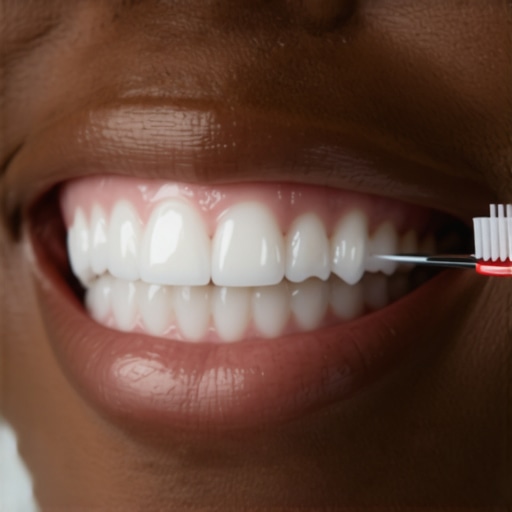
Switch to Nasal Breathing to Keep Tissues Damp
One of the most common mistakes I made was breathing exclusively through my mouth during sprints. This creates a desert-like environment in your mouth, evaporating the saliva that normally buffers your teeth against acid and bacteria. When your gums dry out, they become more sensitive to the pressure of your blood flow. I started practicing ‘box breathing’ or focused nasal inhalations during my warm-ups, and the difference was night and day. If your mouth feels like sandpaper after a mile, your gums are essentially being shrink-wrapped against your teeth, which magnifies every heartbeat. If you have recently undergone dental work, you might even notice why your new veneers feel bulky against your lips when your mouth is dry, as the lack of lubrication makes every sensation feel ten times more intense.
Treat Your Gums Like the Foundation of a House
We often obsess over the aesthetics of our teeth, looking for cosmetic dentistry secrets to brighten our smiles, but the ‘meat’ of the matter is the support structure. Think of your gums like the foundation of a house. You can put the most beautiful siding on—like veneers—but if the ground is shifting and inflamed, the whole structure is at risk. If you find that the throbbing persists even with better hygiene, you may need a professional intervention. I once had to learn how to soothe your gums after a deep cleaning session because I had let the inflammation go too far. A deep cleaning, or scaling and root planing, removes the hardened tartar that no toothbrush can touch, effectively ‘quieting’ the nerves that react to your heart rate.
Manage the Biofilm and Blood Flow Balance
It is vital to use the right tools to maintain this balance. If you are a fan of technology, be careful with the transition to new gadgets. I remember the first time I used a high-powered water flosser; I was too aggressive and couldn’t figure out why your gums bleed only when you use a water flosser. The answer was simple: my tissue was already sensitized. By lowering the pressure and focusing on consistent, gentle removal of biofilm, you can reduce the overall inflammatory load on your body. This makes it so that when you hit your peak heart rate during a workout, your gums remain calm and quiet instead of screaming with every beat of your heart.
Stop Thinking of Cosmetic Work as Purely Visual
Most people make the mistake of separating aesthetics from function, but in the world of advanced oral care, they are two sides of the same coin. I spent years chasing cosmetic dentistry secrets to brighten my smile, only to realize that a ‘perfect’ look can sometimes mask deep-seated issues. The contrarian truth is that sometimes the most ‘beautiful’ teeth are the least functional. For instance, if your bite is not perfectly aligned, even the most expensive work will eventually fail under the pressure of your jaw muscles. This is where family dentistry tips become vital; you cannot build a skyscraper on a swamp. If you are only looking at the surface, you are missing the biological foundation that keeps those teeth in your head.
The One Mistake That Turns High-End Veneers Into Piano Keys
There is a very specific trap that people fall into when they decide to transform their smile. They want the whitest, straightest teeth possible, but they forget that natural teeth have subtle translucency and variations in shape. If you are not careful, you end up with the mistake that makes porcelain veneers look like piano keys. This happens when the dental technician makes the porcelain too opaque and the edges too square. High-quality work should be indistinguishable from nature. According to the American Academy of Cosmetic Dentistry (AACD), the true goal of aesthetic dentistry is ‘imperceptible restoration.’ When the work is done poorly, you might even notice why your new veneers feel bulky against your lips, which is a sign that the proportions are off and could actually interfere with your speech or your ability to clean your gums properly. 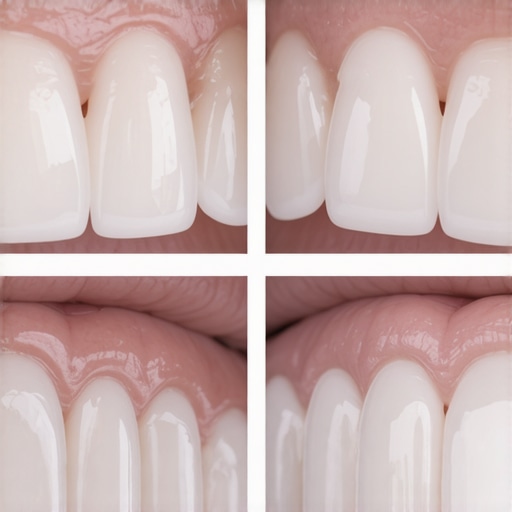
Do your dental implants need more care than your natural teeth?
It is a common myth that once you have a titanium post in your jaw, you are ‘done’ with dental problems. In reality, the margin for error is much smaller. While you cannot get a cavity in a ceramic crown, the tissue around the post is highly susceptible to peri-implantitis—a specialized form of gum disease. I have talked to people who were shocked to discover why your dental implant feels different when it rains or during shifts in barometric pressure. This is often due to the way the bone integrates with the metal, a process called osseointegration. If you are looking into the future of dental implants, you will see that 2025 is all about biomimicry—making sure the implant behaves exactly like a natural tooth root. But even with how dental implants reshape your oral health, you still have to be a ‘hygiene hero’ to keep them. Have you ever fallen into this trap of thinking a dental fix was a permanent ‘set it and forget it’ solution? Let me know in the comments.For me, the shift from ‘brushing because I have to’ to ‘maintaining a high-performance system’ changed everything. Once I invested in my smile, I realized that generic advice wasn’t enough to protect the craftsmanship of my dentist. If you want to keep that aesthetic sharp, you have to upgrade your arsenal. I personally swear by an electric toothbrush with a built-in pressure sensor. I used to be a ‘scrubber,’ which is a nightmare for gum health, but the sensor forces me to be gentle. When you are learning how to safely clean a dental implant without scratching the post, you quickly realize that mechanical force is your enemy, while consistency is your best friend. I also integrated a water flosser into my nightly routine because it reaches the sulcus in a way string flossing just can’t, especially around restorative work.
How do I keep these results for the next twenty years?
Longevity is the true test of any cosmetic or restorative procedure. You might have found expert tips for perfect results, but the real work happens while you sleep. I didn’t realize I was a nighttime clencher until I woke up with jaw soreness. This is a common culprit behind why your veneers feel tight when you wake up in the morning. A custom-fitted night guard is the most important ‘insurance policy’ you can buy for your mouth. According to a study in the International Journal of Prosthodontics, porcelain restorations are significantly more likely to fracture in patients with untreated bruxism. Treating your mouth like a finely tuned machine means protecting it from your own subconscious habits. 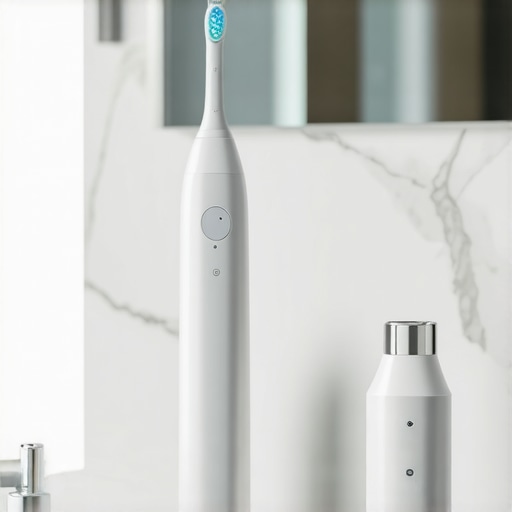
Your Bathroom Sink is About to Get a Lot Smarter
Looking ahead, the way we manage family dentistry tips is shifting toward data-driven care. I am already seeing the rise of AI-integrated toothbrushes that map your mouth in real-time, highlighting exactly where you’re missing plaque. We are moving toward a future where bio-sensors in our saliva could alert us to inflammation before we even feel that workout-induced throb. With innovations that redefine comfort and durability, the technology is catching up to our biology. Even the future of dental implants involves smart abutments that can monitor bone integration levels. It’s an exciting time to be proactive. If you haven’t yet, I highly recommend asking your dentist for a ‘bite-mapping’ session at your next check-up to ensure your alignment is protecting your dental work rather than stressing it.
The Hardest Lesson I Learned About My Fitness and Smile Connection
For a long time, I treated my gym performance and my dental health as two completely separate worlds. I realized far too late that my mouth is essentially an early-warning system for inflammation. When my gums started pulsing during heavy sprints, I wasn’t just ‘working hard’—I was seeing the physical manifestation of underlying irritation that I had been ignoring in favor of aesthetic goals. I learned that you can’t out-train poor hygiene, and even the most expensive veneers transformation won’t feel right if the foundation isn’t quiet. It was a massive lightbulb moment to realize that if I wanted a high-performance body, I needed a high-performance oral care routine. I also discovered that simple environmental changes, like the temperature of what I drank post-workout, mattered immensely; it helped me understand why your gums throb after you eat ice cream or drink ice-cold water when your blood flow is peaked.
The Tools I Use to Quiet the Noise
I have narrowed my daily routine down to a few non-negotiables that have practically eliminated that mid-workout throb. First, I moved to a pressure-sensing electric toothbrush to stop the ‘scrubbing’ habit that was leading to recession. Second, I integrated a water flosser because it is the most effective way to flush the sulcus without the mechanical trauma of traditional floss when my tissues are already sensitive. I also became obsessed with maintenance for my nighttime appliances; I finally found the best way to clean your retainers so they don’t smell, which significantly reduced the bacterial load I was dealing with every morning. These aren’t just ‘chores’ anymore; they are part of my recovery protocol, just like stretching or foam rolling.
Don’t Wait for the Throb to Become a Pain
Your oral health doesn’t have to be a distraction from your personal bests. By implementing these family dentistry tips and staying proactive about inflammation, you can ensure your smile is as resilient as the rest of your body. Take the first step today by paying attention to those subtle signals your body sends during a workout. Have you ever felt your heart rate pulsing in your jaw during a heavy lift or a long run? Let me know in the comments below!