I stared at the pink-stained water swirling down my bathroom drain and felt a wave of pure, cold panic. I had just bought this sleek, professional-grade water flosser, convinced it was the “holy grail” that would finally satisfy my dentist, yet here I was, looking like I’d just gone ten rounds in a heavy-weight boxing match. The weirdest part? My gums didn’t hurt in my daily life. They didn’t bleed when I used my regular toothbrush, and they certainly didn’t complain when I was tearing into a piece of crusty sourdough bread. It was only when this specific machine touched my mouth that the sink turned into a crime scene. If you’ve found yourself hovering over the sink, thumb on the “off” switch and wondering if you should just throw the whole expensive device in the trash, I’ve been exactly where you are. We’re going to get to the bottom of this together, and I promise you don’t have to give up on that deep-clean feeling or your hard-earned money.
That Moment the Sink Turned Red
[image_placeholder]
For a long time, I thought my oral hygiene was bulletproof. I’d read all the family dentistry tips for a lifetime of healthy smiles, and I felt pretty smug about my morning routine. But when I introduced the water flosser, the reality check was brutal. I made a classic “enthusiast” mistake that I see people make all the time: I assumed that if level three felt “okay,” then level ten would be like a power wash for my soul. I blasted my delicate gum tissue with enough pressure to strip paint off a garden fence. It turns out, your gums are more like a delicate silk scarf than a sturdy rug—they need a gentle, gradual introduction to change, especially if they aren’t used to focused irrigation. Have you ever felt that sharp, stinging sensation and immediately worried you were actually doing more harm than good? You aren’t alone, and usually, the culprit isn’t the flosser itself, but the “more is better” mindset we bring to the bathroom mirror.
Is This Water Flosser Actually Hurting My Gums?
It’s the question that kept me up at night after my first week of “bloody” flossing. You start to think that maybe your gums were better off when you were just a standard string-flosser—or worse, when you were lazy. But the truth is often found in how the water interacts with hidden, stubborn plaque. According to the American Academy of Periodontology, bleeding is a primary indicator of localized inflammation, not necessarily a sign that the device is “cutting” you. The water flosser is essentially acting as a “whistleblower.” It reaches deep into the sulcus—the tiny pockets between your teeth and gums—where a manual brush simply cannot go. It’s stirring up bacteria that have likely been sitting there undisturbed for months. If you’ve ever wondered why your gums are bleeding even after a professional cleaning, you know that even a professional’s touch can reveal where your routine has been lacking.
Stop the Bleeding Without Quitting Your Routine
My biggest early failure, and the one that almost made me quit, was ignoring the necessary “break-in” period. I didn’t realize that my gums needed to build up a sort of physiological resilience to the pressurized stream. I also didn’t have a clue how to tell if your gums are healthy based on their color, so I misinterpreted a little bit of healing inflammation for a sign of total failure. The goal today is to help you adjust your technique, pressure settings, and even the angle of the tip so you can stop the bleeding and finally start seeing the health benefits of your investment. Whether you are currently worried about why your gums look receding even though you dont have gum disease or you’re just a nervous first-time user, there is a middle ground. Let’s dive into the mechanics of why that localized bleeding happens and how you can reclaim your morning routine without the drama.
Dial It Down Before You Blast Off
The biggest mistake I made—and the one that left me staring at a crimson sink—was treating the pressure dial like a challenge. I cranked it to ten on day one. Instead, you need to think of your gums like a new pair of leather boots; you have to break them in slowly. Start on the lowest setting possible. It might feel like a pathetic little dribble at first, but this allows your gum tissue to acclimate to the sensation of pressurized water without triggering an inflammatory response. If you find that the reason your teeth feel sensitive after a professional cleaning is usually due to deep-seated bacteria, the same logic applies here. You are gently waking up those areas, not trying to knock them unconscious.
Find the 90-Degree Sweet Spot
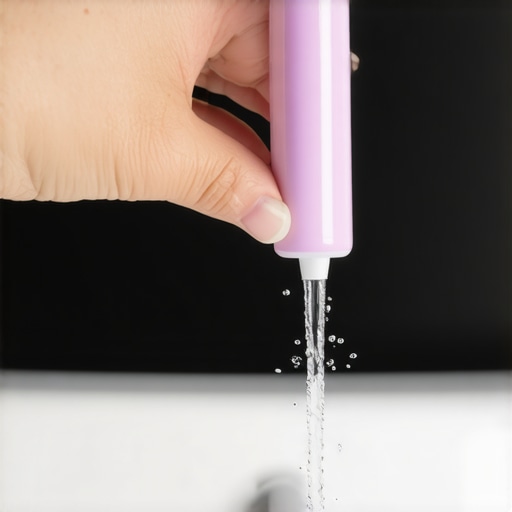
When I first started, I made the messiest mistake imaginable: I looked at myself in the mirror with my mouth wide open while spraying. Not only did I soak my bathroom mirror, but I also aimed the water at a downward angle into the gum pockets. This is a recipe for pain. Instead, lean over the sink, close your lips slightly to prevent splashing, and hold the tip at a 90-degree angle to your gum line. You want the water to hit where the tooth meets the gum, allowing the spray to deflect off the hard surface of the tooth and gently flush the debris away. If you angle it directly into the pocket, you’re just forcing bacteria deeper, which is often why your gums bleed even though you brush twice a day.
Trace the Path Rather Than the Teeth
Don’t just spray randomly. Start at the back of your mouth and follow a logical path. I like to start with the top molars on the left and work my way around. Move the tip along the gum line, pausing for a second or two between each tooth. Think of it like a slow-motion car wash. You aren’t trying to scrub the enamel; you’re clearing the ‘gutters’ where the tooth meets the soft tissue. If you move too fast, you miss the interproximal spaces where the real trouble hides. I remember one Tuesday morning I was in a rush and zipped through the process in thirty seconds; by lunch, my gums were throbbing because I’d irritated the tissue without actually removing the plaque. Slow and steady wins this race.
Special Care for Your Dental Upgrades
If you have invested in your smile, your flossing technique needs a slight pivot. For those with dental implants that reshape your oral health, the water flosser is your best friend because it can reach under the crown where traditional floss struggles. However, you must be even more diligent about low pressure, as the seal between an implant and the gum is different than a natural tooth. The same goes for cosmetic work. You want to avoid high-pressure streams hitting the edges of your porcelain work. If you’ve ever worried about the mistake that makes porcelain veneers look like piano-keys, it’s often poor gum maintenance that leads to recession, exposing the edges of the veneers. Using the flosser correctly keeps that gum line high and healthy, protecting your investment for the long haul.
Manage the Post-Floss Sensitivity
After you finish, your mouth might feel a bit tingly or even slightly sore for the first few days. This is normal. I found that using lukewarm water instead of cold tap water made a massive difference in my comfort levels. Cold water on sensitive gums feels like a localized brain freeze. If the soreness persists, you can learn how to manage tooth sensitivity after your first professional cleaning by applying those same soothing techniques to your daily routine, such as using a desensitizing rinse afterward. The goal is to make the experience pleasant enough that you actually want to do it again tomorrow morning.A lot of people assume that because a crown or an implant isn’t “real” bone or enamel, it is basically a piece of indestructible armor. That’s a dangerous mindset that I see even seasoned health enthusiasts adopt. In fact, the way your gums attach to a titanium post or a porcelain margin is far more precarious than a natural tooth’s ligament attachment. I’ve seen folks blast their gums thinking they are being thorough, only to realize why your gums look receding even though you dont have gum disease a few months later. The “oops” factor here is the false sense of security; if you have dental implants that reshape your oral health, the water flosser must be treated as a precision surgical tool, not a backyard power washer.
Can excessive water pressure actually break the seal around my implant?
This is where the clinical science gets interesting and where most beginners get it wrong. Natural teeth are anchored by the periodontal ligament, which has a robust blood supply and a resilient immune response. Implants, however, rely on what we call a “perimucosal seal.” A study published in the Journal of Periodontology suggests that while mechanical irrigation is vital for preventing peri-implantitis, excessive hydraulic pressure can actually force bacteria deeper into the peri-implant pocket if the tip angle is even slightly off. It’s a nuance that basic manuals completely ignore. You aren’t just cleaning a surface; you’re maintaining a delicate biological barrier. If you’ve ever wondered about the reason your dental implant crown feels tighter than the others, it might actually be localized inflammation from over-aggressive irrigation rather than a structural problem with the hardware.
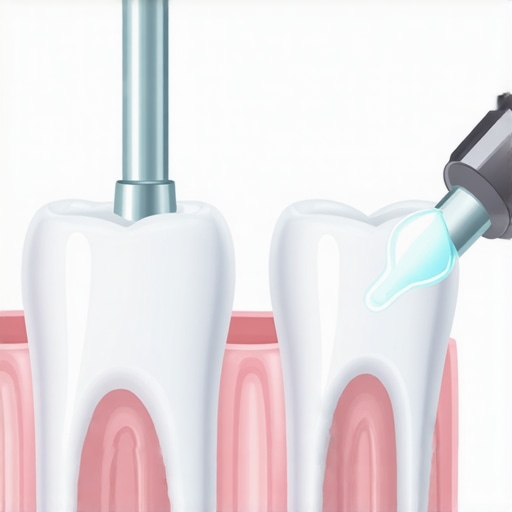
The same caution applies to high-end cosmetic work. Most people worry about the reason your porcelain veneers look opaque and fake, but the real aesthetic killer is the development of “black triangles” caused by chronic tissue trauma. If you use a water flosser on the highest setting right at the margin of a veneer, you risk micro-tearing the interdental papilla—that little triangle of gum between your teeth. Over time, this causes the tissue to retreat, exposing the transition point of the veneer and ruining the illusion of a natural smile. It is the ultimate irony: you are flossing to keep your smile perfect, but a “more is better” technique is actually aging your dental work prematurely. Have you ever fallen into this trap of thinking “harder is better” with your dental tech? Let me know in the comments below.
I’ve realized that the tool itself matters just as much as the hand holding it. After cycling through three generic brands that felt more like power tools than medical devices, I settled on a model that offers a dedicated ‘massage’ mode. This isn’t just a marketing gimmick; it’s a pulsed modulation that encourages blood flow without the sustained trauma of a constant jet. If you’re serious about your investment, look for a device that allows for fine-tuned pressure control. This is one of the most effective family dentistry tips for a lifetime of healthy smiles I can offer from my personal journey. I also swapped my old manual brush for a high-quality sonic version because I realized that over-scrubbing was actually one of the signs your receding gums are caused by your toothbrush rather than just aging. To keep the aesthetics sharp, I’ve learned how to keep your teeth white while drinking black coffee daily by using the flosser immediately after my morning brew to prevent tannins from settling into the micro-crevices of my restorations. Maintaining these results is about layering these small, consistent habits.
How do I maintain my dental work over time?
The secret isn’t a single deep clean; it’s the consistency of ‘low and slow’ maintenance. If you have hardware, you must learn to safely clean a dental implant without scratching the post, as even tiny micro-scratches can become breeding grounds for bacteria. The *Journal of Clinical Periodontology* suggests that subgingival irrigation—especially when paired with a diluted antimicrobial rinse—can reduce gingival inflammation by up to 40% more than brushing alone. This isn’t just about health; it’s about the cosmetic dentistry secrets to boost your confidence that come from knowing your smile isn’t going to fail you in five or ten years. 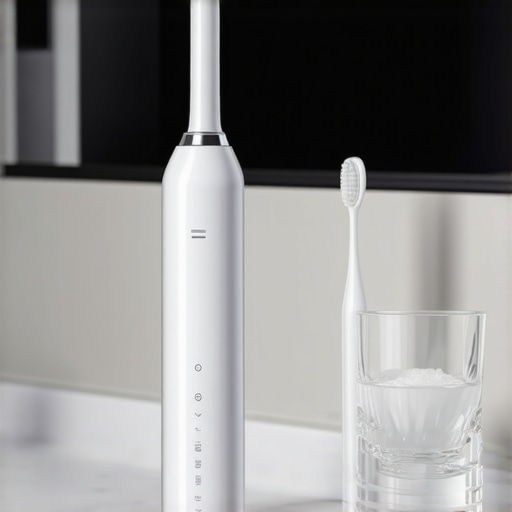
Future Smiles are Smarter and Faster
Looking ahead, I suspect the manual element of our routine will start to fade. We are already seeing the future of dental implants and cutting-edge techniques in cosmetic dentistry involving smart-sensors that detect pH levels in your saliva. Soon, your flosser might tell you exactly which tooth needs more attention before you ever see a drop of blood. My advanced tip for you today: Try adding a pinch of sea salt to your flosser’s water reservoir twice a week. It’s a natural way to keep the oral biome balanced without harsh chemicals. If you’re feeling overwhelmed by all the tech options, don’t hesitate to get in touch with us for a personalized recommendation based on your specific dental history.
The Hardest Lesson I Learned About My New Morning Routine
Looking back at my first week with a water flosser, I realize that I was treating my oral care like a construction project rather than a health ritual. The biggest lightbulb moment came when I stopped viewing the flosser as a way to power-wash my teeth and started seeing it as a way to nourish my gums. I learned that consistency beats intensity every single time. It is much better to use the lowest setting for two minutes every night than to blast your gums on the highest setting once a week. I also realized that my panic over the pink water was actually a good thing; it forced me to look closer and finally learn how to tell if your gums are healthy based on their color. If I hadn’t seen that blood, I would have kept ignoring the localized inflammation that was slowly bubbling under the surface.
The Only Dental Gear I Actually Buy for Long-Term Health
I am often asked what is actually worth the counter space in a modern bathroom. First, I recommend a water flosser with a ‘pulsed’ mode; the rhythmic action is far superior for gum stimulation than a steady stream. Second, I trust high-quality sonic toothbrushes that have a built-in pressure sensor—this is vital if you’ve realized the signs your receding gums are caused by your toothbrush rather than your flosser. Lastly, I keep a high-quality antimicrobial rinse on hand to use in the flosser reservoir once a week. These tools, when combined with family dentistry tips for a lifetime of healthy smiles, create a defensive wall against decay and gum disease that no single gadget can provide on its own.
The Future of Your Healthy Smile Starts Today
It is completely normal to feel a bit of trepidation when your new routine starts with a little bit of discomfort. But don’t let that initial ‘sink full of red’ deter you from the incredible long-term benefits of pressurized irrigation. Whether you are protecting veneers with expert tips for perfect results or just trying to keep your natural teeth for the next fifty years, the water flosser is a game-changer when used with a gentle hand. You are not just cleaning; you are investing in your future confidence. If you ever feel like something isn’t quite right, or if the sensitivity persists longer than two weeks, please get in touch with us so we can ensure your technique is perfect. Have you ever felt like throwing your water flosser out the window after seeing a bit of blood? Let me know in the comments below!