I remember standing in front of my bathroom mirror, mouth filled with a gritty, pitch-black sludge that looked more like industrial waste than a beauty treatment. I’d seen the viral videos—you know the ones—where someone brushes with a mysterious black powder and rinses away the darkness to reveal a blinding, movie-star smile. I was convinced. After years of being a self-proclaimed tea addict, my teeth had definitely seen brighter days, and I wanted that [cosmetic dentistry](https://straightsmileortho.com/cosmetic-dentistry-secrets-to-boost-your-confidence) look on a drugstore budget. But as I spat out the black foam and spent ten minutes scrubbing the sink, I realized I might have made a huge mistake. My teeth didn’t look whiter; they just felt raw, and my gums were screaming.
What I Learned After Scrubbing My Enamel with Black Powder
The reason we all flock to these trends is simple: we want a fast fix. We want to [transform our smile](https://straightsmileortho.com/transform-your-smile-with-veneers-expert-tips-for-perfect-results) without the hefty price tag of professional treatments or permanent [veneers](https://straightsmileortho.com/veneers-transformation-unlocking-your-best-smile-yet). But here is the hard truth I learned the painful way—activated charcoal doesn’t actually whiten your teeth in the chemical sense. It’s an abrasive. It works by physically scraping off surface stains, which sounds great until you realize it’s also scraping away your precious enamel. I made the mistake of using it daily for two weeks, thinking more was better. By day ten, I wasn’t just worried about stains; I was wondering [why my teeth look yellow despite using whitening toothpaste](https://straightsmileortho.com/why-your-teeth-look-yellow-despite-using-whitening-toothpaste). As the enamel thins, the yellowish dentin underneath starts to peek through, making your teeth look darker and more aged in the long run. It was a classic case of trying to skip the steps of proper [family dentistry](https://straightsmileortho.com/family-dentistry-tips-for-a-lifetime-of-healthy-smiles) and paying the price in sensitivity.
Is This Black Powder Really Worth the Risk?
You might be skeptical, thinking, “But it’s natural, how bad can it be?” I thought the same thing. However, a comprehensive review in the Journal of the American Dental Association (JADA) found that there is insufficient clinical evidence to support the safety or efficacy of charcoal products for tooth whitening. In fact, they can actually increase your risk of cavities because they lack fluoride and can be too harsh for your daily routine. If you’ve ever noticed that your [teeth feel sensitive when you eat dark chocolate](https://straightsmileortho.com/why-your-teeth-feel-sensitive-when-you-eat-dark-chocolate) or drink cold water after a charcoal session, that’s your body telling you the protective layer is wearing thin. Have you ever tried one of these DIY whitening hacks and ended up with more mess than results? I’d love to hear your story in the comments—we can commiserate over our ruined toothbrushes together. We need to focus on [the safest way to use charcoal](https://straightsmileortho.com/the-safest-way-to-use-charcoal-for-teeth-whitening) if you are truly determined to try it, but first, let’s look at why this trend caught fire and what the science actually says about your long-term dental health.
Stop Sandpapering Your Smile and Start Treating the Stains
If you want to whiten your teeth without a dentist, you have to stop treating your mouth like a piece of old furniture that needs heavy sanding. Activated charcoal is like using 40-grit sandpaper on a fine mahogany table; sure, you’ll get the grime off, but you’re also losing the finish that makes it beautiful. Instead of scrubbing, you need to transition to methods that lift stains chemically rather than physically. If you have deep discoloration, you might find that [the mistake that makes your teeth look too white and fake](https://straightsmileortho.com/the-mistake-that-makes-your-teeth-look-too-white-and-fake) is simply overdoing the abrasives. Real whitening happens when the peroxide or professional agent penetrates the pores of the tooth, not when you scrape the top layer away. 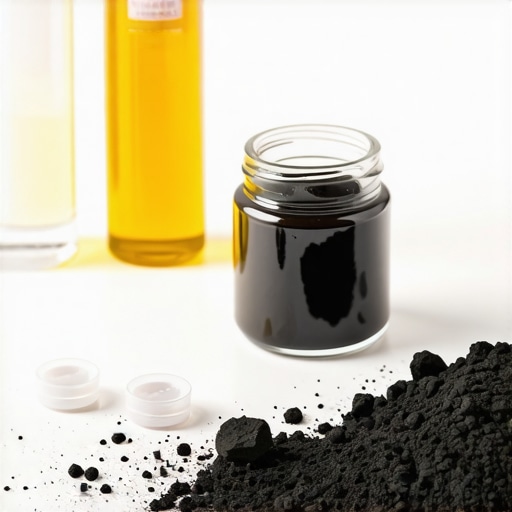
Figure Out If You Are Dealing With Stains or Thin Enamel
Before you reach for another tub of black powder, look at the edges of your teeth. Are they slightly translucent? That is a sign your enamel is already thinning. I remember the morning I noticed my front teeth looked almost clear at the tips—I panicked and thought I had a major cavity. It turns out I was just being too aggressive with my ‘natural’ routine. This is why [family dentistry tips for a lifetime of healthy smiles](https://straightsmileortho.com/family-dentistry-tips-for-a-lifetime-of-healthy-smiles) focus so heavily on gentle care. If your teeth are already worn down, no amount of charcoal will make them white; you’ll just expose more of the yellow dentin. In those cases, you’re looking at a different fix entirely, such as [veneers vs crowns choosing the best option for your smile](https://straightsmileortho.com/veneers-vs-crowns-choosing-the-best-option-for-your-smile) to restore that protective shield.
Invest in a Long-Term Solution That Stays Bright
When my DIY charcoal phase finally ended in a week of sensitivity so bad I couldn’t even breathe in cold air, I had to look at professional alternatives. If you want a result that lasts longer than a few hours, you need to understand the material science of your teeth. For example, many people don’t realize that [why composite bonding stains faster than porcelain veneers 2](https://straightsmileortho.com/why-composite-bonding-stains-faster-than-porcelain-veneers-2) is all about how porous the material is. If you are serious about a permanent change, looking into [cosmetic dentistry secrets to boost your confidence](https://straightsmileortho.com/cosmetic-dentistry-secrets-to-boost-your-confidence) is far more effective than any drugstore powder.
Swap the Powder for Targeted Professional Treatments
If you have a small issue, like a gap you’ve been trying to hide with shadows or clever angles in photos, you don’t need a total overhaul. You can actually learn [how to fix a small gap between your teeth without bracess](https://straightsmileortho.com/how-to-fix-a-small-gap-between-your-teeth-without-braces) through simple bonding or clear aligners. For more significant structural issues or missing teeth, the science has advanced so much that [the truth about the lifespan of a dental implant](https://straightsmileortho.com/the-truth-about-the-lifespan-of-a-dental-implant) makes them a better investment than temporary fixes. I learned the hard way that spending twenty dollars on a ‘miracle’ powder was just a down payment on a much more expensive repair job later. Focus on chemical whitening or professional restorations that work with your biology, not against it.Let’s dig deeper into the world of professional upgrades. Most people assume that once you pay for a high-end smile, your work is done. This is the biggest ‘oops’ factor in the industry. Everyone says a movie-star smile is about picking the whitest shade on the chart, but in my experience—and according to top pros—that is exactly why your porcelain veneers look opaque and not natural. Real teeth have translucency; they catch the light and let it pass through. When you ignore this nuance, you end up with what I call ‘bathroom tile teeth.’ It’s a common trap: choosing a monolithic block of color rather than a layered porcelain that mimics the biological complexity of a real tooth. If you are already there and regretting the ‘thick’ feeling, you aren’t alone; many patients wonder why your porcelain veneers might feel bulky at first before they realize the importance of a precise fit. 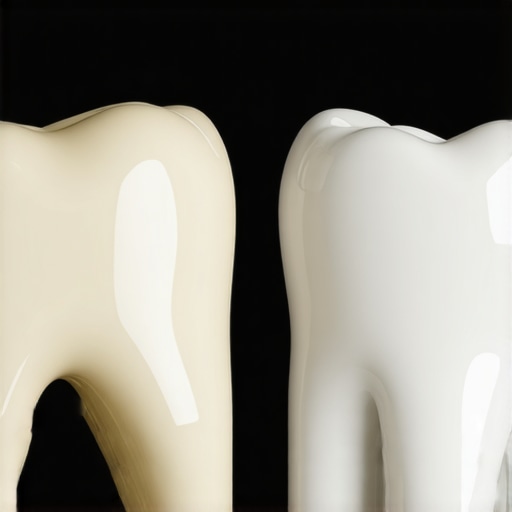
Stop Aiming for ‘Toilet Bowl White’
It sounds harsh, but the obsession with bleaching can backfire. A study published in the Journal of Prosthodontic Dentistry emphasizes that the success of a dental restoration often hinges on the ’emergence profile’—how the tooth comes out of the gum—rather than just the color of the crown. If you push for a shade that doesn’t exist in nature, you end up with the mistake that makes your teeth look too white and fake. The goal should be harmony, not a neon sign.
Is There a Trick to Making Implants Last Forever?
This is the advanced question I get all the time. People think a titanium post is a magic wand, but the truth about the lifespan of a dental implant depends entirely on your bone health and how you treat your gums afterward. One specific nuance many miss is the truth about getting dental implants if you have existing bone loss. You can’t just plant a tree in dry sand and expect it to grow. And once it’s in, don’t be surprised by the sensory shift; the reason your dental implant feels different than a natural tooth is because it lacks the periodontal ligament that acts as a biological shock absorber.
Watch Out for the Shark Teeth Scare
In the realm of family dentistry tips for a lifetime of healthy smiles, parents often panic when they see the reason your child has two rows of teeth at once. It looks like a dental emergency, but it’s often a normal part of development where the permanent teeth erupt before the baby teeth fall out. The ‘hidden nuance’ here is knowing when to intervene and when to let nature take its course. It’s the same with early decay; you need to know how to tell if your toddler has a cavity or a stained groove before rushing into invasive procedures. Have you ever fallen into the trap of choosing ‘extra white’ only to regret it later, or panicked over your kid’s ‘shark teeth’? Let me know in the comments—I’ve been there too!Once you have finally committed to a veneers transformation or successfully replaced a missing gap, the real work shifts from the dental chair to your bathroom counter. It is a common misconception that porcelain or titanium means you are ‘done’ with dental care. In reality, these materials require a specific maintenance protocol that differs from natural enamel. For instance, I personally swear by a high-end water flosser over traditional string because it allows for precision cleaning around the margins of a restoration without the risk of snagging a delicate edge. If you are curious about the best way to remove a stubborn spinach leaf from under your bridge, a water flosser set to a medium-high pressure is the gold standard for dislodging debris without irritating the gums.
Keep Your Investment From Cracking Under Pressure
One of the biggest threats to high-end cosmetic work isn’t sugar; it is mechanical stress. I learned this the hard way after waking up with a tiny chip in my front tooth. According to the American Academy of Cosmetic Dentistry (AACD), even the highest quality porcelain is susceptible to ‘fatigue failure’ if it is subjected to constant, repetitive grinding. This is why I tell everyone that the risk of skipping your night guard for just one week is far higher than most people realize. Your jaw can exert hundreds of pounds of pressure during sleep—enough to eventually crack even the strongest crown. If you notice why your dental implant crown feels slightly wiggly when you bite, it might not be the screw loosening, but rather the surrounding bone reacting to excessive force.
How do I maintain my smile’s brilliance over time?
Consistency is more important than intensity. Use a non-abrasive, low-RDA (Relative Dentin Abrasivity) toothpaste to avoid scratching the polish on your porcelain. For those with orthodontic history, mastering the secret to flossing comfortably with a permanent retainer is essential for preventing the plaque buildup that leads to localized gum recession. I recommend using a bridge-and-implant specific floss with a built-in stiff threader; it makes the process ten times faster than trying to loop standard floss through a needle-threader every night. 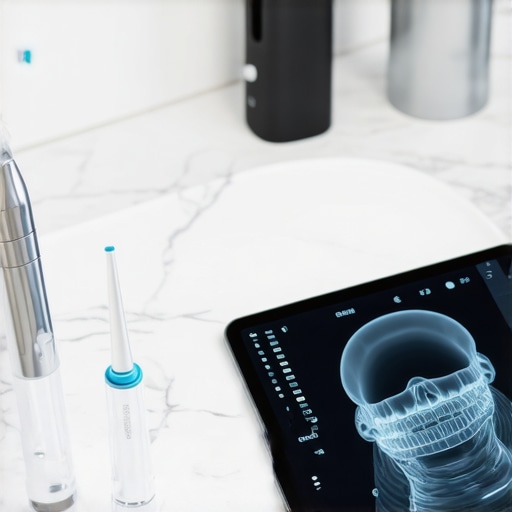
Where We Are Going: The 2025 Tech Shift
Looking ahead, the industry is moving away from ‘one size fits all’ solutions and toward hyper-personalization. We are already seeing dental implants 2025 innovations that redefine comfort and durability through the use of 3D-printed zirconia and AI-mapped surgical guides. This means shorter healing times and a fit so precise it feels like part of your original anatomy. We are witnessing how dental implants reshape your oral health in 2025 by preventing the bone loss that used to be inevitable with age. My prediction is that within the next three years, we will see ‘smart’ retainers that can track your jaw tension in real-time, alerting your phone if you are grinding your teeth too much during the day. If you haven’t yet, I highly encourage you to invest in a custom-molded night guard this week—it is the cheapest insurance policy for your smile you will ever buy.
What My Dentist Finally Admitted About DIY Trends
Looking back on my black-sludge disaster, I realized that the biggest mistake wasn’t just using the wrong product; it was a lack of perspective. After dozens of conversations with professionals, I’ve distilled the truth into a few key lightbulb moments that changed my approach to oral health forever. First, I learned that enamel is a non-renewable resource. Unlike your skin or hair, once you sand away that protective shield with abrasives, it is gone for good. Second, I discovered that ‘natural’ does not always mean ‘safe.’ Arsenic is natural, but we don’t use it in our skincare! Finally, I realized that true beauty in cosmetic dentistry comes from translucency and health, not just a flat white color. If you’ve ever wondered why your veneers look too opaque and how to make them look natural, it’s often because we focus too much on the brightness and not enough on the light-reflecting properties of a real tooth.
The Daily Habits That Keep My Teeth Intact
If you want to maintain your results without constant trips to the clinic, you need a toolkit that prioritizes preservation over aggression. I’ve transitioned to a routine that feels less like a chore and more like an insurance policy for my mouth. Here are the staples I trust: A high-quality water flosser for cleaning under dental work, a soft-bristled electric toothbrush with a pressure sensor, and most importantly, a custom-fitted night guard. If you find yourself stressed and waking up with a tight face, learning how to stop clenching your jaw during the workday is just as vital as any whitening strip. These tools ensure that my veneers and dental implants don’t suffer from the mechanical wear and tear that usually leads to costly repairs.
Your Roadmap to a New Level of Dental Confidence
Ultimately, the journey to a perfect smile isn’t found in a viral video or a mystery powder—it is built on a foundation of family dentistry and smart, evidence-based choices. Whether you are currently researching the future of dental implants or just trying to find a better way to whiten, remember that you deserve a solution that lasts decades, not just until your next social media post. Don’t be afraid to take that first step and reach out to a professional; they can help you navigate the noise and find a plan that respects your biology. If you’re ready to stop guessing and start transforming, feel free to contact us to explore your options. Your future self—and your enamel—will thank you for it. Have you ever been tempted by a viral DIY hack that promised a ‘miracle’ fix for your teeth? I’d love to hear how it went—drop your story in the comments!