I still remember that beach trip to the Outer Banks three summers ago. I was packed, caffeinated, and ready for a week of total relaxation. But as I pulled out of my driveway, a tiny thought nagged at me: I’d forgotten my night guard on the bathroom counter. I shrugged it off. It was just seven days, right? I figured my jaw needed a vacation from that bulky piece of plastic as much as I needed a vacation from my desk. That was the first big mistake of my journey into serious family dentistry self-care.
The High Price of a “Relaxing” Week Without Protection
By the third morning, the honeymoon phase was over. I didn’t wake up feeling refreshed by the ocean breeze; I woke up with a dull, throb-heavy headache that made me reach for the ibuprofen before the coffee. My jaw felt like it had been clinching a heavy weight all night. It turns out, your brain doesn’t stop stressing just because your body is at the beach. If you’ve ever wondered why your jaw hurts more in the morning than at night, it’s usually because that nighttime grinding—or bruxism—is an Olympic-level workout for your facial muscles. By day five of my “break,” I noticed a sharp sensitivity when I bit into a cold slice of watermelon. I was horrified. I’d spent years investing in cosmetic dentistry secrets to boost my confidence, and here I was, potentially cracking my own enamel in a single week of neglect.
Do I really need this thing every single night?
It’s the question I asked myself back then, and it’s the one I hear most often from friends. Skepticism is natural. We think of teeth as these immovable, indestructible ivory towers. But the reality is much more fragile. According to the American Academy of Sleep Medicine, the force exerted by your jaw muscles during a grinding episode can reach up to 250 pounds of pressure on your molars. That is more than enough to cause micro-fractures in seven days. I learned the hard way that skipping just one week can lead to visible changes, such as why your teeth look shorter after years of nighttime grinding, because that wear and tear happens much faster than you’d think. It isn’t just about comfort; it’s about structural integrity. Have you ever tried to go a week without it and felt that immediate, nagging regret the next morning? I’d love to hear if your jaw reacted as quickly as mine did.
The mistake I made early on was assuming my grinding was a conscious choice I could control with “relaxation.” It’s not. It’s a physical habit that needs a physical barrier. When I finally got home and popped my guard back in, my teeth felt like they had shifted—a common sensation after the ligaments have been under constant duress. We’re going to dive into exactly what happens to your bite alignment and your enamel during that seven-day window, so you never have to make the same mistake I did.
When you skip your night guard, you aren’t just missing a piece of plastic; you’re removing the only shock absorber your teeth have. Think of your jaw like the suspension system on a heavy-duty truck. Without that cushion, every bump in the road—or in this case, every stress-induced clench—sends a jarring vibration straight into the chassis of your mouth. This constant pounding is exactly why your teeth look shorter after years of nighttime grinding. To prevent this, you need a protocol that turns protection into a mindless habit.
Treat Your Night Guard Like a Shock Absorber for Your Smile
The core technique isn’t just about ‘wearing it’; it’s about ensuring the fit remains precise enough to redistribute force. If the guard is loose, your jaw will actually work harder to hold it in place, defeating the entire purpose of family dentistry tips for a lifetime of healthy smiles. You want a ‘snap’ fit. When you place it in your mouth, use your fingers—never your teeth—to press it firmly into place. Biting it into position can create micro-cracks in the material or, worse, put uneven pressure on your recent veneers transformation.
The Correct Way to Seat the Device Without Stressing Your Bite
I learned this the hard way. Early on, I used to just ‘bite down’ to pop my guard in while I was walking to bed. One morning, I felt a sharp, localized ache. I was terrified I’d need cutting-edge dental implants because I thought I’d cracked a molar. It turns out I was just seating the guard crookedly, which forced my jaw to sit at an unnatural angle all night. Now, I always use a mirror. Ensuring that it sits flush against your upper arch protects the structural integrity of your bite and prevents that ‘vibrating’ sensation some people feel in their crowns.
Why Hot Water is the Enemy of Your Custom Fit
One of the biggest mistakes people make in their cosmetic dentistry routine is trying to ‘deep clean’ their guard with boiling water. I did this once after a bout with the flu, thinking I was being extra hygienic. I watched in horror as my $500 custom-molded investment shriveled into a plastic pretzel. High heat warps the medical-grade acrylic. Once that shape is gone, it can actually cause your teeth to shift. Instead, use lukewarm water and a gentle cleanser. It’s a similar logic to how to pick a toothbrush that won’t destroy your enamel; you want effective cleaning without the abrasive or destructive force.
Clean It Like a Pro to Avoid Morning Breath
Don’t use regular toothpaste to scrub your guard. Most toothpastes contain abrasives that create microscopic scratches in the plastic. These tiny grooves become ‘hotels’ for bacteria, leading to that funky smell and potentially causing gum irritation. Use a dedicated retainer cleaner or even a mild dish soap with a soft-bristled brush. This attention to detail is part of the real cost of skipping your six-month checkup—if you don’t maintain your appliances, you’re just inviting inflammation back into your mouth. When you wake up, rinse it immediately before the saliva dries into a film, making it much easier to keep clear and odorless.
While protecting your teeth with a night guard is the first step, the real nuance of family dentistry lies in understanding the physics of your bite. I often see patients who believe that choosing the hardest, most ‘indestructible’ material for their restorations is the best way to future-proof their smile. This is a common myth. In reality, your mouth is a delicate ecosystem of varying densities. If you place a rock-hard material next to natural enamel, the enamel will always lose the battle. It is a concept many people overlook when exploring dental implants 2025 innovations that redefine comfort and durability.
Stop Chasing the Hardest Material Possible
In the world of cosmetic dentistry, zirconia is often hailed as the king because it is nearly impossible to break. However, in my experience, using monolithic zirconia without a protective night guard can turn that crown into a hammer that slowly pulverizes the natural tooth sitting opposite it. According to a study published in the Journal of Prosthetic Dentistry, the abrasive nature of unpolished zirconia against natural enamel can lead to accelerated wear of the opposing arch. This is why a ‘soft-touch’ approach often yields better long-term results than simply aiming for strength. You want materials that mimic the wear-rate of your natural teeth to maintain a balanced bite over the decades.
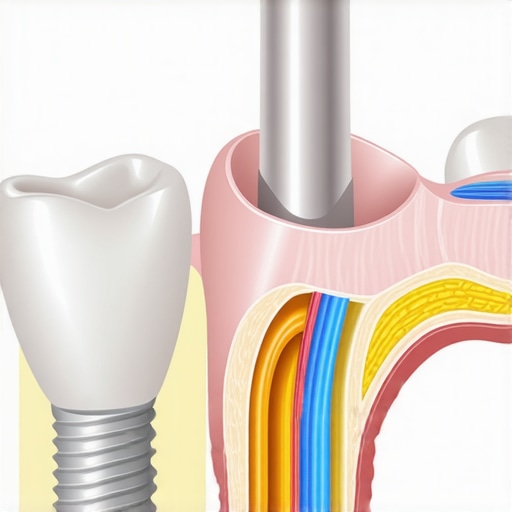
Why is my super-strong dental implant causing my natural teeth to chip?
This is the ‘oops’ factor that catches even the most diligent patients off guard. Because a dental implant is fused to your jawbone, it lacks the periodontal ligament—the tiny shock absorber—that natural teeth have. When you clench or grind, the implant doesn’t move or flex, meaning 100% of that pressure is transferred elsewhere. If your bite isn’t perfectly calibrated, you might start noticing small chips in your natural teeth or even feel like your dental implant feels loose even when the screw is perfectly secure. It’s a sophisticated mechanical issue that requires more than just brushing; it requires a dentist who understands occlusion (how your teeth meet).
The Subtle Trap of Maintenance-Free Claims
Another high-level mistake is assuming that because porcelain or implants can’t get cavities, they don’t need the same level of care as natural teeth. This mindset is dangerous. While the material itself won’t decay, the bone and gums supporting it are still vulnerable to inflammation. For instance, knowing why composite bonding stains faster than porcelain veneers helps you choose the right material, but it doesn’t exempt you from a rigorous cleaning routine. If you let plaque build up around the base of a high-end restoration, you risk peri-implantitis, which can lead to total failure. You must distinguish between the health of the restoration and the health of the foundation. Have you ever fallen into this trap of thinking your ‘fake’ teeth were invincible? Let me know in the comments.
To truly elevate your family dentistry outcomes, focus on the texture and integration of your dental work. If you’ve ever wondered why your veneers look like white chiclets and how to fix the texture, it’s usually because the lab-created surface is too smooth and lacks the natural light-reflecting ‘pits’ of real enamel. A truly expert restoration isn’t just about color; it’s about how it interacts with light and how it respects the biological limits of your jaw. If you’re concerned about how your current dental work feels or looks, it might be time to look at how to tell if your dental implant is rejecting or just healing and ensure your ‘forever’ smile is actually built to last.
I realized that if I was going to treat my mouth like a high-performance machine, I needed the right maintenance equipment. You wouldn’t take a Ferrari to a $5 car wash, so why use a 99-cent toothbrush on $20,000 worth of cosmetic dentistry? For me, the game-changer was a high-pressure water flosser with a specialized tip. If you have any gaps, learning how to clean the underside of a dental bridge without shredding your floss is half the battle. The water flosser creates a turbulent flow that dislodges biofilm that standard string just glides over. It’s the difference between sweeping a floor and power-washing a driveway.
Use This One Tool to Save Your Dental Bridge
Beyond water flossing, I’ve become obsessed with interdental brushes. These aren’t the flimsy ones from the grocery store; I use ISO-sized brushes specifically calibrated for the space between my teeth. They are essential for family dentistry because they physically scrub the concave surfaces of the roots that floss cannot reach. According to research by Dr. Nikos Donos, Head of Clinical Research at the Institute of Dentistry, Queen Mary University of London, mechanical plaque control is the single most important factor in preventing peri-implantitis. If you aren’t using an interdental brush once a day, you’re leaving the door open for bone loss around your high-end work.
How can I keep my dental implants healthy for the long haul?
Long-term success isn’t about luck; it’s about managing the biological seal. My morning routine now includes a pH-balanced mouthwash. Most commercial rinses are actually quite acidic, which can etch the surface of your veneers expert tips or crowns over time. Switching to a neutral or slightly alkaline rinse protects the bond. When I look at 3 secrets to making your porcelain veneers last twenty years, this chemical balance is often the missing piece. It keeps the gum tissue tight and prevents the ‘dark line’ from forming at the margin, which is the ultimate goal for anyone investing in how dental implants reshape your oral health in 2025.
Why Your Electric Toothbrush Needs a Pressure Sensor
I used to be a ‘scrubber.’ I thought harder was better until my dentist pointed out the early signs of recession. Now, I only use a brush with a visible pressure sensor that flashes red if I push too hard. This is crucial for family dentistry tips for a lifetime of healthy smiles because you need to protect the thin gingival tissue. You have to learn how to pick a toothbrush that won’t destroy your enamel or your expensive porcelain. Looking forward, I predict that by 2030, we will have ‘smart’ night guards integrated with bio-sensors that track clenching intensity in real-time, sending data directly to your phone. We are already seeing the beginnings of this in dental implants 2025 innovations that redefine comfort and durability. My challenge to you: tonight, switch your water flosser to the lowest setting and take a full two minutes just on the gum line. You’ll be surprised at what your manual brush missed.
Hard Lessons from My Own Smile Investment
Reflecting on my years navigating the world of high-end dental work, I’ve realized that the biggest breakthroughs didn’t happen in the dentist’s chair, but in the small choices I made at home. First, I learned that dental work has a ‘memory.’ Your periodontal ligaments are surprisingly dynamic; when you skip a night guard, they begin to shift almost immediately, which is why your bite feels ‘off’ the next morning. Second, I discovered that ‘pretty’ doesn’t always mean ‘functional.’ You can have the most beautiful veneers transformation imaginable, but if you don’t respect the physics of your bite, you’re essentially driving a race car without brakes. Finally, the most humbling lesson was realizing that my mouth is a living ecosystem. Even the most advanced cosmetic dentistry requires a healthy biological foundation to survive.
The Gear That Keeps My Dental Work in Check
I don’t leave my oral health to chance anymore, and I rely on a specific toolkit to protect my investment. I personally swear by ISO-sized interdental brushes; they reach the ‘nooks and crannies’ that standard floss misses, especially around the base of a crown. I also keep a stash of pH-balanced, alcohol-free mouthwash to maintain a neutral environment that won’t etch my porcelain. For those looking for deeper guidance, I always refer back to family dentistry tips for a lifetime of healthy smiles to keep the basics sharp. These aren’t just ‘products’ to me; they are insurance policies for my smile. If you are ever unsure about your current routine, the real cost of skipping your six-month checkup is far higher than the price of a few quality tools.
Take Charge of Your Long-Term Oral Health
Investing in your smile is one of the most empowering things you can do for your confidence, but the real work starts after you leave the office. Whether you are looking at 3 secrets to making your porcelain veneers last twenty years or curious about how dental implants reshape your oral health in 2025, the common thread is your daily commitment. Your family dentistry journey is a marathon, not a sprint. Don’t let a few missed nights of protection derail the progress you’ve made. If you have questions about your specific dental plan, feel free to reach out through our contact us page to get the clarity you need. Have you ever accidentally skipped your night guard for a few days and noticed your teeth felt sensitive or ‘different’? Let me know in the comments below!