I remember the first time I saw it. My toddler was laughing at something—probably a cartoon or a very messy dog—and as his mouth opened wide, I caught a glimpse of something dark on one of his back molars. My heart skipped a beat. Was that a cavity? Or just a bit of leftover blueberry from breakfast? I spent the next twenty minutes trying to get a better look while he squirmed away, and honestly, the anxiety was real. I’ve been there, and I know exactly how that sinking feeling in your stomach works when you realize you might have failed at the tooth-brushing game. We all want a lifetime of healthy smiles for our kids, but the line between a harmless stain and a dental emergency can feel incredibly thin.
That Tiny Dark Spot Is Driving You Crazy
The truth is, those deep grooves on the biting surfaces of molars are magnets for everything. They are tiny canyons that collect pigments from food, but they are also the primary targets for decay. Early in my parenting journey, I made the mistake of assuming that if it didn’t hurt, it wasn’t a problem. I ignored a small shadow in my daughter’s mouth for months, thinking it was just a deep groove. By the time we got to the dentist, it was a full-blown cavity. It turns out that learning how to tell if a white spot or a dark line is a cavity is a skill every parent needs to master early on. Today, I’m going to help you figure out if you need to rush to the clinic or if you can just breathe a sigh of relief. [image_placeholder]
Wait, Isn’t a Cavity Always a Big Hole?
This is the biggest misconception I run into. Most parents expect a cavity to look like a crater, but in toddlers, they often start as subtle color changes or sticky-looking lines. According to the American Academy of Pediatric Dentistry, tooth decay is significantly more common in children than asthma, making it a constant battle for parents. If you’ve ever felt like you’re losing the daily struggle to get your kids to brush, you aren’t alone. Have you ever stared at your child’s tooth with a flashlight, feeling like you were overreacting? Tell me in the comments, because I’ve definitely been that parent. We’re going to break down the visual cues, the texture tests, and the red flags that mean it’s time to contact a professional before things get painful.
Spot the Shadow Before it Spreads
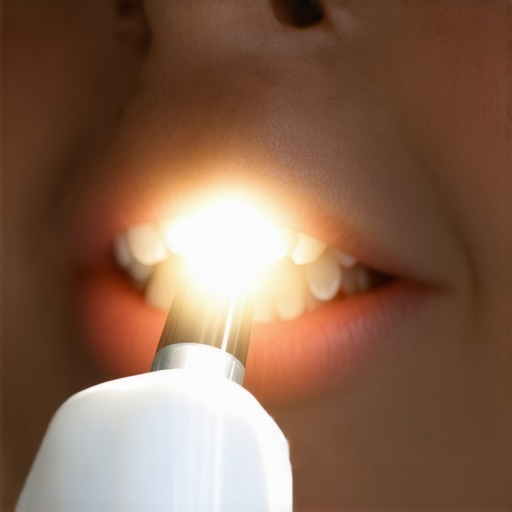
Grab a high-powered flashlight—the one on your smartphone works perfectly—and have your child tilt their head back. You are looking for more than just color; you are looking for depth. A stain, often caused by juice or even certain vitamins, looks like it was painted onto the surface, much like a smudge of ink on a whiteboard. A cavity, however, creates a ‘halo’ or a shadow that seems to live inside the tooth. When I first checked my son’s molars, I noticed a line that looked slightly different from the others. While why your child’s permanent molars look jagged or serrated on top can create natural shadows, this one didn’t change when I moved the light. That ‘immobile’ shadow is your first big warning sign that the enamel has been compromised from the inside out.
Use the Texture Test to Find Soft Spots
Enamel is the hardest substance in the human body, so it should feel like a polished stone or a ceramic plate. If you suspect a spot is more than a stain, you can do a gentle texture test. Use a clean, plastic toothpick or even just a clean fingernail to very lightly feel the area. If the tool glides over the spot smoothly, it is likely just surface pigmentation. However, if it feels ‘tacky’ or ‘sticky’—almost like your tool is sinking into soft clay—that is a localized area of decay. I remember testing a spot on my own tooth years ago after noticing that my teeth feel fuzzy even after I brush. That sticky sensation was the decider. In children, these soft spots can progress quickly, so catching that tactile ‘catch’ is vital for family dentistry tips for a lifetime of healthy smiles.
Watch How They React to Sweets
One of the most reliable ‘home tests’ doesn’t involve looking at all; it involves a snack. If your child winces or complains when eating something cold or particularly sugary, pay close attention. You might notice why your teeth hurt when you eat something very sweet is a common sign of a cavity reaching the dentin, the layer beneath the enamel. I once thought my toddler was just being a picky eater when he refused his favorite fruit snacks, but it turned out the sugar was hitting a microscopic hole in his molar. If the pain is sharp and disappears quickly after the food is gone, you’re likely dealing with early-stage decay that needs professional attention before it turns into a constant throb.
Keep Them Calm During the Check
If you find something concerning, your next step is a professional evaluation. This is where most parents panic because they worry their child won’t sit still for the dentist. I’ve found that turning the home inspection into a game of ‘copycat’ helps. If you show them how you check your own teeth first, they are much more likely to cooperate later. Knowing how to stop your toddler from biting during dental exams starts with these positive, low-pressure checks at home. By the time you get to the clinic, the process of looking into their mouth is already a familiar routine rather than a scary intrusion.
I remember the first time I saw it. My toddler was laughing at something—probably a cartoon or a very messy dog—and as his mouth opened wide, I caught a glimpse of something dark on one of his back molars. My heart skipped a beat. Was that a cavity? Or just a bit of leftover blueberry from breakfast? I spent the next twenty minutes trying to get a better look while he squirmed away, and honestly, the anxiety was real. I’ve been there, and I know exactly how that sinking feeling in your stomach works when you realize you might have failed at the tooth-brushing game. We all want a lifetime of healthy smiles for our kids, but the line between a harmless stain and a dental emergency can feel incredibly thin.
That Tiny Dark Spot Is Driving You Crazy
The truth is, those deep grooves on the biting surfaces of molars are magnets for everything. They are tiny canyons that collect pigments from food, but they are also the primary targets for decay. Early in my parenting journey, I made the mistake of assuming that if it didn’t hurt, it wasn’t a problem. I ignored a small shadow in my daughter’s mouth for months, thinking it was just a deep groove. By the time we got to the dentist, it was a full-blown cavity. It turns out that learning how to tell if a white spot or a dark line is a cavity is a skill every parent needs to master early on. Today, I’m going to help you figure out if you need to rush to the clinic or if you can just breathe a sigh of relief. [image_placeholder]
Wait, Isn’t a Cavity Always a Big Hole?
This is the biggest misconception I run into. Most parents expect a cavity to look like a crater, but in toddlers, they often start as subtle color changes or sticky-looking lines. According to the American Academy of Pediatric Dentistry, tooth decay is significantly more common in children than asthma, making it a constant battle for parents. If you’ve ever felt like you’re losing the daily struggle to get your kids to brush, you aren’t alone. Have you ever stared at your child’s tooth with a flashlight, feeling like you were overreacting? Tell me in the comments, because I’ve definitely been that parent. We’re going to break down the visual cues, the texture tests, and the red flags that mean it’s time to contact a professional before things get painful.
Spot the Shadow Before it Spreads
Grab a high-powered flashlight—the one on your smartphone works perfectly—and have your child tilt their head back. You are looking for more than just color; you are looking for depth. A stain, often caused by juice or even certain vitamins, looks like it was painted onto the surface, much like a smudge of ink on a whiteboard. A cavity, however, creates a ‘halo’ or a shadow that seems to live inside the tooth. When I first checked my son’s molars, I noticed a line that looked slightly different from the others. While why your child’s permanent molars look jagged or serrated on top can create natural shadows, this one didn’t change when I moved the light. That ‘immobile’ shadow is your first big warning sign that the enamel has been compromised from the inside out.
Use the Texture Test to Find Soft Spots
Enamel is the hardest substance in the human body, so it should feel like a polished stone or a ceramic plate. If you suspect a spot is more than a stain, you can do a gentle texture test. Use a clean, plastic toothpick or even just a clean fingernail to very lightly feel the area. If the tool glides over the spot smoothly, it is likely just surface pigmentation. However, if it feels ‘tacky’ or ‘sticky’—almost like your tool is sinking into soft clay—that is a localized area of decay. I remember testing a spot on my own tooth years ago after noticing that my teeth feel fuzzy even after I brush. That sticky sensation was the decider. In children, these soft spots can progress quickly, so catching that tactile ‘catch’ is vital for family dentistry tips for a lifetime of healthy smiles.
Watch How They React to Sweets
One of the most reliable ‘home tests’ doesn’t involve looking at all; it involves a snack. If your child winces or complains when eating something cold or particularly sugary, pay close attention. You might notice why your teeth hurt when you eat something very sweet is a common sign of a cavity reaching the dentin, the layer beneath the enamel. I once thought my toddler was just being a picky eater when he refused his favorite fruit snacks, but it turned out the sugar was hitting a microscopic hole in his molar. If the pain is sharp and disappears quickly after the food is gone, you’re likely dealing with early-stage decay that needs professional attention before it turns into a constant throb.
Keep Them Calm During the Check
If you find something concerning, your next step is a professional evaluation. This is where most parents panic because they worry their child won’t sit still for the dentist. I’ve found that turning the home inspection into a game of ‘copycat’ helps. If you show them how you check your own teeth first, they are much more likely to cooperate later. Knowing how to stop your toddler from biting during dental exams starts with these positive, low-pressure checks at home. By the time you get to the clinic, the process of looking into their mouth is already a familiar routine rather than a scary intrusion.
Stop Chasing the Whitest Shade Possible
Once you move past the anxiety of your toddler’s first checkup, you might start looking at your own dental future with a more critical eye. But here is where the expertise often gets muddied by social media trends. Everyone says they want ‘paper white’ teeth, but in my experience, chasing an ultra-bright shade like BL1 is the fastest way to make your smile look fake. The real nuance in cosmetic dentistry secrets to boost your confidence isn’t just the color—it’s the light transmission. Natural teeth are translucent at the edges, not opaque like a piece of plastic. When you opt for a shade that doesn’t exist in nature, you fall into a common trap: your veneers look like white chiclets and you lose the character of your face. A study from the Journal of Prosthetic Dentistry highlights that the most successful cosmetic outcomes are those that mimic the polychromatic nature of natural dentin and enamel. Have you ever fallen into this trap? Let me know in the comments.
The Structural Trap of Cosmetic Quick Fixes
The biggest ‘oops’ factor I see with adults is treating the choice between veneers vs crowns as purely a style choice. It isn’t. If you have a misaligned bite or a heavy grinding habit, slapping veneers on top is like putting a fresh coat of paint on a crumbling wall. You’ll eventually find yourself researching habits that cause your porcelain veneers to pop off unexpectedly because the ceramic simply cannot handle the shear force of a malocclusion. True expertise means addressing the foundation—your jaw alignment and gum health—before ever picking out a porcelain shade. 
Why does my dental implant feel cold when I drink ice water?
This is a sophisticated question I get from patients who have graduated to more complex procedures like the future of dental implants. While modern implants offer incredible durability, you have to remember that titanium and zirconia do not have the same thermal insulation as a natural tooth with a living pulp. This is exactly why your dental implant feels cold when you drink ice water—the metal or ceramic conducts temperature faster than organic dentin. It isn’t a sign of failure; it’s a physical property of the material. Understanding the reason your dental implant feels different than a natural tooth is key to long-term satisfaction. We always recommend that patients contact us for a detailed mapping of their bite before committing to high-end cosmetic work, as the hidden nuances of your oral mechanics determine the life of your investment.
It’s one thing to get the work done; it’s another thing entirely to keep it. I’ve seen people spend thousands on a veneers transformation only to treat them like natural teeth, which—newsflash—is a recipe for disaster. If you want these investments to last, you have to upgrade your toolkit. Standard string floss is great for your natural molars, but it’s often insufficient for complex restorative work. I personally swear by the ‘hydro-mechanical’ approach. Using a high-pressure water flosser isn’t just about comfort; it’s about irrigation. You need to learn how to clean under a dental bridge without shredding your floss because physical friction alone can’t reach the microscopic biofilm accumulating around the margins of a crown or implant.
How do I keep my veneers looking brand new for twenty years?
The secret isn’t a special toothpaste; it’s protecting the bond. According to a study in the Journal of Adhesion Dentistry, the resin bond between porcelain and enamel is incredibly strong but susceptible to fatigue from micro-stresses. This is why I tell everyone that the risk of skipping your night guard for just one week is higher than you think. You might not feel yourself grinding, but your porcelain feels it. Those micro-cracks don’t show up today, but they are the reason people end up searching for how to fix a chipped veneer five years down the line. I use a custom-fit dual-laminate guard—hard on the outside to take the hit, soft on the inside for comfort. It is the cheapest insurance policy you will ever buy for your smile.
Upgrade Your Daily Routine with Better Tech
If you’re still using a manual brush, you’re fighting a losing battle against the ‘fuzz.’ I’ve noticed that patients who switch to an oscillating-rotating electric brush (like the Oral-B iO series) see a massive drop in gum inflammation. This is crucial because keeping your gums healthy is the only way to prevent the recession that reveals the ‘dark line’ at the base of your crowns. For those with kids, the challenge is different. You aren’t just maintaining porcelain; you’re building habits. Knowing the best age to start looking at orthodontic options allows you to intercept issues before they require major cosmetic intervention. 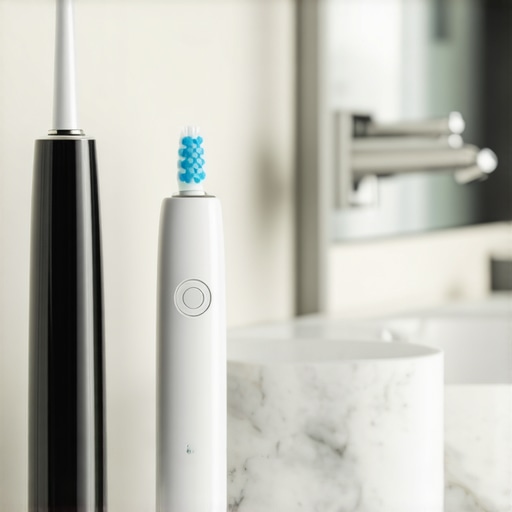
The Next Frontier of DIY Dental Monitoring
I predict that within the next five years, we will see the rise of AI-powered smartphone attachments that allow you to perform a basic ‘structural scan’ at home. We are already seeing apps that can flag early-stage gingivitis from a high-res photo. This won’t replace your dentist, but it will help you catch why your dental implant crown feels loose before it becomes a clinical emergency. For now, my best advice is to stop using your teeth as tools. Seriously, don’t use your teeth to open plastic bags. It sounds simple, but that lateral force is exactly what causes the most expensive failures in cosmetic dentistry. Try this tonight: swap your standard floss for an interdental brush in your largest gaps and see how much more debris you find. You’ll be shocked.
I remember the first time I saw it. My toddler was laughing at something—probably a cartoon or a very messy dog—and as his mouth opened wide, I caught a glimpse of something dark on one of his back molars. My heart skipped a beat. Was that a cavity? Or just a bit of leftover blueberry from breakfast? I spent the next twenty minutes trying to get a better look while he squirmed away, and honestly, the anxiety was real. I’ve been there, and I know exactly how that sinking feeling in your stomach works when you realize you might have failed at the tooth-brushing game. We all want a lifetime of healthy smiles for our kids, but the line between a harmless stain and a dental emergency can feel incredibly thin.
That Tiny Dark Spot Is Driving You Crazy
The truth is, those deep grooves on the biting surfaces of molars are magnets for everything. They are tiny canyons that collect pigments from food, but they are also the primary targets for decay. Early in my parenting journey, I made the mistake of assuming that if it didn’t hurt, it wasn’t a problem. I ignored a small shadow in my daughter’s mouth for months, thinking it was just a deep groove. By the time we got to the dentist, it was a full-blown cavity. It turns out that learning how to tell if a white spot or a dark line is a cavity is a skill every parent needs to master early on. Today, I’m going to help you figure out if you need to rush to the clinic or if you can just breathe a sigh of relief. [image_placeholder]
Wait, Isn’t a Cavity Always a Big Hole?
This is the biggest misconception I run into. Most parents expect a cavity to look like a crater, but in toddlers, they often start as subtle color changes or sticky-looking lines. According to the American Academy of Pediatric Dentistry, tooth decay is significantly more common in children than asthma, making it a constant battle for parents. If you’ve ever felt like you’re losing the daily struggle to get your kids to brush, you aren’t alone. Have you ever stared at your child’s tooth with a flashlight, feeling like you were overreacting? Tell me in the comments, because I’ve definitely been that parent. We’re going to break down the visual cues, the texture tests, and the red flags that mean it’s time to contact a professional before things get painful.
Spot the Shadow Before it Spreads
Grab a high-powered flashlight—the one on your smartphone works perfectly—and have your child tilt their head back. You are looking for more than just color; you are looking for depth. A stain, often caused by juice or even certain vitamins, looks like it was painted onto the surface, much like a smudge of ink on a whiteboard. A cavity, however, creates a ‘halo’ or a shadow that seems to live inside the tooth. When I first checked my son’s molars, I noticed a line that looked slightly different from the others. While why your child’s permanent molars look jagged or serrated on top can create natural shadows, this one didn’t change when I moved the light. That ‘immobile’ shadow is your first big warning sign that the enamel has been compromised from the inside out.
Use the Texture Test to Find Soft Spots
Enamel is the hardest substance in the human body, so it should feel like a polished stone or a ceramic plate. If you suspect a spot is more than a stain, you can do a gentle texture test. Use a clean, plastic toothpick or even just a clean fingernail to very lightly feel the area. If the tool glides over the spot smoothly, it is likely just surface pigmentation. However, if it feels ‘tacky’ or ‘sticky’—almost like your tool is sinking into soft clay—that is a localized area of decay. I remember testing a spot on my own tooth years ago after noticing that my teeth feel fuzzy even after I brush. That sticky sensation was the decider. In children, these soft spots can progress quickly, so catching that tactile ‘catch’ is vital for family dentistry tips for a lifetime of healthy smiles.
Watch How They React to Sweets
One of the most reliable ‘home tests’ doesn’t involve looking at all; it involves a snack. If your child winces or complains when eating something cold or particularly sugary, pay close attention. You might notice why your teeth hurt when you eat something very sweet is a common sign of a cavity reaching the dentin, the layer beneath the enamel. I once thought my toddler was just being a picky eater when he refused his favorite fruit snacks, but it turned out the sugar was hitting a microscopic hole in his molar. If the pain is sharp and disappears quickly after the food is gone, you’re likely dealing with early-stage decay that needs professional attention before it turns into a constant throb.
Keep Them Calm During the Check
If you find something concerning, your next step is a professional evaluation. This is where most parents panic because they worry their child won’t sit still for the dentist. I’ve found that turning the home inspection into a game of ‘copycat’ helps. If you show them how you check your own teeth first, they are much more likely to cooperate later. Knowing how to stop your toddler from biting during dental exams starts with these positive, low-pressure checks at home. By the time you get to the clinic, the process of looking into their mouth is already a familiar routine rather than a scary intrusion.
Stop Chasing the Whitest Shade Possible
Once you move past the anxiety of your toddler’s first checkup, you might start looking at your own dental future with a more critical eye. But here is where the expertise often gets muddied by social media trends. Everyone says they want ‘paper white’ teeth, but in my experience, chasing an ultra-bright shade like BL1 is the fastest way to make your smile look fake. The real nuance in cosmetic dentistry secrets to boost your confidence isn’t just the color—it’s the light transmission. Natural teeth are translucent at the edges, not opaque like a piece of plastic. When you opt for a shade that doesn’t exist in nature, you fall into a common trap: your veneers look like white chiclets and you lose the character of your face. Natural outcomes are those that mimic the polychromatic nature of real enamel.
The Structural Trap of Cosmetic Quick Fixes
The biggest ‘oops’ factor I see with adults is treating the choice between veneers vs crowns as purely a style choice. It isn’t. If you have a misaligned bite, slapping veneers on top is like putting fresh paint on a crumbling wall. You’ll eventually find yourself researching habits that cause your porcelain veneers to pop off unexpectedly because the ceramic simply cannot handle the shear force of a malocclusion. True expertise means addressing the foundation before ever picking out a porcelain shade.
Why does my dental implant feel cold when I drink ice water?
This is a sophisticated question I get from patients who have graduated to more complex procedures like the future of dental implants. While modern implants offer incredible durability, you have to remember that titanium and zirconia do not have the same thermal insulation as a natural tooth with a living pulp. This is exactly why your dental implant feels cold when you drink ice water—the metal or ceramic conducts temperature faster than organic dentin. Understanding the reason your dental implant feels different than a natural tooth is key to long-term satisfaction. We always recommend that patients contact us for a detailed mapping of their bite before committing to high-end cosmetic work.
The Hard Truth About Chasing a Perfect Smile
The most important lesson I’ve learned is that ‘perfect’ is the enemy of ‘functional.’ We often get so caught up in aesthetic trends that we forget the foundation of a healthy bite. Maintenance isn’t a one-time event. Whether it’s a baby tooth or a high-end porcelain restoration, the effort required to keep it is always greater than the effort to get it. I’ve seen too many people focus on the shade of their teeth while ignoring the health of their gums, leading to issues like recession or even implant failure. Real longevity comes from understanding the balance between art and biology.
My Essential Kit for Dental Longevity
I don’t recommend products lightly, but there are a few non-negotiables in my home. First, a high-quality electric toothbrush is the only way to avoid that lingering film that makes teeth feel fuzzy even after you brush. Second, for anyone with restorations, learning how to clean under a dental bridge without shredding your floss is a life-saver for preventing inflammation. Lastly, for protecting long-term investments, I tell everyone that the risk of skipping your night guard for just one week is higher than you think; micro-stresses are the silent killers of porcelain.
Protect Your Family’s Future Smiles
At the end of the day, your dental journey is unique. Whether you are navigating the early years of toddlerhood or considering a life-changing veneers transformation, the goal is always the same: confidence and health. Don’t let the fear of a small dark spot or the complexity of a new procedure stop you from taking the next step toward family dentistry excellence. Proactive care is the only way to ensure your smile—and your child’s—lasts a lifetime. Have you ever found a mysterious spot on your child’s tooth and wondered if it was time to call the dentist? Share your ‘was it a cavity’ stories in the comments below!