I remember sitting in front of my bathroom mirror, staring at a strip of plastic stuck to my teeth that looked more like a piece of scotch tape than a medical grade device. I was twenty-four, prepping for my first big job interview, and I desperately wanted a smile that screamed professional rather than coffee addict. Instead, I ended up with what I call the zingers—those sharp, lightning-bolt pains that make you jump every time you breathe in cold air. I learned the hard way that why your teeth feel sensitive after using whitening strips isn’t just a fluke; it’s often the result of using products that aren’t tailored to your unique enamel. My mistake was thinking more chemicals meant faster results. It didn’t. It just meant a week of drinking lukewarm water and hiding my smile. Today, I want to save you from that frustration and help you decide between the speed of in-office treatments and the control of custom-fitted trays.
Stop Guessing and Start Glowing
Choosing between an hour in the dentist’s chair and a couple of weeks with custom trays feels like a high-stakes game of what if. What if I spend the money and it doesn’t last? What if my teeth are too sensitive for the strong stuff? I’ve been there, and I’ve tried both. The truth is, the right choice depends entirely on your lifestyle, your budget, and how much patience you actually have. We are going to break down exactly which path leads to that confidence-boosting smile without the painful trial-and-error I went through. Have you ever bought a generic whitening kit only to leave it gathering dust in your medicine cabinet because it was just too much hassle? You aren’t alone, and there is a better way to handle your family dentistry needs while still chasing that aesthetic goal.
Is Professional Whitening Actually Worth the Extra Cash?
This is the big one. We all want to save a buck, but when it comes to your smile, cutting corners can be expensive. One major mistake I made early on was thinking all peroxide was created equal. It’s not. Professional-grade gels used in-office or in custom-fitted trays are stabilized and much more potent than anything you’ll find in a grocery aisle. According to the American Academy of Cosmetic Dentistry, in-office whitening can lighten teeth by three to eight shades in a single hour, providing a level of speed and safety that DIY methods simply can’t touch. Plus, once you’ve invested, you’ll need to know how to maintain your white smile to make that investment last. It’s about more than just the initial blast of white; it’s about the science of keeping your enamel safe while you get there. If you’ve been burned by over-the-counter promises before, it’s time to look at the custom options that actually respect your time and your teeth.
Get Your Foundation Checked Before You Bleach
Before you even touch a syringe of gel, you need a clean bill of health. I once made the mistake of applying a professional-grade bleach over a tiny, unnoticed crack in my molar. The ‘zing’ I felt wasn’t just standard sensitivity; it was the chemical hitting the nerve directly. It’s why family dentistry tips for a lifetime of healthy smiles always start with a physical exam. Your dentist needs to check for ‘hidden’ issues like cavities or gum recession that could turn a simple whitening session into a dental emergency. If you have existing dental work, remember that bleach won’t change the color of porcelain. You might need to look into veneers vs crowns: choosing the best option for your smile if your goal is a total color overhaul that includes covering old restorations or darkened teeth that don’t respond to traditional bleaching.
The One-Hour Miracle in the Dentist’s Chair
The in-office route is essentially a sprint toward a brighter smile. During this procedure, the dentist applies a gingival barrier—a thick, rubbery paint that protects your gums—before painting on a high-concentration hydrogen peroxide gel. Often, a specialized light is used to accelerate the breakdown of the peroxide, forcing the oxygen molecules deep into the enamel to break up stains. This is the fastest way to see results, but the intensity can leave some people feeling like their teeth feel extra sensitive after a professional cleaning or whitening session. It is the price of speed. Because the environment is controlled, the dentist can manage the application precisely, ensuring that the high-strength chemicals don’t irritate your soft tissues.
Build Your Own Maintenance Kit with Custom Trays
If you prefer control over speed, custom-fitted trays are the gold standard. These aren’t the ‘boil and bite’ ones from the drugstore that leak gel everywhere and provide uneven results. A professional lab creates these from a 3D scan or a mold of your actual teeth. This precision ensures the whitening gel stays on your enamel and off your sensitive gum line. It’s widely considered the safest way to whiten teeth with sensitive enamel because you can control the frequency. If your teeth start to ache, you simply skip a night. It’s a marathon, not a sprint, typically taking about two weeks of daily wear to reach the same shade as a single one-hour office visit. 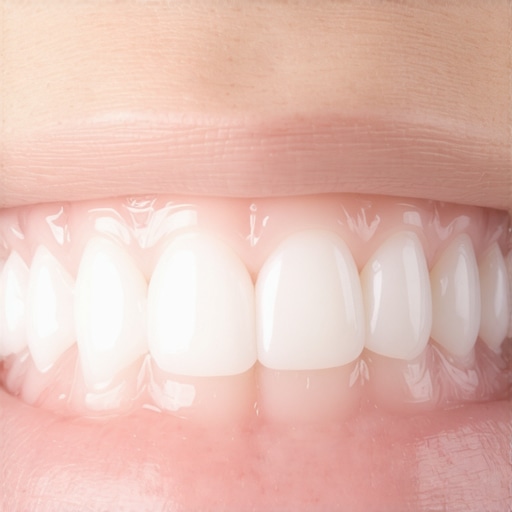
Protect Your Results from the Morning Brew
Once you hit that perfect shade, the real work begins. You don’t have to give up your caffeine, but you do need to learn how to keep your teeth white while drinking black coffee daily. Simple habits, like rinsing with water immediately after your cup or using a straw, prevent the pigments from settling into the micro-pores of your enamel. You should also know how to stop your teeth from staining after a professional whitening session by avoiding ‘chromogenic’ foods—anything that would stain a white t-shirt—for at least 48 hours while your enamel’s pores are still open and susceptible to new stains.
While most people think of cosmetic upgrades as a purely aesthetic choice, the reality is that the foundation of your mouth dictates the success of every procedure. There is a common myth that you can just ‘slap on’ a veneer to hide a crooked or damaged tooth. In my experience, this ‘cover-up’ mentality often leads to a result where your veneers feel bulkier than your natural teeth. This happens when the dentist doesn’t account for the natural alignment or tries to bypass necessary orthodontic work with porcelain. A study published in the International Journal of Prosthodontics highlights that the survival rate of porcelain veneers can be as high as 91% over 20 years, but that longevity is strictly tied to how much original enamel is preserved during the process. If you rush the prep, you might find yourself debating veneers vs crowns: choosing the best option for your smile much sooner than you anticipated because the structural integrity wasn’t there from the start.
Can You Actually Whiten Internal Stains Without Drastic Surgery?
Many patients get frustrated because they spend hundreds on bleaching only to find their teeth still look ‘grey’ or ‘dull.’ This is usually because the staining is intrinsic—it’s locked inside the tooth structure, not just on the surface. Standard whitening won’t touch this. You need to know how to whiten your teeth if you have deep internal stains, which often involves internal bleaching or transitioning to high-end restorative options. One of the biggest ‘oops’ factors I see is people over-bleaching their teeth to the point they become translucent. This gives the teeth a bluish-grey tint that looks unhealthy rather than vibrant. Instead of chasing the brightest white on the chart, the pros focus on how to pick the right shade for your new porcelain veneers so the light reflects naturally, mimicking real dentin.
The Long Game of Dental Implants
If you’re moving past surface-level aesthetics into structural replacement, the nuances of how dental implants reshape your oral health become vital. The biggest mistake is thinking an implant is a ‘set it and forget it’ solution. While titanium doesn’t decay, the bone around it is living tissue that requires constant care. If you don’t have enough bone volume, you’ll find out quickly why your dental implant surgery requires a bone graft to prevent long-term failure or shifting. We are also seeing a shift in the truth about the durability of composite vs porcelain veneers, where material choice is no longer just about price, but about how it interacts with your specific bite force. Have you ever fallen into the trap of choosing the fastest, cheapest option only to have it fail a year later? Let me know in the comments. Investing in cosmetic dentistry secrets to boost your confidence is about understanding these technicalities before you ever sit in the chair.
I’ve seen people spend thousands on a full mouth reconstruction only to treat their new smile like they did their old one. You wouldn’t buy a Ferrari and then never change the oil, right? Maintenance is where the ‘miracle’ of cosmetic dentistry meets the reality of daily life. I personally switched to a high-end sonic toothbrush because of its haptic feedback. I used to be a ‘scrubber,’ which is a fast track to gum damage. If you’ve noticed the signs your receding gums are caused by your toothbrush, you need to make the switch to sonic technology immediately. This isn’t just about cleaning; it’s about preserving the delicate junction where your porcelain meets your natural tissue. Learning how to stop your gums from receding without painful surgery starts with the simple tools you use every morning at 7:00 AM.
The Real Reason You Need a Water Flosser
Then there’s the issue of the ‘invisible’ trap. Implants and bridges create nooks that standard floss simply cannot navigate effectively. This is where I recommend a high-pressure water flosser, specifically one with a dedicated ‘implant’ tip. I’ve found that even patients who are diligent with manual flossing are shocked by what comes out when they use a water flosser for the first time. It is much like the benefit of using a water flosser with your braces; the pulsation disrupts the biofilm that causes peri-implantitis. If that bacteria builds up, you’ll be left wondering why your dental implant feels loose but looks fine on the surface. Maintaining that deep-level cleanliness is the difference between a ten-year success and a two-year failure. 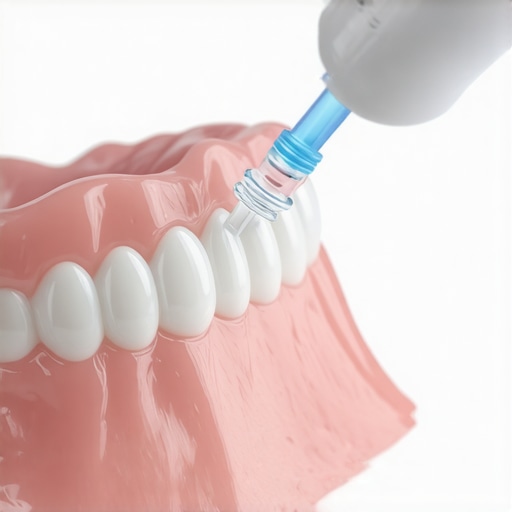
How do I maintain these high-end dental results over time?
The secret weapon for longevity isn’t a paste; it’s a night guard. According to the American College of Prosthodontists, nocturnal bruxism is one of the leading causes of early failure for veneers and crowns, often resulting in costly fractures. I wear a custom-molded occlusal guard every single night. If you’re investing in cosmetic dentistry secrets to boost your confidence, you have to protect that investment from your own jaw muscles. Just make sure you know how to clean your night guard without damaging the material so you aren’t re-introducing bacteria into your mouth every evening. I’ve also noticed that people often overlook the role of saliva and pH balance when it comes to keeping their how dental implants reshape your oral health in 2025 goals on track. High acidity from coffee or wine can micro-etch the surface of even the best porcelain over a decade. By maintaining a neutral oral environment, you ensure that the ‘glaze’ on your veneers stays as reflective as the day they were bonded.
Future Trends in Restorative Protection
As we look toward the future of dental implants: cutting-edge techniques in cosmetic dentistry, we’re seeing more emphasis on ‘smart’ restorations—veneers and implants with embedded sensors that can alert your dentist to excessive grinding or early signs of infection before you ever feel pain. We are rapidly approaching an era where dental implants 2025: innovations that redefine comfort and durability will include 3D-printed scaffolds that mimic the exact elasticity of your original bone. For now, focus on the basics of family dentistry combined with high-tech home tools. My challenge for you: swap your manual brush for a pressure-sensing sonic model this week and notice the difference in your gum health within fourteen days.
The Hardest Lessons I Learned the Expensive Way
Looking back at my own journey, there are a few lightbulb moments that would have saved me thousands of dollars and dozens of hours if I had known them earlier. First, never prioritize speed over safety; your enamel doesn’t grow back, and once it is gone, it is gone for good. I have also realized that the truth about charcoal toothpaste and your tooth enamel is a cautionary tale for everyone because abrasive trends are the enemy of long-term health. Finally, remember that a veneers transformation is more than just a visual fix; it is a lifestyle change that requires a new level of commitment to your daily hygiene routine. Don’t chase a shade of white that looks unnatural in the sun; instead, aim for a healthy glow that mimics the light-reflecting properties of real dentin.
My Recommended Kit for Protecting Your Investment
I am often asked what products I personally use to maintain my results. I do not believe in cluttered cabinets, but I do believe in precision. I always recommend a pressure-sensing sonic toothbrush because it physically prevents you from damaging your gums. For anyone with restorative work, a water flosser with a specialized tip is non-negotiable for reaching the spaces standard floss misses. If you are just starting your journey, these expert tips for perfect results will give you the baseline you need to ensure your new smile stays vibrant for decades, not just months. I also suggest keeping a small travel kit with a neutral pH mouth rinse to use after drinking coffee or tea during the day. #IMAGE_PLACEHOLDER_E#
The Best Time to Fix Your Smile is Now
Taking the leap into cosmetic dentistry can feel intimidating, but the confidence that comes from a healthy, radiant smile is truly life-changing. Whether you choose a subtle whitening or a complete structural update, you are investing in your own well-being and how you show up in the world. You do not have to live with the zingers or the frustration of generic kits that do not work. If you are still on the fence about which procedure fits your lifestyle, feel free to contact us to discuss your specific goals. Have you ever avoided a dental procedure because you were not sure about the long-term maintenance? Let me know in the comments below!