I stood in my bathroom, staring at the $3,000 investment in my mouth, holding a generic metal scraper I’d found at a local pharmacy. I was terrified of plaque buildup, but as I moved the metal toward that shiny titanium post, a cold shiver ran down my spine. I was about to make a huge mistake. Dental implants are absolute game-changers for family dentistry, but they aren’t indestructible. Treat them like your natural teeth and you might actually end up causing more harm than good. Today, I’m going to show you exactly how to keep that smile pristine without leaving a single microscopic scratch on your hardware. I learned the hard way so you don’t have to.
Ditch the Metal Tools Before You Do Real Damage
When I first got my implant, I assumed “strong as titanium” meant I could scrub it with whatever I had on hand. I was wrong. The reality is that how dental implants reshape your oral health depends heavily on how you treat the interface between the post and your gums. A single scratch from a metal tool can become a breeding ground for bacteria. This leads to a nasty condition called peri-implantitis, which is basically the implant version of gum disease. I once thought using a heavy-duty electric brush on its highest setting was the move. It wasn’t. It just made the area tender and red.
Will I accidentally ruin my expensive dental work?
It is a totally valid fear. I once used a highly abrasive charcoal toothpaste because I wanted my crown to sparkle, only to find out later it could dull the finish and irritate the surrounding tissue. You need to be gentle. According to the American Academy of Implant Dentistry, keeping the surface of the abutment smooth is critical because even tiny abrasions allow biofilm to attach more easily. If you’ve noticed red flags that your dental implant is being rejected, it often starts with improper hygiene habits that irritate the site. If you’ve ever felt a bit of sensitivity to cold weather around your implant, it might be time to rethink your cleaning kit. Have you ever caught yourself using something way too sharp to clean your teeth just because you were in a hurry? Tell me I’m not the only one who’s had that “oops” moment. We’re going to fix those habits right now and get you on the path to a scratch-free life.
Swap Your Metal Scrapers for Something Softer
To keep your hardware safe, you have to think like a detailer working on a luxury car. You wouldn’t use a scouring pad on a fresh coat of wax, and you definitely shouldn’t use metal on titanium. The goal is to remove the soft biofilm before it hardens into tartar. Once it’s tartar, you need a professional, but for daily maintenance, soft is king. I switched to brushes with ultra-soft bristles and specialized plastic picks. If you aren’t careful, the signs your receding gums are caused by your toothbrush will start to show up around your implant site, which is the last thing you want when you’ve invested so much in your smile.
Look for the Nylon Coating on Everything
When you shop for interdental brushes—those tiny little trees that go between the teeth—make sure the wire center is coated in nylon. If you see bare wire, put it back. That exposed metal is the enemy of your abutment. I remember a hotel stay in Chicago where I forgot my specific implant kit and tried to use a standard wooden toothpick to dislodge some stubborn steak. The wood splintered, the rough edges irritated my gums, and I spent the next three days in a panic. It made me realize that even when my dental bridge feels like it is trapping food, reaching for a blunt or sharp non-specialized tool is a recipe for disaster. 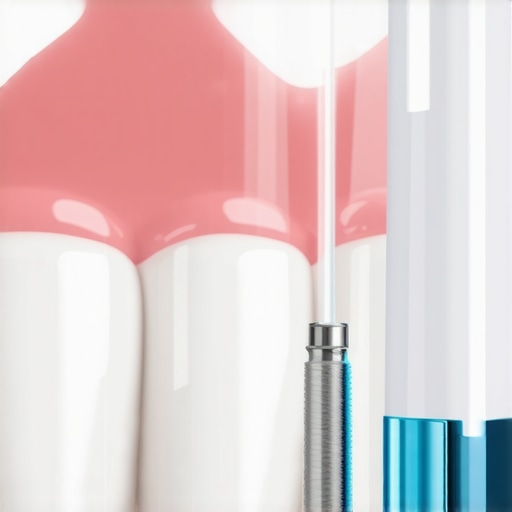
Blast the Biofilm With High-Pressure Water
If you aren’t using a water flosser yet, you’re making your life ten times harder than it needs to be. These devices are the ultimate cheat code for dental implants. They use a stream of pulsating water to flush out the ‘pockets’ where your implant meets the gum line—areas where traditional floss often misses or just pushes the gunk deeper.
The Gentle Art of Pressure Management
You don’t need to turn the setting up to ‘power wash.’ A medium setting is usually enough to clear the debris. Think of the benefit of using a water flosser with your braces; the same logic applies here. It’s about reach and irrigation, not brute force. I once cranked mine to the max, thinking more power meant more clean, but all I got was a bleeding gum line and a sore jaw. Since dental implants 2025 innovations that redefine comfort and durability have made these components more integrated with our biology, we have to treat that connection with respect.
Avoid the Sandpaper Effect in Your Toothpaste
Many ‘whitening’ toothpastes are actually quite abrasive. They use tiny particles to scrub away stains, which is fine for natural enamel but can be devastating for the glaze on your porcelain crown. When that glaze wears down, your tooth starts to look dull and actually attracts stains faster. You should check out the truth about charcoal toothpaste and your tooth enamel-3 to see why those trendy black pastes are often a bad idea for restorative work. Stick to low-abrasive gels that are specifically labeled for sensitive teeth or implant care. This keeps the surface smooth, making it harder for bacteria to grab a foothold and stay there.
People often assume that once the surgery is over and the crown is seated, the hard work is done. This ‘set it and forget it’ mentality is exactly why some of the best dental work fails after only a few years. There is a massive misconception in family dentistry that because titanium and porcelain cannot get cavities, they do not need the same level of scrutiny as enamel. That is a dangerous trap. While the hardware is immune to decay, the biological foundation supporting it—your bone and gums—is more vulnerable than ever. If you have noticed why your dental implant is showing a tiny dark line, you are already seeing the effects of tissue recession or bone loss that occurs when maintenance is treated as an afterthought.
Stop Letting Traditional Tools Near Your Titanium
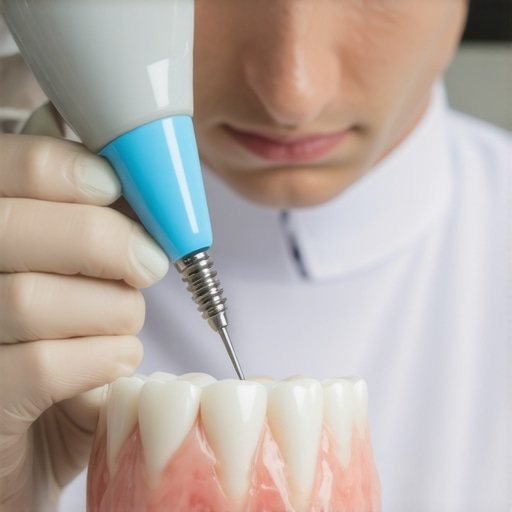
Here is a contrarian view for you: your standard dental cleaning might actually be doing more harm than good if your hygienist is not using specialized equipment. I once sat through a cleaning where the technician used the same stainless steel scaler on my implant that they used on my molars. I could hear the screech of metal on metal. According to research from the International Congress of Oral Implantologists (ICOI), using traditional metal instruments can create microscopic furrows in the titanium. These grooves act like a ‘velcro’ for bacteria, making it nearly impossible for you to clean at home. You should always insist on plastic, resin, or carbon fiber tools that are designed to glide over the surface without leaving a mark.
Does my implant really need the same check-up as a natural tooth?
The answer is no—it actually needs a more specialized one. You should be looking into the future of dental implants and cutting-edge techniques in cosmetic dentistry to see how far maintenance technology has come. Advanced practitioners now use glycine powder air-polishing, which is far more effective and gentler than old-school scraping. Have you ever fallen into the trap of thinking your ‘fake’ teeth were invincible? Let me know in the comments if you have ever had a scare with a loose restoration.
The Whitening Trap Most People Fall Into
One of the most common ‘oops’ moments I see involves the mismatch between natural teeth and cosmetic work. I once went on a whitening binge before a wedding, only to realize too late that my porcelain veneers remained their original shade while my surrounding teeth became blindingly white. It looked like a checkerboard. This is why the reason your veneers look different in sunlight is so important to understand; the translucency of the material is fixed. If you change the backdrop (your natural teeth), the restoration will no longer blend. If you ever feel like why your dental implant feels loose but looks fine, it might be an issue with the internal screw rather than the bone, another nuance that requires a pro who knows the hardware inside and out. Treat your investment with the respect it deserves, and it will stay with you for decades.
After years of trial and error, I found that the battle for a healthy mouth isn’t won in the dentist’s chair, but at my own bathroom sink. I stopped using manual brushes entirely because I realized I couldn’t regulate the pressure. I switched to a sonic brush specifically because the high-frequency vibrations disrupt biofilm without the aggressive mechanical scrubbing that causes receding gums. If you are serious about family dentistry and long-term care, you need a brush with a built-in pressure sensor. Mine flashes red if I push too hard, which is a lifesaver for protecting the delicate seal around my implants. This level of precision is exactly how dental implants reshape your oral health in 2025—by forcing us to become more tech-savvy with our hygiene.
How do I keep my cosmetic work looking new for decades?
The secret lies in what you do while you sleep. I never realized that the connection between frequent headaches and grinding your teeth was actually a warning sign for my veneers transformation. Grinding can exert up to 250 pounds of pressure per square inch, which is enough to chip even the strongest porcelain. I had a custom-fit night guard made, and it’s the single most important insurance policy for my smile. According to Dr. Gordon Christensen of the Clinicians Report, the longevity of modern restorations depends as much on managing these ‘parafunctional habits’ as it does on the quality of the dentist’s work. If you ignore the grind, you are essentially throwing your money away. #IMAGE_PLACE_HOLDER_D#
The High-Tech Future of Bio-Active Materials
We are moving toward an era where your implants might actually talk to your phone. I am following the trend of bio-active materials that release minerals to strengthen the surrounding bone. As we look at the future of dental implants and cutting-edge techniques, we will see ‘smart’ crowns that can detect early signs of infection before you even feel pain. This is a game-changer for cosmetic dentistry secrets to boost your confidence, as it removes the anxiety of ‘what if something is wrong?’ To really step up your game, I highly recommend trying an air-flosser with a 50/50 mix of water and alcohol-free antimicrobial rinse. It reaches deep into the sulcus where traditional floss just can’t navigate. Give it a shot for a week and you will never go back to the string.
What Nobody Tells You About the Titanium-Gum Connection
After years of navigating life with high-end dental work, I’ve realized that the real secret isn’t just the surgery—it’s the stewardship. Here are my biggest lightbulb moments from this journey:
- Biofilm is the silent enemy: You don’t need a heavy hand to remove it; you just need consistency. Brute force leads to the signs your receding gums are caused by your toothbrush, which is a major risk for implant exposure.
- Metal is the enemy of titanium: I learned that even a tiny scratch creates a permanent hiding spot for bacteria. Stick to plastic or resin tools every single time.
- Your gums are the foundation: If you feel like why your porcelain veneers feel gritty to your tongue, it might be a sign that biofilm is building up or the surface is compromised.
- Don’t ignore the signs: Learning how to manage tooth sensitivity after your first professional cleaning is crucial to staying ahead of inflammation.
The Gear That Actually Saved My Hardware
I don’t waste money on gimmicks anymore. These are the four items that actually work to protect your investment and keep your mouth healthy:
- A High-Quality Water Flosser: This is non-negotiable. It flushes the pockets around the abutment where standard floss fails.
- Nylon-Coated Brushes: Avoid bare wire like the plague; that nylon sheath is your shield against microscopic scratches on your titanium.
- Low-RDA Toothpaste: Keep the glaze on your crowns intact. If the glaze goes, the reason your porcelain veneers look opaque and fake is often due to the loss of that protective finish.
- Pressure-Sensitive Sonic Brushes: Let the technology do the work so you don’t over-scrub your delicate tissue.
Your Journey to a Lifetime Smile
Investing in your teeth is one of the best things you can do for your self-esteem and health. By applying these cosmetic dentistry secrets to boost your confidence, you aren’t just buying teeth; you’re buying a future where you never have to hide your laugh. Remember, family dentistry is about long-term prevention, and you are now the primary caretaker of that beautiful, high-tech smile. You’ve got this. Have you ever noticed a tiny scratch or felt something ‘off’ about your dental work after a cleaning? Let me know below so we can troubleshoot it together!