I remember the exact moment I realized my new smile was a disaster. I was standing in front of a mirror at a friend’s wedding, and under those bright, unforgiving LED lights, my teeth didn’t look like teeth at all. They looked like a solid, unyielding row of white piano keys. There was no life, no sparkle, and absolutely no character. I’d spent thousands of dollars in the world of cosmetic dentistry only to end up looking like I was wearing a plastic mouthguard. It was embarrassing. I had made the classic mistake of thinking that ‘perfect’ meant perfectly straight and perfectly white, without considering the subtle artistry that makes a human smile actually look human. If you are currently staring at your own reflection and feeling that same sinking sensation, I promise you, there is a way back to a look that feels authentic. Today, we are diving deep into the technical and aesthetic reasons behind the ‘chiclet’ effect so you can finally transform your smile with veneers that people actually mistake for your natural teeth.
Are high-end veneers actually worth the hype?
You might be skeptical, especially if your first experience felt like a waste of money. I certainly was. I thought maybe I just wasn’t a ‘veneers person.’ But the truth is, the mistake I made early on was prioritizing shade over shape and translucency. Natural enamel isn’t opaque; it’s a complex material that lets light pass through and bounce around. According to the American Academy of Cosmetic Dentistry, the most successful restorations are those that mimic the light-handling properties of natural teeth, which many budget-friendly options simply fail to do. When you ignore these details, you end up with veneers that look opaque and fake, creating that dreaded ‘monoblock’ appearance. Have you ever felt like your dental work stands out for all the wrong reasons?
Get the Light Right or Risk a Flat Smile
The single biggest reason veneers end up looking like a keyboard is a lack of ‘incisal translucency.’ This is a fancy way of saying the edges of your teeth should be slightly see-through. If the porcelain is one solid color from the gum line to the tip, it loses all depth. I learned this the hard way when I realized the reason your veneers look different in sunlight versus indoors often comes down to how the material reacts to UV rays. To avoid the piano key look, you have to pick the right shade that includes subtle gradients. You also need to ensure your dentist builds in ’embrasures’—those tiny, V-shaped gaps between the biting edges of your teeth. Without them, your smile looks like a single white wall. We’re going to look at how to communicate these specific needs to your lab technician so you never have to hide your laugh again.During my revision journey, I brought in a macro photo of a natural tooth I found in a dental textbook. I pointed to the tiny grooves and the way the light seemed to get ‘trapped’ in the biting edge. My dentist smiled and said, ‘You want anatomy, not just coverage.’ That was the turning point. To get this right, you must first decide between choosing veneers or crowns based on how much tooth structure remains. If you have healthy enamel, veneers are almost always the path to that delicate, light-reflective look.
Ditch the Uniform White for Visual Depth
The biggest mistake is selecting a single, blinding shade from a plastic tab. Your natural teeth are like a sunset; they have different ‘temperatures’ and colors from the gum to the tip. When you pick the right shade, you are actually picking a palette. Ask your dentist for a ‘multi-layered’ approach where the porcelain is thinner at the bottom to allow that natural translucency. If the porcelain is too thick or monochromatic, you’ll find the reason your veneers look different in sunlight versus indoors is that they lack the internal ‘fire’ of real enamel. 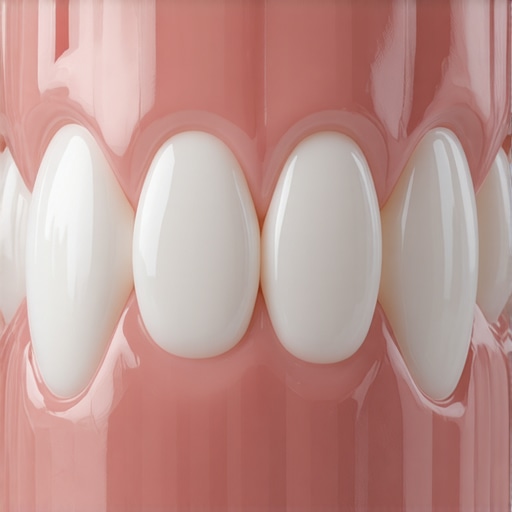
Demand a Mock-Up Before the Permanent Bond
Think of a ‘diagnostic wax-up’ as a test drive for your face. My first dentist skipped this, and I paid the price in regret. A high-end professional will create a temporary version in acrylic that you wear for a few days. This is the time to check if your veneers feel thicker than your natural teeth or if they interfere with your speech. If you start developing a lisp, the length or thickness is wrong. This phase is non-negotiable for boosting your confidence because it removes the guesswork.
Look for Micro-Texture and Anatomy
Real teeth aren’t perfectly smooth glass. They have tiny ridges called perikymata. Without these, your teeth reflect light like a mirror, which screams ‘fake.’ If your finished veneers feel gritty to your tongue at first, it might actually be a sign of intentional surface characterization—though you should always ensure it’s polished porcelain and not leftover cement. When discussing the material, weigh the durability of composite vs porcelain. Porcelain is far superior for mimicking this micro-texture and resisting the stains that plague natural teeth.
Align Your Smile with Your Facial Features
A ‘Hollywood’ smile often fails because the teeth are too wide for the person’s mouth. You want a ‘corridor’ of shadow at the corners of your mouth when you grin. If the veneers are too wide, they fill that space and create a flat, wall-to-wall look. This is why fixing a smile that feels too narrow is a common request in revision cases. Your dentist should measure the distance between your pupils and the corners of your nose to ensure the proportions make sense for your unique face.Let’s dig deeper into the nuances that separate a ‘nice’ smile from a masterpiece. While we’ve talked about the shape of the teeth themselves, we need to address the ‘Symmetry Trap.’ Most patients walk into a consult asking for a perfectly symmetrical smile, wanting the left side to be a mirror image of the right. But here is the contrarian reality: mathematical symmetry is the fastest way to make your teeth look fake. Real, organic beauty is found in micro-asymmetries. In a natural smile, the ‘incisal edges’ (the biting edges) are never perfectly parallel to the floor, and the two central incisors are rarely identical. When you demand perfect symmetry, you lose the ‘personality’ of your face. Research published in The Journal of Prosthetic Dentistry confirms that ‘dynamic’ dental aesthetics rely on these subtle irregularities to create a harmonious look. If you ignore this, you end up with that ‘monoblock’ look we discussed earlier.
The Gum Frame Trap You Need to Avoid
Then there is the ‘Oops’ factor regarding the transition from tooth to gum. Even the most expensive porcelain will look like a cheap stick-on if the ’emergence profile’ is wrong. This refers to the angle at which the veneer or crown emerges from the gum line. If it’s too thick at the base, it creates a ledge that traps bacteria and causes inflammation. This is often the reason your gums are receding around one specific tooth—your body is literally trying to get away from the ill-fitting restoration. 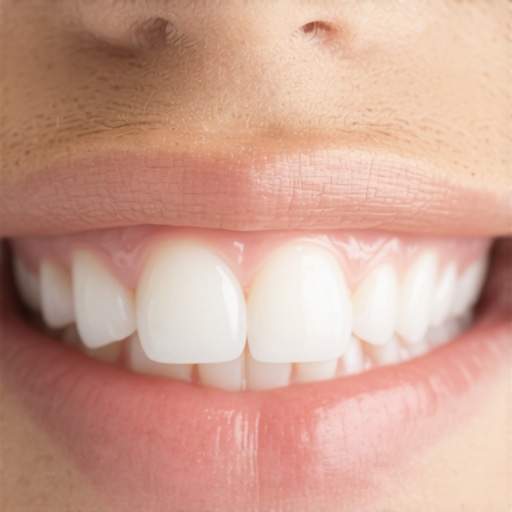 High-end cosmetic dentistry requires a deep understanding of biology, not just ceramics. If you’ve ever noticed that your veneers feel gritty to your tongue or bulky near the gums, you might be dealing with a margin that wasn’t properly refined.
Why does your dental implant feel different when it rains?
It sounds like an old wives’ tale, but many patients swear they can sense changes in barometric pressure once they have titanium in their jaw. While your natural teeth are cushioned by a periodontal ligament—a soft tissue ‘shock absorber’—implants are fused directly to the bone through osseointegration. This means every vibration and pressure change is transmitted directly to your nervous system. In the world of the future of dental implants, we are seeing materials that better mimic the flex of natural bone, but for now, it’s a nuance most people don’t expect. You might even find why your dental implant feels different when it rains is tied to how the metal conducts temperature and pressure compared to living tissue.
The Danger of Selecting Age-Inappropriate Shades
Finally, we have to talk about the ‘Age-Appropriate’ shade. A common mistake in cosmetic dentistry is choosing a shade that is too bright for your skin tone and age. A 60-year-old with the ‘bleach white’ teeth of a teenager looks unnatural because it creates a harsh visual disconnect. Understanding the durability of composite vs porcelain is only half the battle; the other half is color theory and facial harmony. Have you ever fallen into this ‘perfection’ trap? Let me know in the comments, and if your current look feels too narrow or small, don’t lose hope—revision dentistry is all about bringing the human element back to your smile.
Once you’ve invested in a world-class smile, the real work begins: protecting that investment. I used to think a standard toothbrush was enough, but after my restoration journey, I realized that high-end porcelain and titanium require a specialized toolkit. I now swear by the Waterpik cordless pulse model. Why? Because traditional floss can actually snag on the microscopic margins of older crowns if not done with perfect technique, but a water flosser clears the bio-film without mechanical friction. This is especially vital for anyone following family dentistry tips for a lifetime of healthy smiles because it builds sustainable habits. I also noticed that the benefit of using a water flosser isn’t just for teenagers with brackets; it is the secret weapon for anyone with a full set of veneers looking to avoid gum inflammation.
How do I make my cosmetic dental work last a lifetime?
The short answer is to stop treating your teeth like tools. No opening plastic bags, no biting nails, and certainly no chewing ice. But the technical answer involves managing your occlusion—the specific way your upper and lower teeth meet. If you wake up with a tired, sore jaw, you are likely grinding, and porcelain is surprisingly brittle under shear force. According to a landmark study in the Journal of Oral Rehabilitation, nocturnal bruxism is the leading cause of early restoration failure. If you don’t address the connection between frequent headaches and grinding your teeth, your expensive veneers may not last five years. I wear a custom-fitted 2mm hard-soft night guard every single night. It is the ultimate insurance policy for your face.
Keep Your Investment from Cracking under Pressure
You also need to rethink your morning routine if you want to keep that luster. I love my morning brew, but I have mastered how to keep your teeth white while drinking black coffee daily by simply rinsing with plain water immediately after finishing the cup. Never brush right away, as the acidity temporarily softens your natural enamel and can stress the bonding agents. Just rinse and wait thirty minutes. 
What Your Dentist Sees in 2030
Looking ahead, I see a massive shift toward bio-compatible ceramics that do more than just sit there—they will eventually integrate with your natural minerals. We are already seeing dental implants 2025 innovations that use 3D-printed scaffolds to encourage faster bone growth and better soft-tissue attachment. The future of dental implants is moving away from simple replacement and toward true biological regeneration. Check your jaw right now. If it feels tight or clenched, reach out via our contact us page and ask about a diagnostic bite analysis. It is the one proactive move that saved my second smile from the fate of my first.
The Hardest Lessons from My Second Chance at a Natural Smile
Reflecting on my revision journey, I’ve realized that the ‘perfect’ smile isn’t about fitting a mold; it’s about fitting your soul. Here are the lightbulb moments that changed everything for me during my own process:
- The Shade Trap: I stopped chasing the brightest white. In my second round, I learned that picking the right shade means finding the one that reflects your skin tone, not a piece of printer paper.
- Bite Over Beauty: If your teeth don’t meet correctly, they will eventually break. I had to address the connection between frequent headaches and grinding your teeth before I could trust my new porcelain.
- Lab Literacy: Ask your dentist who makes the teeth. High-end ceramics are handcrafted by master ceramists, not spat out of a generic machine.
The Maintenance Gear I Swear By
You wouldn’t buy a luxury car and then never change the oil. To keep your investment pristine, these are the three things I never skip:
- The Water Flosser: It’s the only way to safely clean those hard-to-reach margins. I found that the benefit of using a water flosser extends far beyond orthodontics; it keeps veneer edges free of plaque and inflammation.
- Non-Abrasive Pastes: Stop using charcoal or ‘whitening’ pastes that scratch porcelain. Stick to gentle, fluoride-rich formulas that support family dentistry tips for a lifetime of healthy smiles.
- Custom Guard: If you spent the money on a veneers transformation, wear your night guard. It is the only thing standing between you and a very expensive chip.
Take the Leap Toward a Smile You Actually Recognize
Deciding to fix a smile that feels ‘off’ is a vulnerable experience, but you deserve to feel like yourself when you laugh. Whether you are looking into dental implants 2025 innovations or simple porcelain updates, the technology now exists to give you a result that is both durable and breathtakingly human. Don’t be afraid to ask for a revision if your current work feels thicker than your natural teeth. You are the one who has to wear it every day—make sure it feels like home. Have you ever felt like your cosmetic dentistry work didn’t quite match your personality? Let me know in the comments below!