I remember waking up one Tuesday morning with a dull, thumping ache right at the back of my jaw that I simply couldn’t ignore anymore. For weeks, I’d been telling myself it was just a bit of stress-induced tension, maybe even the connection between frequent headaches and grinding your teeth coming back to haunt me. I was wrong. It wasn’t stress. It was a wisdom tooth that had decided to grow horizontally, pushing against my other teeth like a slow-motion car wreck inside my mouth. I made the classic mistake of waiting until the pain was unbearable, thinking it would eventually straighten itself out. Spoiler: they never do. If you’re feeling that weird, localized pressure or a strange throbbing that seems to radiate toward your ear, you aren’t imagining things. We are going to figure out exactly how to tell if your wisdom teeth are taking a detour through your jawbone so you don’t end up in emergency surgery like I did. Have you noticed a weird fullness at the back of your mouth that just won’t go away?
Stop Waiting for the Pressure to Just Go Away
When I first started feeling that tightness, I actually thought I could just tough it out through some family dentistry tips for a lifetime of healthy smiles. But sideways teeth—or impacted teeth, as the pros call them—don’t play by the rules. According to the American Association of Oral and Maxillofacial Surgeons, nearly 90% of people have at least one impacted wisdom tooth, which means the odds are high that your discomfort is more than just a passing ache. My biggest mistake was ignoring the subtle signs, like a slight swelling near the back of my gums and a persistent metallic tang in my saliva. I later learned that knowing how to handle the bad taste after a wisdom tooth removal is a common topic because by the time the tooth is sideways, it is often trapping bacteria.
Could this just be a regular old toothache instead?
It’s a fair question. Not every twinge means you need surgery. However, sideways wisdom teeth have a very specific pushing sensation. Unlike a cavity that hurts when you eat sugar or something cold, an impacted tooth feels like a constant, heavy pressure that wants to move your entire dental arch. It can even make your front teeth feel crowded or sore out of nowhere. I spent months thinking my teeth were just shifting with age, but in reality, my wisdom tooth was acting like a bulldozer. If you are feeling that deep-seated throb, it is time to stop guessing and start looking for the red flags.
Look for the Red Flaps Near Your Back Molars
The first thing you need to do is a manual inspection. Get a flashlight and a mirror, and look past your second molars. If you see a small flap of gum tissue that looks like a little tent over a tooth that hasn’t fully emerged, you’re looking at a prime spot for infection. This is where food particles love to hide, and because the tooth is sideways, it creates a pocket that’s impossible to clean with a standard brush. If the area looks puffy or deep red, it’s a major red flag. I once spent a week thinking I just had a bit of popcorn stuck back there, but it turned out the ‘flap’ was being irritated by a tooth trying to exit through the side of my jaw. If you’re also noticing a scent you can’t get rid of, you might want to learn how to tell if your bad breath is from your tonsils or if it is actually coming from that trapped bacteria back there. 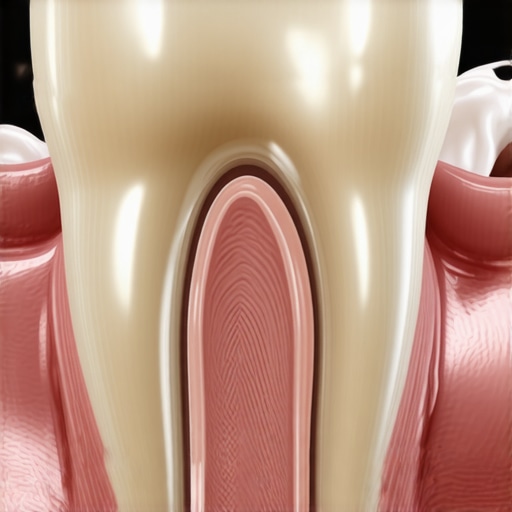
The Floss Test for Sudden Crowding
Sideways teeth act like a slow-motion bulldozer. When a wisdom tooth grows horizontally, it exerts constant pressure on the entire row of teeth in front of it. I remember one specific month where I suddenly couldn’t get my favorite ribbon floss between my two front teeth. It would just shred and snap. At the time, I thought I’d bought a defective pack of floss, but the reality was much more surgical; my wisdom tooth was literally squishing my dental arch. If you suddenly find it impossible to navigate the the secret to flossing when your teeth are tightly crowded, it’s likely because something in the back is pushing everything forward. This pressure doesn’t just make flossing hard; it can actually cause your front teeth to overlap or rotate over the course of just a few weeks.
Why That Weird Metallic Taste Usually Means Trouble
If you wake up with a taste in your mouth that reminds you of a handful of pennies, don’t ignore it. When a wisdom tooth is impacted, it often creates a ‘pericoronitis’ situation—a fancy word for inflammation around the crown of the tooth. This inflammation often leaks a tiny amount of fluid or blood that has a distinct metallic tang. You might be wondering why your breath smells metallic despite having good hygiene, and the answer is usually hiding in that back corner. In my case, I was brushing three times a day, but the sideways tooth had created a microscopic cavern where bacteria were throwing a party. If the taste is accompanied by a slight swelling that makes it hard to open your mouth fully, the tooth is definitely not growing in straight.
The Difference a 3D Scan Makes for Your Diagnosis
You can poke and prod all day, but you can’t see through bone without help. A standard bitewing X-ray—the kind where you bite down on the plastic tab—often misses the full picture of an impacted tooth because it only captures the top half of the teeth. This is the reason your Culpeper dentist uses CBCT scans instead of regular X-rays. A 3D scan shows the exact angle of the roots and how close they are to your alveolar nerve. Seeing my own scan was a wake-up call; the tooth looked like a fallen tree lying across a highway. If your dentist suggests a more advanced scan, take it. It’s the only way to map out the ‘eviction notice’ for that tooth without damaging the healthy molars next to it.
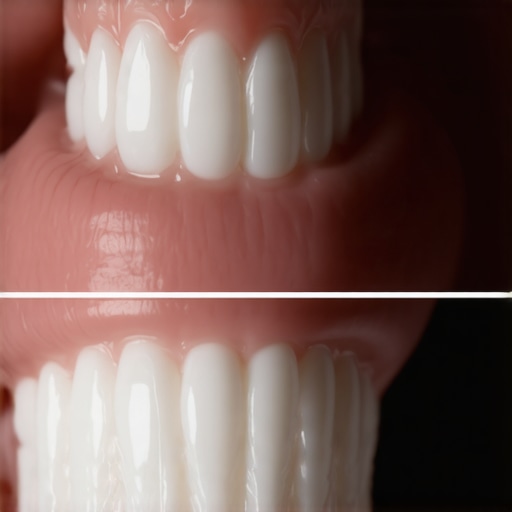
Now that we have covered the structural chaos of a sideways tooth, let’s pivot to what happens during the restoration phase. Many people assume that once the problem tooth is gone, the path to a perfect smile is just a matter of picking the whitest shade available. This is actually a massive misconception. In reality, the ‘whitest’ shade often lacks the natural translucency found in real enamel, which is exactly the reason your porcelain veneers look opaque and fake when they are not properly customized. A natural smile is not a row of solid white blocks; it requires depth, varied texture, and a slight hint of the underlying dentin color to look authentic.
The Symmetry Myth in Cosmetic Design
Here is a contrarian take that might surprise you: stop aiming for perfect symmetry. In my experience, a ‘perfectly mirrored’ smile is the fastest way to make your dental work look obvious. Human faces are naturally asymmetrical, and a successful smile design should reflect that. According to the American Academy of Cosmetic Dentistry (AACD), the most aesthetic results occur when the dentist accounts for the ‘golden proportion’ relative to your specific facial features, rather than just forcing a standard template onto your mouth. If your dentist tries to sell you a one-size-fits-all solution, you are likely falling into a common trap. Professional cosmetic dentistry secrets to boost your confidence often involve adding tiny, intentional ‘imperfections’ like slight rotations or varied edge lengths to mimic nature.
Can you actually get veneers without any tooth preparation?
This is the most frequent question I get from people who are afraid of the dental drill. The short answer is: rarely. While ‘no-prep’ veneers exist, they are only suitable for a very specific type of patient—usually someone with naturally small teeth or large gaps. If you have any crowding at all, skipping the preparation phase will result in teeth that look far too large for your mouth. This is frequently why your veneers feel bulkier than your natural teeth; the added porcelain has nowhere to go but out. Without that microscopic removal of enamel, you’re basically just gluing a thick shell onto an already full-sized tooth. It creates a ledge at the gum line that traps bacteria and irritates your tissue, which is a recipe for long-term failure.
The Invisible Risks of Dental Implants
If your wisdom tooth extraction left a gap that requires an implant, don’t ignore the importance of gum biotype. Many patients focus entirely on the titanium post and forget about the soft tissue surrounding it. If your gums are naturally thin, you might eventually notice a shadowy appearance near the base of the tooth. Knowing why your dental implant is showing a tiny dark line can help you distinguish between a failed implant and a simple aesthetic issue related to tissue thickness. Advanced practitioners now use specialized techniques to thicken the gum tissue during the initial surgery to prevent this very problem. Have you ever fallen into the trap of choosing the fastest treatment option only to realize the details were missed? Let me know in the comments.
Once you have invested in a high-end smile, the real work shifts from the dental chair to your bathroom sink. I used to think a manual toothbrush and a bit of string floss were enough, but that mindset is how I ended up needing extensive work in the first place. If you are balancing a mix of natural teeth, porcelain, and titanium, you need a more surgical approach to your daily routine. This is especially true for keeping those expensive restorations looking fresh; you have to know how to maintain your white smile after a coffee habit without scratching the surface of your porcelain.
Upgrade your toolkit for long-term success
I personally transitioned to a high-frequency sonic toothbrush because the vibration patterns are specifically designed to disrupt biofilm without the aggressive scrubbing that leads to recession. A study published in the Journal of Periodontology highlights that mechanical plaque control is the single most important factor in preventing peri-implantitis—the inflammatory process that can cause your body to reject an implant. If you’re worried about longevity, look into the red flags that your dental implant is being rejected so you can catch issues before they become catastrophic.
How do I maintain my dental implants and veneers over time?
The secret isn’t just brushing; it is irrigation. I recommend the Waterpik Aquarius because it allows you to flush out the ‘dead zones’ under bridge work or around implant crowns where traditional floss simply shreds. This is one of the most effective family dentistry tips for a lifetime of healthy smiles I can offer. For those with veneers, you also need to be wary of the physical forces you put on your teeth. If you have a history of clenching, you absolutely must wear a custom-fitted night guard. Failing to do so is the primary reason people end up comparing veneers vs crowns choosing the best option for your smile after a porcelain shell snaps off during sleep. 
Smart diagnostics are the next big shift
Looking ahead, I predict we will see a massive rise in at-home diagnostic tools. We are already seeing ‘smart’ toothbrushes that sync with apps to show exactly where you are missing plaque in real-time. In the near future, expect to see small, intraoral cameras designed for consumers that allow you to send high-res photos to your dentist for a virtual check-up. This tech will align perfectly with dental implants 2025 innovations that redefine comfort and durability, making the ‘lifetime’ promise of modern dentistry more attainable than ever. If you haven’t switched to an electric brush with a pressure sensor yet, do it this week—your gums will thank you.
Why I Stopped Chasing the ‘Perfect’ White Shade
If there is one thing I’ve learned from navigating the world of high-end restorations, it is that health always dictates beauty. When I first started looking into fixes, I was obsessed with finding the brightest white possible, but I quickly realized that the longevity of your results depends on the foundation. For instance, understanding the truth about the durability of composite vs porcelain veneers changed how I approached my own treatment plan.
I realized that durability isn’t just about the material; it’s about how that material interacts with your bite. I also learned that small habits, like clenching during a stressful workday, can jeopardize even the most expensive work. My ‘lightbulb moment’ was realizing that a sideways wisdom tooth wasn’t just a dental issue—it was a systemic threat to every other tooth I had worked so hard to save.
The Gear That Keeps My Smile From Crumbling
Maintaining a complex smile requires more than just a quick brush before bed. I’ve curated a toolkit that focuses on the ‘blind spots’ that dentists often warn us about. First, I never skip a day with my water flosser; I’ve found the benefit of using a water flosser extends far beyond just braces—it’s the only way to truly clear the sulcus around an implant or the margins of a veneer. Second, I look for tools that help me monitor changes in real-time. This proactive approach is essential because how dental implants reshape your oral health in 2025 is going to be all about preventative tech. Finally, I’ve learned to be extremely careful with lifestyle choices, specifically regarding habits like smoking, as I’ve seen first-hand the impact of smoking on your dental implant success rate and how it can cause the body to reject even the best surgical work.
#IMAGE_PLACEHOLDER_E#
Trust Your Gut When Your Teeth Start Pushing
If you feel that tell-tale pressure in the back of your jaw, don’t wait for a ‘convenient’ time to address it. Your oral health is a living, breathing system that requires constant attention. Whether you are looking for transform your smile with veneers expert tips for perfect results or you are just trying to get through a Tuesday without a thumping headache, the solution starts with a single appointment. Your future self will thank you for being proactive today. Don’t let a sideways tooth dictate the shape of your face. Have you ever noticed your teeth shifting suddenly, or did a wisdom tooth catch you by surprise like mine did?