I still remember the night I almost took a pair of pliers to my own face. It sounds dramatic, but if you are currently dealing with brackets that feel like miniature cheese graters, you know exactly what I mean. My journey into orthodontics was not some seamless transition; it was a week of wondering if I would ever speak normally again. I spent three days trying to be tough and ignore the stinging, only to realize that my inner cheek looked like a relief map of the Grand Canyon. I made the classic mistake of thinking that the soreness would just vanish if I ignored it. Spoiler alert: it does not. In fact, neglecting that initial irritation can lead to chronic ulcers that make eating a nightmare. We need to talk about why this happens and how to flip the switch from constant pain to barely there. If you have also noticed that your gums are puffy around your new braces, you are likely dealing with a double-whammy of inflammation that makes the rawness feel even worse. [image]
Stop Letting Your Brackets Shred Your Mouth
The mucosal lining of your mouth is incredibly thin and sensitive, and suddenly introducing a mouth full of stainless steel is a massive shock to the system. The primary reason for that raw feeling is simple friction. As you speak, eat, or even sleep, your cheeks move against the sharp edges of the brackets and wires. This is especially true in the first few weeks when your tissue has not yet adapted to the foreign objects. According to the American Association of Orthodontists, while some minor irritation is expected, the goal of treatment is never to cause open sores or debilitating pain that prevents you from eating. I used to think that using dental wax was cheating or that it would make me look weird. That was a mistake that cost me a week of comfortable meals. Learning how to manage gum pain after getting your braces tightened is a skill, just like anything else in life.
Do You Just Have To Toughen Up?
There is a common myth that you just have to build up a callus inside your mouth. While your tissue does eventually desensitize, you should not be suffering through the process without help. Have you ever reached the point where you considered putting duct tape on your brackets just to get five minutes of relief? If you are there right now, know that it is not supposed to be this hard. Today, we are going to dive into the mechanical reasons your hardware is catching on your tissue and the immediate hacks I used to finally get some sleep. We are aiming for the kind of long-term success we talk about in family dentistry tips for a lifetime of healthy smiles, but we need to survive this adjustment phase first. Let’s get your comfort back.
Put a Barrier Between the Metal and Your Cheeks
The first thing you need to master is the art of the wax wall. Think of dental wax like a protective barrier for your mouth. If you have ever tried to break in a pair of heavy leather boots without socks, you know the raw blisters that follow. Braces are essentially those boots for your teeth. You cannot just slap a glob of wax on and hope for the best; there is a mechanical process to it. I remember sitting in a restaurant bathroom once, trying to fix a rogue wire that was stabbing my molar. I tried to put wax on while my mouth was wet, and it just slid off like a wet noodle. It was incredibly frustrating.
The Secret to Making Wax Actually Stay Put
To make wax stick, you must dry the bracket first. Use a cotton swab or even the corner of a clean paper towel to blot the specific bracket that is causing the trouble. Once the metal is dry, take a pea-sized amount of wax, roll it into a ball to warm it up, and press it firmly over the hardware. This creates a smooth surface for your cheek to glide over rather than snagging. If you find that your hardware is constantly shifting or causing sharp pain, knowing how to handle a loose orthodontic bracket while on vacation can save you from a week of misery when your doctor isn’t available. 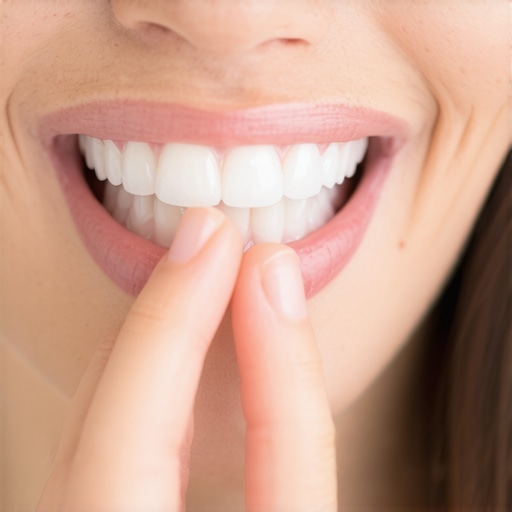
Heal the Wounds You Already Have
If the damage is already done and you have open sores, wax alone won’t fix the problem. You need to switch from defense to active recovery. This is where most people fail because they wait for the body to heal itself while continuing to irritate the area. Much like how how to treat a burn on your gums from hot pizza requires immediate soothing, brace-induced ulcers need a controlled environment to close up.
Why Saltwater is Your Best Friend
Mix half a teaspoon of salt into a cup of warm water and swish for thirty seconds. It sounds basic, but the osmotic pressure helps reduce swelling and kills bacteria that prevent the mucosal lining from knitting back together. Do this at least four times a day. While some patients worry about aesthetics during this phase, similar to how one might worry why your porcelain veneers might feel bulky at first, your priority right now is tissue health. Inflammation makes everything feel larger and more intrusive than it actually is.
Stop the Friction Before It Starts
Prevention is about more than just wax; it is about how you move. During the first few weeks, try to limit excessive talking or exaggerated facial expressions that force your cheeks into the metal. I used to practice my ‘S’ sounds in the mirror because I felt the brackets were changing my speech. This constant movement was actually what was keeping my sores open. If you are also dealing with other cosmetic hardware, you might notice that why your veneers feel thick and bulky when you try to say the letter s is a similar adjustment period where your tongue and cheeks have to learn a new landscape. Be patient with the mechanics of your mouth.
Maintain a Clean Surface to Reduce Irritation
Food particles trapped in your brackets act like sandpaper. Every time you chew, those particles rub against the sores. This is why mastering the trick to flossing around permanent orthodontic retainers or new braces is vital. A clean bracket is a smooth bracket. If you leave plaque or debris, the resulting gum inflammation will push your tissue further against the metal, creating a cycle of pain that is hard to break. Keep the hardware polished, use your wax proactively before you feel a poke, and let the saltwater do the heavy lifting for healing.Once you move past the initial adjustment phase of braces and brackets, it is tempting to view permanent restorative options like veneers or implants as a final, maintenance-free finish line. However, the most critical nuance I have learned from years of clinical perspective is that these high-end solutions are not merely ‘set-it-and-forget-it’ upgrades; they are biological partnerships. Everyone tells you that a new smile will restore your confidence, but they rarely mention the mechanical vigilance required to protect that investment. In my experience, the biggest ‘oops’ factor is assuming that because porcelain and titanium do not decay like natural enamel, they are invincible. This mindset is precisely why some patients face unexpected complications. For instance, understanding the truth about the lifespan of a dental implant requires acknowledging that while the post won’t get a cavity, the surrounding bone and tissue are still very much susceptible to environmental factors.
Your New Smile Isn’t a Set-and-Forget Solution
The common belief is that a veneer is an impenetrable shield. But if the bond is compromised or your bite alignment is off, you are headed for trouble. I have seen countless patients spend thousands on a smile only to fall victim to the 6 habits that cause your porcelain veneers to pop off unexpectedly, such as absentminded pen-chewing or using their teeth as tools to open plastic bags. It is not just about the strength of the ceramic; it is about the integration with your natural anatomy. If you have ever felt that why your porcelain veneers look opaque and not natural is a purely aesthetic issue, think again—it often points to a depth of preparation or material choice that failed to account for the light-reflecting properties of your underlying teeth.
Is It Possible for Your Body to Actually Reject Titanium?
This is the advanced question that many patients ask when they feel a slight twinge in a healed area. While titanium is incredibly biocompatible, ‘rejection’ is rarely an allergic reaction; it is usually a failure of osseointegration or a late-stage infection known as peri-implantitis. A study published in the Journal of Oral Implantology emphasizes that the ‘biological width’—the specific seal of soft tissue around the implant neck—is the ultimate gatekeeper of long-term success. If this seal is breached by poor hygiene or smoking, the implant becomes vulnerable. Being able to distinguish between minor post-surgical inflammation and a real mechanical failure is vital. Learning how to tell if your dental implant is rejecting or just healing can save you from a complete reconstructive failure if caught early. 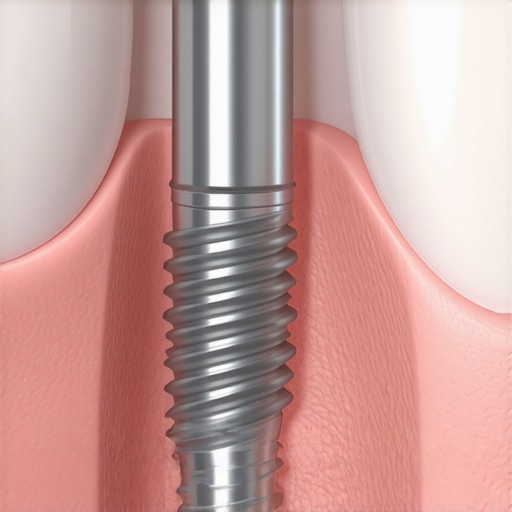
Why Your Bite Mechanics Matter More Than the Material
Most patients focus on the shade of white for their new teeth, but the hidden trap in cosmetic dentistry is almost always the occlusion (your bite). If an implant or veneer is even a fraction of a millimeter too high, it absorbs the full force of your jaw’s crushing power, which can lead to bone recession or porcelain fractures. This mechanical sensitivity is part of the reason your dental implant feels different than a natural tooth; it lacks the periodontal ligament that acts as a natural shock absorber. Without that cushion, the precision of your dentist’s fit is your only line of defense. Have you ever fallen into this trap of thinking your dental work was indestructible? Let me know in the comments.To keep these high-end results, you have to upgrade your toolkit. I used to think a standard manual toothbrush and some generic floss were enough for anyone, but after seeing how plaque can hide in the transition zones of a bridge or an implant, I changed my mind. The specialized ‘implant-specific’ interdental brush, which features a plastic-coated wire, is my non-negotiable tool. Unlike metal-core brushes that can scratch the titanium or porcelain, these allow you to reach the ‘black triangles’ and Sulcus areas without causing trauma. If you have ever struggled with how to clean under a dental bridge without shredding your floss, you know that physical dexterity is half the battle. This is where an oral irrigator becomes your best friend. I personally use one twice a day because the pulsating water stream can dislodge bio-film in crevices that even the most expensive floss can’t touch. 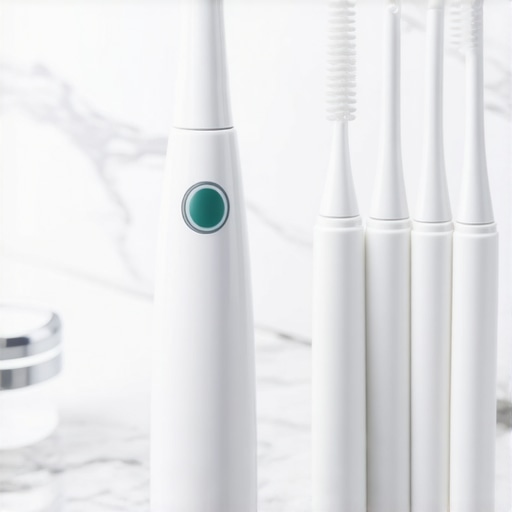
How can I keep my cosmetic work looking brand new?
Maintenance is as much about what you don’t do as what you do. The mechanical forces of grinding, or bruxism, are the silent killers of cosmetic dentistry. I have seen beautiful, expensive veneers shattered in a single night because the patient skipped their protective gear. You must understand the risk of skipping your night guard for just one week; it only takes one stressful night of jaw-clenching to compromise the bond of your porcelain. Beyond that, the long-term success of any restoration relies on the health of the underlying bone and gums. According to the Clinical Oral Implants Research journal, maintaining a ‘stable peri-implant environment’ is significantly more difficult than maintaining natural teeth because the lack of a periodontal ligament means the tissue is less resilient to aggressive bacterial attacks. This is why following family dentistry tips for a lifetime of healthy smiles is the foundation upon which your specialized cosmetic care sits.
Why the 2025 Tech Shift Changes Everything
Looking forward, we are moving away from reactive dentistry and into a phase of predictive maintenance. The trend for the coming years involves ‘smart’ restorations—veneers and implants embedded with pH sensors that can alert your smartphone if the environment around your tooth becomes too acidic, signaling a potential infection before you even feel pain. We are already seeing dental implants 2025 innovations that redefine comfort and durability through the use of 3D-printed lattices that mimic human bone structure more closely than ever before. This bio-mimicry is the future of dental implants cutting edge techniques in cosmetic dentistry, ensuring that your smile isn’t just a facade but a functional part of your biology. My advanced tip for you today: stop using standard toothpaste with high abrasivity (RDA) values, as they can microscopically dull the luster of your porcelain over time; switch to a gel-based, low-abrasive formula to keep that factory-new shine for the next twenty years.
The Hard Truths About Living with Your New Hardware
Over years of helping patients transition from the ‘shredded cheek’ phase of braces to the polished look of restorative work, I have noticed a few things that never make it into the brochures. First, your tongue is a detective; for the first three months, it will constantly search for edges, seams, or changes in texture. This is normal biological curiosity, not a sign that something is wrong. Second, the perfection of modern restorations is actually found in their subtle imperfections. If you find why your veneers look too opaque and how to make them look natural, it is usually because the light-reflecting properties of the material were not matched to your underlying dentin. True beauty lies in translucency. Finally, remember that your jaw is a dynamic machine; if you feel a slight ‘ping’ when you chew, it is often your bite mechanics adjusting to the new weight of your porcelain.
The Gear That Actually Saves Your Teeth
I do not just recommend tools because they are fancy; I recommend them because they prevent the black triangles and gum recession that ruin a beautiful smile. My toolkit starts with plastic-coated interdental brushes. Using metal-core brushes on implants is like cleaning a high-end car with a wire brush. Next, prioritize an oral irrigator. This is the only way to reach the microscopic gaps when you are deciding between veneers vs crowns: choosing the best option for your smile and long-term stability. I also suggest keeping a specialized repair kit on hand; knowing how to fix a chipped veneer without replacing the whole unit can save you from a weekend of panic if you accidentally bite into something too hard. This proactive approach ensures your investment stays pristine for decades rather than just years.
Your Journey Toward a Confident Future
Taking control of your oral health is more than just a medical necessity; it is an act of self-care that pays dividends for decades. Whether you are navigating the early days of bracket irritation or exploring how dental implants reshape your oral health in 2025, the goal is always the same: a functional, comfortable, and radiant smile. [image] By using cosmetic dentistry secrets to boost your confidence and adhering to the foundational principles of family dentistry tips for a lifetime of healthy smiles, you are setting yourself up for a lifetime of success. Don’t let the temporary discomfort of an adjustment period rob you of the long-term joy a healthy mouth brings. Have you ever felt like your dental work changed the way you speak? Let me know in the comments below.