I stared at the menu, ready to order the sea bass, but my tongue felt like it was trying to navigate a construction zone. When I finally spoke, the ‘S’ sound came out as a soft, whistling ‘th,’ and I felt my face turn bright red. It was my first night out with my new smile, and instead of feeling confident, I felt like I was wearing a bulky sports mouthguard. If you are standing in front of your bathroom mirror right now, wondering why your veneers feel like white chiclets or why your tongue suddenly feels too big for your mouth, I have been exactly where you are. [IMAGE_PLACEHOLDER]
That Annoying Lisp After Your Smile Makeover
When I first ventured into the world of cosmetic dentistry, I thought the hardest part would be picking the right shade of white. I was wrong. The real challenge was the sudden realization that my tongue and my new teeth were having a heated territorial dispute. That thick, bulky sensation usually happens because the porcelain on the back of your teeth is encroaching on the ‘incisal edge’ or the ‘lingual’ space where your tongue needs to rest to flick out those sharp ‘S’ sounds. I made the massive mistake of not speaking enough during my trial-smile phase, assuming that I would just ‘get used to it’ eventually. But phonetics are precise, and if the porcelain is too thick, your brain simply cannot compensate. Today, we are going to solve the mystery of the bulky ‘S’ and look at how to refine your veneers transformation so you can actually enjoy your new look.
Is this awkward bulkiness actually worth the hype?
You might be feeling a bit of buyer’s remorse right now, wondering if you traded your speech for a pretty smile. It is a common skepticism, but here is the reality: even a tiny change in tooth thickness can throw off your internal acoustics. According to research in the Journal of Prosthetic Dentistry, a change of just 1.0mm in the thickness of the upper central incisors can significantly alter the clarity of speech sounds. This isn’t just a ‘feeling’—it is a phonetic reality. Have you noticed your tongue getting ‘stuck’ or do you feel like your upper lip is catching on the edges of your new teeth? I want to know if you are struggling with this right now, because you shouldn’t have to choose between looking good and speaking clearly. Let’s get into the practical reasons why this happens and how we can achieve those perfect results without the bulk.
Reclaiming Your Natural Voice After the Upgrade
If you feel like you are speaking through a mouthful of marbles, the first thing you need to do is a ‘phonetic audit.’ Grab a mirror and start repeating words like ‘success,’ ‘sixty-six,’ and ‘Mississippi.’ Watch your tongue. To make a clean ‘S’ sound, your tongue tip needs to press against the roof of your mouth, just behind your upper teeth. If that porcelain is too far back, your tongue hits it too early, creating that dreaded whistle. This isn’t something you should just ‘live with.’ In the world of family dentistry, we know that comfort is just as vital as aesthetics.
#IMAGE_PLACE_HOLDER_B#
The 4:00 PM ‘S’ Test That Saved My Social Life
I remember sitting in the dental chair late on a Friday afternoon. My dentist was packing up, but I refused to leave because every time I said ‘seven,’ I sounded like a cartoon character. I had him take a piece of articulating paper—that blue bite-marking paper—and I literally spoke into it while biting. The paper showed exactly where my tongue was striking the ‘lingual’ or back-side of the veneer. We realized the porcelain was just 0.5mm too thick at the biting edge. He used a fine diamond bur to gently thin the back surface, and suddenly, my voice returned to normal. It was a tiny adjustment that made a world of difference. If you are struggling with a similar issue, you might want to learn why your clear aligners are making you lisp because the phonetic principles are remarkably similar—it is all about the available space for your tongue.
Stop the Whistle by Thinning the Back Edge
When you talk to your dentist, don’t just say ‘they feel big.’ Use specific terms. Tell them you need the incisal edge thinned or the lingual contours reduced. Sometimes the issue isn’t just thickness, but the way the light hits the material, making it look blocky. If your teeth also look ‘flat’ or fake, you should address why your veneers look too opaque and how to make them look natural during the same visit. A good dentist can hand-sculpt the porcelain even after it is bonded to ensure it doesn’t interfere with your speech. Think of it like tailoring a suit; the off-the-rack version might look okay, but the custom tailoring makes it feel like a second skin.
Why Veneers and Crowns Offer Different Levels of Bulk
Sometimes the bulkiness is a result of the restoration type chosen. If your teeth had significant decay or structural issues before the makeover, your dentist might have opted for crowns instead of veneers. When debating veneers vs crowns, remember that crowns wrap all the way around the tooth, naturally adding more volume to the back side. If this is the case, the adjustment process is even more critical because there is more material to manage. You might also notice that the surface isn’t as smooth as you’d like, in which case you could look into how to polish a scratched veneer to restore that slick, natural feeling that doesn’t irritate your tongue. Every fraction of a millimeter counts when your brain is trying to map out a new oral landscape.
People often assume that for a dental restoration to be ‘permanent,’ the dentist needs to aggressively shave down the natural tooth to create a massive mechanical ‘grip.’ This is perhaps the most dangerous myth in modern cosmetic dentistry. In my early days of researching this, I thought a heavy-handed prep meant the veneer would never budge. I was wrong. In fact, the most sophisticated approach today is ‘biomimetic,’ which focuses on preserving every possible micron of natural enamel.
Stop Assuming More Prep Means a Stronger Smile
In my experience, the strongest bond isn’t found deep inside the tooth; it is found right on the surface. Bonding porcelain to enamel is a chemical miracle, creating a fusion that is nearly as strong as the original tooth structure. However, once a dentist drills past the enamel into the dentin, the bond strength can drop significantly. This is exactly how to tell if your veneers were bonded correctly to the enamel versus the deeper layers. If your dentist was too aggressive, you might notice persistent sensitivity because the porcelain is sitting on the more porous dentin rather than the shield-like enamel.
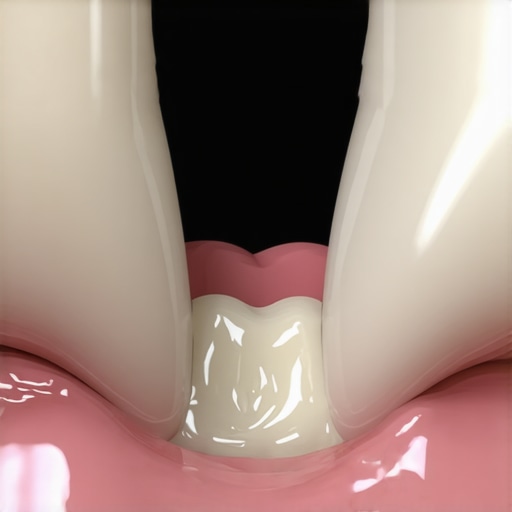
Can you actually bond porcelain to anything other than enamel?
While you can bond to dentin, it is far more complex and prone to failure over time. Dr. Pascal Magne, a leading authority in biomimetic dentistry, argues that preserving the ‘enamel rim’ is the single most important factor in the long-term success of a restoration. When that rim is lost, the tooth flexes more under pressure, which is one of the habits that cause your porcelain veneers to pop off unexpectedly. If you are considering a makeover, ask your provider about ‘no-prep’ or ‘minimal-prep’ options first. It is much harder for the dentist to work within these tiny margins, but the payoff for your tooth’s health is massive.
The Invisible Boundary That Keeps Your Gums from Turning Red
The ‘Oops’ factor that most patients miss is the violation of the ‘biological width.’ This is the specific amount of space (usually about 2mm) that your body requires between the edge of a veneer or crown and the underlying bone. If the porcelain edge is pushed too deep into this zone to hide the ‘seam,’ your body will react as if there is a splinter in your gum. This leads to chronic inflammation, and it is a common reason why your gums are receding even though you brush twice a day. You aren’t ‘bad at flossing’; your teeth are literally trying to move away from the invading porcelain. This isn’t just about family dentistry basics; it is a high-level architectural requirement for your mouth.
Why Sunlight is the Ultimate Truth Teller for Your Smile
Finally, let’s talk about the ‘metamerism’ trap. Have you ever noticed that your teeth look perfect in the dental office but look like glowing neon signs in the park? This happens because different light sources have different spectrums. Sophisticated labs use multi-layered porcelain to mimic the way light travels through a natural tooth. If your lab uses a single, opaque block, you will realize why your veneers look different in sunlight versus indoor lighting the moment you step outside. Have you ever fallen into the trap of choosing a shade that looked great under fluorescent lights but ‘fake’ in the sun? Let me know in the comments, and let’s discuss how to navigate these high-end choices before you commit to a veneers transformation.
Once you have successfully navigated the phonetic adjustments and the lighting quirks, the focus shifts from ‘getting’ your smile to ‘keeping’ it. I used to think that because porcelain doesn’t get cavities, I was essentially off the hook for intense maintenance. That is a dangerous mindset. In the world of high-end restorations, the porcelain might be bulletproof, but the biological foundation—the gums and the natural tooth structure—is still vulnerable. If you want to master the 3 secrets to making your porcelain veneers last twenty years, you have to treat your mouth like a high-performance engine that needs specific, non-negotiable tools.
How do I maintain these high-end results over time?
The biggest threat to your new investment isn’t coffee or wine; it is mechanical force. I personally use a custom-fabricated ‘hard-soft’ occlusal guard every single night without exception. Why ‘hard-soft’? Because the hard outer layer protects the porcelain from shearing forces, while the soft inner layer cushions your natural teeth. According to Dr. Gordon J. Christensen, a renowned expert in clinical dentistry, the abrasion rates of monolithic zirconia can be significantly higher than natural enamel if the surface isn’t polished to a sub-micron level. This means if you have dental implants reshaping your oral health, they won’t wear down, but they might wear away the natural teeth on the opposite arch if you don’t use a guard. It is a small price to pay to avoid learning how to fix a chipped veneer the hard way. 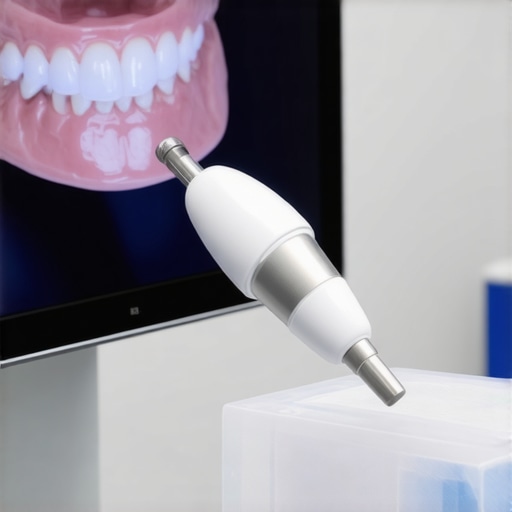
The Digital Guard Rail for Your Future Smile
Looking toward the next few years, the trend is moving away from reactive ‘fixing’ toward predictive monitoring. I am a huge proponent of intraoral digital scanning. In my own routine, I make sure my provider takes a 3D digital ‘baseline’ scan once a year. We use software like iTero or Trios to overlay this year’s scan with last year’s. This allows us to see even a 0.1mm change in gum position or tooth wear that the naked eye would miss. This is the gold standard of family dentistry tips for the modern era. We can catch issues before they require a total redo. If you aren’t already, start using a Waterpik on the ‘low’ setting specifically at the margin where the porcelain meets the gumline. It flushes out the microscopic biofilm that a manual brush simply cannot reach. If you haven’t yet, ask your dentist for a copy of your digital STL file—it is your ‘genetic backup’ for your smile. Check out the latest dental implants 2025 innovations to see how this digital integration is changing the game forever.
The Hardest Lessons I Learned After My Smile Makeover
It took me months to realize that a great smile isn’t just about the ‘look’—it is about the ‘feel’ in your daily life. First, never underestimate the power of the trial-smile phase. If you can’t say ‘Mississippi’ clearly in the temporary set, you won’t be able to say it in the permanent ones either. Second, your dentist’s ego shouldn’t come before your comfort. If something feels bulky, speak up immediately before the final bonding happens. Third, remember that learning how to tell if your veneers were bonded correctly to the enamel is the difference between a lifetime of health and chronic sensitivity.
The Daily Habits That Protect Your Investment
To keep your smile looking like day one, you need a specific maintenance routine. I always recommend the ‘Low-Pressure Waterpik’ method to my friends; it cleans the junction between the porcelain and your gum without causing irritation. I also swear by the ‘Double-Layer Guard’—a custom night guard that prevents the mechanical wear that ruins even the best dental work. Finally, make sure you are following high-quality family dentistry tips like regular professional cleanings to catch any microscopic shifts in your bite before they become big problems. I also recommend studying the 3 secrets to making your porcelain veneers last twenty years to ensure your investment stays secure.
Your Voice Deserves to Be as Bright as Your Smile
At the end of the day, a veneers transformation should empower you, not make you feel like you are hiding behind a mask. Don’t settle for ‘good enough’ when it comes to your speech and comfort. You deserve a smile that sounds just as beautiful as it looks in the mirror. If you have any lingering doubts, don’t hesitate to reach out to the pros via the contact us page to get a second opinion on your fit. Have you noticed any weird speech changes or clicking since you got your new smile? Let me know your experience in the comments below.