I remember sitting at my kitchen table three years ago, nursing a lukewarm coffee because anything hot felt like a lightning bolt shooting through my jaw. I had spent weeks telling my wife it was just a bit of stress-related grinding. I even researched why your jaw hurts more in the morning than at night, hoping for a simple fix like a drugstore mouthguard. My big mistake? I assumed that a wisdom tooth growing in sideways would be visually obvious. I thought I would see a tooth poking out at a weird angle, but the real damage was happening beneath the surface, where I couldn’t see a thing. By the time I finally sought help, that ‘sideways’ tooth was playing a literal game of bumper cars with my healthy molars. Today, I want to help you identify those sneaky, internal cues before you end up in an emergency situation. We are going to break down the specific pressure patterns, the strange gum sensations, and the structural risks of ignoring an impacted tooth. Have you ever felt a dull, localized pressure at the very back of your jaw that just won’t quit?
Signs Your Wisdom Tooth is Taking a Dangerous Detour
When a tooth doesn’t have enough room to emerge properly, it begins to look for the path of least resistance. Unfortunately, that path is often directly into the roots of the tooth next to it. Early on, you might notice that your gums feel itchy while your wisdom teeth are coming in, which is frequently the first sign of a problematic or horizontal eruption. It isn’t just about a bit of discomfort; it is about protecting your alignment. According to the American Association of Oral and Maxillofacial Surgeons (AAOMS), nearly 85% of wisdom teeth eventually need to be removed to avoid infection or crowding. If you decide to tough it out, you might be facing the long-term consequences of what happens if you leave a wisdom tooth in too long, which can include damage to adjacent teeth and even cyst formation.
Is this jaw pressure just a temporary nuisance?
It is easy to convince yourself that the pain will just go away if you wait long enough, but with impacted teeth, ‘wait and see’ is a dangerous game. I remember ignoring a persistent throbbing, convinced it was just a minor gum irritation. However, standard x-rays sometimes miss the subtle nuances of root positioning. Often, what your dentist sees on a CBCT scan provides a much clearer picture of whether that tooth is actually heading north or heading straight for your other teeth. If you feel stiffness when opening your mouth or notice a persistent foul taste near the back of your throat, your body is sounding the alarm. Taking action now means avoiding the complications of a tooth that has decided to grow in completely the wrong direction.
Upgrade Your Diagnostics Immediately
Imagine your jaw is a crowded subway car. When one person—the wisdom tooth—tries to shove their way in sideways, every other passenger has to shift to make room. The first step in stopping this chaos isn’t just a physical exam; it is getting a three-dimensional view of the battlefield. Standard bitewing X-rays are like looking at a flat paper map; they show you the roads but not the elevation or the depth of the potholes. This is exactly what your dentist sees on a CBCT scan that makes all the difference. These scans allow us to see the precise relationship between the wisdom tooth and the mandibular nerve, or the roots of the adjacent second molar. If you are feeling that localized pressure, don’t settle for a 2D image. Demand the ‘GPS’ of dental imaging to see if that tooth is a minor nuisance or a structural threat.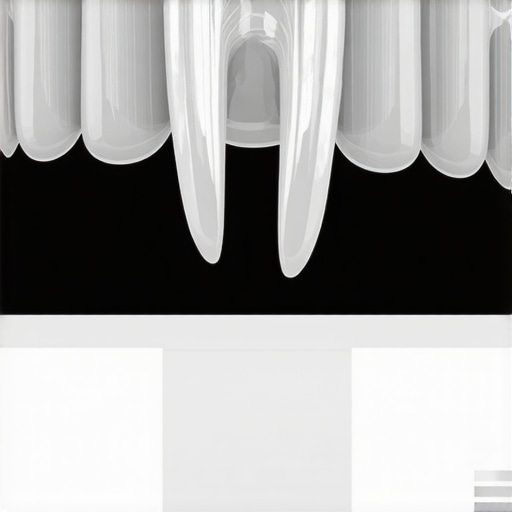
Protect Your Smile from the Domino Effect
Once you have the data, you must evaluate how that pressure is moving through your arch. I remember the exact moment I realized my front teeth were actually starting to overlap. I’d spent years following family dentistry tips for a lifetime of healthy smiles, only to have a single hidden tooth underneath my gums undermine all that hard work. If your wisdom tooth is horizontal, it acts like a slow-motion battering ram. If you’ve already invested in cosmetic work, you might notice why your veneers feel tight against your natural teeth as the force is transferred from the back of the mouth all the way to the front. To stop the shift, you have to intercept the tooth before it compromises the root of the neighbor tooth. If the damage to your front teeth is already visible, you might need to transform your smile with veneers after the extraction to restore the alignment and shape that the pressure destroyed.
When to Switch from Extraction to Replacement
Sometimes, we catch the problem too late, and the wisdom tooth has already resorbed the root of the healthy molar next to it. In this scenario, the focus shifts from a simple extraction to a more complex restoration. This is where how dental implants reshape your oral health in 2025 comes into play. If a primary chewing tooth is lost because of an impacted wisdom tooth, a dental implant becomes the gold standard for maintaining jawbone density. When I had to walk a patient through this last year, they were worried about the longevity of the fix. I had to explain the truth about the lifespan of a dental implant: with proper care, it can last decades, unlike a bridge that might need replacing. Looking at dental implants 2025 innovations, the process is now more comfortable and predictable than ever. The key is to act while you still have enough bone structure to support the implant; waiting longer only makes the ‘rescue mission’ more difficult.Most people believe that cosmetic dentistry is a luxury ‘extra’—a purely aesthetic choice for those wanting a Hollywood glow. However, my experience with the fallout of impacted wisdom teeth has shown me a very different reality. When those back teeth push your entire arch out of alignment, the resulting damage to your enamel and bite isn’t just a cosmetic flaw; it is a structural failure. The big myth I want to challenge today is that veneers are just ‘stickers’ for your teeth. In truth, when done correctly, they function as a biological shield for teeth that have been weakened by the pressure of crowding. Many patients wait until their teeth are literally cracking before they consider restorative work, making the mistake of prioritizing white color over functional integrity. If you’re weighing veneers vs crowns: choosing the best option for your smile, understand that the ‘oops’ factor usually happens when you ignore the translucency and texture of the material. 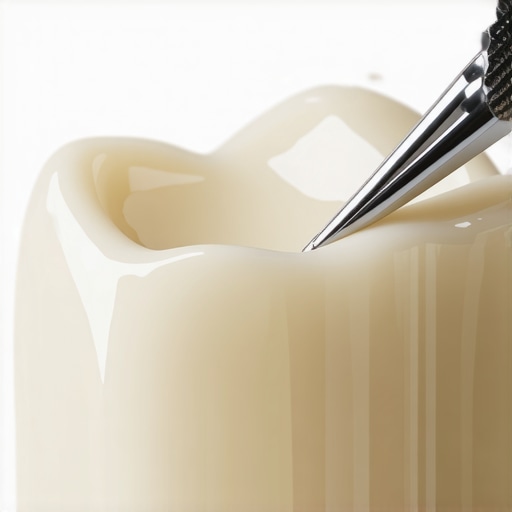 If your restorations look like flat, opaque tiles, it is because they lack the micro-topography of real enamel. This is why your veneers look like white chiclets—they aren’t scattering light the way nature intended.
Why do your new teeth look different under office lights?
This is a sophisticated nuance called metamerism. A shade that looks perfect in the dentist’s chair might look completely artificial in a grocery store or at a dinner party. It is precisely why your veneers look different in sunlight versus indoor lighting. A study by the American Academy of Cosmetic Dentistry (AACD) emphasizes that the highest level of expertise involves ‘multi-layering’ porcelain to ensure light reflects from the deeper layers of the restoration, just like a natural tooth. If your practitioner isn’t checking your shade under at least three different light temperatures, you are likely to end up with a smile that looks ‘off’ the moment you leave the office. We see a similar sensory gap with tooth replacement. Often, the reason your dental implant feels different than a natural tooth is that it lacks the periodontal ligament, meaning you lose that ‘cushion’ and tactile feedback when you chew. It feels more rigid, which is a nuance many beginner patients find jarring. Furthermore, technical precision in the laboratory is everything; how to tell if your veneers were bonded correctly to the enamel depends on the seamlessness of the margin. If the transition between the porcelain and your gum is thick or uneven, your porcelain veneers might feel bulky at first and eventually harbor bacteria that lead to recession. To transform your smile with veneers effectively, you must demand a result that respects biology as much as beauty. Have you ever fallen into this trap of prioritizing speed or color over the structural health of your bite? Let me know in the comments.
Stop the Grind Before Your Enamel Pays the Price
Maintaining a high-end smile isn’t just about showing up for your six-month cleanings; it is about the equipment you use at home every single night. I’ve seen patients spend thousands on a full-arch restoration only to crack a molar because they thought their teeth were invincible. If you’ve gone through the process of correcting a crowded bite caused by impacted wisdom teeth, you have essentially reset your dental clock. However, the muscles in your jaw still remember those old grinding patterns. This is why I am obsessed with custom-fitted occlusal guards. If you are curious about the immediate danger of going a few nights without protection, consider the risk of skipping your night guard for just one week. The micro-fractures that occur from bruxism are often invisible to the naked eye until a veneer pops off during a morning bagel. I personally recommend a hard-acrylic lab-processed guard rather than the soft, squishy ones you find at the drugstore, because the soft ones can actually encourage your jaw to ‘chew’ in your sleep, worsening the muscle tension.
How do I keep my new smile looking fresh for decades?
The longevity of your work comes down to managing the ‘biological width’—the specific distance between your restoration and your bone. To keep that area clean without causing damage, you must be surgical with your tool selection. I tell my patients that how to pick a toothbrush that won’t destroy your enamel is the most important decision they make all year. You want extra-soft bristles and a pressure sensor that forces you to stop when you are scrubbing too hard. For those with implants, standard flossing won’t cut it because you need to reach the ‘chimney’ of the implant where bacteria hide. I recommend using an interproximal brush coated in a non-abrasive gel twice a week. If you have a bridge, you have to master how to clean under a dental bridge without shredding your floss using specialized threaders. Following these 3 secrets to making your porcelain veneers last twenty years will ensure your investment doesn’t end in an early replacement.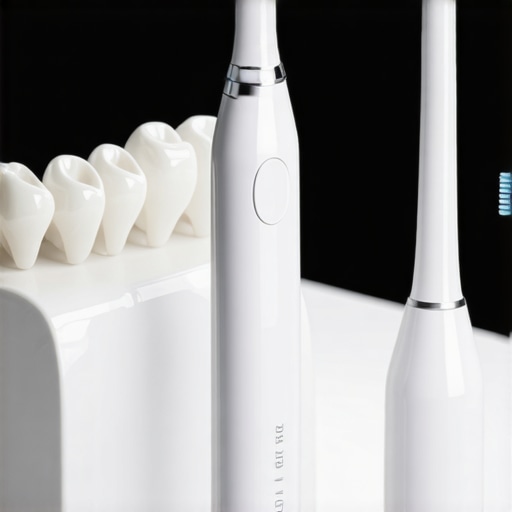
The Move Toward Biomimetic Longevity
Looking ahead, the industry is moving away from just ‘replacing’ teeth and toward mimicking their natural physics. According to a landmark study by Dr. Pascal Magne, the pioneer of biomimetic dentistry, the goal is to use materials like lithium disilicate that flex and distribute stress exactly like human dentin. I predict that in the next five years, we will see 3D-printed ceramics that are infused with your own minerals to prevent rejection. We are already seeing this shift in the future of dental implants and cutting-edge techniques in cosmetic dentistry, where the focus is on preserving the original tooth structure rather than grinding it down for a crown. This ‘additive’ approach is the gold standard for anyone looking to scale their oral health long-term. If you are ready to stop reacting to dental pain and start a proactive maintenance plan that actually works, I want you to try this: swap your manual toothbrush for a high-end electric model with a pressure sensor tonight and see how much less ‘fuzzy’ your teeth feel in the morning. If you have questions about your specific alignment, don’t hesitate to contact us for a diagnostic scan.
What Your Smile Actually Needs After the Wisdom Teeth Are Gone
The biggest oversight I see in my chair isn’t the extraction itself—it is what happens six months later. Once those ‘bumpers’ are removed, your entire bite will settle into a new equilibrium. If you have already explored cosmetic dentistry secrets to boost your confidence, you must understand that your alignment is now in a state of flux. One ‘insider’ tip I always share is that the space left behind can sometimes cause the second molars to tilt slightly backward if the bone doesn’t heal with sufficient density. This subtle shift can lead to new ‘food traps’ you never had before. Furthermore, if you’ve been living with the pressure of impacted teeth for years, your brain has likely developed a ‘compensated’ chew. You’ve been subconsciously avoiding the pain, and you need to retrain your jaw muscles to bite vertically rather than laterally to protect your existing dental work. This is the foundation of a successful veneers transformation; it is as much about muscle memory as it is about porcelain.
#IMAGE_PLACEHOLDER_E#
The Daily Toolkit for a Resilience-First Smile
I am often asked what products I personally use to maintain my own dental health after having my wisdom teeth removed years ago. I don’t just rely on any random toothpaste; I look for ‘low-abrasivity’ formulas that won’t scratch the glaze on my dental work. Here are the three non-negotiables in my toolkit. First, a high-quality electric toothbrush with a pressure sensor is essential. I’ve seen too many people try to ‘scrub away’ their problems, only to end up needing advice on how to tell if your gum recession is caused by brushing too hard. Second, I trust 3D imaging over everything else. If your provider isn’t utilizing the precision found in what your Culpeper dentist sees on a CBCT scan, you are essentially flying blind through your own anatomy. Finally, never underestimate a custom-fit night guard. It is the cheapest ‘insurance policy’ you can buy for your dental implants 2025 innovations, ensuring that nocturnal grinding doesn’t undo years of clinical progress.
The Future of Your Smile Starts with One Small Step
Deciding to address an impacted wisdom tooth or a shifting bite is more than just a medical box to check; it is a commitment to your future self. Whether you are looking to restore what was lost or simply want to prevent a ‘domino effect’ of crowding, the technology available today makes the process smoother than ever before. You don’t have to live with a ‘tired’ jaw or a smile that feels like it is constantly under pressure. Take the time to understand your options, from veneers vs crowns: choosing the best option for your smile to modern implant techniques. Your oral health is the gateway to your overall well-being, and it’s never too late to start a proactive plan. If you are ready to see the real state of your jaw and teeth, I encourage you to contact us and schedule a comprehensive evaluation. Have you noticed your front teeth shifting even though you thought your wisdom teeth were done growing? Let me know in the comments below.