I woke up after my wisdom tooth surgery feeling surprisingly brave, but that confidence lasted about four hours. As the anesthesia wore off, a taste started creeping into the back of my throat that I can only describe as a mixture of old pennies and a damp basement. It was visceral. Every time I breathed, I felt like I was inhaling the scent of a copper factory. If you are sitting there right now, tongue hovering near your extraction site, wondering if you will ever taste a normal sandwich again, I have been exactly where you are. We are going to fix it today.
Banish That Gross Post-Extraction Funk Once and For All
I’ll be honest with you: the metallic tang is usually just a side effect of minor bleeding and your body’s natural healing proteins. However, knowing that doesn’t make your morning coffee taste any less like a science experiment. When I had mine done, I made the absolute rookie mistake of trying to drown the flavor with a vigorous, minty mouthwash rinse just twelve hours after the procedure. Please, do not do that. I ended up terrified that I had dislodged my blood clot, and I spent the next night frantically researching how to manage the intense pain of a dry socket at home tonight because I was so worried I’d messed everything up. The key isn’t force; it’s gentle management. You need to learn how to clean your mouth after a wisdom tooth extraction without being aggressive. According to the American Association of Oral and Maxillofacial Surgeons, some degree of bleeding and localized bacteria is a standard part of the inflammatory response, which often leads to temporary breath issues. But there is a line between ‘healing smells’ and ‘something is wrong.’ Have you ever felt like you were chewing on a battery after a dental visit, or is it just me?
Is it possible this taste means something is seriously wrong?
The fear of infection is real. I spent hours in front of the bathroom mirror with a flashlight, convinced my mouth was turning against me. While a metallic breath smell despite having good hygiene is common right after surgery, a foul, bitter, or salty taste that gets worse after day three could be a sign of trapped food or a developing infection. If you notice that your gums are swollen or you have a fever, it’s time to call the office. But for most of us, it’s just the unpleasant reality of the ‘healing phase.’ We’re going to walk through the safe, neighbor-approved ways to freshen up without risking your recovery.
Master the Art of the No-Swish Salt Water Rinse
The first rule of post-op recovery is that your mouth is currently a construction zone. You wouldn’t take a power washer to a freshly poured concrete driveway, and you shouldn’t use heavy-duty mouthwash on a healing socket. Instead, mix about half a teaspoon of salt into eight ounces of warm water. When I did this, I didn’t actually swish. I took a mouthful, tilted my head from side to side like a slow-moving lava lamp, and then just leaned over the sink and let the water fall out. It feels messy and a little undignified, but it’s the safest way to neutralize the acidity that causes the real reason your breath smells like metallic pennies without disturbing the vital blood clot. Repeat this after every time you eat—once you have reached the point where you know how long you should really wait to eat after an extraction based on your surgeon’s specific instructions. 
Water is Your Best Defense Against Sour Saliva
When your mouth is dry, your saliva becomes thick and concentrated, which magnifies that copper-pipe flavor. I remember day three of my recovery; I was so focused on the pain that I forgot to drink anything but lukewarm broth. My mouth felt like it was coated in old velvet. I finally started taking tiny, frequent sips of plain water every ten minutes. Think of it like a constant, gentle irrigation system for your gums. This is a core tenet of family dentistry tips for a lifetime of healthy smiles: a hydrated mouth is a self-cleaning mouth. If you’re used to cosmetic dentistry secrets to boost your confidence, you know that a fresh environment is key, and that starts with basic H2O.
Treat Your Tongue Like Fine China
Most of that nasty taste isn’t actually coming from the hole in your gums; it’s sitting on your tongue. The bacteria that thrive on blood proteins love to hang out in the tiny bumps on the back of your tongue. On my fourth day, I tried to use a tongue scraper and nearly jumped out of my skin when I got too close to the back molars. The trick is to use a very soft-bristled toothbrush—one you might find in a toddler’s kit—and very gently brush only the front and middle of your tongue. Stay far away from the extraction sites. This small act can remove the film that keeps the metallic scent trapped in your nose. While it might be tempting to look into transforming your smile with veneers or other upgrades while you’re staring in the mirror, focus on this basic hygiene first to ensure your breath doesn’t remain an issue as you heal. If the taste persists for weeks, it might be worth asking about other causes, as some people notice their mouth feels metallic after getting a new crown or other hardware, but for now, stay the course with gentle cleaning.
Once that metallic taste finally fades and your extraction site heals, your mind will likely pivot toward the next big hurdle: deciding how to fill that gap. Most people assume that getting an implant or a veneer is the ‘finish line.’ In my experience, that’s actually where the real strategy begins. We often hear that modern restorations are ‘one and done,’ but that’s a dangerous myth that leads to thousands of dollars in avoidable repairs. One of the biggest traps I see patients fall into is the ‘monochrome mistake.’ In a rush to have a Hollywood smile, many choose a shade that is blindingly bright, falling for the mistake that makes your teeth look too white and fake. Natural teeth have subtle translucency and color gradients; if you ignore those nuances, your smile will look more like a row of plastic chiclets than a biological upgrade.
Stop Thinking Your New Dental Implants Are Indestructible
The most common contrarian view I hold is that dental implants actually require more specialized care than your natural teeth. People think because they can’t get cavities, they can slack off on hygiene. However, a study published in the Journal of Oral Implantology highlights that late-stage implant failure is frequently linked to peri-implantitis—a gum disease-like condition—and mechanical overloading. You aren’t just buying a tooth; you are investing in a living relationship between metal and bone. Understanding how dental implants reshape your oral health in 2025 means recognizing that the bone needs constant stimulation and the soft tissue needs meticulous flossing. If you’re not prepared for the maintenance, even the most expensive implant can fail within a decade.
Why does my dental implant area feel sensitive to cold weather?
This is a question that stumps even seasoned dental patients. While a titanium post doesn’t have a nerve to feel ‘pain’ like a regular tooth, the surrounding bone and tissue are still very much alive. Many patients are surprised to find that their dental implant area is sensitive to cold weather or pressure. This is often due to the way metal conducts temperature faster than natural dentin. Furthermore, if you skipped a necessary prep step, you might be feeling the lack of insulation. According to the American Academy of Implant Dentistry, the long-term success of these procedures relies heavily on the foundation, which is why the reason your dental implant surgery requires a bone graft is often the most important conversation you’ll have with your surgeon. Skipping the graft to save money is a ‘trap’ that leads to recession and sensitivity years down the road.
The Secret Nuance of Material Choice
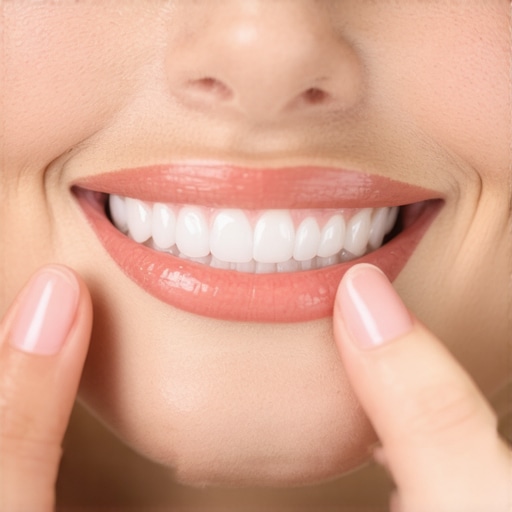
Another area where beginners get tripped up is the ‘porcelain is always better’ myth. While porcelain is the gold standard for aesthetics, it is also brittle. If you are a heavy grinder, you need to look into the truth about the durability of composite vs porcelain veneers. Sometimes, a high-quality composite is the better choice because it is more easily repaired in the chair if it chips, whereas a cracked porcelain veneer usually requires a total and costly replacement. Transitioning from a healing socket to a permanent restoration is about finding the balance between what looks good in a selfie and what survives a steak dinner. Have you ever fallen into the ‘too white’ trap or felt like your dentist didn’t warn you about the maintenance required for implants? Let me know in the comments.
I’ve spent a small fortune on my mouth over the years, and if there is one thing I’ve learned, it’s that a manual toothbrush is basically a stone tool in a digital age. Once you move past the initial healing of an extraction or an implant, you have to transition into what I call the ‘custodian phase.’ You are no longer just a patient; you are the manager of high-end biological real estate. The tool that changed everything for me wasn’t a fancy boutique toothpaste, but a high-pressure water flosser. Even though I don’t wear metal wires anymore, I realized the benefit of using a water flosser with your braces applies just as much to the tight spaces around dental implants and veneers. It flushes out the microscopic debris that traditional floss simply skips over.
The High-Tech Kit I Actually Use Every Morning
My daily routine involves a sonic toothbrush with a pressure sensor. This is non-negotiable because porcelain is tough, but your gum line is fragile. If you scrub too hard, you’ll cause recession, and suddenly that expensive veneer has a dark line at the top. I also became obsessed with my custom night guard. If you’re a grinder like me, you are basically trying to crush your investment every night while you sleep. I had to learn how to clean your night guard without damaging the material because using the wrong chemicals can make the plastic porous, which then traps bacteria right against your teeth. 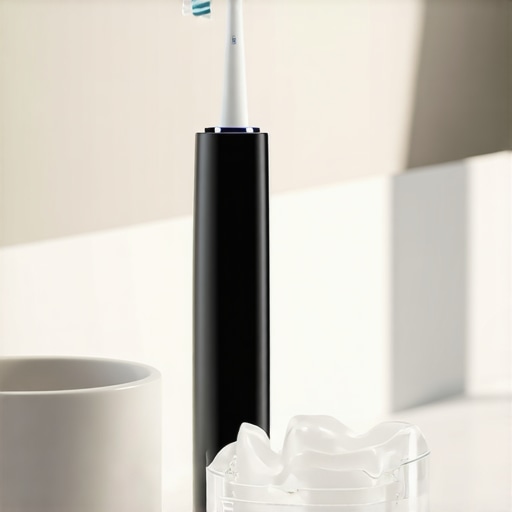
How do I keep my porcelain work from wearing down over time?
Long-term success is about managing ‘mechanical load.’ Dr. Gordon Christensen, a leading authority in restorative dentistry and founder of the Clinicians Report, has frequently emphasized that the way your teeth meet—your occlusion—is the primary predictor of whether a restoration will last five years or fifty. If you notice why your dental implant crown feels slightly wiggly when you bite, it is rarely the screw failing; it is usually the bite being slightly ‘high,’ causing the bone to retreat. I get my bite checked every six months with T-Scan digital technology, which measures the force of every single tooth strike. It is the only way to ensure one tooth isn’t doing all the heavy lifting.
Don’t Let Your Investment Pop Off During Dinner
We’ve all had that nightmare where we bite into a piece of bread and a tooth stays behind. Knowing what to do when a veneer pops off during dinner is a great safety net, but prevention is better. I avoid ‘leverage’ movements—like tearing into a tough bagel with my front teeth. I use my molars for the heavy work. This minor habit change is what keeps how dental implants reshape your oral health in 2025 a positive story rather than a series of emergency visits. I predict that in the next few years, we will see ‘smart’ implants with built-in pH sensors that alert your smartphone to early signs of inflammation before you ever feel a twinge of pain. Exploring the future of dental implants and cutting-edge techniques in cosmetic dentistry shows we are moving toward 3D-printed bio-compatible scaffolds that actually encourage bone regrowth faster than ever before. If you want to level up your care right now, my advanced tip is to use a disclosing tablet once a week after you brush. It will dye the hidden plaque purple, showing you exactly where your technique is failing. It’s a humbling but necessary reality check.
Lessons from the Chair That I Learned the Hard Way
Healing isn’t a straight line; it’s a series of small recalibrations. One major lightbulb moment for me was realizing that gum health dictates how ‘real’ a restoration looks. If your gums aren’t healthy, even the most expensive porcelain will look like a prosthetic. Another hard truth? That metallic taste is your body’s way of asking for hydration and gentle care, not a sign to scrub harder. I also learned that your bite can change slightly as inflammation goes down, so never skip those follow-up appointments where they check your alignment.
The Dental Kit I Swear By for Long-Term Success
I don’t leave my oral health to chance anymore. My toolkit includes a water flosser, which I used even after my extraction—once safely healed—to keep the surrounding teeth pristine. #IMAGE_PLACEHOLDER_E# I also swear by a soft-bristled brush to protect the delicate junction where the tooth meets the gum. To keep my smile bright, I follow specific protocols like how to keep your teeth white while drinking tea daily, ensuring my investment doesn’t dull over time. If you’ve ever felt like your smile was physically lacking, looking into how to fix a smile that feels too narrow or small can provide a roadmap for structural changes you didn’t know were possible.
Start Your Own Transformation with Confidence
Your journey from a metallic-tasting recovery to a fully restored, confident smile is entirely within your control. Whether you are navigating the early days of a veneers transformation for unlocking your best smile yet or just trying to get through the week after a wisdom tooth surgery, remember that patience is your best tool. By following solid family dentistry tips for a lifetime of healthy smiles, you’re not just fixing a temporary problem; you’re building a foundation for decades of health. Embrace the process, stay hydrated, and don’t be afraid to ask your provider the tough questions. Have you ever experienced a strange taste or sensation after a dental procedure that took you by surprise? Let me know in the comments below!