I will never forget the Tuesday morning during my second trimester when I spit into the sink and saw a bright swirl of red. My heart absolutely dropped. I was already worried about everything—from the nursery paint color to the baby’s kick count—and now I had to worry about losing my teeth? I have always been a bit of a stickler for my dental routine, so seeing blood felt like a personal failure. But here is the thing I wish someone had told me earlier: your body is essentially a hormonal construction site right now, and your gums are often the first place to show the strain. If you have noticed your gums looking a bit puffy or bleeding when you floss, you are definitely not alone. Today, we are going to dive into how to distinguish between a simple brushing mishap and legitimate pregnancy gingivitis.
My Panicked Search for Answers After Seeing Blood
When I first saw that blood, I made the classic mistake of thinking I just needed to scrub harder. I bought the firmest toothbrush I could find, thinking I needed to ‘blast’ away whatever was causing the inflammation. It was a disaster. I later learned that bleeding even when you brush twice a day is incredibly common when you are expecting. According to the Centers for Disease Control and Prevention (CDC), about 60% to 75% of pregnant women develop gingivitis. This happens because those soaring progesterone levels make your gum tissue much more sensitive to the bacteria in plaque. It is not just you being ‘bad’ at flossing; it is your biology reacting to the pregnancy.
Could this really be just a pregnancy side effect?
It feels like a stretch, doesn’t it? You expect the backaches, the swollen ankles, and the weird cravings for pickles, but bleeding gums feel like a weird prank. The reality is that your oral health is deeply tied to your pregnancy journey. I have talked to so many moms-to-be who worry because their teeth feel loose during the third trimester, and while that is a scary sensation, it is often linked to the same hormonal shifts affecting your gums. I want to help you tell if your gums are healthy based on their color so you can stop the 3:00 AM Google spirals. Have you looked in the mirror lately and felt like your smile looks more ‘angry red’ than ‘healthy pink’? This guide is for you. We are going to look at the specific red flags that mean it is time to stop worrying and start taking gentle, effective action.
How to Calm Your Gums Without Over-Scrubbing
When I realized my “scrub harder” method was basically like trying to clean a wound with sandpaper, I had to pivot fast. You have to treat your gums like a delicate silk fabric right now. Plaque is soft and sticky; it doesn’t need a heavy-duty power wash to come off. It just needs gentle, consistent movement. This is the core of family dentistry tips for a lifetime of healthy smiles, but it’s especially vital when your hormones are in the driver’s seat.
Switch to a Brush That Feels Like a Cloud
The first thing I did—on the advice of my dentist—was throw my medium-bristled brush in the trash. If you are seeing blood, your first instinct is to fight back, but you actually need to retreat into softness. I switched to an extra-soft manual brush and focused on “massaging” the gum line rather than sawing at it. Within three days, the bright red inflammation started to fade into a manageable pink. If you don’t make this switch, you might realize the signs your receding gums are caused by your toothbrush are appearing alongside your pregnancy symptoms. 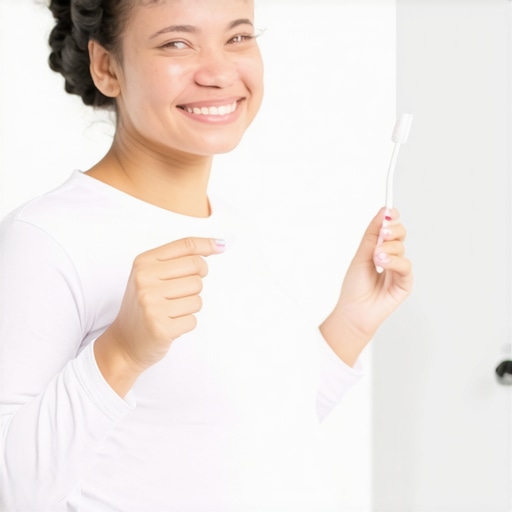
Keep Your Professional Cleaning Appointments
I almost canceled my six-month cleaning because I was so embarrassed by how much my gums bled. Don’t do that. A professional cleaning is like a “reset” button for your mouth’s ecosystem. Your hygienist can reach the hardened tartar (calculus) that is irritating your already-sensitive gums. Even if you are diligent, you might wonder why your gums are bleeding even after a professional cleaning; often, it’s just the lingering hormonal effect, but the cleaning prevents that irritation from turning into a full-blown infection.
Soothe the Inflammation with a Saline Strategy
After my cleaning, my mouth felt like it had gone through a boxing match. To calm things down, I used a simple warm salt-water rinse twice a day. It’s an old-school trick, but it works by drawing out excess fluid from the swollen tissues. This is a great way to soothe your gums after a deep cleaning session or just to manage the daily puffiness that comes with the second trimester. It’s a low-cost, high-impact habit that doesn’t involve harsh chemicals or alcohols that can dry out your mouth.
Master the “C-Shape” Flossing Technique
Most of us “snap” the floss between our teeth, which hits the gum like a guillotine. When you’re pregnant, that snap leads to an immediate crime scene in the sink. Instead, wrap the floss in a “C” shape around the side of the tooth and slide it gently under the gum line. It’s a subtle shift, but it removes the bacteria without the trauma. I started doing this while watching TV to make sure I wasn’t rushing, and the decrease in sensitivity was almost immediate.
Don’t Fall for the Hollywood White Trap
While we are on the subject of sensitive gums and changing smiles, let’s talk about a major myth I see in the cosmetic world: the idea that ‘the whiter the tooth, the better the result.’ Many people think getting veneers is a quick fix for any dental insecurity, but they often fall into the mistake that makes porcelain veneers look like piano keys. When you choose a shade that is blindingly white without any natural translucency, you lose the character of a real smile. Real teeth have subtle gradients. If you are considering a smile makeover after your pregnancy, remember that expert tips for perfect results always prioritize harmony with your face shape and gum line over sheer brightness. I’ve seen so many people regret going too bold too fast, only to realize the reason your veneers look opaque and fake is often a lack of customized texture. 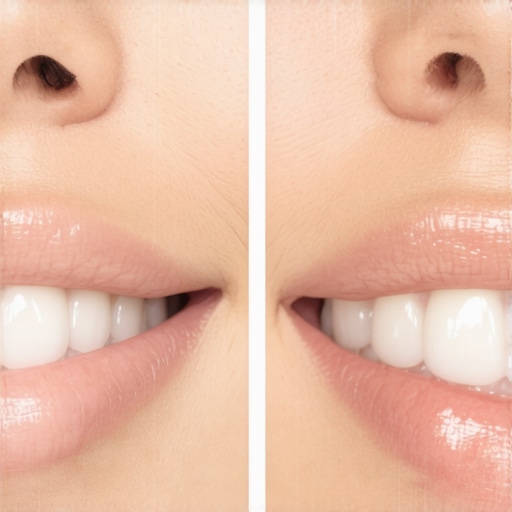
The Foundation Matters More Than the Porcelain
Here is a contrarian view: Your dentist shouldn’t just be looking at your teeth; they should be obsessed with your bone health. Most patients believe a dental implant is just a ‘screw and a crown,’ but the secret to longevity is the bio-integration. You might notice why your new veneers feel bulky against your lips or why an implant feels ‘off’ if the structural foundation wasn’t prepped correctly. A study published in the Journal of Prosthetic Dentistry highlights that the mechanical stability of an implant depends entirely on the quality of the host bone, not just the brand of the titanium post. This is why innovations that redefine comfort and durability in 2025 are focusing more on 3D bone mapping than ever before.
Will my bite feel the same after major cosmetic work?
This is the sophisticated question every patient should ask. The nuance that beginners miss is ‘occlusion’—the way your teeth meet. If your new dental work changes your bite even by a fraction of a millimeter, it can lead to headaches or jaw tension. I often tell my readers that if you feel your smile looks asymmetrical after dental work, it might actually be a functional issue rather than a visual one. You have to ensure your dentist is checking how you chew, not just how you look in the mirror. It is a trap to assume that ‘feeling tight’ is a normal part of the healing process. In reality, the reason your dental implant crown feels tighter than the others could be a sign of improper spacing that needs an immediate tweak. Have you ever fallen into the trap of choosing aesthetics over function? Let me know in the comments below!Once you have navigated the tricky waters of occlusion and bite alignment, the real work begins: the long-game of maintenance. Most people treat their new veneers or implants as invincible, but that is a dangerous mindset. I treat my dental work like a high-performance car; you would not take a luxury vehicle through a cheap brush-wash, right? I learned the hard way that standard flossing is often not enough when you have high-tech hardware in your mouth.
Stop treating your implants like natural teeth
The biggest shift for me was realizing that my implant is not attached to my jaw by a flexible ligament like a real tooth; it is fused directly to the bone. This means it does not give under pressure, and the gum seal around it is actually more fragile than a natural one. To protect this, I swear by a water flosser on the medium setting. I found that knowing how to safely clean a dental implant without scratching the post was the difference between a lifetime fix and a costly repair. Metal tools or even some abrasive toothpastes can create microscopic scratches on the titanium, which then become breeding grounds for bacteria.
My secret weapon for veneer longevity
For my veneers, I had to completely overhaul my stain management strategy. Since porcelain is not porous like enamel, stains do not go into them, but they can sit on the surface. If you are a coffee or wine lover, you will want to know the secret to getting red wine stains off your veneers without damaging the glaze—it is all about immediate rinsing and using a non-abrasive gel rather than a whitening paste. Many commercial whitening pastes are far too gritty and can actually dull the polish of your porcelain over time. 
How do I maintain these high-end restorations over time?
The answer is not just to brush more; it is about specific biomechanical care. According to a meta-analysis in the International Journal of Oral & Maxillofacial Implants, using plastic-coated interdental brushes is significantly more effective at preventing peri-implantitis than standard floss because they can better navigate the unique anatomy of an implant crown. These are essential family dentistry tips for a lifetime of healthy smiles that ensure your investment lasts decades rather than years. I truly believe the next five years will change how we monitor our oral health at home. Looking ahead, the future of dental implants cutting edge techniques in cosmetic dentistry points toward smart crowns equipped with biosensors. Imagine getting a notification on your phone that early-stage bacteria are forming around your implant before you even see a speck of blood in the sink. My challenge to you: swap your standard metal-core interdental brush for a plastic-coated version today to protect your implant’s titanium surface. It is a small change that could save you thousands in the long run.
What My Dentist Finally Admitted About Hormone-Driven Gums
Looking back on my journey, the biggest revelation was that I did not have to accept bleeding as a mandatory ‘tax’ for being pregnant. One of the most effective cosmetic dentistry secrets to boost your confidence is simply maintaining the health of your natural gum line before you ever look into aesthetic upgrades. I realized that my fear of the dentist during my second trimester was actually making the inflammation worse. The ‘wait and see’ approach is often how we end up needing more complex interventions later down the road. If you are already looking past the baby phase and thinking about a smile refresh, you might eventually find yourself weighing veneers vs crowns which is right for your smile once your hormones have finally stabilized. But remember: no restoration can thrive in an unhealthy, inflamed environment. I also learned that how dental implants reshape your oral health in 2025 is less about the titanium post and more about the quality of the bone you preserve today through simple, daily care.
Tools That Saved My Teeth When Everything Felt Sensitive
I have curated a small but mighty toolkit that helped me transition from panicked bleeding to a healthy, pink smile without the stress. First, throw away any ‘hard’ or ‘medium’ toothbrushes; they are far too aggressive for pregnancy-sensitized tissue and will only cause more trauma. Second, invest in a high-quality water flosser if traditional string feels too painful. It is a game-changer for getting under the gum line without the ‘snap’ that causes bleeding. Third, keep a very close eye on any permanent work you already have in your mouth. You should know the red flags that your dental implant is being rejected if you notice unusual swelling or a ‘heavy’ feeling that does not respond to salt-water rinses. Finally, keep your dentist’s number handy for those ‘is this normal?’ moments. Professional guidance is the only way to truly distinguish between temporary pregnancy gingivitis and a systemic issue.
The Future of Your Smile Starts with Today’s Tiny Habits
The journey through pregnancy is full of surprises, but your oral health should not be a source of constant anxiety. By shifting from a ‘scrub harder’ mentality to a ‘care gentler’ approach, you are setting the foundation for a lifetime of dental health. Whether you are currently navigating the third trimester or planning for the future of dental implants cutting edge techniques in cosmetic dentistry, the goal remains the same: a functional, beautiful smile that makes you feel like yourself. Don’t let a little blood in the sink discourage you from the long-term goal of a healthy mouth. Your body is doing incredible work right now, so give your teeth the grace they deserve. Have you noticed any weird changes in your teeth or gums since you found out you were expecting? Let me know in the comments below!