I remember the moment clearly. I was staring in the bathroom mirror, looking at my brand-new porcelain veneers. They were beautiful, sure, but I felt like I had a heavy mouth guard in. Every time I closed my lips, it felt like I was fighting against my own face for space. I’d spent weeks dreaming of this transformation, yet there I was, wondering if I’d made a massive mistake that I was stuck with forever. If you’re currently poking at your front teeth with your tongue and thinking they feel way too thick, I want you to take a deep breath. You aren’t alone, and it doesn’t mean your smile is ruined. Today, I’m going to walk you through exactly why your veneers feel bulkier than your natural teeth and how we can get you back to feeling like yourself again. [IMAGE_PLACEHOLDER]
That Strange Feeling When Your Lips Won’t Settle
It’s a visceral sensation. You look in the mirror and see a Hollywood smile, but your brain is screaming that there’s an intruder in your mouth. When I first got mine, I actually avoided smiling for the first forty-eight hours because I felt like a ventriloquist’s dummy. The reality is that porcelain veneers can look like piano keys if the proportions are even a fraction of a millimeter off. My big mistake early on? I was so excited during the temporary phase that I didn’t mention a tiny bit of tightness I felt to my dentist. I just assumed it was part of the process. According to the American Academy of Cosmetic Dentistry, while skilled technicians can craft veneers as thin as 0.3 millimeters, your lips are incredibly sensitive and can detect changes even smaller than that. Your brain needs time to recalibrate to the new topography of your mouth.
Will I ever be able to speak normally again?
This is the biggest fear I hear from everyone in the new veneer club. You’re worried that your slight lisp is permanent or that you’ll forever be the person with the big teeth. I’ve been there. I remember trying to say sixteen and feeling my bottom lip catch on the new porcelain. It’s frustrating, but it’s almost always a temporary sensory overload or a minor adjustment issue that can be easily solved with a quick visit for some family dentistry expertise. Usually, it’s just a matter of your muscles learning the new boundaries.
Why Your New Smile Might Feel More Like a Mouthful
There are a few mechanical reasons for this horse-tooth sensation. Sometimes, the lab doesn’t taper the edges enough, or the bonding material adds a microscopic layer of bulk that your lips pick up on instantly. I’ve seen cases where porcelain veneers feel gritty or thick because the initial prep work wasn’t deep enough to accommodate the material properly. It’s a delicate dance between preserving your natural tooth and making room for the new aesthetic. Have you felt that weird shelf feeling at the gumline yet? Tell me in the comments if your lips are catching on the top or the bottom of the teeth—it helps to know where the friction is happening! We’re going to dive into the structural fixes and the adjustment period next.
The Tailoring Session You Can’t Skip
Think of your new smile like a bespoke suit. It might look incredible on the hanger, but if the sleeves are a quarter-inch too long, you’ll feel like you’re playing dress-up in your dad’s closet. The same applies to cosmetic dentistry. When you get into the chair for your follow-up, you have to be vocal. I remember sitting in that leather recliner three days after my placement, feeling absolutely ridiculous because I couldn’t say the word “success” without whistling. My dentist didn’t roll his eyes; he pulled out the articulating paper—that thin, colored ribbon you bite down on—and had me grind my teeth. We found that the back-side of my left central incisor was just a hair too long, catching my lip every time I spoke. Ten minutes of careful polishing changed everything. If you are struggling with a similar issue, checking expert tips for perfect results can help you identify exactly what to ask for.
Why Your Tongue is the Most Honest Critic
Your tongue is essentially a high-precision scanner. It will find every microscopic ledge and ridge. Sometimes, the sensation of bulk isn’t about the front of the tooth, but how the veneer transitions into the back. This is where the reason your veneers feel thicker than your natural teeth usually lies. If there’s a “step” where the porcelain meets your natural enamel, your tongue will obsess over it until it feels like a mountain. A skilled professional in family dentistry can smooth these margins so they feel seamless. #IMAGE_PLACE_HOLDER_B#
Identifying the Three Hot Spots for Friction
To get a fix that actually works, you need to point your dentist to the specific trouble zone. First, check the “incisal edge”—the very bottom of the tooth. If this is too thick, it pushes your bottom lip out. Second, check the “cervical margin” near the gums. If this area is bulky, it can lead to irritation or even make your gums recede around one specific tooth. Finally, look at the “interproximal spaces” between the teeth. If these are too closed off, you won’t be able to floss, and the teeth will feel like a solid, heavy block rather than individual units. Unlike modern dental implants which are anchored into the bone and have a different weight distribution, veneers sit right on the surface, making these margins critical for comfort.
Don’t Settle for “Good Enough”
I once talked to a woman who had lived with “horse teeth” for three years because she didn’t want to be a bother to her office. When she finally came in for a consult on veneers vs crowns, we realized her veneers were actually twice as thick as they needed to be. A simple re-contouring session—which is painless, by the way—shaved off the excess and gave her back her confidence. If you’re debating the durability of composite vs porcelain, remember that porcelain can be safely thinned by a professional without losing its strength, provided they stay within the correct parameters. If your smile feels like a heavy mask, it’s time to schedule that adjustment.
Why Perfect Teeth Can Actually Look Wrong
There is a common misconception in the world of cosmetic dentistry that the goal is a perfectly straight, perfectly white wall of teeth. In my experience, that is exactly what leads to the piano key disaster. If your veneers do not have slight variations in length or a subtle curve to the biting edge, they will look—and feel—artificial. Natural teeth have character; they have tiny translucencies at the tips. When we talk about a veneers transformation unlocking your best smile yet, we are not just talking about alignment. We are talking about mimicking how light travels through enamel. 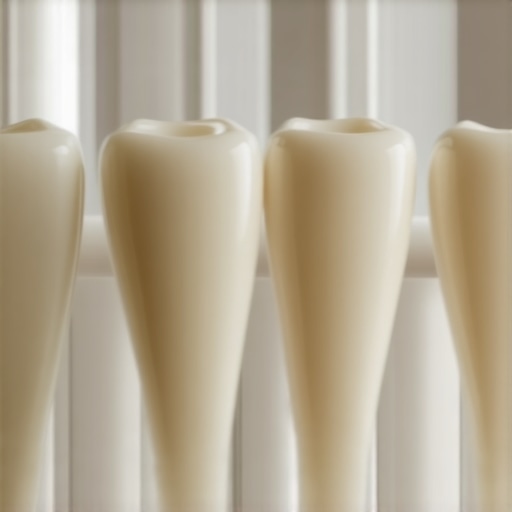
The Opaque Trap You Need to Avoid
The biggest mistake I see is not actually about the physical thickness, but the density of the porcelain. If the material is too opaque, it does not allow light to pass through, causing it to bounce right off the surface. This is the reason your porcelain veneers look opaque and fake and why they can feel heavier visually. A common trap is choosing the whitest bleach shade without considering value or brightness. A study published in the Journal of Esthetic and Restorative Dentistry notes that incisal translucency is the most critical factor in mimicking the natural appearance of human teeth. If your dentist skips this detail, you end up with a flat, blocky look that your brain registers as an intruder. Have you ever fallen into this trap of choosing the brightest shade possible? Let me know in the comments!
How does light interact with your new smile?
This is where things get technical. You might notice the reason your veneers look different in sunlight compared to the fluorescent lights in your office. This is called metamerism. If your veneers feel bulky, it might be because they lack the depth that internal layering provides. In high-end family dentistry, we look for opalescence—the way a tooth looks slightly blue in some lights and orange in others. When you learn how to pick the right shade for your new porcelain veneers, you should always ask to see the samples in natural light. If they look like a solid wall of white, they are going to feel like a solid wall of porcelain in your mouth, no matter how much they are polished.Once the initial adjustment period fades and your brain finally accepts your new teeth as part of the family, the focus shifts to preservation. I used to think that because porcelain doesn’t decay like natural enamel, I could go back to my old habits. I was wrong. To keep that seamless feel, you have to be meticulous about the tools you use daily. If you notice that your porcelain veneers feel gritty, it might be because you are using the wrong toothpaste. I strictly avoid anything with high Relative Dentin Abrasivity (RDA) scores. This means ditching the whitening pastes that rely on silica or baking soda, which can microscopically scratch the surface of your restorations over time. Instead, I use a gel-based, non-abrasive formula specifically designed for cosmetic work.
Stop using gritty pastes that scratch your porcelain
I’ve seen so many people fall for the charcoal trend, but the truth about charcoal toothpaste and your tooth enamel is that it is far too aggressive for the fine glaze on your veneers. When that glaze wears down, your teeth lose that light-reflecting quality we worked so hard to achieve. For my personal routine, I stick to a soft-bristled electric toothbrush with a pressure sensor. This ensures I’m not scrubbing the gum line too hard, which is the number one cause of recession around restorations. If you want to dive deeper into the technical side, the truth about the durability of composite vs porcelain shows that while porcelain is tough, it’s the bond at the margin that needs your protection. 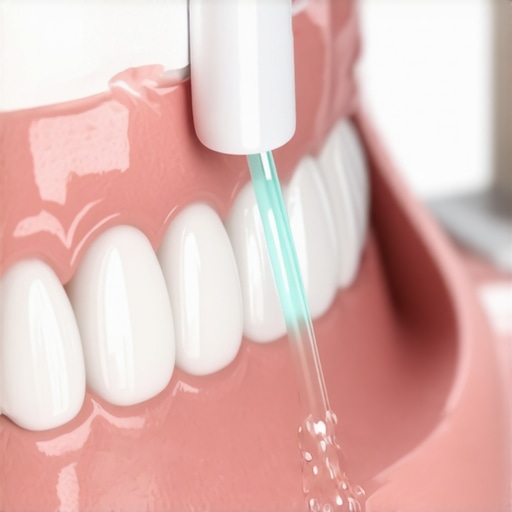
A water flosser is your secret weapon for healthy margins
While traditional string floss is great, I’ve found that a water flosser is a game-changer for maintaining the interface where the veneer meets the tooth. I use mine on a medium setting to flush out any microscopic debris that can lead to inflammation. This is one of those family dentistry tips for a lifetime of healthy smiles that people often overlook. The water stream can reach into those tight interproximal spaces that we mentioned earlier, ensuring your gums stay tight and pink. In fact, the benefit of using a water flosser extends far beyond orthodontics; it’s about preserving the tissue health that frames your smile. According to a study published in the Journal of Prosthetic Dentistry, the long-term success of ceramic restorations relies heavily on the integrity of the marginal seal, which can be compromised by both bacterial buildup and aggressive mechanical cleaning.
How do I keep my smile looking fresh for a decade?
Maintenance is about consistency and the right tech. Looking ahead, I predict we’ll soon see AI-integrated toothbrushes that can detect the specific material of your crown or veneer and automatically adjust their vibration frequency to prevent wear. For now, the best thing you can do is wear a custom-fitted night guard. Even if you don’t think you grind your teeth, the sheer pressure of nocturnal clenching can cause micro-fractures in the porcelain. I recommend you try this one specific tip tonight: run your tongue along the back of your veneers where they meet the natural tooth; if you feel any catch or sharpness, don’t wait for your six-month cleaning. Call your office and ask for a quick margin polish to prevent future staining. It’s the small, proactive steps that turn a temporary transformation into a twenty-year success story.
Hard-won wisdom from a former piano-key smile owner
Reflecting on my own journey, there are a few things that changed my perspective on cosmetic dentistry secrets forever. First, never underestimate the power of the ‘two-week window.’ Your brain’s sensory cortex literally has to map out new territory through a process called neuro-adaptation, so don’t panic on day three if things feel crowded. Second, the most expensive veneer in the world will still feel like a piece of plastic if the biting edge isn’t tapered correctly; always advocate for a ‘natural thinness’ over ‘perfect symmetry.’ Lastly, if you are stuck between veneers vs crowns, remember that the prep work dictates the final bulk—less is often more when it comes to comfort. [IMAGE_PLACEHOLDER_E]
The gear that keeps my porcelain looking pristine
Maintaining that seamless feel requires moving away from the ‘scrub hard’ mentality common in family dentistry. I personally swear by these three things: a high-quality water flosser to protect the margins—since the benefit of using a water flosser isn’t just for kids with braces—a non-abrasive gel to avoid the microscopic scratches caused by charcoal toothpaste, and a custom night guard to prevent pressure-related sensitivity. If you’re still in the planning phase, I highly recommend studying how to pick the right shade for your smile, focusing on translucency rather than just brightness to avoid that ‘heavy’ opaque look.
Your smile shouldn’t feel like a heavy secret
You deserve to wake up and forget you even have restorations. A successful veneers transformation is one where you stop thinking about your teeth and start living through them. Don’t let a minor adjustment issue or a bit of bulkiness stop you from showing off your hard-earned results. Reach out to your provider, use the terminology we discussed today like ‘incisal edge’ and ‘marginal seal,’ and get that perfect fit. Have you noticed a specific lisp or a ‘heavy’ feeling when you say certain words? Let me know in the comments below!