I’ll never forget the sinking feeling of standing in a crowded elevator, clutching a coffee cup, and seeing the person next to me subtly take a step back. I had literally just finished a thirty-second swish with a premium, thirty-dollar bottle of ‘clinical grade’ mouthwash. I was doing everything right—or so I thought. I was obsessive about my routine, yet that stale, swampy taste kept creeping back into the back of my throat. It felt like a personal betrayal by the dental hygiene industry. If the most expensive bottle on the shelf couldn’t save me, what could? We’re going to peel back the curtain on why your expensive rinse is likely just a scented band-aid and how you can actually fix the root cause of the problem for good.
Stop Wasting Money on Rinses That Do Not Work
The biggest mistake I made early on was assuming that a stronger burn meant a cleaner mouth. I was practically pickling my gums in alcohol-based rinses five times a day. In reality, I was making the problem worse by killing off the good bacteria and drying out my tissues. When your mouth is too dry, it can’t wash away food particles, leading to that frustration of why your teeth feel fuzzy only hours after cleaning them even when you think you’ve been thorough. Breath issues are rarely about the teeth themselves; they are about the ecosystem. If you’ve noticed a specific localized issue, like why your mouth feels metallic after getting a new crown, it’s a sign that your oral environment is reacting to something specific rather than just being ‘dirty.’ According to the Mayo Clinic, chronic bad breath is often caused by sulfur-producing bacteria that live deep in the throat and on the tongue, areas that a quick splash of mouthwash can’t even reach. Have you ever felt like you were the only person in the room who could smell your own breath despite using every product available?
Is My Breath Just Permanently Broken?
It is easy to get cynical and think you are just ‘naturally’ prone to bad breath, but that is a myth. Most of the time, the odor is a signal of a structural issue or a gum health problem that needs a real solution, not a minty mask. For example, keeping your gums in top shape is vital; you might want to look into how to stop your gums from receding without painful surgery because recessed pockets are the ultimate hiding spots for the bacteria that cause that morning-breath-all-day sensation. We have to stop treating our mouths like a kitchen floor that needs bleaching and start treating them like a delicate garden that needs the right balance.
Swap Your Toothbrush for a Metal Scraper
I remember the first time I actually used a stainless steel tongue scraper. I’d been brushing my tongue with a toothbrush for years, thinking I was doing a great job. When I finally dragged that metal edge from the back to the front, I was genuinely horrified by the thick, opaque film it pulled off. It looked like grey sludge. That was the moment I realized why my ‘clinical’ mouthwash was failing; it was just sitting on top of that gunk like Febreze on a trash can. Brushing your tongue just pushes the bacteria deeper into the papillae (the tiny bumps on your tongue). You need a physical tool to lift it off. If you have recently undergone oral surgery, you must be more delicate, so learning how to clean your mouth after a wisdom tooth extraction is critical to ensure you aren’t leaving behind bacteria that can cause a localized infection and a nasty smell.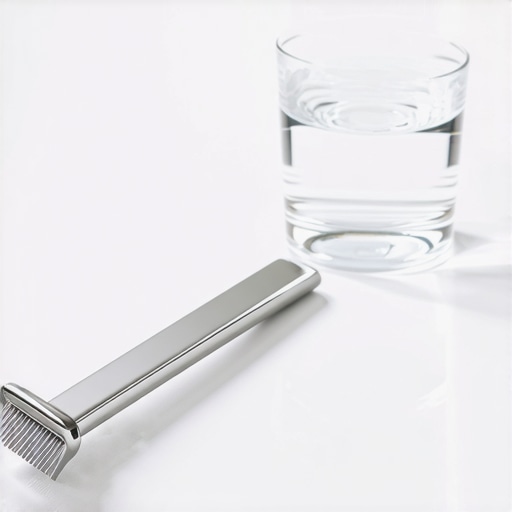
Why Your Dental Work Might Be Hiding Odors
Even if you are a master at scraping your tongue, your dental hardware might be working against you. I used to think my crowns were indestructible, but they are actually specialized traps for biofilm. If you notice that your porcelain veneers feel gritty to your tongue, that is not just a texture issue; it is a sign that a film of bacteria is colonizing the surface. The same goes for more complex structures. It is incredibly common for patients to ask why your dental bridge feels like it is trapping food, and the answer is usually that the gap between the gums and the prosthetic has become a ‘bacteria resort.’ To fix this, you cannot just brush harder. You need a targeted approach. For those with traditional hardware, the benefit of using a water flosser with your braces or bridges cannot be overstated. It flushes out the debris that manual string flossing simply misses.
Keep the Saliva Flowing to Kill the Smell
Saliva is your mouth’s natural detergent. It’s packed with enzymes and oxygen that keep the smelly, anaerobic bacteria at bay. When your mouth dries out, those bacteria throw a party. I realized this most clearly when I started using aligners. If you are wondering why your mouth feels dry while wearing clear aligners, it is because the plastic trays prevent saliva from coating your teeth and gums properly. This lack of flow leads to rapid bacterial growth. To counter this, you have to stay ahead of the hydration curve. This doesn’t mean just chugging water; it means avoiding things that strip moisture, like the very alcohol-based mouthwashes I used to swear by. Instead of reaching for a bottle of blue liquid, try rinsing with a simple saline solution or a pH-balancing spray that mimics natural saliva. You have to stop thinking of ‘freshness’ as a scent and start thinking of it as a state of hydration.Most people treat cosmetic dentistry like a quick home renovation—you pick a color, pay the bill, and expect it to last forever. But in my years of obsessing over dental health, I’ve realized that the biggest mistake isn’t the procedure itself; it’s the lack of biological planning. Everyone says that veneers are the ultimate solution for a perfect smile, but in my experience, they can be a nightmare if you don’t account for your bite’s natural physics. I have seen countless people frustrated because their veneers feel bulkier than your natural teeth, which usually happens when the dentist tries to mask a structural issue with porcelain rather than fixing the alignment first. Cosmetic work should be the final flourish on a healthy foundation, not a mask for decay or gum disease.
Why Choosing the Whitest Shade Usually Backfires
The ‘Oops’ factor that I see most often is the ‘Chiclet’ effect. We are conditioned to want the brightest white possible, but natural teeth have a layer of translucency that lets light pass through. When you demand a solid bleach-white shade, you lose that depth, which is exactly the reason your porcelain veneers look opaque and fake. Truly high-end cosmetic work mimics the subtle gradients of nature. A study published in the Journal of Clinical Medicine highlights that patient satisfaction in aesthetic dentistry is more closely linked to facial harmony and shade matching than to the actual brightness of the restoration. If you are in the planning stages, learning how to pick the right shade for your new porcelain veneers is the difference between a smile that looks ‘done’ and one that looks effortlessly beautiful.
Can Your Jaw Bone Actually Reject a Modern Dental Implant?
It is a common myth that dental implants are a ‘set it and forget it’ solution. While dental implants in 2025 are more durable than ever, they are not invincible. Advanced readers should know that the real danger isn’t the metal not fusing; it is ‘peri-implantitis,’ a localized infection that eats away at the bone supporting the post. I have spoken with people who were shocked when their dental implant feels loose but looks fine on the surface. This often happens because they didn’t account for lifestyle factors, such as the impact of smoking on your dental implant success rate, which significantly hinders blood flow to the surgical site. You have to treat an implant with even more care than a natural tooth because it lacks the periodontal ligament that acts as a natural shock absorber and early-warning system for pain.
The Biological Commitment of a Smile Makeover
When you decide between veneers vs. crowns, you are making a decision that affects how your mouth functions for the next twenty years. It isn’t just about the ‘look.’ For instance, if you have children, the best way to avoid these expensive adult corrections is to focus on family dentistry tips for a lifetime of healthy smiles from day one. I spent so much time trying to ‘buy’ a new smile with products and quick fixes, when the real secret was understanding the nuances of how my teeth, gums, and restorations interacted as a single ecosystem. Have you ever fallen into the trap of choosing a cosmetic fix only to realize it didn’t solve the underlying discomfort? Let me know in the comments.People often ask me why I am so pedantic about the specific brand of floss or the pulse frequency of my water flosser. It is because once you have invested in a full set of veneers or a complex bridge, you aren’t just cleaning teeth anymore; you are maintaining high-performance medical hardware. I personally swear by the ‘interdental mapping’ method. Instead of just mindlessly flossing, I use a specific 0.4mm TePe brush for the gaps around my molars and a high-powered water flosser for the bridge work. Understanding the benefit of using a water flosser with your braces or bridges is a total game-changer because manual floss simply cannot navigate the tight architecture of a prosthetic. If you are struggling with how to clean under a permanent retainer without breaking it, you already know that precision matters much more than pressure.
Build a Maintenance Toolkit That Actually Works
I have spent years testing gadgets, and I have learned that the most expensive tool isn’t always the best. However, for anyone with porcelain work, an ultrasonic cleaner for your night guard or aligner is non-negotiable. It removes the calcified plaque that a toothbrush just smears around. According to technical documentation from the Journal of Oral Implantology, the Relative Dentin Abrasivity (RDA) of your toothpaste is the silent killer of cosmetic work. Using a paste with an RDA over 70 is like taking sandpaper to your porcelain. This is exactly why the truth about the durability of composite vs porcelain veneers often comes down to the daily habits you think are helpful but are actually destructive. If you want to keep that luster, you need a non-abrasive gel, not a gritty whitening paste.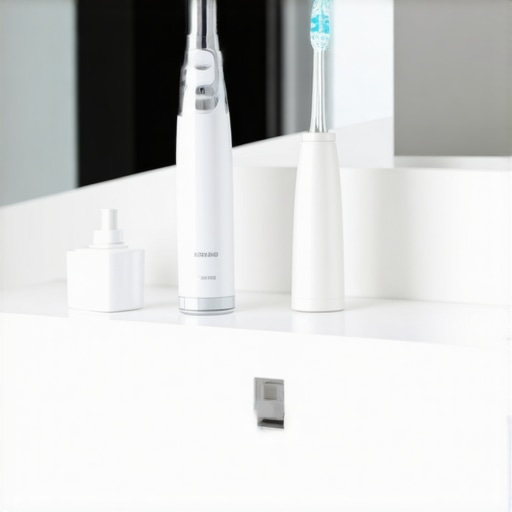
How do I maintain my new smile over time?
Long-term success isn’t about one big cleaning a year; it’s about the micro-habits that protect your investment. I recommend a ‘stress-test’ of your bite every morning. If you feel even a tiny bit of tension in your jaw, it is a sign you were grinding, and your night guard needs adjustment before it chips a veneer. These cosmetic dentistry secrets to boost your confidence only work if the hardware remains intact. I also suggest using a high-quality pH-neutral mouth rinse to keep the oral microbiome stable, especially if you have had multiple procedures. Balancing the chemistry of your mouth is just as important as the physical scrubbing.
Smart Tech and the End of Guesswork
In the next few years, I predict we will see the rise of ‘smart’ bio-sensors embedded directly into dental restorations. Imagine getting a notification on your phone that says your pH levels are dropping or that early-stage biofilm is forming on your abutment before you even feel a tingle. We are moving toward a world where how dental implants reshape your oral health in 2025 involves proactive data rather than reactive repairs. The future of dental implants is not just about the metal fusing to the bone, but how that metal communicates with our digital health apps. For now, your best advanced tip is to switch to a low-RDA toothpaste (under 70) for one month and see if that gritty feeling on your veneers finally disappears. Check your current tube—you might be surprised how abrasive it really is.
Three Lessons I Learned the Hard Way About Dental Work
After years of navigating the world of high-end restorations, I have realized that the most expensive procedure in the world won’t save you if you don’t respect the biology of your mouth. First, permanence is a myth; even the best dental work requires a higher level of care than natural teeth. Second, I learned that ignoring small discomforts is a recipe for disaster. If I had known the red flags that your dental implant is being rejected early on, I could have saved months of corrective surgery. Finally, never prioritize shade over structure. A bright white smile is useless if your bite is misaligned or your gums are struggling. When you are looking at veneers vs. crowns choosing the best option for your smile, remember that health is the foundation of beauty.
The Daily Toolkit That Keeps My Smile From Cracking
I don’t leave my oral health to chance anymore. My daily routine is built around specific tools that protect my investment. I always keep a high-quality water flosser on my counter to clear out the debris that manual floss misses, and I am obsessive about using a soft-bristled brush to avoid physical trauma to my gum line. If you are just starting your journey, I highly recommend reading through transform your smile with veneers expert tips for perfect results to understand the maintenance required. For specialized advice or if you feel something isn’t right with your current work, don’t hesitate to contact us to get a professional opinion before a minor issue turns into a major repair.
Stop Masking Problems and Start Building Your Health
We have to move past the idea that a quick rinse or a whitening strip is the answer to our dental frustrations. True confidence comes from knowing your mouth is healthy from the bone up. Whether you are dealing with the lingering taste of a recent procedure or trying to decide on a full smile makeover, the goal should always be long-term stability. Your smile is one of your greatest assets, and treating it with the care it deserves is the best investment you will ever make. It is time to stop hiding behind minty sprays and start focusing on the biological health that makes a smile truly shine. Have you ever felt like you were doing everything right with your routine but still ended up with a dental surprise? Let me know in the comments below.