I remember the exact moment the local anesthetic wore off after my first implant procedure. I didn’t just feel the expected soreness; I felt a bizarre, dense weight in my lower jaw that I wasn’t prepared for. It was like someone had replaced a part of my face with a heavy-duty bolt. I spent the first forty-eight hours constantly shifting my jaw, wondering if my dentist had somehow used a “super-sized” screw. This sensation is actually a very common part of the journey in cosmetic dentistry secrets that rarely gets discussed in the brochures. If you are sitting there right now feeling like you have a lead sinker tucked into your gums, I want you to take a deep breath. You aren’t crazy, and your jaw isn’t going to fall off.
That Dense Feeling Is Often Part of the Process
The truth is, dental implants are a massive leap from natural teeth. When you get a natural tooth, it is held by a periodontal ligament that acts like a tiny shock absorber. An implant, however, is a direct connection to the bone. When I first started exploring how dental implants reshape your oral health, I made the rookie mistake of comparing the two. I spent days worrying that the “heaviness” meant my body was fighting it. In reality, that sensation is often just your jawbone reacting to the new mechanical load. According to the American Academy of Implant Dentistry, the process of osseointegration—where the bone grows into the implant—can take months, and during the initial stages, the increased blood flow and localized inflammation can create a “full” or heavy feeling that persists even after the initial sharp pain fades.
Will this heavy sensation ever actually go away?
It is the question that kept me up at night: is this my new permanent reality? I remember looking into the future of dental implants hoping for a lighter material, but the weight isn’t the problem; it’s the adaptation. Sometimes, the sensation comes from the surrounding tissue being slightly swollen or the fact that your dental implant feels tight when you wake up due to natural morning inflammation. I once panicked because I thought implant rejection was imminent simply because it felt “there” all the time. But tell me—have you ever felt like your implant was physically pulling on your jaw, or is it more of a dull, constant pressure? Knowing the difference is key to your peace of mind. Today, we are going to break down exactly what that heaviness signifies and how to identify the rare moments when you actually need to call the office.
Stop Guessing and Start Monitoring the Pressure
The most important step in your recovery is learning to categorize the sensations you are feeling. Think of your implant like a new pair of heavy-duty work boots. At first, they feel stiff, heavy, and a bit intrusive, but you eventually stop noticing them once they break in. If you feel a dull, dense weight, that is usually the bone accepting the titanium. However, if your dental implant area feels tingly or numb beyond the first few days, that is a specific signal to check in with your surgeon. I remember one specific Tuesday, about ten days after my surgery, I was certain the ‘lead jaw’ feeling was actually the implant moving. I spent twenty minutes gently pushing on it with a clean Q-tip, only to realize that my dental implant feels loose but looks fine simply because my brain hadn’t updated its internal map of my mouth yet. 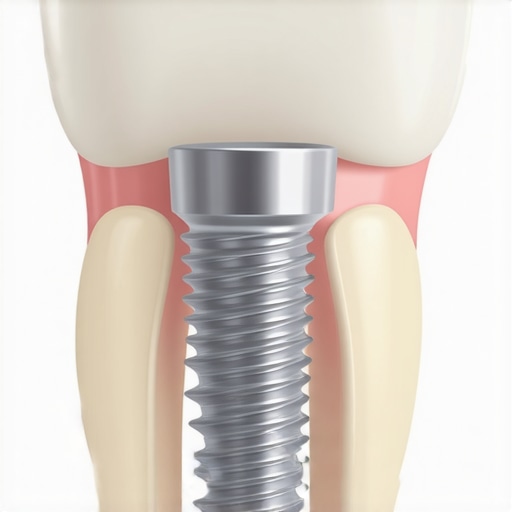
Keep the Inflammation Down with These Recovery Tricks
To help that heavy feeling dissipate, you need to manage the micro-swelling that happens inside the bone itself. While external ice packs help in the first 48 hours, the long-term ‘heaviness’ often responds better to consistent, gentle care. Avoid ‘testing’ the implant with your tongue or fingers; this constant mechanical stimulation keeps the area inflamed. Also, pay attention to the temperature. Some patients find that why your dental implant area is sensitive to cold weather is actually tied to the density of the metal post-conducting temperature faster than natural roots. If the site feels heavy and you notice that the dental implant site feels warm during healing, you should be using a saltwater rinse three times a day to keep the bacterial load at zero.
Why a Bone Graft Changes the Way Your Jaw Feels
If your procedure was more complex, the sensation of weight is often doubled. For instance, the reason your dental implant surgery requires a bone graft is usually to provide enough ‘soil’ for the titanium ‘seed.’ This added material increases the initial density of the site, making that heavy sensation much more pronounced than it would be in a standard procedure. When I had my graft, the feeling wasn’t just heavy; it felt like a pressurized marble was tucked under my gum line.
Adjust Your Sleep Position to Reduce Morning Tightness
One actionable change I made was switching to a wedge pillow for the first month. By keeping your head significantly elevated above your heart, you prevent the blood from pooling in your facial tissues overnight. This directly impacts that ‘heavy’ or ‘tight’ feeling you get the moment you wake up. It isn’t just about comfort; it’s about reducing the hydrostatic pressure that makes the titanium post feel like it’s growing in size while you sleep.While most dentists tell you that your new tooth will feel just like a natural one, I want to challenge that common belief. In my years of research and personal recovery, I’ve found that the ‘just like natural’ promise is a bit of a marketing stretch. A natural tooth has millions of nerve endings in the ligament; an implant has zero. Everyone says the heaviness should vanish instantly, but in my experience, a lingering awareness is actually a sign of a high-functioning integration. Let’s dig deeper into the mechanics. The weight you feel is often not the titanium itself, but the increased bone density surrounding the post. It is a biological response to the ‘stress’ of the implant. If you’ve been comparing the truth about the durability of composite vs porcelain veneers or looking into dental implants 2025 innovations that redefine comfort and durability, you need to understand that your body’s perception of weight is a sophisticated feedback loop.
Does the material choice actually change how your brain perceives the weight?
It is a question that more patients should be asking. While titanium is the gold standard, some newer zirconia options are marketed as ‘lighter.’ However, a study published in the Journal of Prosthetic Dentistry highlights that the way our brains process ‘foreign object’ sensation is heavily dependent on the precision of the final bite adjustment rather than the material weight. The real ‘oops’ factor to avoid is assuming that a heavy feeling is always harmless. If that sensation is coupled with a specific type of grittiness—similar to why your porcelain veneers feel gritty to your tongue—it often indicates that your bite is slightly off, causing the implant to ‘over-load’ the jawbone every time you swallow. 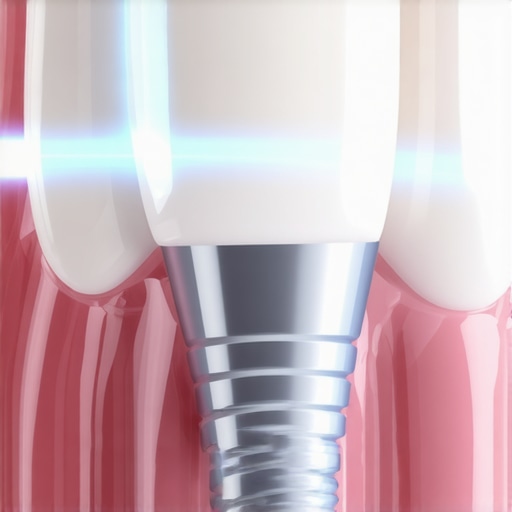
Why Your Bite Matters More Than the Screw Length
Many people mistakenly believe that a ‘heavy’ implant means the surgeon used a screw that was too long or too wide. The trap is focusing on the size of the hardware instead of the alignment of the crown. When deciding between veneers vs crowns which is right for your smile, or finalizing an implant, the way the upper and lower teeth meet dictates the pressure profile. If the crown is even a fraction of a millimeter too high, the ‘heavy’ sensation becomes a constant, localized pressure that feels like a lead sinker. I’ve seen patients panic about why your dental implant area feels tingly or numb, only to find out that a simple five-minute bite adjustment relieved the entire ‘heavy’ sensation. Have you ever fallen into this trap of thinking a sensation was a failure when it was just a minor adjustment issue? Let me know in the comments.
Stop Treating Your Implants Like Regular Teeth
Once you move past the ‘heavy’ phase, the biggest mistake people make is falling into a ‘set it and forget it’ trap. I’ve seen patients invest thousands into cosmetic dentistry secrets only to treat their new teeth like plastic toys a year later. Your new smile is a high-performance machine, and machines need specific maintenance protocols. I personally swear by the Waterpik Aquarius with the ‘Plaque Seeker’ tip. Why? Because manual flossing around an implant collar is notoriously tricky. If you don’t get under that cuff, you risk peri-implantitis—a fancy word for bone loss around your investment. According to a study in the Journal of Oral Implantology, mechanical plaque removal is the single most significant factor in preventing late-stage implant failure. I also keep a close eye on my gums; learning about the signs your receding gums are caused by your toothbrush taught me that my old ‘scrubbing’ habit was actually pushing my gum line away from the titanium post.
How do I maintain my dental implants and veneers over time?
Consistency isn’t about intensity; it’s about the right tools and the right rhythm. I transitioned to a sonic toothbrush with a pressure sensor because I realized I was unconsciously overcompensating for the lack of sensation in my implant. Using the benefit of using a water flosser even without braces is a game-changer for clearing out the ‘food traps’ that occur between an implant and a neighboring natural tooth. 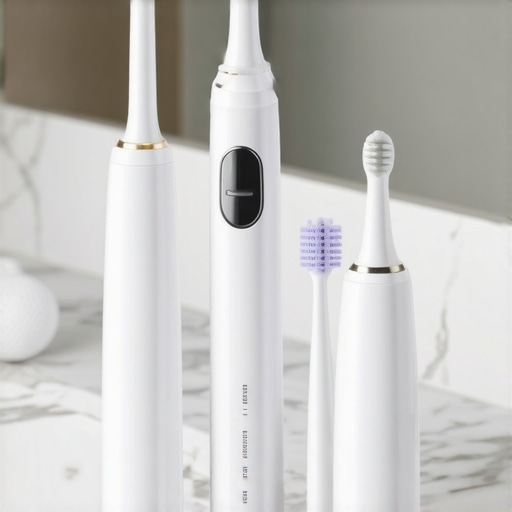
Digital Twins Are the Next Frontier for Your Teeth
Looking ahead, I predict we are moving toward ‘Digital Twins’ in family dentistry tips for a lifetime of healthy smiles. Imagine having a 3D scan of your mouth on your phone that alerts you via AI when it detects a micron of gum recession. We aren’t far off from that reality as we see dental implants 2025 innovations move toward smart-sensor technology. For now, my pro tip is this: buy a dedicated interdental brush specifically for your implant site and use it dipped in a non-staining antimicrobial rinse once a day. This reaches the ‘blind spots’ that even the best water flossers might miss. If you want to scale your oral health to the next level, start tracking your gum measurements at every checkup—don’t just wait for the dentist to tell you there is a problem.
What Your Brain Won’t Tell You About Titanium
One of the biggest hurdles is realizing that your body has a ‘vocabulary’ for healing. When you explore how dental implants reshape your oral health in 2025, you learn that ‘heavy’ often translates to ‘stable.’ Don’t mistake the lack of a periodontal ligament for a problem; it’s simply a new way of interacting with your food. Your tongue is a hyper-sensitive detective that will tell you the implant is a giant mountain when it’s actually a grain of sand. Give your proprioception—your brain’s ability to sense your own body parts—time to catch up to your new hardware. Another lesson I learned: your bite is everything. If the heaviness doesn’t fade, it is rarely the screw and usually the crown. When deciding between veneers vs crowns choosing the best option for your smile or an implant, the precision of that final fit determines your comfort for years to come.
The Toolkit for a Permanent Smile
To protect your investment, I recommend these specific additions to your routine. First, use a high-quality wedge pillow for the first month to manage nocturnal blood pressure around the surgical site. Second, a Waterpik is non-negotiable for cleaning the ‘cuff’ where the implant meets the gum. Third, I always advocate for family dentistry tips for a lifetime of healthy smiles by keeping a digital log of your dental x-rays and gum measurements. Tracking your data helps you and your dentist spot tiny changes in bone levels long before they cause physical discomfort. Lastly, stay updated on dental implants 2025 innovations that redefine comfort and durability to see how smart-sensor technology might benefit your future checkups.
Step Into Your New Confidence
Choosing to restore your smile is a brave decision that pays dividends in every conversation and every meal. While the early days of dental implants might feel heavy or intrusive, this is the foundation for a future without dental pain or gaps. Use these cosmetic dentistry secrets to boost your confidence and trust the healing process. You are well on your way to a smile that feels like a natural part of you again. Have you experienced that ‘lead sinker’ sensation during your recovery, or are you still in the planning stages of your journey? Let me know below.