I remember the first time my daughter wiggled her front tooth and looked at me with those wide, worried eyes. "It feels weird, Mom," she whispered. When I peeled back her lip to take a look, I didn’t see the cute, rite-of-passage milestone I expected. Instead, I saw a puffy, angry red ridge of gum tissue wrapped around the base of that wobbly tooth. I’ll be honest: I panicked. My mind immediately went to infections, dental emergencies, and expensive procedures. I spent the next hour frantically googling while she happily went back to her LEGOs, completely unaware of my internal meltdown. It turns out, that vivid red swelling is often just the body’s natural way of saying out with the old and in with the new, but knowing that doesn’t make it any less startling the first time you see it.
Stop Panicking Over That Red Ridge
The truth is, when a baby tooth gets loose, the root is literally dissolving to make way for the adult tooth underneath. This process creates a lot of movement and some minor trauma to the surrounding tissue. I made a huge mistake early on by trying to scrub that swollen area extra hard with a toothbrush, thinking it was a hygiene issue. All I did was make the area bleed and make my kid afraid of the toothbrush for a week. That swelling is usually just localized inflammation because the loose tooth is acting like a tiny splinter, irritating the gums every time it wiggles. If you are seeing this right now, take a breath. You are likely just witnessing a very active transition phase. However, if the discomfort is high, you might want to check out these family dentistry tips for a lifetime of healthy smiles to keep their oral health on track during these shaky years.
Is a bit of swelling actually worth a trip to the dentist?
I get the skepticism. We don’t want to be the parents who cry wolf every time a tooth wobbles. But here is the thing: while most swelling is normal, sometimes food or bacteria gets trapped in the gap between the loose tooth and the gum. According to the American Academy of Pediatric Dentistry, localized gingival inflammation is extremely common during the transition from primary to permanent teeth, but it should never be accompanied by a fever or a bad taste in the mouth. I’ve learned the hard way that if the swelling looks like a pimple or a bubble, it’s time to call in the pros. Sometimes, you might even notice that your child has a double row of teeth, which happens when the permanent tooth refuses to wait its turn. Have you ever looked at your kid’s mouth and thought, ‘Is that supposed to look like that?’ You aren’t alone. Drop a comment or contact us if you’re currently in the middle of a loose-tooth saga!
Calm the Chaos in Your Child’s Mouth
Managing that red, angry-looking gum line isn’t about scrubbing away the problem; it’s about gentle maintenance. Think of the loose tooth as a loose floorboard in your house. If you stomp on it, it hurts and causes further damage. If you carefully keep the dust out of the cracks, it stays functional until you can replace it. My daughter’s “red ridge” lasted for nearly two weeks, and during that time, I had to pivot our entire routine. I learned that why your child’s gums are red where a tooth is erupting is usually due to the tooth’s physical movement creating a micro-pocket where bacteria love to throw a party, rather than a lack of general hygiene.
Soften Your Approach to Brushing
The first thing I did was swap her regular toothbrush for one with “extra-soft” bristles. If you use a medium or hard brush on an inflamed gum, it’s like using a wire brush on a fresh scrape. You want to use tiny, circular motions, barely touching the gum line itself. If you see a tiny bit of spotting, don’t panic. A little blood is completely normal when a tooth is being physically pushed out of its socket. However, if the area seems excessively tender and they are avoiding eating, you can learn how to soothe your child’s gums during the teething stage using cold compresses or specific silicone massagers that provide relief for older kids too.
Salt Water Is Your Secret Weapon
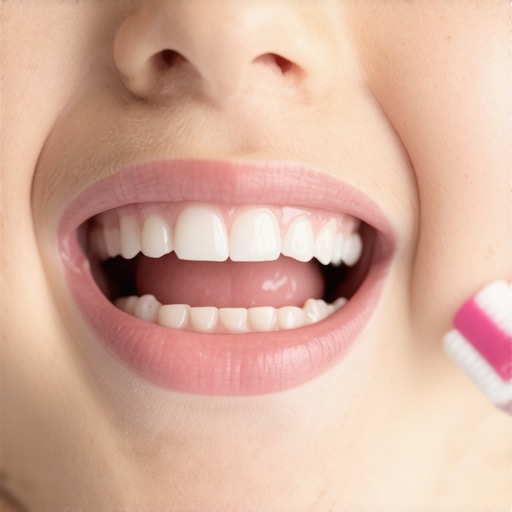
When my son went through this last year, he complained of a “stinging” feeling whenever he ate orange slices or anything even slightly acidic. I started having him do a warm salt water rinse twice a day—once after school and once before bed. It’s an old-school remedy for a reason: it works. The salt helps draw out excess fluid from the swollen gums and flushes out the debris hiding in the gap between the tooth and the tissue. It’s much like how a professional might prepare a site for cosmetic dentistry work; you want the environment as calm and clean as possible before any major change happens. Just a half-teaspoon of salt in a cup of warm water can reduce the inflammation enough to make dinner time manageable again.
When Two Teeth Occupy the Same Space
Sometimes the issue isn’t just a loose tooth, but a permanent tooth that is too impatient to wait for the baby tooth to fall out. This creates a “double row” effect. I saw this with my nephew—his adult incisors came in completely behind his baby teeth, making him look a bit like a little shark. If you see this, you need to understand why your child has a double row of teeth in the front and whether the baby tooth needs a “wiggle assist” from a professional. Usually, the tongue will naturally push the adult tooth forward into the correct spot once the baby tooth is finally gone, but keeping those gums healthy during the overlap is critical.
Stability Matters for the Long Haul
Think of these early dental transitions as the blueprint for their adult smile. Just as an adult needs to understand the truth about getting dental implants if you have existing bone loss to ensure a stable and long-lasting result, children need a healthy foundation of gum tissue to support their emerging permanent teeth. If a baby tooth stays stuck for too long, it can force the permanent tooth to erupt at an awkward angle, leading to more complex orthodontic needs later. If you’re ever worried about the “traffic jam” happening in their mouth, getting a quick check-up ensures their adult teeth have the space and health they need to thrive from day one.
While we’re focused on our kids’ wobbly transitions, we often overlook the sophisticated nuances of our own oral health. As the ‘dental CEO’ of your household, you’ve likely looked into cosmetic dentistry secrets to boost your confidence, but there is a massive misconception that ‘perfect’ means ‘brightest white.’ In my experience, chasing a Hollywood-bleach shade is the fastest way to look like you’re wearing a snap-on costume. The real expertise lies in matching translucency and internal tooth structure. If you aren’t careful, you’ll fall for the mistake that makes your teeth look too white and fake, which is ignoring how natural light passes through real enamel versus opaque porcelain.
Ditch the Piano-Key Aesthetic
The contrarian view in modern aesthetics is that a slightly ‘imperfect’ tooth position or shade often looks more expensive and natural than mathematical symmetry. When people rush into veneers without a deep dive into facial harmony, they often complain that their smile feels ‘crowded’ or ‘thick.’ This is usually why your veneers feel bulkier than your natural teeth—the dentist may not have prepared the tooth surface enough to account for the added material. It’s a delicate balance that separates a master clinician from a standard one.
Why does my dental work look different in the sun than in the bathroom?
This is a question I hear from the most observant patients. It’s a phenomenon called metamerism. Different light sources have different spectral power distributions. Porcelain can look stunning under the LEDs of a dental office but turn an odd, flat gray in a park at high noon. This is the reason your veneers look different in sunlight, and it’s why a high-end practitioner will have you how to pick the right shade for your new porcelain veneers by checking the samples near a window, not just under the operatory light. Have you ever fallen into this trap where you loved a shade in the chair but hated it in your car mirror? Let me know in the comments.
Look Beyond the Surface of Your Jaw
We often treat dental implants like a simple ‘plug-and-play’ solution for a missing tooth, but the advanced nuance is that the titanium post is only as good as the soil it’s planted in. Many patients are surprised when they are told the reason your dental implant surgery requires a bone graft is because the jawbone begins to atrophy the moment a tooth is lost. According to a study in the Journal of Clinical Medicine, bone volume is the single most significant predictor of long-term implant success. If you’ve waited years to fill a gap, you must face the truth about getting dental implants if you have existing bone loss. Don’t let a provider skip the deep diagnostics; the reason your Culpeper dentist uses CBCT scans instead of regular x-rays is to ensure there is actually enough structural density to support your new smile for decades, not just months.
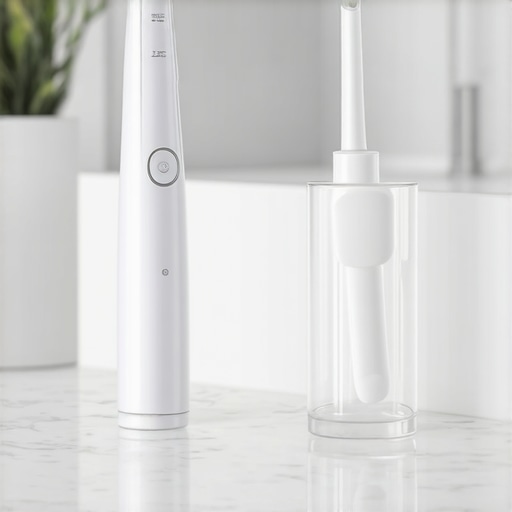
Maintaining a high-end smile isn’t about more effort; it’s about better tools. If you’re still using manual string floss on a full set of veneers or an implant bridge, you’re essentially trying to detail a Ferrari with a kitchen sponge. I’ve transitioned almost entirely to a high-frequency water flosser for my daily routine. The technical reason is simple: pulsation. Research published in the International Journal of Oral & Maxillofacial Implants indicates that peri-implantitis—the leading cause of implant failure—often starts because of subgingival biofilm that physical string simply cannot reach in deep pockets. I personally use a model that hits at least 1,400 pulses per minute, which is the clinical sweet spot for disrupting bacteria without irritating the delicate tissue. This is especially vital if you need the secret to flossing when your teeth are tightly crowded or have permanent hardware that traps debris.
Stop Sawing Your Gums with String
Standard floss can be surprisingly abrasive if your technique isn’t perfect, especially around the margins of porcelain work. A water flosser acts like a power washer for your mouth, flushing out the “micro-trash” that accumulates at the base of a crown or veneer. For those of us with complicated dental histories, this tool is the difference between a five-minute checkup and a two-hour deep cleaning. If you are struggling with tight contacts, you can also learn how to remove a stuck piece of floss between tight teeth without panicking and damaging your expensive dental work.
How do I keep my restorations from failing over time?
The secret isn’t just cleaning; it’s structural protection. Most people don’t realize that the greatest threat to a porcelain smile isn’t red wine or coffee—it’s your own jaw muscles. We call it “bruxism,” and the forces your masseter muscles can generate during sleep are enough to shear off even the most advanced bonded porcelain. If you’ve invested in transforming your smile with veneers, you absolutely must wear a custom-fabricated occlusal guard. I recommend a dual-laminate guard: hard on the outside to deflect force and soft on the inside for comfort. Just make sure you stay on top of hygiene and know how to clean your night guard without damaging the material, or you’ll be reintroducing bacteria to those expensive margins every night.
Your Smartphone Is About to Become a Dental Assistant
Looking ahead, we are entering the era of “Smart Maintenance.” By 2026, I predict we will see widespread adoption of bio-integrated sensors within the implant posts themselves. These will sync to your phone to alert you to early pH changes or cytokine levels that signal infection before you even feel a single throb. We are already seeing the beginnings of this data-driven approach with dental implants in 2025, where materials are designed to encourage faster osseointegration and reduce the chance of long-term bone loss. The focus is shifting from reactive repair to proactive data tracking. For now, your best move is to ditch the abrasive “whitening” pastes—which are basically liquid sandpaper for your enamel—and switch to a hydroxyapatite-based paste. It actually remineralizes the micro-scratches in your natural teeth and keeps the transition between your tooth and your dental work invisible. Go buy a high-quality water flosser today and use it on the lowest setting for the first week to let your gums adapt; your future self will thank you for the thousands of dollars saved in replacement costs.
Why I Stopped Chasing the Bleached White Look
If there is one thing I have learned after years of managing my own dental work and my kids’ wobbly milestones, it is that health has a specific texture. I used to think a perfect smile looked like a row of chiclets, but a real veneers transformation unlocking your best smile yet is about finding harmony, not just brightness. I spent too much time worrying about the ‘shade’ and not enough about the foundation. I also realized that waiting for a problem to hurt is the most expensive mistake you can make; proactive maintenance is always cheaper and less stressful than emergency repairs.
The Simple Gear I Swear By Now
To keep everything running smoothly, I have narrowed my toolkit down to a few essentials. First, a high-frequency water flosser is non-negotiable for anyone with restorative work or tight spaces. Second, I always keep a bottle of salt on hand for those unexpected ‘red ridge’ days with the kids. Finally, I’ve switched the whole family to hydroxyapatite toothpaste. It’s a game-changer for sensitivity and actually feels like it’s reinforcing our enamel every day. #IMAGE_PLACEHOLDER_E# If you are feeling overwhelmed by the options, don’t hesitate to contact us for guidance on where to start your journey.
A Healthier Smile is Within Your Reach
Navigating the world of dental health doesn’t have to feel like a series of crises. Whether you are helping your child through their first loose tooth or considering how dental implants reshape your oral health in 2025, you have the power to make informed, calm decisions. Taking these small steps today ensures that your family will have strong, confident smiles for decades to come. By staying curious and staying ahead of the curve with the future of dental implants cutting edge techniques in cosmetic dentistry, you are setting a gold standard for your household’s well-being. Have you ever been surprised by a dental ’emergency’ that turned out to be a normal part of growing up? Let me know in the comments below!