I still remember the Tuesday morning I woke up clutching my jaw like it was about to fall off. I was absolutely certain a root canal was in my near future. The pressure was intense, right behind my cheekbones, and every time I took a step, my upper molar felt like it was bouncing in its socket. I’ve spent years following family dentistry tips for a lifetime of healthy smiles, so I felt like a total failure. I rushed into the office, convinced I had a massive abscess, only for my dentist to gently tell me that my teeth were perfect. My sinuses, however, were a disaster. It’s a terrifying feeling when you can’t tell if the pain is a call the dentist emergency or a buy more tissues inconvenience. Today, I’m going to help you figure out exactly which one you’re dealing with so you don’t make the same expensive mistake I did. We’ll look at the tell-tale signs of pressure versus decay, and how to tell if your tooth pain is a cavity or just a sinus infection before you panic.
Stop Panicking About That Throb in Your Upper Jaw
The biggest mistake I made early on was assuming that pain always equals a dental problem. I didn’t realize how closely our bodies are wired. Your upper teeth are essentially neighbors with your maxillary sinuses. When those sinuses get inflamed, they push down on the roots of your teeth. It’s a physical overlap that fools even the most diligent brushers. According to research published by the American Journal of Rhinology & Allergy, the roots of the upper premolars and molars can even protrude into the sinus cavity itself, meaning any inflammation upstairs is felt downstairs immediately.
Is a Sinus Infection Actually Capable of Mimicking a Cavity?
It sounds like a stretch, right? You’d think you could tell the difference between a head cold and a hole in your tooth. But the nerves in your face are incredibly sensitive. I remember sitting in the chair, feeling silly because the pain was so real. If you find yourself wondering why your teeth ache more when you lean over to tie your shoes, or if the pain is spread across several teeth instead of just one, you might just be dealing with a sinus toothache. Before you start researching how to manage tooth pain when you have a sinus infection, take a breath. Have you ever rushed to the dentist only to find out your cavity was actually just a bad case of seasonal allergies? If you’re still worried, it’s always better to get a professional opinion than to sit in pain.
The Three-Minute Test to Diagnose Your Jaw Pain
If you are currently holding your face and wondering if you need a drill or a decongestant, you need immediate, actionable steps. The goal is to separate the localized nerve pain of a cavity from the broad, structural pressure of a sinus infection. I’ve been through this cycle of panic, and once I understood the mechanics of how the maxillary sinus sits directly atop the molar roots, I stopped making unnecessary emergency appointments. Let’s break down the execution of a self-diagnosis.
Take a Literal Leap of Faith
One of the fastest ways to rule out a cavity is what I call the “kitchen jump.” Think of your sinus cavity like a half-full water balloon sitting on top of your teeth. When you move suddenly, that balloon bounces, putting immediate weight on the nerves of your teeth. I remember standing in my kitchen, hopping up and down like a madman while my wife watched in confusion. Every time my feet hit the floor, my upper teeth felt like they were being hammered into my jaw. This is a classic sinus indicator. A cavity usually won’t care if you’re jumping; it’s more of a constant, localized nag. This is why many runners or gym-goers often wonder why your teeth throb immediately after you finish a long run—the rhythmic impact is literally bouncing your inflamed sinuses against your tooth roots.
Check if the Pain Has a Zip Code
A cavity is like a sniper; it hits one specific spot. If you can take your finger and point to the exact millimeter of the tooth that hurts, you’re likely looking at decay or a physical break. If you’re unsure about the look of the tooth, you might want to learn how to tell if a white spot on your tooth is a cavity. On the other hand, sinus pain is “zonal.” It’s a dull, heavy ache that blankets the entire upper back row. When I had my first major sinus scare, I couldn’t tell if it was my first molar or my second premolar hurting—it felt like the whole neighborhood was under renovation. If you’ve recently suffered a facial injury, though, be careful; for instance, knowing why your front tooth looks grey after a minor hit can help you distinguish trauma-related nerve death from simple congestion.
Monitor Your Reaction to Morning Coffee
Temperature sensitivity is the ultimate snitch. If your tooth screams when you take a sip of hot coffee or iced water, the nerve inside that specific tooth is likely exposed or irritated. Sinus pressure rarely cares about the temperature of your drink. Instead, it cares about the position of your head. If the pain intensifies when you lean over to tie your shoes or pick up a pen, it’s the fluid shift in your sinuses, not a hole in your enamel. I learned this the hard way after avoiding cold drinks for three days for no reason, only to realize the pain only appeared when I looked down at my phone. If you do find a real issue, you might eventually look into cosmetic dentistry secrets to boost your confidence once the health of the tooth is restored.
Wait for the Professional Verdict
When the jump test and the temperature test leave you guessing, you need modern imaging. Standard X-rays are great for seeing “between” teeth, but they are flat. They don’t always show the 3D relationship between the sinus floor and the root tips. This is the reason your Culpeper dentist uses CBCT scans instead of regular X-rays. These scans provide a three-dimensional view that can clearly show if there is fluid buildup in the sinus or an actual infection at the root. Ignoring the signs is risky; the danger of ignoring a small chip on your molar can lead to real abscesses that feel exactly like the sinus pressure you were hoping for, so never skip the professional checkup if the pain persists past a week.Once you realize that throb in your jaw wasn’t a sinus infection but actually a compromised root, the conversation usually shifts toward tooth replacement. This is where most people hit a wall of misinformation. We’re often told that dental implants are a ‘one-and-done’ solution, essentially a bionic tooth that requires zero effort. In my experience, that’s the most dangerous myth in modern family dentistry. While an implant cannot get a cavity, the gum and bone surrounding it are still very much alive—and vulnerable. Research published in the Journal of Periodontology suggests that nearly 43% of implant sites can develop peri-implant mucositis, which is essentially the implant version of gingivitis. If you stop flossing because the tooth is ‘fake,’ you’re inviting a failure that is much harder to fix than a simple cavity. The truth about the lifespan of a dental implant is that it depends entirely on your commitment to hygiene, not just the surgeon’s skill. We are seeing how dental implants reshape your oral health in 2025 through better materials, but they still need a healthy host.
Why Is Your Dental Implant Sensitive to Heat but Not Cold?
This is a question that stumps even well-informed patients. Since the implant has no nerve, it shouldn’t feel temperature at all, right? Not exactly. If you find that your dental implant is sensitive to heat but not cold, it’s often a sign that the heat is causing the surrounding bone or the adjacent natural teeth to expand, or it could signal a late-stage infection in the surrounding tissues. It’s a nuanced ‘oops’ factor that many overlook: treating the implant as an isolated island rather than part of a connected system. If you ever feel why your dental implant feels like it is vibrating slightly when you speak, it may be a sign that the crown isn’t seated perfectly, creating a micro-resonance that natural teeth don’t have.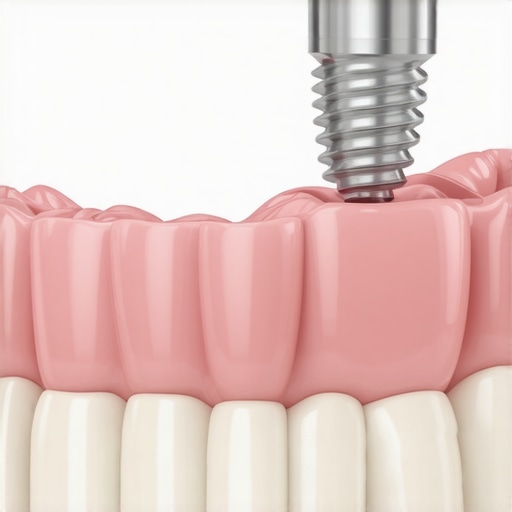
Don’t Let Your Veneers Look Like a Row of Chiclets
When it comes to the cosmetic side, the biggest ‘trap’ is the quest for perfection. Everyone wants a Hollywood smile, but the the mistake that makes your teeth look too white and fake is choosing a shade that has no translucency. Natural teeth have depth; they aren’t solid blocks of white. Many people also struggle with why your porcelain veneers might feel bulky at first. This usually happens because the technician tried to mask underlying discoloration without enough tooth preparation. It’s a delicate balance between preserving enamel and achieving the desired look. If you’re considering a major change, always ask to see a wax-up first. Have you ever fallen into this trap of thinking a replacement tooth or a veneer was maintenance-free? Let me know in the comments.
Why I Swapped Standard Floss for High-Tech Water Pressure
I used to think that traditional string floss was the gold standard, but after investing in high-end restorative work, I realized that dragging a piece of nylon across a delicate porcelain margin is like trying to detail a Ferrari with a burlap sack. I personally switched to a cordless water flosser because it allows me to irrigate the ‘sulcus’—that tiny pocket where the gum meets the implant or veneer—without mechanical irritation. I set mine specifically to 75 PSI; it’s the sweet spot for dislodging biofilm without traumatizing the tissue. A study published in the International Journal of Implant Dentistry found that water flossing is actually 29% more effective than string floss for reducing bleeding around implants. If you’re still following standard family dentistry tips for a lifetime of healthy smiles, it’s time to upgrade your toolkit to include a Plaque Seeker tip. It has three thin tufts of bristles that reach those hidden nooks around the abutment that a regular brush simply can’t touch.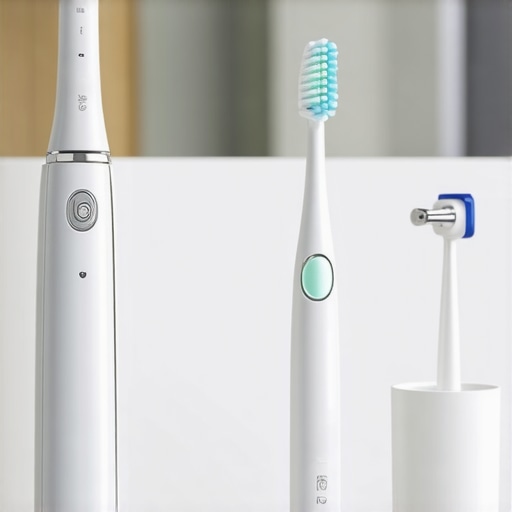
How do I maintain my dental implants and veneers over time?
Long-term success isn’t just about what you do in the bathroom; it’s about protecting your teeth from your own stress. I never go to sleep without my custom-molded occlusal guard. Many patients worry about veneers vs crowns and choosing the best option for your smile, but they forget that both can fail if you’re a nighttime clencher. Porcelain is strong, but it’s brittle under the sheer force of a grinding jaw. I also recommend a professional checkup every six months where your hygienist uses glycine powder air-polishing. Unlike traditional gritty prophy paste, glycine is gentle enough not to scratch the surface of your restorations. Using these cosmetic dentistry secrets to boost your confidence starts with keeping the hardware pristine so you aren’t back in the chair for repairs in five years.
The Future of Custom Smiles Is Guided by AI
Looking ahead, the way we manage these procedures is changing rapidly. I’m particularly excited about the future of dental implants and cutting-edge techniques in cosmetic dentistry, specifically the move toward 3D-printed ceramic implants. These are becoming more accessible and offer better biocompatibility for people with metal sensitivities. We are already seeing how dental implants reshape your oral health in 2025 through AI-driven diagnostic software that can predict bone loss years before it happens. My advice? Don’t wait for a problem to arise. My challenge to you is to swap your manual toothbrush for a high-quality sonic model this week and spend an extra 30 seconds on your gumline. If you need a professional to look at your current work, you can always contact us for a detailed evaluation.
The Hardest Lesson I Learned About Protecting My Dental Work
I used to think that once the dentist finished the procedure, my work was done. I couldn’t have been more wrong. The most significant realization I had was that stress is the silent killer of even the best dental work. If you are a nighttime grinder, your beautiful new porcelain doesn’t stand a chance without a custom night guard. Another ‘lightbulb moment’ for me was realizing that implants aren’t invincible; while they don’t get cavities, the tissue around them requires even more precision than natural teeth. I also learned that small, proactive adjustments are infinitely cheaper than waiting for a failure. If something feels ‘off,’ it probably is.
My Must-Have Toolkit for a Hospital-Grade Clean
To keep my smile in top shape, I’ve curated a specific routine that goes beyond the basics. First, I never skip the water flosser—it’s the only way to safely irrigate the spaces around my restorations without causing irritation. I also rely on high-quality sonic brushes that tell me if I’m pressing too hard. If you are aiming for a veneers transformation unlocking your best smile yet, you need to be diligent. I highly recommend reading through expert tips for perfect results to refine your own home care. Additionally, keeping up with dental implants 2025 innovations ensures you’re always using the best materials available today.
#IMAGE_PLACEHOLDER_E#
Stop Waiting for the Perfect Moment
Your oral health is a lifelong project, and it’s never too late to start prioritizing it. Whether you are currently exploring family dentistry or you are curious about how to fix a small gap between teeth without using braces, the most important step is simply taking action. A healthy, confident smile changes how you interact with the world. Don’t let the fear of a potential cavity or the complexity of an implant keep you from the care you need. Your future self will thank you for the investment you make today. Have you ever struggled with maintaining a new dental restoration? Let me know your experience below!