I will never forget the morning I leaned into my bathroom mirror, practically touching the glass, only to notice a tiny, chalky white speck right on the edge of my front tooth. I felt that instant jolt of anxiety. Was it a leftover bit of bagel? Nope. Was it just a weird stain from my morning tea? I wished. My first instinct was to grab the hardest toothbrush I owned and scrub until my gums bled. Big mistake. I actually made the area around it look worse and ended up spiraling through every family dentistry tips for a lifetime of healthy smiles article I could find. I thought I was being proactive, but I was actually damaging my enamel. If you are staring at a similar mystery mark right now, I want to save you that stress. Today, we are going to figure out if that spot is a harmless birthmark of the tooth or a red alert for a cavity. We will look at texture, location, and why your teeth might even start to look a bit different, like why your teeth look translucent at the edges, which is another sign that your enamel is thinning out. Have you ever noticed a new mark on your teeth and immediately assumed the worst?
Stop Panic Brushing and Look Closer at That Spot
When I first saw that spot, I assumed my tooth was basically rotting from the inside out. But here is the thing: white spots are often just the precursor to a cavity. It is the tooth’s way of screaming for help before a physical hole actually forms. One of my biggest early mistakes was thinking I could just whiten it away. I did not realize that certain treatments could make the spot pop even more if the enamel was already porous. You really need to know how to pick a toothbrush that won’t destroy your enamel because aggressive scrubbing will not fix demineralization; it only strips away what is left of your tooth’s protection. Interestingly, according to the American Dental Association, these white lesions represent areas where minerals like calcium have been leached out of the enamel by bacterial acids. The surprising part? If you catch it at the white spot stage, it is often still reversible through remineralization.
Is this little white mark actually going to ruin my smile?
It is a fair fear. We all want that perfect glow, but sometimes our teeth have other plans. I used to worry that every tiny imperfection meant I was headed for expensive repairs. Have you ever caught yourself obsessing over a tiny dental flaw during a video call or while looking at a selfie? It is exhausting. But most of the time, identifying the cause—whether it is fluorosis from childhood or the very start of a cavity—is half the battle. Even if it turns out to be a permanent mark, modern dentistry has come a long way, and there are cosmetic dentistry secrets to boost your confidence that can mask or fix these issues seamlessly. Now, let’s get into the nitty-gritty of how you can tell the difference at home before you make that appointment.
Feel for a Texture Change Before You Reach for Whitener
To get started, you need to use your senses beyond just looking in the mirror. I remember once trying to ‘polish’ a white spot with baking soda and a dry, stiff brush because I thought it was a surface stain from my tea habit. I ended up making the tooth so sensitive that I could not even breathe in cold air without wincing. The biggest tell-tale sign is the texture. Use your tongue or a clean fingernail to gently glide over the mark. If it feels smooth, glossy, and hard—exactly like the rest of your tooth—it is likely a stable mark like fluorosis. However, if it feels slightly rough, matte, or ‘tacky,’ you are likely looking at demineralized enamel. This chalky texture is like the difference between a polished marble countertop and a piece of drywall. When the enamel is this porous, you might also notice that why your teeth hurt when you eat something very sweet is becoming a more frequent question in your mind, as the acids in sugar can penetrate those weak spots much faster. 
Look at the Spots Neighborhood
The location of the spot tells a story about your oral hygiene habits. If the white mark is hugging the gumline or tucked between two teeth, it is almost certainly the start of a cavity caused by plaque buildup. Think of plaque like a slow-moving rust; if it sits on one spot for too long, it eats through the finish. If the spots are scattered randomly across the middle of your teeth and you’ve had them since you were a kid, they are usually just ‘birthmarks’ of the tooth. In children, it is important to distinguish these from other issues, as the real reason your childs permanent teeth look yellow or spotted often tracks back to their early development rather than current decay.
Determine if You Need a Porcelain Reset
If you find that the spots are not just cosmetic but are actually structural weaknesses, you have to decide on the level of intervention. Think of veneers transformation unlocking your best smile yet like a high-end, custom-fitted protective case for your tooth. A veneer doesn’t just mask the white spot; it replaces the compromised outer layer with a durable, stain-resistant shield that mimics natural light reflection. For much more severe cases where the tooth is beyond saving, dental implants 2025 innovations that redefine comfort and durability act like the foundation of a house. If the original ‘timber’ is rotten, the implant provides a brand-new, permanent ‘post’ that ensures the rest of your smile doesn’t shift or collapse into the gap.
Spot the Difference Between Old Fluorosis and New Decay
Check if the mark changes when the tooth is dry. If you breathe in deeply and the spot becomes much more visible and opaque, that is a sign of porous enamel that is losing its mineral content. This is a red flag that the area is trending toward a full-blown hole. You might also start to notice that why your teeth look transparent at the bottom edges is a related concern, as both indicate a loss of density. If the mark is stagnant and never changes regardless of how dry your mouth is, it is likely a permanent, harmless artifact of your tooth’s growth.
Whitening often backfires on those chalky spots because most people treat demineralization like a standard coffee stain. In my years of obsessing over dental aesthetics, I have seen so many people try to ‘bleach’ a white lesion away, only to find that the spot becomes five times brighter than the rest of the tooth. This happens because the porous enamel of a white spot absorbs the whitening agent much faster than the healthy, dense enamel around it. If you have ever wondered why your professional whitening results faded after just one week, it is often because the surface was too dehydrated or porous to begin with.
Avoid the Opaque Trap That Ruins Your Look
The biggest mistake I see in cosmetic dentistry is the ‘perfection’ trap. People go into a consultation wanting the whitest shade on the chart, but pure white does not exist in nature. When you choose a shade with zero translucency, you fall victim to the mistake that makes your new crowns look like chiclets. Natural teeth have layers; they are denser at the core and more transparent at the edges. If your restoration is a solid, flat block of white, it will look like plastic under office lights. This is especially true if you do not understand why your veneers look too opaque and how to make them look natural by incorporating incisal characterization.
Why does my dental implant feel like a ‘thud’ instead of a natural click?
If you have recently graduated from managing white spots to replacing a tooth entirely, you might notice a strange sensation when you chew. Unlike a natural tooth, which is suspended in the jaw by a flexible ligament that acts as a shock absorber, an implant is fused directly to the bone. This is the reason your dental implant feels different than a natural tooth; it lacks the nerve endings that tell your brain exactly how hard you are biting. While it is incredibly sturdy, you have to be mindful not to over-pressurize the area. If you feel any movement, however, you need to know how to tell if your dental implant is rejecting or just healing to avoid long-term bone loss.
The Hidden Math of a Perfect Smile
Expert clinicians often argue that the success of a smile makeover isn’t just about the teeth, but the ‘golden proportion.’ A study published in the Journal of Esthetic and Restorative Dentistry emphasizes that the perceived width of the front teeth should follow specific mathematical ratios to look ‘right’ to the human eye. This is why simply slapping a veneer over a white spot doesn’t always work if the tooth shape is fundamentally off. You have to weigh veneers vs crowns choosing the best option for your smile based on how much structural change is needed. Sometimes, the ‘nuance’ is less about the color and more about the light reflection. Have you ever fallen into the trap of choosing the brightest shade possible only to regret it later? Let me know in the comments.
Once you have successfully navigated the ‘Golden Proportion’ and avoided the dreaded chiclet look, the game shifts from design to defense. I used to think that because my veneers were made of high-grade porcelain, they were invincible. I was wrong. The porcelain is tough, but the bond and the margin—the tiny seam where the veneer meets your gum—are the frontline of a daily battle. To win, I have had to swap my old ‘super-whitening’ toothpaste for something much more technical. Most commercial whitening pastes are actually quite abrasive, measured on the Relative Dentin Abrasivity (RDA) scale. If you use a paste with an RDA over 70 on porcelain, you are essentially sandpapering away that beautiful glaze you just paid for. I personally stick to a gel-based, low-RDA formula because it preserves the shine while keeping my natural roots safe.
Ditch the Coarse Pastes Before They Scratch Your Investment
According to the American Academy of Cosmetic Dentistry (AACD), the long-term failure of ceramic restorations often stems from ‘micro-leakage’ at the margins. This is where bacteria find a microscopic gap and start a cavity underneath your expensive work. To prevent this, I do not just floss; I use a high-pressure water flosser specifically aimed at those margins. It is the only way I have found to clear out debris without the risk of accidentally popping a margin with aggressive string flossing. If you are struggling with a bridge, you really need to know how to clean the underside of a dental bridge without shredding your floss to ensure those supporting teeth stay rock solid. I also make it a point to use family dentistry tips for a lifetime of healthy smiles that focus on pH balancing—like rinsing with water after my morning tea to neutralize acids immediately.
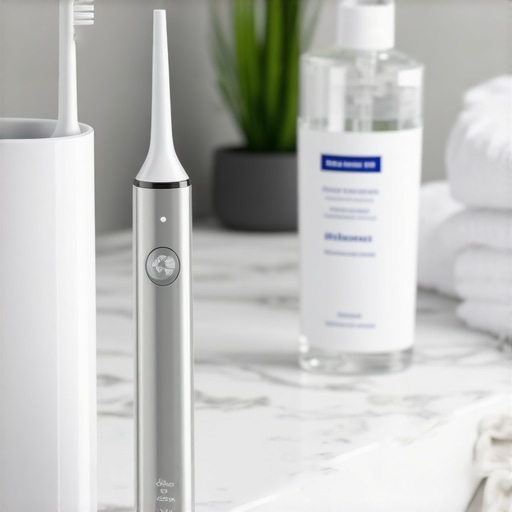
How can I keep my cosmetic work looking brand new for decades?
The secret is not just in what you use, but what you avoid. I have learned 3 secrets to making your porcelain veneers last twenty years, and the most important one is wearing a custom-fitted night guard. Even if you think you do not grind your teeth, the micro-movements we make during deep sleep can put thousands of pounds of pressure on those porcelain edges. This is how chips happen. I also rely on the secret to keeping your smile white without giving up your morning tea, which involves using a straw for dark liquids and never, ever using my teeth as tools. You have to treat your smile like fine jewelry, not a Swiss Army knife.
The 2025 Shift Toward Bio-Active Protection
Looking toward the future, the way we maintain these results is getting even more high-tech. We are seeing a massive trend in how dental implants reshape your oral health in 2025 through the use of bio-active materials that actually encourage bone growth and fight bacteria locally. I predict that within the next few years, we will see ‘smart’ veneers that can change color slightly to warn you if your mouth’s acidity levels are too high. This proactive approach will take the guesswork out of maintenance and allow us to catch issues before they require a veneers vs crowns choosing the best option for your smile debate. If you want to stay ahead of the curve, I highly recommend checking the RDA value of your current toothpaste today; if it is over 100, toss it immediately and switch to a gentle gel to protect your enamel and your investment.
Hard Truths I Discovered While Chasing the Perfect Smile
Looking back at that morning in front of the mirror, I realize I wasn’t just looking at a white spot; I was looking at a wake-up call. The hardest lesson I learned is that dental health isn’t a ‘set it and forget it’ project. Even after you achieve a veneers transformation unlocking your best smile yet, the work continues in the shadows of your daily routine. I found out the hard way that my ‘healthy’ habits, like sipping lemon water all day, were actually the culprits behind my enamel thinning. Another lightbulb moment? Restorations like implants don’t have nerves, so you have to learn to ‘feel’ with your jaw muscles instead of your teeth. Most importantly, I learned that a white spot isn’t a failure—it is a signal that your body is ready for better family dentistry tips for a lifetime of healthy smiles.
The Gear I Actually Use to Protect My Investment
I don’t just rely on luck anymore. My bathroom counter looks a bit like a mini-clinic, but every tool has a purpose. First, I transitioned to a high-quality water flosser because it is the only way to effectively clean the underside of a dental bridge without shredding your floss or irritating sensitive margins. I also keep a digital copy of my dental x-rays to track changes over time. For those considering the latest tech, I highly recommend reading up on how dental implants reshape your oral health in 2025 to see how bio-active materials are changing the game. Finally, I trust the Relative Dentin Abrasivity (RDA) charts more than flashy marketing—knowing your toothpaste’s score is the best way to prevent scratching your porcelain.
Your Path to a Confident Reflection Starts with One Choice
Whether you are currently staring at a chalky spot or deciding between veneers vs crowns choosing the best option for your smile, remember that modern dentistry is on your side. You don’t have to live with the anxiety of a ‘failing’ smile or hide your teeth in photos. By staying proactive and using cosmetic dentistry secrets to boost your confidence, you can turn a dental mystery into a success story. Your smile is the first thing the world sees; make sure it reflects the health and vitality you feel on the inside through consistent family dentistry care. Which did you notice first on your own teeth: a change in the texture or just a change in the color of the spot? Let me know in the comments below!