I’ll never forget the day my cousin Sarah showed up to Thanksgiving dinner with her brand-new set of veneers. She was beaming with pride, but as she sat down, the overhead dining room lights hit her teeth and they looked… well, like bathroom tile. There was no depth, no shimmer, just a flat, aggressive wall of bleach-white ceramic. It was that cringey moment where you want to say something nice, but your brain is screaming that something is deeply “off.” She had fallen victim to the most common blunder in the book: choosing a shade and opacity that simply doesn’t exist in nature. I’ve been around the block with family dentistry and aesthetic work for years, and I’ve even made the mistake myself of pushing for a “Level 0” white on a crown, only to realize it looked like a glowing thumb in my mouth.
The One Blunder That Screams “I Have Fake Teeth”
The biggest culprit isn’t actually the shade itself; it’s the lack of translucency. Real teeth aren’t solid blocks of color. If you look closely at a natural tooth, the edges are almost see-through, allowing light to pass through and bounce back. When you opt for veneers that are “opaque,” they look flat and heavy. This is exactly why your porcelain veneers look opaque and not natural. It’s a common trap because we’ve been conditioned to think that “white” equals “healthy,” but in the world of cosmetic dentistry secrets to boost your confidence, the real win is a smile that makes people wonder if you were just born with perfect genes. According to the American Academy of Cosmetic Dentistry, one of the hallmarks of a natural smile is the “incisal halo,” a subtle interplay of light at the biting edge that most mass-produced dental work completely ignores. If your teeth look like a single, solid picket fence, you’ve lost that battle. We’re here to talk about how to balance that desire for a veneers transformation with the reality of human anatomy.
Are natural-looking veneers actually worth the extra effort?
You might be wondering if anyone even notices these tiny details. It’s just white teeth, right? Wrong. Your brain is a master at pattern recognition. When you see a smile that lacks the subtle gradients of natural dentin and enamel, your “uncanny valley” alarm goes off. It looks “fake” because it’s too perfect. I once had a patient who insisted on the whitest shade possible, ignoring my warnings about how to make them look natural. Two weeks later, he was back in my chair because his own kids told him he looked like a cartoon character. It’s a hard lesson to learn, but a vital one: true beauty lies in the imperfections. Have you ever caught a glimpse of yourself in a photo and thought your teeth looked a little too much like a Hollywood prop? Drop a comment or reach out—I’d love to hear your “too white” horror stories. Next, we’re going to dive into how to pick the right shade that actually complements your skin tone without looking like you’re wearing a mouthguard.
Stop Picking the Whitest Shade on the Chart
When you sit in that dental chair, the temptation to point at the brightest, most blinding white on the porcelain palette is almost overwhelming. You’re paying for a transformation, so you want it to show, right? But that’s the first step toward the bathroom-tile look. To avoid this, I use a trick I call the Sclera Check. Look at the whites of your eyes—the sclera. If your veneers are significantly whiter than your eyes, they will look artificial and ‘jump’ out of your face in every photo. I once worked with a guy named Marcus who was dead set on the ‘Bleach’ shades. I had to literally walk him to a window with a mirror and show him how the bright porcelain made his eyes look yellow and tired by comparison. We dialed it back two shades, and the result was a veneers transformation that made him look younger, not just like he had new teeth. 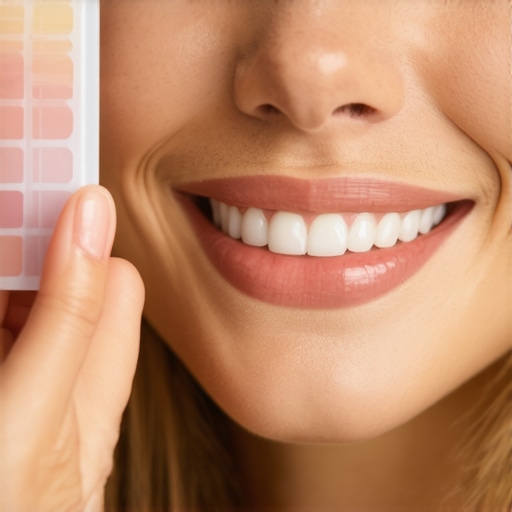
How to Match Your Shade to Your Skin Tone
Your skin’s undertone—whether you’re warm, cool, or neutral—determines how that porcelain will actually look once it’s in your mouth. If you have a warm complexion and you pick a cool, blue-white tooth, it will look grey and muddy. This is a massive reason why your porcelain veneers look opaque and not natural. You want a shade that has a hint of warmth to it if you have olive or deeper skin tones. We often use the ‘Rule of Two’: never go more than two shades lighter than your natural teeth if you’re only doing a few, but even with a full set, you need to stay within the realm of human biology.
Demand a Translucency Map from Your Lab
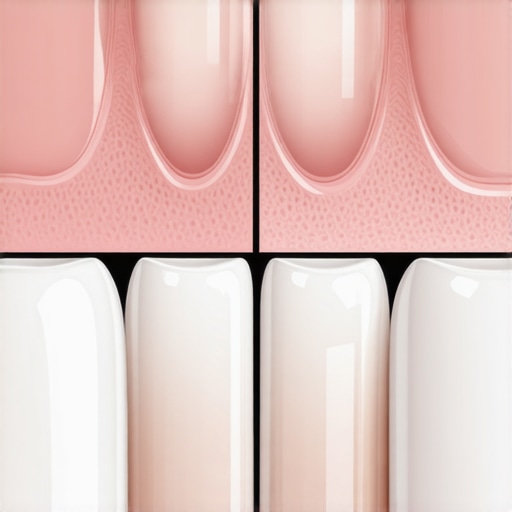
Real enamel is a layered masterpiece. It’s dense at the gum line and becomes increasingly see-through as you move toward the biting edge. When you’re discussing your case, ask your dentist about the ‘incisal halo.’ This is a thin line of opacity at the very edge of a tooth that sits behind a translucent layer. If the lab technician doesn’t build this into the porcelain, the tooth looks like a plastic toy. I’ve seen cases where people complained that their teeth look different in photos with flash, usually appearing like glowing white blocks. That’s because the flash is hitting a solid, opaque surface instead of traveling through it. You want the light to enter the tooth and bounce around, just like it does with a real tooth.
The Test Drive: Why Temporaries are Your Best Friend
Never let a dentist go straight from prep to permanent porcelain without a ‘test drive’ in high-quality temporaries. This is where you catch the functional errors. If the temporaries are too long or too thick, you’ll notice why your veneers feel thick and bulky when you try to say the letter s. Use this week to look at yourself in different lighting—office flourescents, golden hour, and even the harsh light of your bathroom. I had a patient who loved her temps in the office but realized they were too long when she kept ‘clacking’ them against her lower teeth while eating. We adjusted the final porcelain design by a fraction of a millimeter, and it saved her from a lifetime of discomfort. This is the stage for expert tips for perfect results, because once the permanent ones are bonded, changes become much more difficult and expensive.
While the test drive in temporaries is vital, there is a common industry buzzword that often leads patients astray: “No-Prep Veneers.” Marketing makes it sound like a dream—no drilling, no needles, just instant perfection. But here is the contrarian truth: in my experience, strictly no-prep work often leads to the very problems we are trying to avoid. Unless your natural teeth are incredibly small or have large gaps, adding a layer of porcelain on top of an unprepared tooth is like putting a winter coat over a tuxedo. It adds bulk where there shouldn’t be any, which is exactly why your porcelain veneers look opaque and not natural. A skilled hand actually needs to remove a microscopic amount of enamel—about the thickness of a contact lens—to ensure the porcelain sits flush with your gum line.
Why No-Prep Might Be Your Worst Move
When veneers are placed without proper contouring, you end up with a shelf at the gum line. This isn’t just an aesthetic issue; it’s a hygiene nightmare. That tiny ledge becomes a magnet for plaque, leading to chronic inflammation. I’ve seen countless patients come in wondering why your porcelain veneers look opaque and not natural, only to find that the issue is actually the puffy, red tissue around the edges because the fit is too bulky. If the edge of the restoration isn’t perfectly smooth, you might even notice the reason your porcelain veneer feels rough to your tongue is a sign of an over-contoured margin. True family dentistry experts know that long-term health depends on that seamless transition from tooth to ceramic.
Can you ever go back to natural teeth after veneers?
This is the question that keeps many people on the fence. The reality is that once you’ve committed to a veneers transformation involving enamel removal, it is a permanent lifestyle change. You are essentially trading your natural outer layer for a high-tech shield. According to a long-term study in the Journal of Prosthetic Dentistry, porcelain veneers have a survival rate of over 90% at the ten-year mark, but that success hinges entirely on your habits. If you think you can skip your protective gear, think again. I cannot stress enough the risk of skipping your night guard for just one week; even the strongest porcelain can’t withstand the forces of nighttime grinding without protection.
The Secret Geometry of a Perfect Smile
Most people focus on the color, but the real pros look at the “Gingival Zenith”—the highest point of the gum line on each tooth. If these points aren’t symmetrical, the most expensive teeth in the world will still look “off.” This level of detail is what separates a standard procedure from a life-changing veneers transformation. In some cases, we even discuss veneers vs crowns choosing the best option for your smile because a crown might be necessary if the structural integrity of the tooth is compromised. We are even seeing dental implants 2025 innovations that redefine comfort being used in conjunction with cosmetic cases to fill gaps before the final aesthetic work begins. Have you ever fallen into the ‘no-prep’ trap because you were afraid of the drill? Tell me your experience in the comments; let’s talk about what really goes into a lasting smile.
Once you have walked out of the office with your new look, the real work begins. I always tell my patients that getting the work done is a sprint, but keeping it is a marathon. You cannot treat high-end porcelain like it is indestructible. To keep your results looking fresh, I personally swear by the Waterpik Aquarius. Why this specific one? Because manual flossing around the edges of a veneers transformation can be risky if you use a sawing motion. A water flosser flushes out the bacteria at the margin without the mechanical stress of traditional string. If you have been wondering the reason your porcelain veneer feels rough to your tongue, it might be due to a tiny bit of plaque buildup that a standard brush just missed. I use mine on the ‘massage’ setting to keep the gum tissue tight and pink, which is the perfect frame for white teeth.
Your toolkit for a ten-year smile
Beyond the water flosser, you need to be obsessive about your toothpaste. Most ‘whitening’ brands are packed with abrasive silicas that can actually micro-scratch the glaze of your porcelain over time. I recommend a low-RDA (Relative Dentin Abrasivity) paste. Dr. Gordon Christensen, a legendary figure in clinical dentistry research, has noted in his CRA reports that using highly abrasive pastes can dull the luster of aesthetic restorations prematurely. When that happens, your teeth lose that lifelike shimmer and start to look like the ‘bathroom tiles’ we discussed earlier. This is also the secret to keeping your smile white without giving up your morning tea; it is not about scrubbing harder, but about preventing the stain from grabbing onto the surface in the first place.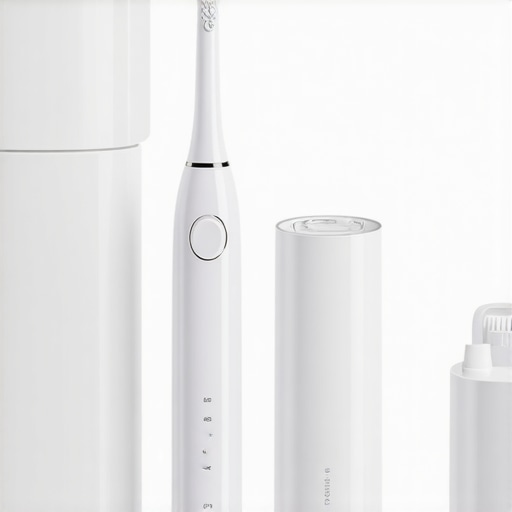
How do I maintain my porcelain veneers over time?
Consistency is your best friend here. I’ve seen people spend ten thousand dollars on their smile and then destroy it by ‘forgetting’ their bite guard. You must view your night guard as an insurance policy. I personally keep mine in a case right next to my phone charger so I never forget it. Remember the risk of skipping your night guard for just one week; a single night of heavy clenching can cause a micro-fracture that ends in a total failure. If you are a runner, you might even notice why your teeth throb immediately after you finish a long run if you are clenching your jaw during high-intensity cardio. A thin, custom-made sports guard is a game changer for active patients who want to protect their investment.
The digital future of your teeth is already here
Looking ahead, I predict that the next five years will move away from manual laboratory work and entirely into AI-driven ‘Bio-copying.’ We are already seeing technology that can scan your natural teeth before they are prepped and use AI to recreate that exact organic texture in the final porcelain. This will completely eliminate the ‘fake’ look because the machine will replicate your unique dental DNA. We are also seeing the future of dental implants merging with digital smile design to create seamless full-mouth rehabilitations that look indistinguishable from nature. If you want to stay ahead of the curve, my biggest tip is to ask your dentist for a ‘Digital Wax-Up’ before any porcelain is ordered. It allows you to see the 3D result on a screen and even 3D print a model you can hold. My challenge to you: Go check the RDA value of your current toothpaste today—if it is over 70, swap it for a sensitive or low-abrasion formula to protect your polish.
Lessons from the Chair That Marketing Always Skips
After years of seeing both the triumphs and the ‘bathroom tile’ tragedies, I’ve realized that the most successful cases share a secret: they embrace subtlety. First, remember that perfection is the enemy of the natural. If every tooth is exactly the same length and color, it looks like a computer-generated image. I always suggest keeping one tiny, ‘planned’ imperfection to break the visual pattern. Second, your veneers transformation should be a conversation between your facial features and the porcelain, not just a standalone bright spot. Finally, never rush the process; the best results come from patients who take the time to really live in their temporaries before committing to the final bond.
The Daily Checklist for a Lifetime of Compliments
To keep that high-end work looking like it was done yesterday, I recommend a few specific tools. I personally trust the Waterpik Aquarius for its ability to clean margins safely without mechanical stress. For toothpaste, look for anything with an RDA value under 70, such as Sensodyne Pronamel, to prevent scratching that expensive glaze over time. If you want to see what’s truly possible with modern artistry, spend some time browsing the gallery at the American Academy of Cosmetic Dentistry (AACD). These cosmetic dentistry secrets to boost your confidence are the difference between a merely white smile and a truly life-changing one.
Ready to Own Your Most Confident Smile Yet?
Deciding to upgrade your smile is a powerful step toward the person you want to be. Whether you are currently weighing veneers vs crowns choosing the best option for your smile or searching for expert tips for perfect results, the goal is always to feel like the most authentic version of yourself. Don’t let the fear of a ‘fake’ look hold you back; with the right lab and a clear plan for translucency, you can have a smile that is as unique as your fingerprint. If you are ready to take that next step toward a lasting change, feel free to contact us to explore your specific options. Which part of the veneer process scares you the most—the microscopic prep work or the pressure of picking the right shade? Let me know in the comments below!