I still remember the walk of shame from my orthodontist’s office back in the day. I was sixteen, feeling cocky because I’d survived the initial “metal mouth” phase, and I actually told my mom I wanted to stop for a crusty sourdough baguette on the way home. Big mistake. Huge. Two hours later, it felt like my teeth were trying to escape my jaw, and my gums were throbbing like a bass line at a concert. I sat on the kitchen floor with a bag of frozen peas against my face, wondering if I’d made a terrible life choice. The pressure was intense, and every time I swallowed, I felt that sharp reminder that my smile was under construction.
The Reality of the Post-Adjustment Throb
The truth is, getting your braces tightened is a bit of a necessary evil. Your orthodontist is literally recalibrating the tension on your teeth to guide them into that perfect alignment you’re paying for. But man, that pressure can be brutal. I used to think I just had a low pain threshold until I realized that the reason your gums are puffy around your new braces often comes down to the sudden inflammatory response your body has to that new force. It isn’t just in your head; your tissues are physically reacting to the movement.
Is the soreness actually a sign of progress?
You might be sitting there right now, clutching your jaw and wondering if something is broken. I get it. I once spent an entire evening convinced a bracket had snapped simply because the pressure felt “different” this time. While you should always know how to handle a loose wire on your braces at home, most of the time, that dull ache is just your periodontal ligaments stretching. According to the American Association of Orthodontists, this discomfort is a normal biological response as bone tissue remodels around your moving teeth. It’s annoying, but it’s the sound of success.
My Failures Taught Me Better
When I first started this journey, I made every mistake in the book. I’d try to “tough it out” without any prep, or worse, I’d wait until the pain was a level ten before looking for relief. I once even tried to use an old heating pad on my face, which—spoiler alert—actually made the inflammation worse because it increased blood flow to the already-puffy areas. We want to soothe the fire, not stoke it. Whether you are managing your own treatment or looking for family dentistry tips for a lifetime of healthy smiles to help your kids, the goal today is to move past the “frozen pea” phase and into a routine that keeps you functional. Have you ever felt that specific, localized throb where you’re sure one specific tooth is bearing the brunt of the entire adjustment? It’s a wild sensation, isn’t it? Let’s dive into what actually works to calm those gums down so you can actually enjoy your dinner tonight.
Freeze the Pain Before It Takes Over
The first 24 hours after an adjustment are the most critical. You need to think of your mouth like a sprained ankle. When you roll your ankle, you don’t put a heating pad on it; you ice it to keep the swelling down. The same logic applies to your gums. Using cold temperatures constricts the blood vessels and numbs the area naturally. I used to keep a dedicated sleeve of those plastic-backed ice packs in the freezer specifically for my ‘tightening days.’ I’d wrap one in a thin paper towel and hold it against my cheek for fifteen minutes on, fifteen minutes off. It was a game-changer compared to the time I tried to just ‘deal with it’ and ended up with a headache that lasted until Tuesday. Just like knowing why your dental implant area throbs when you lay down to sleep, understanding that this pressure is a vascular response helps you realize that cold is your best ally. If the external cold isn’t enough, sipping ice-cold water or sucking on a sugar-free popsicle can provide direct relief to the interior tissues.
Skip the Heating Pad and Grab the Ice
As I mentioned before, heat is the enemy here. While a warm compress feels cozy, it actually encourages blood flow to the area, which can increase the ‘puffy’ feeling in your gums. If you are also dealing with other sensitivities, like why your teeth hurt when you eat something very sweet, you might find that the cold helps dull that overall nerve excitability too. 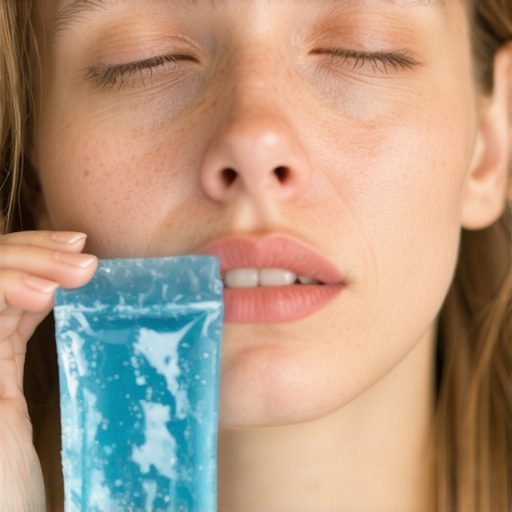
The Survival Diet for Tightening Day
You have to be strategic about what you eat. I once made the mistake of trying to eat a ‘soft’ quesadilla about three hours after a wire change. I thought the melted cheese would be fine, but the slight crunch of the tortilla felt like a thousand tiny hammers hitting my molars. It was a disaster that ended with me picking cheese out of my brackets for twenty minutes while my jaw throbbed in protest. Now, I tell everyone: stick to the liquids and mashes. Think of it as a 48-hour vacation for your teeth. Protein shakes, Greek yogurt, mashed potatoes, and lukewarm soup are your best bets. Be careful with the temperature of that soup, though; you don’t want to end up needing to know how to treat a burn on your gums from hot pizza because your mouth was too numb to feel the steam.
Saltwater Rinses Are Not Just for Grandmas
It sounds old-fashioned, but a warm saltwater rinse is incredibly effective at soothing the ‘itchy’ or raw feeling in your gums. Sometimes the movement of the teeth causes micro-irritations along the gumline that can feel similar to why your gums feel itchy after you eat certain raw fruits. Dissolve half a teaspoon of salt in eight ounces of warm water and swish it gently for thirty seconds. This helps kill bacteria and reduces the acidity in your mouth, which can make those tiny cuts from your brackets heal faster.
Keep Your Mouth Clean Without Causing a Riot
Maintaining hygiene is harder when your teeth are tender, but skipping it makes the inflammation worse. Use a soft-bristled brush and take your time. If you see slight gaps opening up during the movement, don’t panic—there are 3 ways to fix the black triangles between your teeth after braces once the treatment is finished. For now, focus on removing the plaque that irritates already sensitive gums. Use a sensitive toothpaste to help bridge the gap until the nerves settle down again.Beyond the initial adjustment of braces, many of us start eyeing the finish line—that moment when the brackets come off and we finally get to see the masterpiece. But here is the nuance most people miss: a ‘perfect’ smile isn’t just about straightness; it is about the physics of light and the mechanics of your jaw. We often fall into the trap of thinking that more ‘correction’ is always better. For instance, I’ve seen so many people insist on the whitest possible shade for their new smile, only to find that why your veneers look too opaque and how to make them look natural becomes their next frantic Google search. The American Academy of Cosmetic Dentistry emphasizes that natural teeth possess a specific degree of translucency at the edges—if you lose that, your teeth end up looking like flat white blocks rather than living tissue. It’s one of those cosmetic dentistry secrets to boost your confidence: sometimes less pigment is actually the key to a more expensive-looking result.
White Teeth Don’t Always Mean Natural Smiles
I used to think the goal was to have a smile that practically glowed in the dark. The reality is that real teeth react dynamically to their environment. You might notice why your veneers look different in sunlight versus indoor lighting because porcelain and enamel reflect light at different frequencies. If your dentist doesn’t account for the ‘value’ and ‘chroma’ of the porcelain, your ‘perfect’ teeth might look great in the office but ghostly at a backyard BBQ. It’s an advanced nuance that separates a basic procedure from true clinical artistry. 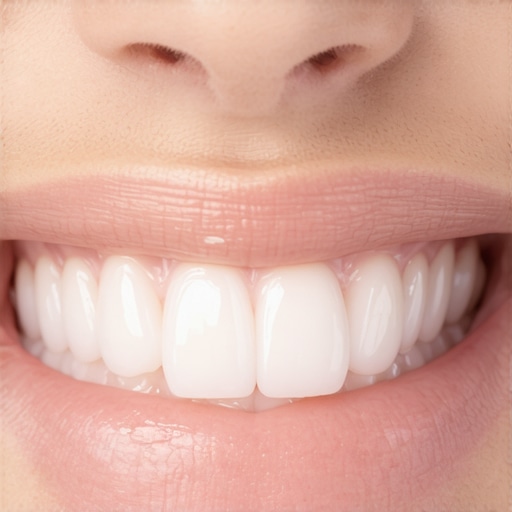
Why Do Some People Struggle to Speak After Veneers?
This is a question I get all the time from patients who’ve just invested in their dream smile but suddenly feel like they have a lisp. If the dental lab makes the porcelain just a fraction of a millimeter too long or slightly too thick on the lingual side, it interferes with your tongue’s precise placement against the back of your upper teeth. This is exactly why your veneers feel thick and bulky when you try to say the letter s. It’s not a permanent defect, but it is an ‘oops’ factor that requires either a minor adjustment by the dentist or a few weeks of phonetic retraining for your brain to recalibrate its entire speech pattern.
The Phantom Limb Sensation of Dental Implants
Then there’s the biggest misconception in restorative work: the expectation that a titanium post will feel exactly like a biological tooth from day one. Even when you understand the truth about the lifespan of a dental implant, nothing quite prepares you for the total lack of a periodontal ligament. Natural teeth have tiny shock-absorbing fibers that send signals to your brain about how hard you are biting. Implants, however, are fused directly to the bone via osseointegration. This is the reason your dental implant feels different than a natural tooth—it’s solid, unyielding, and completely lacks the ‘tactile’ feedback of a living tooth. You essentially have to learn how to chew with a different ‘sense’ of pressure. Have you ever fallen into this trap of expecting instant perfection only to realize there was a steep learning curve? Let me know in the comments.Once you navigate the initial adjustment phase, you enter the maintenance zone. I like to tell my friends that a new smile is exactly like a luxury sports car; it won’t stay in peak condition if you never change the oil. For me, the most critical piece of equipment isn’t the toothbrush—it’s the high-pressure water flosser. If you are living with hardware, you have to learn how to clean under a dental bridge without shredding your floss or risk chronic inflammation. I personally use a model with a specialized ‘orthodontic tip’ because it gets into the micro-gaps that manual string just can’t touch. Clinical expert Dr. Gordon Christensen has often noted in his research that mechanical plaque removal is the single most important factor in preventing ‘peri-implantitis,’ which is basically the implant version of gum disease.
Stop Flossing Like It Is 1995
Moving beyond traditional methods is essential when you have porcelain or titanium in your mouth. I’ve found that using an interdental brush—those tiny Christmas-tree-looking things—is the only way to really scrub the base of an implant. If you ignore this, the bacteria buildup can lead to a metallic taste or even bone loss. It’s the same logic for cosmetic work; you need 3 secrets to making your porcelain veneers last twenty years, and high-level hygiene is always number one. Don’t fall for the DIY ‘hacks’ you see on social media, either. For example, you need to know the safest way to use charcoal for teeth whitening before you accidentally scratch the polish off your expensive new veneers with an abrasive paste. 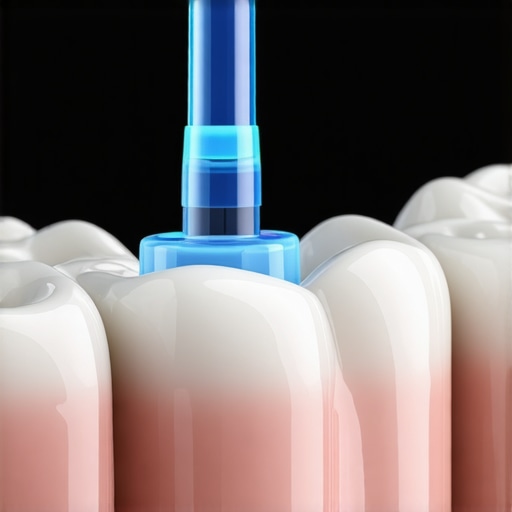
How do I maintain these results for the next twenty years?
The secret is actually what you do while you’re asleep. I used to be terrible about wearing my night guard, thinking it was just an extra upsell from the dentist. Then I saw a macro-photo of a porcelain chip caused by nighttime grinding, and I was cured of my laziness forever. Even if you don’t think you grind, the sheer force of your jaw can create micro-fractures in porcelain over a decade. Understanding the risk of skipping your night guard for just one week is a wake-up call for anyone who has invested five figures into their mouth. It’s the cheapest insurance policy you’ll ever buy.
The Future of Bionic Smiles
Looking ahead, I suspect the ‘maintenance’ of 2030 will look very different. We are already seeing the beginning of how dental implants reshape your oral health in 2025 through smart-sensor technology. Imagine an implant that can alert your phone if it detects a specific type of bacterial acidity before you even feel a throb. We’re moving toward a world where ‘preventative’ care is automated. My advice? Start the habit now by investing in a high-quality water flosser and using it on the medium-high setting twice a day—your future self will thank you for the saved thousands in repair costs.
The One Thing My Dentist Finally Admitted About Perfection
After years of sitting in the chair, I finally realized that the goal isn’t just to have straight teeth; it’s to have a functional, healthy foundation that lasts. One of my biggest lightbulb moments was discovering that the ‘puffy’ feeling in my gums wasn’t a sign of failure, but a sign of active movement. If you are looking at the bigger picture, you might be interested in a veneers transformation unlocking your best smile yet to really cap off your hard work.
- Progress isn’t always linear: Some months your teeth move more than others, and that’s okay. You can’t rush biology without risking the roots of your teeth.
- Natural shades win every time: A slightly off-white tooth with natural translucency looks more ‘expensive’ than a fluorescent white block.
- Pain is a temporary teacher: It reminds you to stay on top of your hygiene and nutrition during the most sensitive phases of your treatment.
The Hardware I Swear By for Maintenance
I’ve wasted hundreds of dollars on dental gimmicks, but a few things have stayed in my kit for years. First, a high-quality water flosser is non-negotiable for anyone with hardware. Second, I always keep a specialized soft-bristle brush for those sensitive days post-adjustment. If you’re curious about the next level of care, look into dental implants 2025 innovations that redefine comfort and durability to see how technology is making these procedures easier than ever. And please, don’t ignore the real cost of skipping your six-month checkup—preventative maintenance is the only way to protect your financial and emotional investment in your teeth.
The Road to Your Best Smile Starts Now
The journey from ‘metal mouth’ to a confident, radiant smile is a marathon, not a sprint. Every adjustment, every bowl of mashed potatoes, and every saltwater rinse is a small deposit into your future confidence. You are doing the hard work now so you can enjoy the results for the next fifty years. Whether you are curious about cosmetic dentistry secrets to boost your confidence or just need a little encouragement during a rough adjustment week, stay focused on the end goal. If you need professional guidance or a second opinion on your treatment plan, don’t be afraid to contact us. Have you ever felt that incredible relief when the braces finally come off, or are you still in the thick of the adjustment phase? Let me know in the comments below!