I’ll never forget the morning of my cousin’s wedding, standing in front of my bathroom mirror with a mouth full of what looked like engine oil. I’d seen a viral video claiming that activated charcoal was the holy grail of natural beauty, and in my rush to get a Hollywood smile, I’d ditched my regular routine for a tub of black powder. Ten minutes later, my sink was ruined, my gums were an angry shade of grey, and my teeth felt like they’d been scrubbed with sandpaper. I thought I was being a genius by saving money on cosmetic dentistry secrets, but instead, I was terrified I’d just scratched off my enamel for good. We’ve all been there—trying the latest hack because professional treatments feel out of reach—but today, I’m going to show you how to navigate the charcoal trend without causing permanent damage to your pearly whites.
My messy mistake with charcoal toothpaste
It’s easy to get sucked into the ‘natural is better’ mindset, but my first attempt at charcoal whitening was a total disaster because I treated it like a regular toothpaste. I scrubbed and scrubbed, thinking the friction was doing the work. In reality, I was committing the ultimate dental sin: over-abrasion. If you’ve ever noticed that your teeth look transparent at the edges, you might already be dealing with enamel thinning. I learned the hard way that charcoal isn’t a bleach; it’s an abrasive that physically scrapes off surface stains. My mistake was using it daily, which led to a sensitivity so sharp I couldn’t even enjoy a glass of water. Today, I want to help you avoid that throbbing pain and find a balance that actually works for your lifestyle.
Is scrubbing with soot actually worth the hype?
You’re probably skeptical—and honestly, you should be. With so many products claiming to ‘detoxify’ your mouth, it’s hard to know what’s science and what’s just clever marketing. Even the American Dental Association has noted that there is currently no clinical evidence proving that charcoal is safe or effective for teeth whitening (Source: ADA Science Institute). Many people find that their professional whitening results fade and they turn to charcoal as a quick fix, but is it worth the risk of thinning your enamel? We’re going to dive into the ‘dab, don’t scrub’ method that keeps things safe. Have you ever tried a charcoal product and immediately regretted the mess it made?
Why your enamel needs more protection than you think
Your enamel is like the clear coat on a car; once you scratch it away, the yellowish layer underneath—the dentin—starts to show through, which actually makes your teeth look darker in the long run. This is why I always tell my neighbors to be cautious with DIY powders. If you really want that bright look, sometimes looking into veneers is a more predictable path than trying to scrub your way to a new shade. I’ve found that the safest way to incorporate charcoal isn’t by replacing your toothpaste, but by using it as a very occasional supplement—and I mean once every few weeks, not every morning. In the next section, I’ll break down the exact ‘slurry’ technique I use now to get the benefits without the bite.
Mixing the perfect charcoal slurry
To avoid the sandpaper effect, you need to change the consistency of the charcoal. I learned this after a frantic call to my dentist sister who told me to stop treating my mouth like a grill. Instead of dipping a dry brush into the powder, create a ‘slurry.’ Take a tiny pinch of the powder—about the size of a pea—and mix it with a few drops of water or your regular fluoride toothpaste in a small dish. You’re looking for a wet, runny paste, not a thick sludge. This dilution reduces the friction while still letting the charcoal particles bind to surface toxins. Think of it like washing a delicate silk blouse; you wouldn’t use a wire brush, you’d soak it gently. This approach is a staple in family dentistry tips for a lifetime of healthy smiles because it prioritizes the integrity of the tooth over a quick, aggressive fix.
Dab your way to a brighter shade
Here is the secret I wish I knew before I ruined my bathroom: don’t brush. When I first tried this, I spent three minutes vigorously scrubbing my molars. Big mistake. Now, I use a soft-bristled brush or even a cotton swab. I gently ‘paint’ the slurry onto my teeth and let it sit for two minutes. I actually timed myself once using my phone, standing in the kitchen so I wouldn’t stare at the mess in the mirror. By dabbing the mixture on, you’re letting the porous nature of the charcoal do the heavy lifting of pulling out stains from your morning latte. If you’re looking for the secret to keeping your smile white without giving up your morning tea, this passive absorption is far safer than mechanical scrubbing. 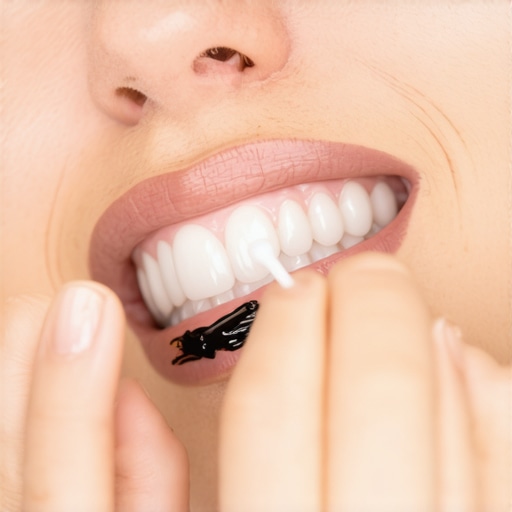
The rinse-and-repeat reality
Rinsing is where most people give up because charcoal is incredibly stubborn. It loves to hide in the ‘sulcus’—that tiny pocket where your tooth meets your gum. If you don’t get it all out, it can irritate the tissue, leading to that ‘grey gum’ look I mentioned earlier. I’ve found that using a water flosser or rinsing at least five times with lukewarm water is the only way to be sure. If you notice your teeth feel gritty, stop. That grit is literally wearing down your protection. You should also know how to pick a toothbrush that won’t destroy your enamel to use for your secondary ‘clean’ brush—the one you use to remove the leftover black residue.
Why some stains just won’t budge
You have to be realistic: charcoal only works on the outside. It’s a surface-level relationship. If your discoloration is coming from the inside—perhaps from aging or old medications—no amount of black powder will help. In fact, if you overdo it, you’ll just expose the yellow dentin underneath. For those deep-set issues, you might want to transform your smile with veneers expert tips for perfect results instead of risking your natural structure. When I saw my cousin again a month after her wedding, she asked why my teeth looked ‘matte.’ I’d scrubbed so much I lost the natural luster. Now, I stick to the slurry once every three weeks, and my enamel—and my bathroom sink—is much happier for it.While my charcoal disaster was a lesson in grit, it opened my eyes to a much bigger truth: even professional upgrades aren’t ‘set it and forget it’ solutions. I used to think that getting a set of porcelain covers meant I was essentially invincible to cavities or staining. I was wrong. The biggest myth in the waiting room is that cosmetic work replaces the need for rigorous hygiene. In reality, the margin where your porcelain meets your natural tooth is a high-risk zone for bacteria. If you’ve ever wondered why composite bonding stains faster than porcelain veneers, it often comes down to the porosity of the material and how it interacts with your unique oral microbiome.
Your natural teeth still matter under that porcelain
Everyone tells you that veneers are the ultimate shortcut to a Hollywood smile, but in my experience, they are more like a long-term partnership with your dentist. You can’t just glue them on and stop caring. One major ‘oops’ factor I see people fall into is neglecting their gums once their teeth look perfect. A study published in the International Journal of Oral & Maxillofacial Implants (IJOMI) highlights that peri-implantitis—the dental equivalent of gum disease—is actually more aggressive than natural periodontal disease if not caught early. This is why family dentistry tips for a lifetime of healthy smiles always emphasize foundation over aesthetics. If the ‘dirt’ under your house is shifting, it doesn’t matter how pretty the siding looks.
How can you tell if your veneers were bonded correctly?
This is the advanced question most patients forget to ask until they feel a snag. High-quality bonding should feel like a seamless extension of your tooth. If you feel a ledge or a rough patch with your tongue, that is a trap for plaque that no amount of charcoal slurry will ever fix. You need to know how to tell if your veneers were bonded correctly to the enamel because a micro-gap is an invitation for internal decay. Have you ever fallen into this trap of thinking a procedure was ‘one and done’? Let me know in the comments. 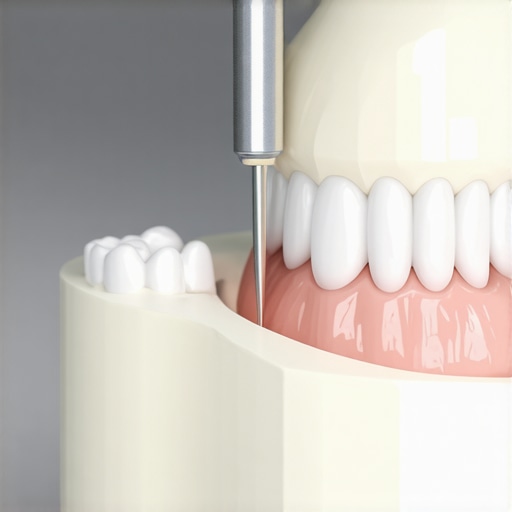
The bite alignment trap that ruins a new smile
I’ve seen people spend thousands on veneers transformation unlocking your best smile yet, only to have a veneer pop off while eating a piece of sourdough. The culprit isn’t usually the glue; it’s the occlusion, or how your teeth fit together. If your dentist doesn’t account for how you grind your teeth at night, those expensive porcelain shells are under constant mechanical stress. It’s the same logic behind 3 secrets to making your porcelain veneers last twenty years: it’s about protection, not just appearance. Even with dental implants 2025 innovations that redefine comfort and durability, the way your jaw moves is the deciding factor in whether that hardware stays put for a decade or fails in three years. Don’t be afraid to ask for a ‘bite check’ multiple times; your long-term comfort depends on it. Instead of chasing the brightest white, focus on the structural integrity that keeps that white smile in place. When you see someone whose veneers look like white chiclets, it’s often because they prioritized the ‘look’ over the natural anatomy of the mouth.
The specialized gear that keeps my porcelain in place
Since my charcoal fiasco, I’ve become a bit of a nerd about the tools I keep on my bathroom counter. If you’ve invested in high-end restorative work, you can’t just use whatever was on sale at the grocery store. I personally swear by a variable-pressure water flosser. Why? Because string floss can sometimes catch on the margins of a veneer if it’s not perfectly smooth, but water can get into those microscopic spaces without the mechanical tugging. It’s also the only way I’ve found to effectively manage how to clean under a dental bridge without shredding your floss. I use the ‘massage’ setting specifically to stimulate blood flow in the gums, which prevents the recession that eventually exposes the dark roots of your natural teeth. Along with this, you need to be incredibly picky about your bristles. I transitioned to a sonic brush with a pressure sensor because I realized I was a ‘heavy-handed’ brusher. Learning how to pick a toothbrush that won’t destroy your enamel was a turning point for me; it’s about the vibration frequency, not the force of your arm. 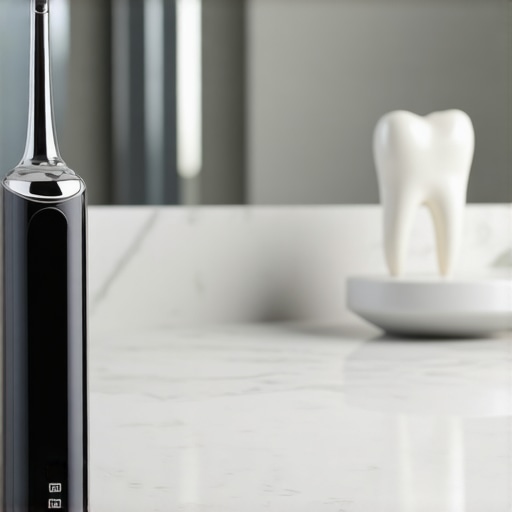
How do I maintain these results for the next decade?
Consistency is the boring answer, but the specific technique is what actually saves your wallet. I’ve incorporated interdental brushes into my nightly routine, even though they look like tiny pipe cleaners. If you’ve noticed why your gums are bleeding only when you use an interdental brush, it’s usually a sign of localized inflammation that a standard brush simply can’t reach. These tiny tools are the real heroes for people with implants or wide gaps. According to Dr. Gordon Christensen of Clinicians Report, the longevity of complex restorations is directly tied to a patient’s ability to manage the ‘biofilm’ at the margin—the exact spot where your hardware meets your biology. If you follow the 3 secrets to making your porcelain veneers last twenty years, you’ll find that using an alcohol-free mouthwash is also non-negotiable, as alcohol can actually soften the bonding agents over time.
What 2025 means for the future of your jaw health
Looking ahead, we are moving into an era where your dental work is smarter than ever. We are already seeing dental implants 2025 innovations that redefine comfort and durability, including ‘smart’ implants that can actually monitor for signs of infection or bone loss before you even feel a twinge of pain. I predict that within the next few years, at-home AI scanners will be as common as electric toothbrushes, allowing you to send a weekly 3D scan of your mouth to your dentist to catch issues like why your dental implant area throbs when you lay down to sleep before it becomes an emergency. We are seeing the future of dental implants cutting-edge techniques move toward 3D-printed scaffolds that encourage your own bone to grow faster and stronger. It’s a far cry from the ‘one size fits all’ approach of the past. If you want to get ahead of the curve, I encourage you to try this one thing tonight: switch to a high-quality interdental brush for your back molars and see how much debris your regular brush has been missing. You’ll be shocked at what’s actually hiding back there, even after a ‘thorough’ cleaning. This simple switch is the cornerstone of how dental implants reshape your oral health in 2025 and beyond.
Lessons My Bathroom Mirror Taught Me About DIY Vanity
Looking back at that messy morning, I realize my charcoal obsession wasn’t really about the powder; it was about trying to skip the essential steps of professional care. Here are the lightbulb moments that changed how I treat my mouth: First, friction is rarely the answer to a whiter smile. We are taught to scrub harder to get things clean, but enamel is a finite resource, not a kitchen floor. Second, the ‘natural’ label is often used as a shield to hide products that haven’t been safety-tested for long-term use. Lastly, I learned that the real cost of skipping your six-month checkup is far higher than the price of a tube of viral toothpaste; you pay for it in sensitivity and thinned enamel that eventually requires expensive intervention. If I had just focused on the basics instead of the ‘hacks,’ I would have saved myself years of tooth sensitivity.
The Gear I Actually Use to Protect My Investment
I’ve replaced my jar of soot with a curated toolkit that prioritizes health over trends. Here is what stays on my vanity today: Variable-Pressure Water Flossers are my absolute non-negotiable. They are the only way I’ve found to truly manage how to clean the underside of a dental bridge without shredding your floss or irritating sensitive gum margins. I also exclusively use PH-neutral mouthwashes. Many big-brand rinses are surprisingly acidic, which can actually soften your enamel before you brush. Finally, I’ve learned that how to pick a toothbrush that won’t destroy your enamel comes down to finding ultra-soft, tapered bristles that vibrate rather than oscillate. These tools don’t just keep my teeth white; they ensure my natural structure remains strong enough to support any future work I might need. #IMAGE_PLACEHOLDER_E#
Your Future Smile Starts with a Real Plan
At the end of the day, a beautiful smile isn’t something you find in a DIY kit—it’s something you build through consistent, informed choices. Whether you are recovering from a charcoal mistake like I was or you’re ready to explore cosmetic dentistry secrets to boost your confidence, the most important step is to stop guessing. Your teeth are one of the few things that don’t grow back, so treat them with the respect they deserve. Don’t be afraid to walk away from the viral trends and toward a professional plan that actually protects your long-term health. Your smile is worth more than a quick fix. Have you ever tried a viral whitening hack that backfired or left you with more questions than results? Let me know in the comments below!