I remember the first time I truly noticed it; I had just finished a deep clean at home, using every tool in my arsenal. I ran my tongue over my front teeth and—ugh. They felt tacky. Almost like I had just finished a handful of gummy bears, even though I hadn’t touched sugar all day. It’s a maddening feeling. You do the work, you buy the expensive paste, you follow the rules, and you still feel like your mouth is wearing a tiny, invisible sweater. I used to think the answer was just more force. I bought the stiffest bristles I could find and went to town. Honestly, it was a massive mistake that left me wondering how to tell if my gum recession was caused by brushing too hard. The truth is, that stickiness usually isn’t about how hard you scrub; it’s about what’s actually happening on the surface of your enamel.
Stop Scrubbing and Start Thinking About Biofilm
That persistent film isn’t just a figment of your imagination. We are dealing with dental biofilm, a complex and stubborn community of microorganisms. According to the National Institutes of Health, this biofilm is incredibly resilient and begins to reform almost immediately after you finish cleaning. If you aren’t disrupting it correctly, it just sits there, feeling like a layer of glue. I spent years perfecting my routine, and I’ve realized that when your mouth feels like this, it’s often a sign that your saliva isn’t doing its job or your toothpaste is leaving a residue. Have you ever finished your morning routine only to feel like your teeth were actually stickier than when you started? It’s more common than you think. Often, this happens because of why your mouth feels sticky and dry when you wake up, which sets the stage for a rough texture all day.
Are Some People Just Destined for Fuzzy Teeth?
You might be skeptical. I certainly was. I thought maybe my teeth were just naturally textured and I had to accept the fuzz. But after looking into family dentistry tips for a lifetime of healthy smiles, I found that the “sticky” sensation is usually a solvable problem involving pH balance and mechanical disruption. It’s not just about the brush; it’s about the environment in your mouth. Today, I want to walk you through why that film stays put and how you can finally get that smooth, glass-like finish you’re after.
Stop the Sawing Motion and Start Massaging Your Enamel
Most of us were taught to brush in broad, horizontal strokes, but that is actually the least effective way to disrupt the sticky proteins in dental biofilm. When you saw back and forth, the bristles often jump right over the microscopic valleys in your teeth where the film lives. I learned this the hard way when I noticed why my teeth looked yellow despite using whitening toothpaste—the gunk was simply being compacted into the enamel rather than lifted away. The trick is the Bass Technique: tilt your brush at a 45-degree angle toward the gum line and use tiny, vibrating circles. This does not just clean the surface; it agitates the bacteria hiding just under the collar of the gum. 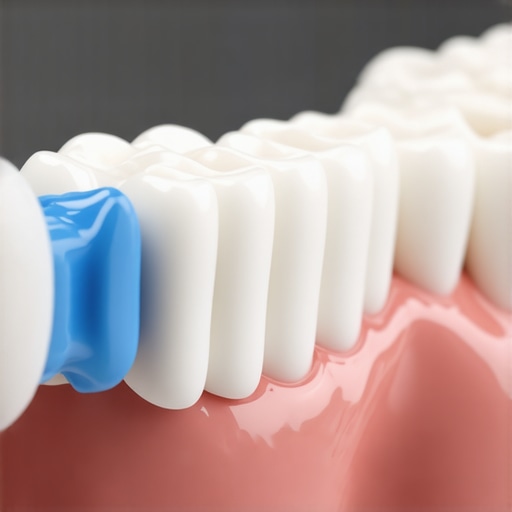
Why Your Dry Mouth is a Magnet for Biofilm
If you have ever woken up and felt like you could peel a layer off your teeth, you are experiencing the fallout of low saliva production. Saliva is your mouth’s natural detergent. When it dries up, the proteins in your mouth become concentrated and glue-like. I remember a phase where I was drinking four cups of coffee a day and wondering why my mouth felt like a desert. My teeth were not just fuzzy; they were practically magnetic to every bit of food I ate. This often happens because of why your mouth feels sticky and dry when you wake up, which can turn into a chronic cycle if you do not hydrate properly. To fix this, you have to flush the system. Water is the obvious answer, but using a pH-balancing mouthwash is the real secret to neutralizing the acids that make biofilm so adhesive.
Identify if the Texture is Plaque or Your Dental Work
Sometimes, the sticky or rough feeling is not even biological. If you have cosmetic work, you might be feeling the physical properties of the material. For instance, I once had a situation where I was convinced I had a permanent film on my front teeth, but after an exam, it turned out to be the reason your porcelain veneer feels rough to your tongue—the glaze had slightly etched over time from acidic drinks. Similarly, if you have recently explored the future of dental implants and cutting-edge techniques in cosmetic dentistry, the transition between the restoration and your natural gum can trap tiny particles that feel fuzzy. You are not failing at hygiene; you just need to adapt your tools. Using a water flosser or a dedicated interproximal brush can clear those specific gaps where a standard brush simply cannot reach.
The Hidden Impact of Your Diet on Tooth Texture
What you eat does not just affect your health; it changes the physical grip of your teeth. Have you ever noticed that after eating a bowl of spinach or some raw fruits, your teeth feel weirdly chalky or itchy? I used to get so frustrated after a healthy snack because my mouth felt dirtier than before I ate. This is often linked to the reason your gums feel itchy after you eat certain raw fruits, which is a localized reaction that can increase mucus production and film buildup. To counteract this, always rinse with plain water immediately after eating. It sounds too simple to work, but by diluting the sugars and acids before they have a chance to bond with the biofilm, you prevent that invisible sweater from knitting itself together. This simple habit is one of those family dentistry tips for a lifetime of healthy smiles that people often overlook because it is not a fancy product you can buy.
Why Implants Demand More Attention Than Natural Teeth
Many people believe that once they invest in dental implants 2025 innovations that redefine comfort and durability, they are finished with the rigors of oral hygiene. It is a common misconception that because titanium and porcelain cannot decay, they are indestructible. In my experience, this is the most dangerous trap a patient can fall into. While the implant itself won’t get a cavity, the surrounding tissue is actually more susceptible to a specific type of inflammation called peri-implantitis. Unlike a natural tooth, an implant lacks the periodontal ligament, which serves as both a shock absorber and a sensory alarm system. According to a study published in the Journal of Oral Implantology, biofilm management on titanium is significantly more complex because the ‘seal’ between your gums and the implant is purely mechanical, not biological. This means that if you feel a sticky film around your restoration, you are at a higher risk for bone loss than you would be with a natural tooth. 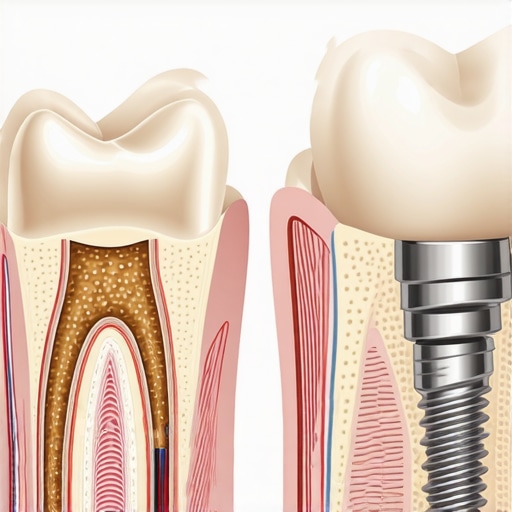
Avoid the Abrasive Paste Trap with Your Veneers
If you have recently undergone a veneers transformation unlocking your best smile yet, you might be tempted to use the strongest whitening toothpaste available to keep them bright. This is a massive ‘oops’ factor that most people get wrong. High-abrasive pastes act like sandpaper on the microscopic level. Over time, they strip the professional glaze off the porcelain. This is often the reason your porcelain veneer feels rough to your tongue. Once that glaze is gone, the surface becomes porous, making it a magnet for the very stains and biofilm you were trying to avoid. To keep that glass-like finish, you need to switch to a non-abrasive gel. If your teeth look flat or chalky, it might be why your porcelain veneers look opaque and not natural; the light is no longer bouncing off a smooth surface, but rather a scratched one. Have you ever fallen into this trap of over-cleaning your dental work? Let me know in the comments.
Why does my dental implant feel sensitive to heat but not cold?
This is a question that often confuses patients because the implant has no nerve. If you are noticing why your dental implant is sensitive to heat but not cold, it is usually an advanced sign of gum recession or an issue with the adjacent natural teeth. Because titanium conducts heat differently than biological tissue, it can sometimes transfer thermal energy to the bone or neighboring nerves faster than you expect. It could also indicate that the restoration is too thick, leading to why your veneers feel thick and bulky when you try to say the letter s or other speech impediments. Mastering the nuances of family dentistry tips for a lifetime of healthy smiles means realizing that your restorations require a tailored approach. You cannot treat a porcelain bridge or a titanium post exactly like a natural molar and expect it to reach the truth about the lifespan of a dental implant without specific, non-abrasive care and diligent biofilm disruption.I used to think my hands were precise enough to clean every nook, but using a manual brush is like trying to detail a high-end sports car with a kitchen sponge. I eventually switched to a sonic toothbrush that includes a built-in pressure sensor. Why? Because I realized I was still aggressive enough to risk permanent damage to my soft tissue. If you are wondering how to tell if your gum recession is caused by brushing too hard, that little red light on a smart brush is your best friend. It stops the ‘sawing’ motion I mentioned earlier and forces you to be gentle with your investment. This is especially vital when you are navigating the complex maintenance of cosmetic dentistry secrets to boost your confidence. Sonic technology does more than just move bristles; it creates fluid dynamics that reach into the microscopic spaces between your teeth.
Why Water Flossers are Non-Negotiable for Implants and Bridges
Standard string floss is a great baseline for natural teeth, but once you have a bridge or a titanium post, the physics of your mouth change. I have found that a water flosser is survival gear, not a luxury. It reaches the hidden architecture where how to tell if your dental bridge is trapped with food becomes a daily concern. I personally fill mine with one part alcohol-free mouthwash and three parts warm water. This doesn’t just blast away debris; it delivers antibacterial agents into those hard-to-reach pockets around an implant that string simply cannot navigate without fraying. 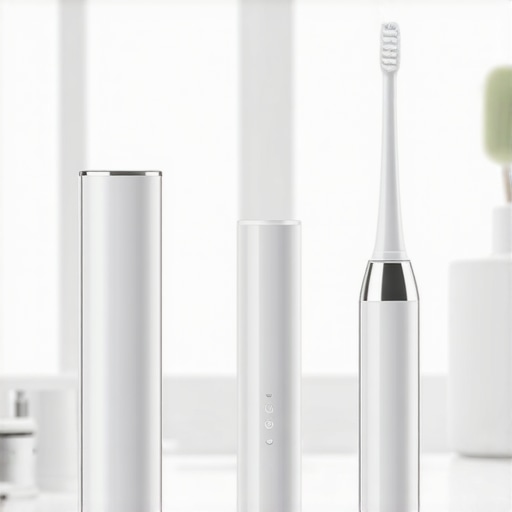
How do I keep my dental work looking brand new for a decade?
The secret is not found in a single deep clean; it is the consistency of your ‘interceptive’ care. You have to treat your mouth like a high-performance engine that requires frequent tuning. This means regular check-ins to evaluate the ‘seal’ of your restorations. Sometimes, a veneer might need a slight professional polish, or you might need to discuss veneers vs crowns choosing the best option for your smile if a natural tooth underneath starts to show unexpected wear. According to clinical standards from the American Academy of Cosmetic Dentistry (AACD), the leading cause of restoration failure is not the material itself, but the failure of the supporting tissue due to sub-marginal plaque accumulation.
The Near Future of Real-Time Biofilm Monitoring
Looking ahead, I predict we are moving toward ‘Smart Saliva’ monitoring. Within the next few years, I expect to see home hygiene kits that sync with your smartphone to analyze the pH and bacterial load of your mouth in real-time. This technology will tell you exactly when you are at risk for biofilm buildup before you even feel that fuzzy ‘invisible sweater’ on your teeth. It is the next logical step in how dental implants reshape your oral health in 2025. By identifying spikes in acidity early, you can neutralize the environment before it compromises the bond of your veneers or the health of your implant’s bone structure. This proactive approach is the only way to truly secure the truth about the lifespan of a dental implant. If you have not yet, I challenge you to try the ‘Two-Week Water Floss’ test. Use a water flosser every night for fourteen days alongside your regular brushing. You will be shocked by what your toothbrush has been leaving behind. If things still feel rough or sticky, do not wait for a small issue to become an expensive one. You can always contact us to get a professional look at what is going on.
What I Learned About Protecting a Professional Smile
After years of obsessing over oral hygiene, I realized that the fuzzy feeling is your mouth’s way of sounding an alarm. Here are the most important lightbulb moments I have had: First, your toothbrush cannot do 100% of the heavy lifting; it is merely the opening act for biofilm disruption. Second, the texture of your teeth is a direct reflection of your body’s hydration and pH balance, not just how hard you scrub. Third, following family dentistry tips for a lifetime of healthy smiles is more effective than any single expensive deep-cleaning session. I stopped chasing a perfect scrub and started focusing on creating an environment where bacteria simply cannot thrive.
The Only Tools You Need to Fight Biofilm
If you want to keep that smooth, post-dentist feeling every single day, you need a targeted toolkit. I personally rely on three essentials: a sonic toothbrush with a pressure sensor to prevent gum damage, a high-quality water flosser to reach the tight spaces around dental implants 2025 innovations that redefine comfort and durability, and a pH-neutralizing mouthwash to break the stickiness of early-morning biofilm. These are not just gadgets; they are the foundation of cosmetic dentistry secrets to boost your confidence. Using these tools correctly ensures your restorations stay as smooth as the day they were placed. #IMAGE_PLACEHOLDER_E#
Your Journey to a Truly Smooth Finish Starts Tonight
You do not have to accept a mouth that feels like it is wearing a tiny sweater. By shifting your focus from aggressive scrubbing to gentle, effective biofilm disruption, you can protect your natural teeth and your high-end dental work for decades. The future of your oral health is literally in your hands every morning and night. If you are ever unsure about a persistent texture or a rough spot on a restoration, do not hesitate to contact us for a professional evaluation. It is always better to catch a small change in texture before it becomes a structural problem. Have you ever tried the two-week water floss challenge to see what your brush was missing? Let me know your results in the comments below!