I was halfway through a massive bagel last Sunday when I had to stop. Not because I was full—far from it—but because my face actually hurt. My jaw felt heavy, sluggish, and frankly, exhausted. I looked at my wife and said, ‘Is this bagel made of rubber or am I falling apart?’ It was a wake-up call. For years, I’d just powered through the discomfort of eating crusty bread or steak, thinking my muscles were just ‘getting a workout.’ I even made the rookie mistake of assuming my bite was fine even though I had a slight clicking sound that I just ignored. It turns out, that fatigue isn’t a sign of a strong jaw; it’s a red flag that your oral system is working overtime to compensate for something that isn’t quite right. Today, I’m going to help you figure out why your mouth feels like it’s running a triathlon every time you eat and what you can actually do to find some relief.
Your Jaw Muscles Aren’t Designed for a Marathon
[IMAGE_PLACEHOLDER] When we talk about jaw fatigue, we’re usually talking about the masseter muscles. These are the powerhouse muscles that help you chew, but they aren’t supposed to burn like your quads do on a steep hike. Early on in my journey to better dental health, I made the mistake of thinking I just needed to ‘tough it out’ or even try those weird ‘jawline chewing’ gadgets I saw online. Big mistake. I ended up with a headache that lasted three days because I was overworking an already stressed joint. I didn’t realize that how to fix the clicking sound in your jaw while you eat was actually the first step toward stopping that exhaustion. If your bite is even slightly off—maybe from a missing tooth or a shifting alignment—your muscles have to pull extra weight. This constant tension can lead to a cycle of pain that affects everything from your sleep to your ability to enjoy a meal out. According to the Mayo Clinic, TMJ disorders can cause significant muscle fatigue and pain that often goes untreated because people think it’s just ‘the way they chew.’ Have you ever had to put your fork down mid-meal just to give your face a rest?
Is this ache actually worth a trip to the dentist?
You might be skeptical. You might think, ‘It’s just a bagel, it’s not that serious.’ But that persistent tiredness is often a precursor to much bigger issues. I found out the hard way that ignoring muscle strain can lead to the risk of skipping your night guard for just one week, which only makes the morning jaw pain worse. Whether it’s why your jaw clicks only when you chew on the right side or a general sense of heaviness, your body is trying to tell you that your alignment needs a tune-up. Sometimes it’s as simple as stress, but other times it’s about how your teeth meet. We aren’t just talking about comfort; we’re talking about preventing long-term wear on your teeth and joints. It’s time to stop ignoring the burn and start looking at what’s happening under the surface. If you’ve been feeling like you need a nap after a steak dinner, you aren’t alone, and you don’t have to just ‘deal with it.’ Let’s dive into what’s actually going on inside that joint.
Stop guessing and test your bite alignment
The first thing I had to do was a simple “clench test.” Sit up straight, relax your shoulders, and slowly bring your teeth together. Do they land all at once like a synchronized team, or does one side hit first? If you feel a “slide” where your jaw shifts to get the rest of your teeth to touch, you’ve found the culprit. This is called a premature contact. I remember my dentist once used that thin blue articulating paper—it felt like biting on a piece of carbon paper from an old checkbook—to map out exactly where my teeth were hitting too hard. It turned out my molars were basically high-centering my entire jaw. This is why the real cost of skipping your six-month checkup is so high; a pro can spot these tiny imbalances before they turn into full-blown muscle spasms. 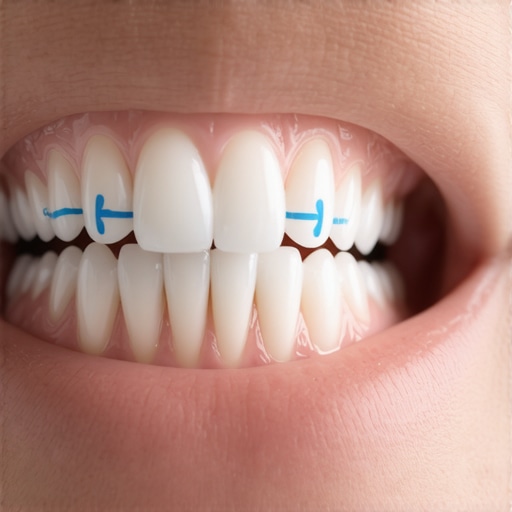
Address the gaps before your muscles quit
If you have even one missing tooth, your entire oral architecture starts to lean. Imagine a bridge where one support beam is missing; the other beams have to carry double the load. That’s exactly what happens when you have a gap. Your remaining teeth will actually start to tip or “drift” into that open space, which completely throws off your bite. I’ve seen friends try to figure out how to fix a small gap between your teeth without braces, but if the gap is from a lost tooth, you need a structural replacement. This is where modern tech saves the day. Learning how dental implants reshape your oral health in 2025 shows that we aren’t just filling a hole for looks; we are providing a “stop” for the jaw to rest against. Without that support, your masseter muscles are basically trying to stabilize a wobbly table while you’re trying to eat a steak dinner.
Pick the right armor for your worn-down teeth
If you’ve been grinding for years, your teeth might actually be shorter than they were a decade ago. This “vertical dimension” loss means your jaw has to close further than it wants to, putting immense pressure on the joint. You might notice why your teeth look shorter after years of nighttime grinding and think it’s just cosmetic, but it’s actually a mechanical failure. To fix this, you have to decide between reinforcing the tooth or just masking the front. In the debate of veneers vs crowns which is right for your smile, the answer usually comes down to how much force you’re putting on your mouth. If you’re a heavy “clencher” like I was, a crown provides 360-degree protection, whereas a veneer is more like a beautiful shield on the front. If you really want to go the distance, looking into the truth about all-on-4 implants and how they feel in your mouth can be a life-changer if the damage is widespread. You have to stop treating the symptoms with ibuprofen and start rebuilding the foundation.Rebuilding that foundation isn’t just about aesthetics; it’s about mechanical precision. Most people think that getting a new smile is like buying a new set of tires—you just pick the ones that look the sturdiest and go. But here is the contrarian truth: the ‘perfect’ smile you see on Instagram is often a functional nightmare. I’ve seen so many people rush into full-mouth reconstructions only to find that their jaw fatigue actually increases. Why? Because their new teeth are too long or too thick for their natural anatomy. If your dentist doesn’t account for your ‘envelope of function’—the specific path your jaw takes when you speak and chew—you’ll end up with ‘clunky mouth’ syndrome.
Stop chasing the Hollywood white if you want to keep your bite
A huge trap people fall into is the ‘Chiclet’ look. They want the whitest shade on the guide, but they forget that natural teeth have translucency at the edges. If your crowns are opaque and blocky, they won’t just look fake; they’ll feel like foreign objects. This is why the mistake that makes your new crowns look like chiclets is more than just an aesthetic fail—it’s a sign that the anatomy of the tooth wasn’t respected, which can lead to your jaw working harder to find a comfortable resting spot. 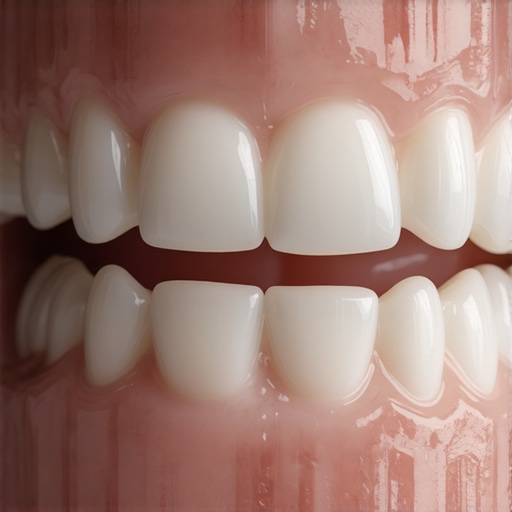
How do I know if my veneers were actually bonded correctly?
It’s a sophisticated question because it’s not just about them staying on; it’s about how they integrate with your gum health. You need to check the ‘margin’—the exact place where the porcelain meets your gum line. If you can feel a significant ledge with your tongue, that’s a harbor for plaque and a future source of inflammation. You should also pay attention to how they feel against your natural structure. If they feel like they’re under constant pressure or ‘squeezing’ your teeth, you might need to ask how to tell if your veneers were bonded correctly to the enamel. According to a study published in the Journal of Prosthetic Dentistry, the long-term success of these restorations depends heavily on a moisture-free environment during bonding; even a tiny bit of contamination can cause the bond to fail prematurely.
Don’t sacrifice your speech for a brighter shade
If you find yourself struggling with why your veneers feel thick and bulky when you try to say the letter s, it’s usually because the ‘incisal edge’ is too far forward or too thick. This is a common ‘oops’ in cosmetic dentistry where the lab makes the teeth overly thick to mask underlying discoloration, sacrificing your speech in the process. If you’re looking at long-term tooth replacement instead of just surface fixes, dental implants 2025 innovations that redefine comfort and durability are incredible, but they require a rock-solid foundation of healthy bone. You can’t just slap a titanium post into a weak base and expect it to feel natural. Have you ever fallen into the trap of choosing ‘extra white’ only to regret it later? Or maybe you’ve felt that weird tightness after a procedure? Let me know in the comments—I’d love to hear your smile makeover horror stories or wins.If you want your investment to last, you have to stop treating your bathroom routine like a chore and start treating it like high-level maintenance. After I got my work done, I realized that my old manual toothbrush was basically a sandpaper stick. I switched to an electric model with a built-in pressure sensor—not because I like gadgets, but because I was a chronic over-brusher. Learning how to pick a toothbrush that wont destroy your enamel was the single biggest turning point for my gum health. If you are pushing too hard, you are literally scrubbing away the bond between your veneers and your teeth.
Use a soft touch or pay the price
I also had to get real about flossing. If you have any restorative work, like a bridge, standard floss just does not cut it. I started using a bridge needle—a stiff little plastic loop that lets you thread the floss through those tight spots. It is the only way I have found how to clean under a dental bridge without shredding your floss. These little tools are what separate the people who get ten years out of their work from the people who get thirty. For my kids, I have tried to instill family dentistry tips for a lifetime of healthy smiles early on, because fixing a habit at age seven is a lot cheaper than fixing a jaw at age forty.
How do I keep this investment working for decades?
Maintenance is not just about cleaning; it is about awareness. I keep a list of 6 habits that cause your porcelain veneers to pop off unexpectedly in the back of my mind every time I am tempted to bite into a hard candy. No ice chewing, no using my teeth as tools, and definitely no skipping the night guard. The American Academy of Cosmetic Dentistry (AACD) emphasizes that the longevity of porcelain relies heavily on the integrity of the adhesive interface, which is compromised by the micro-shocks of grinding. You can even find 3 secrets to making your porcelain veneers last twenty years that most people ignore because they think the porcelain is indestructible. It is not; it is a glass-like ceramic that needs respect. Also, I have found the secret to keeping your smile white without giving up your morning tea involves a quick water rinse immediately after drinking—simple, but effective.
Why smart sensors are the next big thing for your bathroom
Looking ahead, I predict we are going to see AI-integrated mouthguards that actually sync with your phone to tell you exactly how many minutes you spent clenching the night before. We are moving away from guessing if our teeth are healthy and toward data-driven dental care. Until then, my best advice is to grab a high-quality water flosser and use it on the pulse setting to massage your gums daily. Give that water flosser plus bridge threader combo a try tonight—it is a total game-changer for that just-left-the-dentist feeling.
The Hardest Lesson I Learned About Rebuilding My Bite
After spending years in the dental chair, I realized that a beautiful smile is worthless if it doesn’t function correctly. I used to think cosmetic dentistry secrets to boost your confidence were all about the ‘after’ photo, but the real secret is how your teeth feel at 2:00 PM on a Tuesday. I learned that even a micron of difference in tooth height can cause your brain to send stress signals to your jaw muscles. This is often why your veneers feel tight against your natural teeth—they are fighting for space that isn’t naturally theirs. I also discovered that patience is your best friend; rushing to get a full set of crowns without testing the bite first is a recipe for chronic headaches. Small imbalances in your bite are the silent drivers of muscle exhaustion. [IMAGE_PLACE_HOLDER_E]
Tools and Resources That Keep My Jaw Pain-Free
To keep my restoration in peak condition, I rely on a few non-negotiables. First, I never skip my night guard because the risk of skipping your night guard for just one week is enough to undo months of alignment progress. For daily maintenance, I use a specific combination of tools: an electric toothbrush with a sensitive head and a water flosser. If you have complex work, you should check out the 3 secrets to making your porcelain veneers last twenty years, which emphasizes gentle care over aggressive scrubbing. I also recommend checking out the American Academy of Cosmetic Dentistry for peer-reviewed studies on material durability, which helped me choose porcelain over composite for my heavy-duty chewing surfaces.
Don’t Settle for a Smile That Hurts
You deserve to eat a meal without feeling like your face is running a marathon. Whether you are looking into the future of dental implants cutting edge techniques in cosmetic dentistry or just trying to figure out why your jaw feels stuck or locked after a long dental appointment, the goal is always the same: comfort and longevity. Your oral health is the foundation of your overall well-being, so do not be afraid to ask the hard questions and advocate for a bite that feels as good as it looks. Have you ever felt like your teeth just do not fit together quite right while you are eating? Let me know in the comments below.