I still remember the first time I hovered over my daughter’s high chair with a flashlight, feeling my heart sink as I looked at her newly sprouted bottom teeth. Instead of the smooth, flat edges I expected, they looked like tiny, serrated saws. I panicked. I immediately started spiraling, wondering if I had failed at her nutrition or if her enamel was somehow defective from the start. I even looked up cosmetic dentistry secrets to see if toddlers could get veneers—which, looking back, was a bit dramatic. But that is what we do as parents, right? We worry. I’m here to share exactly why those ridges appear and why they are actually a sign that everything is going just right. Today, we are going to demystify these little bumps, known as mamelons, and help you understand when to just let them be. Have you ever caught yourself staring into your child’s mouth and wondering if those jagged edges were normal?
Those Little Serrated Edges Are Actually Perfectly Natural
If you are looking at those ridges and thinking they look like a mountain range, you aren’t alone. These bumps are called mamelons. They are simply three little lobes of enamel that help the tooth break through the gum line more easily. Think of them like the ‘serrated edge’ on a bread knife; they serve a functional purpose during eruption. I made the classic mistake of trying to ‘brush them smooth’ early on, thinking they were some kind of weird plaque buildup. Don’t do that! You can’t brush away anatomy. In fact, the American Academy of Pediatric Dentistry notes that these ridges are standard features of permanent teeth and often baby teeth as they first emerge. Usually, they wear down naturally over time as your child starts chewing more solid foods and their upper and lower teeth begin to meet and grind against each other. It is a slow, natural process that doesn’t require any intervention.
Could This Actually Be a Sign of a Bigger Problem?
It is natural to feel a bit skeptical. We are constantly told to watch for every little imperfection in our kids’ health. However, in the vast majority of cases, ridges are just a sign of ‘fresh’ teeth that haven’t been worn down by years of chewing yet. If you are still feeling uneasy, it helps to look at family dentistry tips for a lifetime of healthy smiles to see how varied normal development can be. While mamelons are harmless, you do want to make sure you aren’t confusing them with actual damage. If the ridges are accompanied by discoloration, it might be time to check how to tell if your toddler has a cavity or a stained groove. But if they are bright white and just ‘bumpy,’ take a deep breath. You are doing a great job, and your child’s smile is likely right on track.
Let Chewing Do the Hard Work
The most effective way to smooth out those serrated edges isn’t a specialized dental tool; it is simply a carrot stick. I like to call this the ‘sandpaper effect.’ Just as ocean waves eventually smooth out jagged rocks on a beach, the daily friction of chewing solid foods naturally grinds those mamelons down over time. If your child is still primarily on a soft diet, those ridges will stay prominent for much longer. When my son finally transitioned from soft pouches to crunchy apples and raw veggies, I noticed his front teeth looked significantly flatter and more ‘mature’ within just six months. It is also a vital time to note that as these adult teeth emerge, you might notice other changes in appearance. For instance, do not be alarmed if your child’s permanent teeth look more yellow than baby teeth; this is actually a sign of healthy, dense dentin and is completely normal. 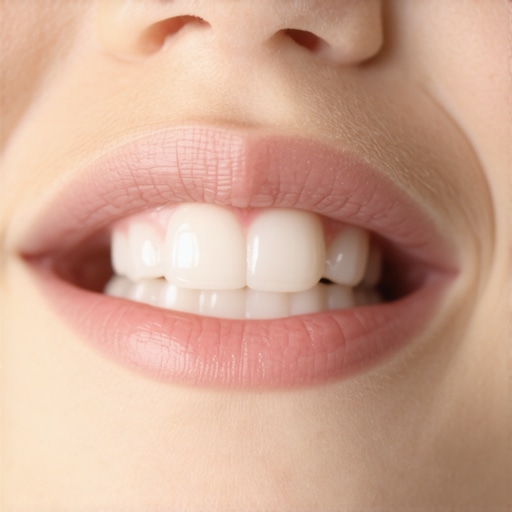
Check How the Upper and Lower Teeth Meet
If those ridges are still sharp and prominent by age eight or nine, the issue might not be a lack of crunchy snacks. It could be a sign of an ‘open bite.’ This occurs when the top and bottom teeth do not actually touch each other when the mouth is closed. If they never meet, they cannot rub together, and the mamelons never have the chance to wear away. I remember sitting in the pediatric dentist’s office with my daughter, convinced her teeth were somehow malformed because the ridges weren’t disappearing. Our dentist calmly pointed out that because of her thumb-sucking habit, she had developed a slight gap between her front teeth even when biting down. If you notice a similar gap, or perhaps wonder why your child is still grinding their teeth at age six, it is worth a focused discussion at your next checkup. Grinding is often the body’s subconscious way of trying to find a comfortable ‘fit’ for the jaw, which can actually help wear those ridges down, even if the sound makes you cringe.
Beyond the Bumps: Real Concerns to Watch
While mamelons themselves are a non-issue, other dental milestones during this transitional phase require a closer look. For example, if a ridge looks jagged because of a sharp chip rather than a rounded natural lobe, you need to act quickly. You should know how to handle a tooth that was knocked-out completely in an accident versus a simple cosmetic ridge, as timing is everything for saving a permanent tooth. Also, keep an eye on the spacing between the new teeth. Many parents panic when they see a ‘Huck Finn’ gap, but understanding why your baby has a massive gap between their two front teeth can lower your stress level; it is usually just nature’s way of ensuring there is enough room for the rest of the adult teeth to arrive. If you remain concerned about the long-term aesthetics of their smile, keep following family dentistry tips for a lifetime of healthy smiles to ensure their foundation is solid before worrying about the tiny details.While we often worry about our kids’ serrated edges, many of us fall into the opposite trap when we look at our own smiles: the obsession with artificial perfection. Most patients assume that ‘cosmetic’ means purely aesthetic, but the best work is actually invisible. In my experience, the biggest mistake people make is chasing a shade of white that doesn’t exist in nature. If you go too bright, you lose the natural translucency that makes a tooth look ‘alive.’ This leads to the mistake that makes your teeth look too white and fake, where your smile ends up looking like a row of ceramic blocks rather than a healthy set of teeth. This is often why your porcelain veneers look opaque and not natural. Real teeth have depth, slight variations in color, and a certain level of light transmission that ‘budget’ cosmetic work simply can’t replicate. 
Why does your expensive veneer feel like a foreign object in your mouth?
It isn’t just about the color; it’s about the ‘bulk.’ If a practitioner doesn’t account for the way your tongue and lips interact with the back of your teeth, you might experience why your veneers feel thick and bulky when you try to say the letter s. According to a study published in the Journal of Prosthetic Dentistry, phonetic adaptation is one of the most critical, yet frequently overlooked, aspects of successful dental restoration. If the lab makes the porcelain even a fraction of a millimeter too thick, your brain treats it as a foreign body rather than part of your anatomy. This nuance is why your veneers feel tight against your natural teeth during the first few weeks as your mouth attempts to adjust to the new dimensions.
Fix the foundation before the facade
I have seen countless parents rush into transform your smile with veneers expert tips for perfect results without first addressing their underlying bite issues. If you have a history of grinding, those beautiful new teeth will likely chip or pop off within a year. It is a similar story with tooth replacement; you cannot simply ‘install’ an implant if your jaw bone has already begun to atrophy. You must understand the truth about getting dental implants if you have existing bone loss before committing to the procedure. Long-term success in family dentistry tips for a lifetime of healthy smiles comes from realizing that the ‘pretty’ part is only the final 10% of the work. The rest is structural integrity. Have you ever fallen into the trap of choosing speed or ‘whiteness’ over structural health? Let me know in the comments.Once you have addressed the foundation and decided between veneers vs crowns, the real work begins. I often tell my patients that getting a new smile is like buying a high-performance sports car; if you don’t change the oil or check the tires, you’ll be back in the shop much sooner than you’d like. In my own routine, I’ve moved away from standard string floss for my bonded areas. I now strictly use a high-pressure water flosser because it reaches the gingival margins of a bridge or implant without the risk of snagging a margin. If you’ve ever wondered how to fix the gap that appeared between your gums and your new bridge, it usually starts with plaque accumulation that a standard brush just couldn’t reach.
Why a simple toothbrush isn’t enough for high-end dental work
For anyone with veneers or implants, I recommend an electric brush with a built-in pressure sensor. I personally use the Oral-B iO series because it alerts you when you are pressing too hard. Over-brushing is a silent killer of cosmetic work; it leads to recession, and once those gums pull back, the ‘seam’ of the veneer is exposed. This is precisely how to tell if your gum recession is caused by brushing too hard. Additionally, I’ve integrated a pH-neutralizing mouthwash into my nightly ritual. Many commercial rinses are surprisingly acidic, which can etch the glaze on porcelain over several years. According to a technical bulletin from the American Academy of Cosmetic Dentistry (AACD), maintaining a neutral oral environment is the single most effective way to prevent the marginal staining that makes older veneers look ‘dated.’ 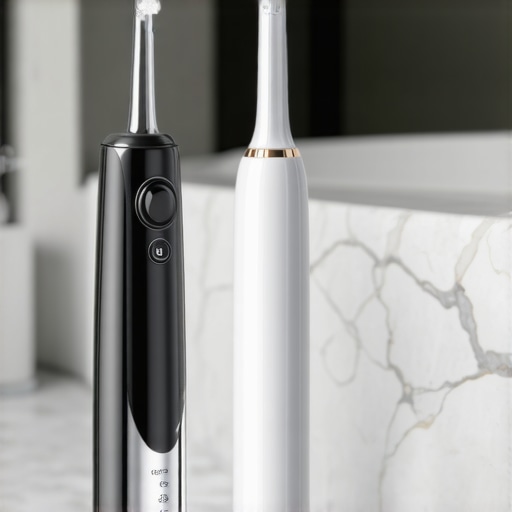
How do I keep my new smile functioning perfectly over time?
Maintenance isn’t just about cleaning; it’s about protection. If you’ve invested in your smile, you absolutely cannot ignore the physics of your bite. The sheer force of a human jaw can reach 200 pounds per square inch, which is more than enough to crack porcelain if you grind at night. I never go to sleep without my custom night guard. I’ve seen what happens when people think they can skip it; the risk of skipping your night guard for just one week is that you might wake up with a micro-fracture that ends a ten-year restoration in a single night. This is especially true for those exploring the truth about the lifespan of a dental implant. While the titanium post might last forever, the crown on top is subject to the same wear and tear as a natural tooth.
The precision diagnostics of the near future
Looking ahead, I expect we will see a massive shift toward AI-driven home monitoring. We are already seeing the emergence of ‘smart’ scan boxes that allow you to take high-resolution photos of your teeth and send them to your dentist for a weekly health check. This technology is already helping patients understand what to do when your clear aligners stop fitting correctly without needing an immediate office visit. This level of precision is also revolutionizing how dental implants reshape your oral health in 2025, moving us toward a world where we can predict a failure before it even happens. My best advice? Start using a water flosser tonight. It is the one tool that consistently makes the biggest difference in the health of my patients’ gums and the longevity of their dental work.
What I Finally Realized About Those First Adult Teeth
Looking back on my years of parenting and dental care, I’ve learned that the “perfect” smile isn’t about perfectly straight lines—it’s about health. I used to think those jagged ridges meant something was wrong, but now I see them as a badge of a fresh start. One of the biggest cosmetic dentistry secrets to boost your confidence is simply accepting that natural anatomy has character. I also realized that you can’t rush nature; trying to file down mamelons or panic-buying whitening kits for an eight-year-old only leads to stress. The hardest lesson? Dental health is a marathon, not a sprint. If you focus too much on the temporary bumps, you miss the chance to build a solid foundation for the future.
The Tools That Keep Our Smiles Healthy
I’ve spent a lot of time trial-and-erroring different products, and a few have truly changed the game for us. First, I cannot recommend a high-quality water flosser enough, especially if you or your kids are dealing with complex spacing. It is the only way I’ve found to prevent how to fix the gap that appeared between your gums and your new bridge or keep mamelons clean while they wear down. #IMAGE_PLACEHOLDER_E# Second, the Oral-B iO series is a lifesaver for anyone prone to recession. It stops you before you do damage, which is vital because you want to know how to tell if your gum recession is caused by brushing too hard before it becomes a permanent issue. Finally, I always keep a tab open for the truth about the lifespan of a dental implant to stay educated on long-term restorative options as my family ages.
Ready to Give Your Family the Smile They Deserve?
Whether you are staring at your toddler’s serrated edges or considering a smile makeover for yourself, remember that every phase of dental development is a step toward a lifetime of confidence. Don’t let the small details distract you from the big picture of oral health. By staying proactive and using the right family dentistry tips for a lifetime of healthy smiles, you are setting everyone in your household up for success. Your journey to a healthy mouth starts with a single brush stroke and a lot of patience. Have you ever noticed those jagged ridges in your own child’s mouth, or did they wear down before you even realized they were there? Let me know in the comments!