I was three bites into a sourdough crust on a random Tuesday when I heard it—that sickening ‘clack’ that definitely wasn’t a toasted seed. My tongue immediately found the culprit: a jagged, sharp mountain where my smooth back molar used to be. My first thought wasn’t about the pain, because surprisingly, there wasn’t any yet. It was pure, unadulterated annoyance. If you are reading this while poking a sharp edge in the back of your mouth with your tongue, I know exactly how you feel. You are probably wondering if you can just ignore it, how much this is going to set you back, or if you’re about to lose the whole tooth. Trust me, I’ve been in that exact chair. Today, we are going to walk through the exact steps you need to take to save your tooth and your sanity, based on my own trial-and-error journey through the world of dental mishaps. [IMAGE_PLACEHOLDER]
Your Molar Just Gave Up the Ghost—Now What?
When I chipped my first molar, I made the classic ‘neighborly’ mistake: I assumed that because it didn’t hurt and was tucked away in the back where nobody could see it, I could just wait until my next scheduled cleaning in six months. That was a huge error in judgment. By the time I finally dragged myself into the office, that tiny, innocent-looking chip had turned into a gateway for bacteria, leading me straight toward needing family dentistry intervention I wasn’t at all prepared for. Whether you are currently trying to figure out how to deal with a chipped molar while you are eating dinner or you are already past the meal and in full-on research mode, the priority is protection. According to the American Association of Endodontists, cracked and chipped teeth are among the leading causes of tooth loss in adults, primarily because the initial damage often feels minor enough to ignore. We are going to look at everything from temporary at-home fixes to why modern cosmetic dentistry is about way more than just looking good—it is about keeping your bite from collapsing.
Is a tiny chip really worth a trip to the dentist?
This is the biggest trap we fall into. We think pain is the only indicator of a real dental emergency. In reality, a chip in the back of your mouth is like a tiny crack in a car’s windshield; it might stay still for a week, but the next time you hit a bump—or in this case, a stray almond or a piece of ice—it can shatter the entire structure. Have you ever tried to ‘wait out’ a dental issue only to have it backfire in the middle of a long weekend? I would love to hear your story, so feel free to reach out and share. I have learned the hard way that the back molars do the heavy lifting of your entire mouth, and once their enamel is compromised, they are on a ticking clock. We’re going to dive into the best professional solutions next, but first, let’s talk about why those back teeth are so uniquely vulnerable to breaking when you least expect it.
Stop the Sharp Edges from Wrecking Your Tongue
Once that chip happens, you have a mechanical problem that requires an immediate physical barrier. If you are currently handling a chipped molar while you are traveling abroad, or even just stuck at home over a long weekend, your first mission is to dull the blade. I once tried to ‘smooth out’ a jagged molar with a piece of sugar-free gum while at a friend’s wedding reception. It worked for exactly three sips of champagne before the gum slid off and I ended up slicing the side of my tongue anyway. Learn from my mess: skip the gum and go straight to a pharmacy for orthodontic wax. It is a medical-grade silicon savior that you can mold directly over the sharp edge. After you have neutralized the ‘knife’ in your mouth, rinse with warm salt water at least three times a day. This is not just for comfort; it is a critical step in keeping the area sterile, preventing bacteria from infiltrating the exposed dentin before you can get into a chair for family dentistry intervention. 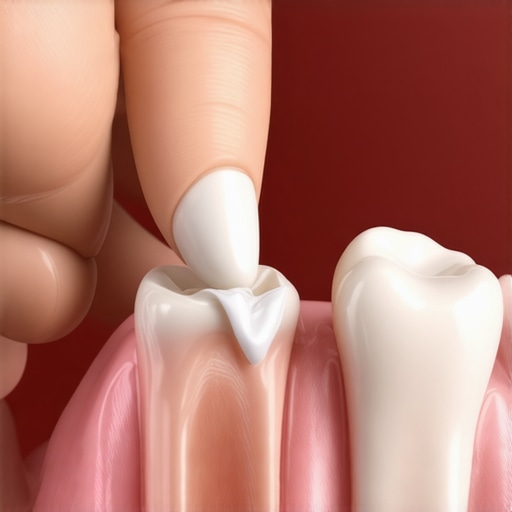
Choosing Between a Crown and a Veneer
Think of your tooth restoration like choosing the right kind of armor. In the world of cosmetic dentistry, a veneer is like a decorative shield—it covers the front beautifully but does not provide 360-degree structural support. For a back molar that handles the heavy lifting of chewing, a veneer is almost always the wrong tool. You likely need a crown, which functions like a full-coverage helmet for your tooth. When weighing veneers vs. crowns, the decision is dictated by structural integrity. If the chip is deeper than a couple of millimeters, a crown is the only way to prevent the tooth from splitting further down toward the root. I recall trying to convince my dentist to just ‘patch it’ with a filling to save money. That patch popped out while I was eating a soft piece of bread because the tooth lacked the vertical walls to hold the material. If your dentist places a temporary fix while your permanent porcelain is being crafted, you must be hyper-vigilant about how to stop your temporary crown from falling off, as the exposed tooth underneath is highly sensitive to temperature and pressure.
When the Tooth is Too Far Gone for a Simple Fix
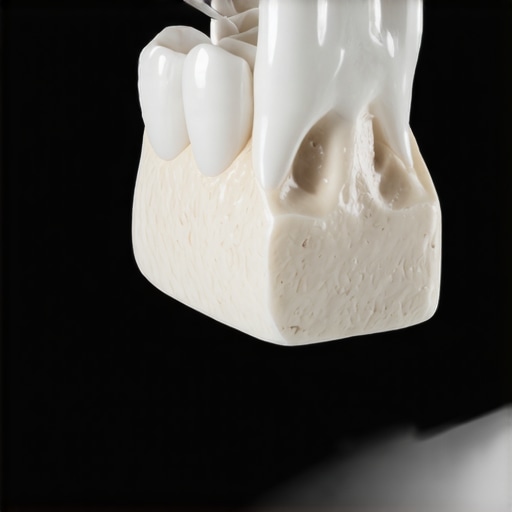
Sometimes that ‘clack’ you heard was more than a surface chip; it was a vertical fracture. If the crack extends below the gum line, a crown cannot save it because the foundation is no longer stable. This is where understanding how dental implants reshape your oral health becomes a vital part of your recovery plan. An implant is not just a cosmetic replacement; it is a titanium post that fuses with your jawbone, mimicking a natural tooth root. While it sounds intimidating, dental implants in 2025 use advanced 3D guided surgery to make the process incredibly precise and nearly painless. If your molar is truly split, do not view an extraction as a defeat. Instead, see it as an opportunity to install a permanent solution that will never decay or chip again, effectively resetting the clock on your oral health for that specific spot in your mouth.
Most people treat a chipped tooth like a scratch on a car door—annoying but purely cosmetic. In my experience, that is the single most dangerous assumption you can make in dental health. I have seen tiny, painless chips escalate into full-blown extractions because the patient relied on the lack of sensation as a green light to procrastinate. We need to look at the mechanics of your mouth as an engineering project rather than a beauty contest. While cosmetic dentistry can certainly make your smile look incredible, its primary function for a back molar is structural reinforcement. If you have ever thought ‘it doesn’t hurt, so I’ll wait,’ you are currently sitting in the ‘danger zone’ of dental care.
Why does my dental implant or crown feel different when it rains or during meals?
This is one of those sophisticated nuances that many patients find jarring after a procedure. If you have moved past a simple repair and opted for an implant, you might notice odd sensations. For instance, why your dental implant feels different when it rains often comes down to barometric pressure changes affecting the surrounding bone and sinus cavities, not the titanium post itself. Similarly, if you are wondering why your dental implant crown is shaped differently than your natural tooth, it is because the emergence profile—the way the tooth grows out of the gum—must be engineered to allow for easy cleaning. A natural tooth has a wider root base than a titanium post, so the ‘waist’ of the crown is often narrower to prevent bacteria traps. Have you ever noticed these tiny shifts in sensation after a dental fix? Let me know in the comments if you’ve fallen into the trap of thinking a restoration should feel 100% identical to a biological tooth.
One common ‘oops’ factor I see involves patients choosing the wrong material for the sake of aesthetics. There is a specific mistake that makes porcelain veneers look like piano keys, and it usually happens when someone tries to use veneers to fix a structural molar issue. Veneers are thin; they cannot handle the 200 pounds of pressure your jaw generates during a steak dinner. According to a study published in the Journal of Prosthetic Dentistry, the failure rate of porcelain restorations increases significantly when the ‘occlusal load’—that’s the pressure of your bite—is not properly distributed across the tooth’s surface. This is why a crown is often the superior choice for longevity in family dentistry. If you prioritize the ‘look’ over the ‘lift,’ you will likely be back in the chair within eighteen months.
Another nuance often overlooked is the ‘color’ of the trauma. If you notice your teeth look grey after a dental injury, that is a sign of internal bleeding or nerve death, even if the chip itself looks small. This is where advanced tools like those used for cutting-edge techniques in cosmetic dentistry come into play. We aren’t just slapping a patch on the problem; we are diagnosing the health of the pulp. Whether you are weighing veneers vs. crowns or considering a full replacement, remember that the best dental work is the kind that considers how you’ll be chewing ten years from now, not just how you’ll look in a selfie tomorrow.
Once you have invested in a crown or a replacement, the ‘set it and forget it’ mindset is your fastest ticket back to the chair. I used to be a string-floss purist until I realized I was essentially sawing at my gums trying to navigate the junction of my new implant. The reality is that the trick to flossing around a bulky dental bridge or implant isn’t about more effort; it’s about better fluid dynamics. I personally switched to a high-pressure water flosser because it flushes out the ‘crevicular fluid’ and bacteria that traditional floss simply cannot reach in the deeper pockets around a titanium post. If you’ve noticed why your gums bleed only when you use a water flosser, it’s often not the tool’s fault—it’s a sign of dormant inflammation that the water finally reached. Learning how to safely clean a dental implant without scratching the post is non-negotiable because those microscopic scratches become skyscrapers for plaque. According to a landmark study in the Journal of Oral Implantology, mechanical debridement—basically, keeping the site clean—is the number one factor in preventing peri-implantitis, which is the implant-equivalent of gum disease. 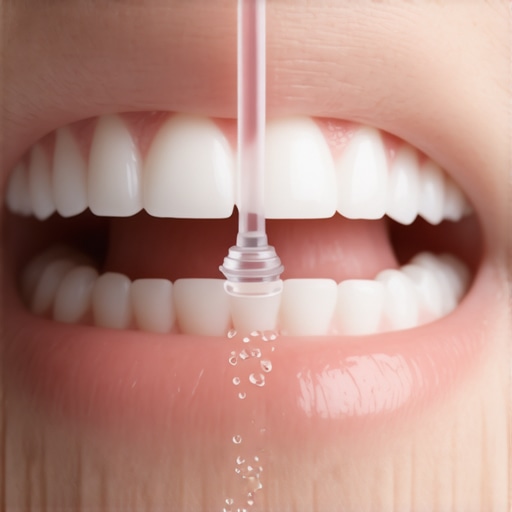
How do I maintain my dental restorations over the next decade?
The single biggest tool in my kit isn’t a brush—it’s my nightguard. If you have veneers or crowns, your jaw’s natural grinding habit (bruxism) is a slow-motion wrecking ball. I’ve seen patients who spent thousands on unlocking their best smile yet only to chip a porcelain edge six months later because they skipped the guard. If you’ve ever felt like your crown feels tight after you havent worn your nightguard, that’s your teeth literally shifting under the pressure. Don’t let the maintenance get gross, either; you need to know how to remove the smell from your plastic night guard at home using non-abrasive cleaners so you actually want to wear it every night. Looking ahead, I predict we are about to see a surge in ‘Smart Restorations’—implants with built-in pH sensors that alert your phone the second they detect a bacterial bloom. Until then, you are the sensor. My best advice? Go buy a dedicated orthodontic cleaning kit today and use the interdental brushes for those tight spots around your new molar. It’s a five-minute habit that saves a five-thousand-dollar investment.I was three bites into a sourdough crust on a random Tuesday when I heard it—that sickening ‘clack’ that definitely wasn’t a toasted seed. My tongue immediately found the culprit: a jagged, sharp mountain where my smooth back molar used to be. My first thought wasn’t about the pain, because surprisingly, there wasn’t any yet. It was pure, unadulterated annoyance. If you are reading this while poking a sharp edge in the back of your mouth with your tongue, I know exactly how you feel. You are probably wondering if you can just ignore it, how much this is going to set you back, or if you’re about to lose the whole tooth. Trust me, I’ve been in that exact chair. Today, we are going to walk through the exact steps you need to take to save your tooth and your sanity, based on my own trial-and-error journey through the world of dental mishaps. [IMAGE_PLACEHOLDER]
Your Molar Just Gave Up the Ghost—Now What?
When I chipped my first molar, I made the classic ‘neighborly’ mistake: I assumed that because it didn’t hurt and was tucked away in the back where nobody could see it, I could just wait until my next scheduled cleaning in six months. That was a huge error in judgment. By the time I finally dragged myself into the office, that tiny, innocent-looking chip had turned into a gateway for bacteria, leading me straight toward needing family dentistry intervention I wasn’t at all prepared for. Whether you are currently trying to figure out how to deal with a chipped molar while you are eating dinner or you are already past the meal and in full-on research mode, the priority is protection. According to the American Association of Endodontists, cracked and chipped teeth are among the leading causes of tooth loss in adults, primarily because the initial damage often feels minor enough to ignore. We are going to look at everything from temporary at-home fixes to why modern cosmetic dentistry is about way more than just looking good—it is about keeping your bite from collapsing.
Is a tiny chip really worth a trip to the dentist?
This is the biggest trap we fall into. We think pain is the only indicator of a real dental emergency. In reality, a chip in the back of your mouth is like a tiny crack in a car’s windshield; it might stay still for a week, but the next time you hit a bump—or in this case, a stray almond or a piece of ice—it can shatter the entire structure. Have you ever tried to ‘wait out’ a dental issue only to have it backfire in the middle of a long weekend? I would love to hear your story, so feel free to reach out and share. I have learned the hard way that the back molars do the heavy lifting of your entire mouth, and once their enamel is compromised, they are on a ticking clock. We’re going to dive into the best professional solutions next, but first, let’s talk about why those back teeth are so uniquely vulnerable to breaking when you least expect it.
Stop the Sharp Edges from Wrecking Your Tongue
Once that chip happens, you have a mechanical problem that requires an immediate physical barrier. If you are currently handling a chipped molar while you are traveling abroad, or even just stuck at home over a long weekend, your first mission is to dull the blade. I once tried to ‘smooth out’ a jagged molar with a piece of sugar-free gum while at a friend’s wedding reception. It worked for exactly three sips of champagne before the gum slid off and I ended up slicing the side of my tongue anyway. Learn from my mess: skip the gum and go straight to a pharmacy for orthodontic wax. It is a medical-grade silicon savior that you can mold directly over the sharp edge. After you have neutralized the ‘knife’ in your mouth, rinse with warm salt water at least three times a day. This is not just for comfort; it is a critical step in keeping the area sterile, preventing bacteria from infiltrating the exposed dentin before you can get into a chair for family dentistry intervention.
Choosing Between a Crown and a Veneer
Think of your tooth restoration like choosing the right kind of armor. In the world of cosmetic dentistry, a veneer is like a decorative shield—it covers the front beautifully but does not provide 360-degree structural support. For a back molar that handles the heavy lifting of chewing, a veneer is almost always the wrong tool. You likely need a crown, which functions like a full-coverage helmet for your tooth. When weighing veneers vs. crowns, the decision is dictated by structural integrity. If the chip is deeper than a couple of millimeters, a crown is the only way to prevent the tooth from splitting further down toward the root. I recall trying to convince my dentist to just ‘patch it’ with a filling to save money. That patch popped out while I was eating a soft piece of bread because the tooth lacked the vertical walls to hold the material. If your dentist places a temporary fix while your permanent porcelain is being crafted, you must be hyper-vigilant about how to stop your temporary crown from falling off, as the exposed tooth underneath is highly sensitive to temperature and pressure.
When the Tooth is Too Far Gone for a Simple Fix
Sometimes that ‘clack’ you heard was more than a surface chip; it was a vertical fracture. If the crack extends below the gum line, a crown cannot save it because the foundation is no longer stable. This is where understanding how dental implants reshape your oral health becomes a vital part of your recovery plan. An implant is not just a cosmetic replacement; it is a titanium post that fuses with your jawbone, mimicking a natural tooth root. While it sounds intimidating, dental implants in 2025 use advanced 3D guided surgery to make the process incredibly precise and nearly painless. If your molar is truly split, do not view an extraction as a defeat. Instead, see it as an opportunity to install a permanent solution that will never decay or chip again, effectively resetting the clock on your oral health for that specific spot in your mouth.
Most people treat a chipped tooth like a scratch on a car door—annoying but purely cosmetic. In my experience, that is the single most dangerous assumption you can make in dental health. I have seen tiny, painless chips escalate into full-blown extractions because the patient relied on the lack of sensation as a green light to procrastinate. We need to look at the mechanics of your mouth as an engineering project rather than a beauty contest. While cosmetic dentistry can certainly make your smile look incredible, its primary function for a back molar is structural reinforcement. If you have ever thought ‘it doesn’t hurt, so I’ll wait,’ you are currently sitting in the ‘danger zone’ of dental care.
Why does my dental implant or crown feel different when it rains or during meals?
This is one of those sophisticated nuances that many patients find jarring after a procedure. If you have moved past a simple repair and opted for an implant, you might notice odd sensations. For instance, why your dental implant feels different when it rains often comes down to barometric pressure changes affecting the surrounding bone and sinus cavities, not the titanium post itself. Similarly, if you are wondering why your dental implant crown is shaped differently than your natural tooth, it is because the emergence profile—the way the tooth grows out of the gum—must be engineered to allow for easy cleaning. A natural tooth has a wider root base than a titanium post, so the ‘waist’ of the crown is often narrower to prevent bacteria traps. Have you ever noticed these tiny shifts in sensation after a dental fix? Let me know in the comments if you’ve fallen into the trap of thinking a restoration should feel 100% identical to a biological tooth.
One common ‘oops’ factor I see involves patients choosing the wrong material for the sake of aesthetics. There is a specific mistake that makes porcelain veneers look like piano keys, and it usually happens when someone tries to use veneers to fix a structural molar issue. Veneers are thin; they cannot handle the 200 pounds of pressure your jaw generates during a steak dinner. According to a study published in the Journal of Prosthetic Dentistry, the failure rate of porcelain restorations increases significantly when the ‘occlusal load’—that’s the pressure of your bite—is not properly distributed across the tooth’s surface. This is why a crown is often the superior choice for longevity in family dentistry. If you prioritize the ‘look’ over the ‘lift,’ you will likely be back in the chair within eighteen months.
Another nuance often overlooked is the ‘color’ of the trauma. If you notice your teeth look grey after a dental injury, that is a sign of internal bleeding or nerve death, even if the chip itself looks small. This is where advanced tools like those used for cutting-edge techniques in cosmetic dentistry come into play. We aren’t just slapping a patch on the problem; we are diagnosing the health of the pulp. Whether you are weighing veneers vs. crowns or considering a full replacement, remember that the best dental work is the kind that considers how you’ll be chewing ten years from now, not just how you’ll look in a selfie tomorrow.
Once you have invested in a crown or a replacement, the ‘set it and forget it’ mindset is your fastest ticket back to the chair. I used to be a string-floss purist until I realized I was essentially sawing at my gums trying to navigate the junction of my new implant. The reality is that the trick to flossing around a bulky dental bridge or implant isn’t about more effort; it’s about better fluid dynamics. I personally switched to a high-pressure water flosser because it flushes out the ‘crevicular fluid’ and bacteria that traditional floss simply cannot reach in the deeper pockets around a titanium post. If you’ve noticed why your gums bleed only when you use a water flosser, it’s often not the tool’s fault—it’s a sign of dormant inflammation that the water finally reached. Learning how to safely clean a dental implant without scratching the post is non-negotiable because those microscopic scratches become skyscrapers for plaque. According to a landmark study in the Journal of Oral Implantology, mechanical debridement—basically, keeping the site clean—is the number one factor in preventing peri-implantitis, which is the implant-equivalent of gum disease.
How do I maintain my dental restorations over the next decade?
The single biggest tool in my kit isn’t a brush—it’s my nightguard. If you have veneers or crowns, your jaw’s natural grinding habit (bruxism) is a slow-motion wrecking ball. I’ve seen patients who spent thousands on unlocking their best smile yet only to chip a porcelain edge six months later because they skipped the guard. If you’ve ever felt like your crown feels tight after you havent worn your nightguard, that’s your teeth literally shifting under the pressure. Don’t let the maintenance get gross, either; you need to know how to remove the smell from your plastic night guard at home using non-abrasive cleaners so you actually want to wear it every night. Looking ahead, I predict we are about to see a surge in ‘Smart Restorations’—implants with built-in pH sensors that alert your phone the second they detect a bacterial bloom. Until then, you are the sensor. My best advice? Go buy a dedicated orthodontic cleaning kit today and use the interdental brushes for those tight spots around your new molar. It’s a five-minute habit that saves a five-thousand-dollar investment.
What I Wish Someone Told Me Before My First Crown
Looking back, the biggest lightbulb moment was realizing that pain is a terrible metric for health. I once thought a painless chip was a minor issue, but I learned that once the enamel is breached, the dentin is like an open door for decay. Secondly, material choice for molars isn’t just about color matching; it’s about engineering. A molar undergoes incredible force, so prioritizing structural integrity over a slightly better shade of white will save you from a fracture down the line. Lastly, never underestimate the power of a second opinion when deciding between veneers vs. crowns. For a back tooth, the 360-degree protection of a crown is almost always the smarter long-term play for your oral health.
The Toolkit That Keeps My Smile Intact
If you want to avoid recurring visits for emergency repairs, I highly recommend building a small dental defense kit. I personally swear by orthodontic wax for immediate relief from jagged edges. I also trust high-quality water flossers to reach the tricky gaps around new implants where traditional floss might fray. For those who have already invested in expert tips for perfect veneers, a custom-fitted nightguard is the single most important tool to prevent night-time chipping. Finally, keep a direct line to a professional team; you can always contact us if you’re unsure whether a small chip requires immediate intervention.
Step Out of the Danger Zone and Toward a Stronger Smile
Dental mishaps are frustrating, but they are also an opportunity to reset your oral health habits. Whether you’re dealing with a minor chip or exploring innovative dental implants in 2025, the goal is the same: a functional, pain-free bite that lasts for decades. Don’t let a small ‘clack’ turn into a permanent loss. By taking action now and prioritizing family dentistry checkups, you ensure that your next sourdough crust is enjoyed without a single worry. Have you ever ignored a tiny tooth chip only to have it turn into a bigger project later? Let me know your experience in the comments below!