I remember sitting at my kitchen table, three months after my ‘successful’ procedure, and feeling a wave of absolute dread. I had just taken a bite of a simple piece of sourdough toast when a sharp, rhythmic throb shot through my jaw. I felt cheated. I had done everything right—followed the family dentistry tips for a lifetime of healthy smiles, sat through the long appointments, and paid the bill in full. Yet, there I was, nursing a glass of lukewarm water while my tooth felt like it was auditioning for a heavy metal band. If you are sitting there right now, tongue-poking a tooth that was supposed to be ‘fixed’ months ago, I see you. It is infuriating, and honestly, it is a bit scary to feel pain in a tooth that is technically supposed to be dead. We are going to figure out why your body is still sending SOS signals today. Have you ever felt like you were losing your mind because a tooth that ‘should’ be dead is still screaming for attention? Drop a comment below; I want to know I am not the only one who has sat in that dental chair twice for the same problem.
When a Dead Tooth Keeps Talking Back
My biggest mistake early on was assuming that a root canal was a one-and-done miracle that made a tooth invincible. I once ignored a persistent ache for weeks, convinced it was just the reason your teeth ache when you have a common head cold, only to find out that a tiny, microscopic canal had been missed. It happens more often than you think. Even with the best technology in cosmetic dentistry, the human anatomy is surprisingly complex. According to the American Association of Endodontists, some teeth can have up to four or five canals, and if a single one is left untreated, bacteria can slowly recolonize, leading to that frustrating ‘months later’ pain. This is not always a sign of a bad dentist; it is often just the reality of hidden biology. Unlike why your tooth still feels sensitive weeks after a filling, where the nerve is still alive and reacting to temperature, post-root canal pain is usually about what is happening *around* the tooth in the bone and ligaments.
Did my dentist actually miss something?
It is the question that keeps us up at night. The skepticism is real—especially when you’ve invested time and money into a procedure that promised relief. Sometimes the issue isn’t a missed canal at all, but a tiny fracture in the root that only becomes apparent after months of biting and chewing. We are going to look at the differences between normal healing and a true failure so you can walk back into that office with confidence and the right questions.
Look for the Tapping Signal
To stop the guessing game, you need to perform a simple diagnostic at home. I call it the ‘spoon test.’ One Tuesday morning, after weeks of wondering if I was just imagining the throbbing, I took a small metal spoon and lightly tapped the top of the treated tooth. The sharp, jarring sensation I felt was my ‘aha’ moment. If your tooth is sensitive to pressure or tapping, the infection has likely moved into the periodontal ligament or the surrounding bone. This is vastly different from the reason your teeth feel sensitive after a professional cleaning, which usually involves temporary enamel exposure. When you feel pain during a tap, it means the area around the root is inflamed, often because bacteria are hiding in a side canal or a hairline fracture. Start a pain journal for three days; note if the pain is constant or only occurs when you bite down. This data is gold when you finally sit back in that chair.
Demand a 3D Scan Over a Standard X-ray
Most general practitioners use 2D digital X-rays, but these can hide a multitude of sins. If your pain persists for more than three months, a standard film isn’t enough. You need to ask for a Cone Beam Computed Tomography (CBCT) scan. Think of a 2D X-ray like looking at a photograph of a house; you see the front, but you have no idea what’s happening in the backyard. A CBCT scan is like walking through the house in 3D. It can reveal hidden canals or even a failed seal that a flat X-ray would miss entirely. I spent two months being told ‘everything looks fine’ on the film until a specialist used a CBCT and found a microscopic fourth canal. 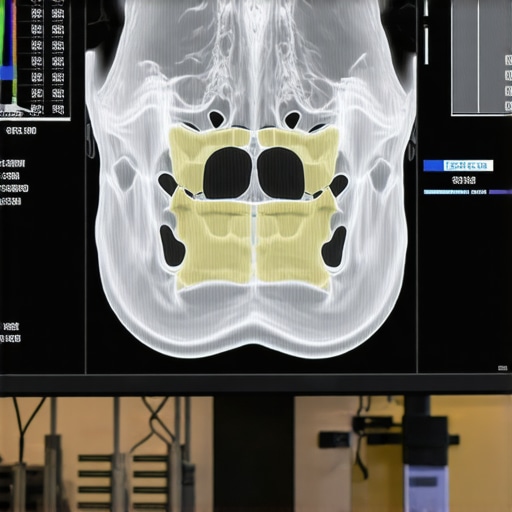 This technology is a staple in how dental implants reshape your oral health in 2025, but it is equally vital for saving a failing root canal.
Evaluate if the Crown is the Culprit
Sometimes the tooth itself is fine, but the restoration is failing. If the crown was placed slightly too high, every time you chew, you are essentially ‘bruising’ the bone beneath the tooth. This leads to a persistent ache that mimics a failed root canal. I once had a crown adjusted by just a fraction of a millimeter, and the relief was instantaneous—it felt like taking off a pair of shoes that were two sizes too small. If you find yourself wondering about veneers vs crowns choosing the best option for your smile, remember that the fit and bite alignment are more important than the material itself. If your jaw feels exhausted, it might be the reason your jaw feels stiff after a long dental appointment rather than a deep-seated infection.
Know When to Walk Away and Choose an Implant
There is a point where ‘saving’ a tooth becomes a lost cause. If a CBCT reveals a vertical root fracture, no amount of re-treatment will fix it. In these cases, prolonging the inevitable only leads to bone loss. This is where you shift your focus to longevity. You should be asking your dentist how to tell if your dental implant is healing at the right speed if you decide to pull the tooth. An implant provides a fresh start without the risk of hidden bacterial pockets that plague old root canals. I struggled with the idea of losing a tooth until I realized that a healthy implant is far better than a diseased natural root that keeps me awake at night.
Let’s dig deeper. The most dangerous myth in modern dentistry is the idea that artificial materials mean you are immune to biological problems. I’ve seen patients breathe a sigh of relief after getting an implant or a set of veneers, thinking they’ve finally opted out of the ‘dental drama’ cycle. But here is the contrarian truth: artificial restorations often require more precision and vigilance than your original teeth. While a titanium post can’t get a cavity, the bone and tissue holding it in place are more vulnerable than ever. A study published in the Journal of Periodontology suggests that nearly half of all dental implant patients may develop some form of peri-implant disease within a decade. Unlike a natural tooth, an implant lacks the periodontal ligament—that microscopic cushion and immune barrier—which means bacteria can travel to your jawbone much faster than you’d expect. This is often the real reason behind that mysterious throbbing you feel when the barometric pressure drops, or why your dental implant feels different when it rains.
Is your sinus actually the one causing the trouble?
If your pain is in the upper jaw, there is a hidden nuance many generalists overlook: the ‘sinus floor’ relationship. Your upper molar roots often sit right against, or even inside, the maxillary sinus. I once spent three months chasing a ‘phantom root canal failure’ only to realize that a lingering sinus infection was putting pressure on the tooth from the top down. This is an advanced trap; you think you have a dental crisis, but you actually have an ENT issue. Before you agree to a second root canal or an extraction, look at your 3D scans specifically for sinus thickening. 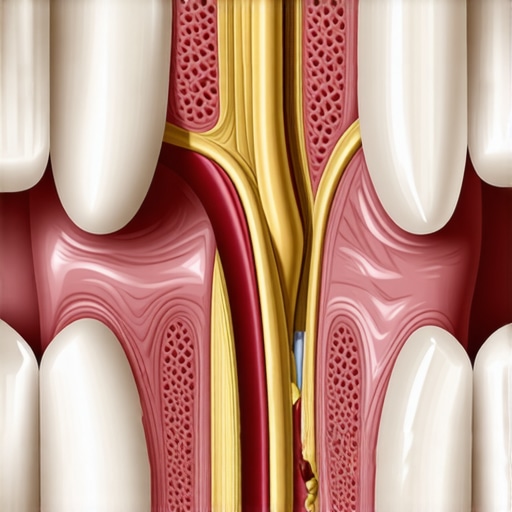 This kind of diagnostic depth is what separates a quick fix from a lifetime of health. If your dentist hasn’t mentioned the sinus-root connection, you aren’t getting the full picture of family dentistry tips for a lifetime of healthy smiles.
Stop assuming your veneers are bulletproof
The ‘Oops’ factor with cosmetic work is usually a lack of maintenance. People often forget that while the porcelain won’t decay, the tiny sliver of natural tooth at the gum line is still a target. If your dentist didn’t account for your specific bite, you might find why your new veneers feel bulky against your lips is more than just a comfort issue—it’s a mechanical one. Excessive pressure leads to micro-cracks at the margin, which is the top reason for the mistake that makes porcelain veneers look like piano keys or, worse, early failure. You must master how to safely clean a dental implant without scratching the post and use non-abrasive pastes on your veneers to avoid creating microscopic scratches that harbor bacteria. Have you ever fallen into this trap of thinking your new smile was ‘maintenance-free’? Let me know in the comments; let’s swap stories so others don’t make the same expensive mistakes. True cosmetic dentistry secrets to boost your confidence aren’t about the procedure day—they are about the years of care that follow.
Once you’ve made the leap into high-end restorations, the goal shifts from ‘fixing’ to ‘preserving.’ I learned the hard way that you cannot treat a $20,000 smile the same way you treated your natural teeth at age sixteen. The margin where your restoration meets your gum is the front line of a silent war against bacteria. If you are serious about family dentistry tips for a lifetime of healthy smiles, you need to upgrade your toolkit immediately. I personally threw away my manual toothbrush the day I saw a microscopic video of what happens when you ‘scrub’ too hard at the gumline. You aren’t cleaning; you are sandpapering your investment.
How do I keep my dental work from failing in five years?
The answer lies in fluid dynamics, not just physical friction. I swear by a sonic toothbrush with a built-in pressure sensor—not because it’s a luxury, but because it’s a fail-safe. If you press too hard, the motor stalls, preventing you from causing the very recession that leads to why your gums look receding even though you dont have gum disease. For my friends with implants, string floss can actually be a liability if it shreds and leaves tiny fibers caught in the screw threads. I recommend a water flosser with a specialized ‘plaque seeker’ tip. A meta-analysis in the International Journal of Implant Dentistry highlights that mechanical debridement often fails without proper home-care protocols tailored specifically to the prosthetic design. This is exactly how to safely clean a dental implant without scratching the post while ensuring the surrounding tissue stays pink and tight.
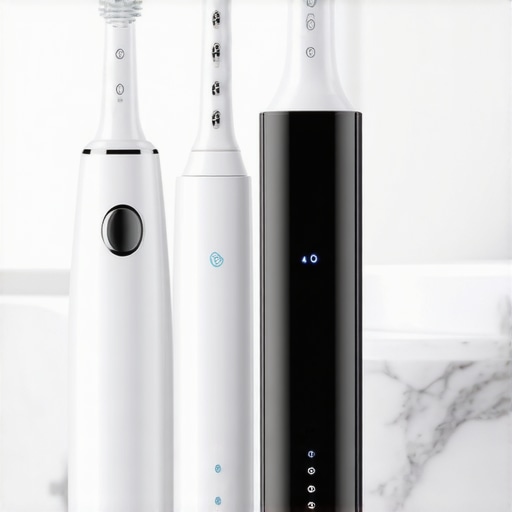
Beyond the daily scrub, you have to watch your environment. I started using a pH-balanced mouthwash because I realized my morning habit of lemon water was slowly etching the seal around my veneers vs crowns choosing the best option for your smile. Acid is the enemy of dental cement. If you are struggling with sensitivity or a weird taste, you might even be looking at how to manage the metallic taste after a new dental crown, which is often a sign that your oral microbiome is out of balance. Don’t just mask it with mint; treat the underlying chemistry.
Smart tech is coming for your toothbrush
Looking ahead, the next five years will redefine what we consider ‘home care.’ We are moving toward a world where your toothbrush doesn’t just buzz; it scans. I’m already seeing prototypes of brushes equipped with near-infrared transillumination that can detect early-stage decay under a veneer before it shows up on an X-ray. These dental implants 2025 innovations that redefine comfort and durability aren’t just for the clinic; they are becoming part of our daily lives. We are entering an era of ‘proactive dentistry’ where your phone will alert you to inflammation before you ever feel a throb. If you haven’t already, I strongly suggest you invest in a water flosser today and use it on the lowest setting twice a day; it is the single most effective way to prevent the bacterial ‘biofilm’ from colonizing those hard-to-reach areas around your new work. Trust me, your future self—and your bank account—will thank you for being this obsessed.
The Reality Check My Dentist Never Gave Me
After years of navigating various procedures, I’ve realized that a ‘dead’ tooth is rarely truly silent. Here is the insider wisdom I wish I’d had before my first root canal. First, pain in a treated tooth is your body’s way of talking, not necessarily a sign of a failed surgery. It’s often the surrounding ligaments that are inflamed, not the tooth itself. Second, the quality of your home care must scale with the price of your dental work. If you have followed expert tips for perfect results, you know that maintenance is where the real work begins. Third, a 3D scan is your best friend. If your dentist only offers 2D films, they are only seeing half the story. Don’t be afraid to advocate for better imaging to find those hidden canals or fractures.
Invest in These High-Performance Tools
Maintaining a high-end smile requires better gear than the generic brush you get in a gift bag. I personally trust a sonic toothbrush with a pressure sensor to prevent gum recession. For those with prosthetics, knowing how to safely clean a dental implant without scratching the post is the difference between a ten-year success and a two-year failure. I also recommend a water flosser with a specialized tip for bridge and implant work. Finally, keep a pH-balanced mouthwash in your cabinet to neutralize acids that could weaken the seal on your veneers vs crowns choosing the best option for your smile.
Your Path to a Pain-Free Smile Starts Now
You shouldn’t have to live in fear of the next throb or ache. By combining professional expertise with diligent home care, you can ensure your family dentistry tips for a lifetime of healthy smiles actually pay off. Stay proactive, stay informed about dental implants 2025 innovations, and never settle for ‘it looks fine on the X-ray’ if you are still hurting. Your intuition is one of your most valuable diagnostic tools. Have you ever had a tooth that just wouldn’t stop hurting even after the dentist said it was ‘fixed’? Let me know your experience in the comments below!