I was at my sister’s wedding, nursing a glass of Malbec, when a stray elbow sent a splash of purple straight onto my front teeth. I didn’t just worry about the laundry; I panicked about my smile. I’d spent years dreaming of a veneers transformation only to see it turn a shade of bruised plum in seconds. If you’ve ever felt that sinking feeling in your stomach after a sip of red, you know exactly why I’m writing this. I thought I had ruined everything. I spent the next twenty minutes in the bathroom trying to lick my teeth clean, which—spoiler alert—does absolutely nothing except make you look strange in the mirror. Look, I’ve been there—staring into a dimly lit restaurant mirror, convinced I’ve just dyed my smile a permanent shade of merlot. It’s terrifying. But over the years, I’ve learned that the secret isn’t about scrubbing harder; it’s about understanding what you’re actually cleaning.
Wipe Away the Wine Panic
Most of us assume that once we get our permanent teeth fixed, they are invincible. I certainly did. I thought porcelain was like a high-end glass window—impermeable and impossible to stain. But there I was, frantically rubbing my teeth with a cocktail napkin, making everything worse by pushing the pigment into the tiny gaps. The truth is, while high-quality porcelain is incredibly resistant, the edges where the veneer meets your tooth are the vulnerable spots. If you’ve ever wondered how to get purple wine stains off your teeth quickly, you first have to understand that the stain often isn’t on the veneer itself. It is usually a film of plaque or protein that has grabbed onto the wine’s tannins.
Wait, can porcelain actually soak up Cabernet?
It’s the biggest fear for anyone who loves a good Napa Valley red. You spent the money, you went through the procedures, and now you’re worried you’re stuck with a permanent purple tint. This is where the skepticism kicks in: is it even possible to keep these things white if you enjoy life? According to the American Academy of Cosmetic Dentistry (AACD), high-quality dental porcelain is non-porous, meaning the wine can’t actually seep inside the material like it does with natural enamel. However, surface-level accumulation and stains at the margins—the glue lines—are very real. Have you ever noticed that your porcelain veneers feel gritty after a night out? That’s not the porcelain breaking down; it’s the debris catching on the surface, acting like a magnet for that dark pigment.
Avoid the Scrubbing Mistake That Cost Me My Shine
Early on in my journey with cosmetic dentistry, I made a massive, scratchy error. I thought I could simply sand the stain off. I grabbed a box of baking soda from the pantry and went to town. Let me tell you, the danger of using baking soda to whiten your teeth is even more significant when you have porcelain involved. I ended up micro-scratching the polished glaze. Within a month, my teeth looked duller than ever because those tiny scratches were now trapping every bit of coffee and wine I drank. It was a classic neighborly fail that I don’t want you to repeat. We’re going to talk about the right way to lift that pigment using gentle, chemical-safe methods that protect your investment. Have you ever tried an at-home hack that ended up making your dental work look worse? Tell me I’m not the only one who has panicked and reached for the abrasive stuff!
The Swish and Swallow Method That Actually Works
To keep your smile pristine, you have to treat red wine like a staining agent that is looking for a home. The most effective way to prevent the pigment from settling is to carry a glass of water for every glass of wine. I call it the ‘rinse-as-you-go’ technique. After every few sips of Cabernet, take a swig of water and swish it gently around your mouth. This isn’t just about hydration; it’s about mechanical rinsing. Think of it like rinsing a wine glass immediately after use versus letting it sit on the counter overnight. If the tannins don’t have time to dry against the margins of your dental work, they can’t stick. If you have mastered how to keep your teeth white while drinking black coffee daily, you already know that frequency of rinsing is more important than the intensity of brushing later that night. 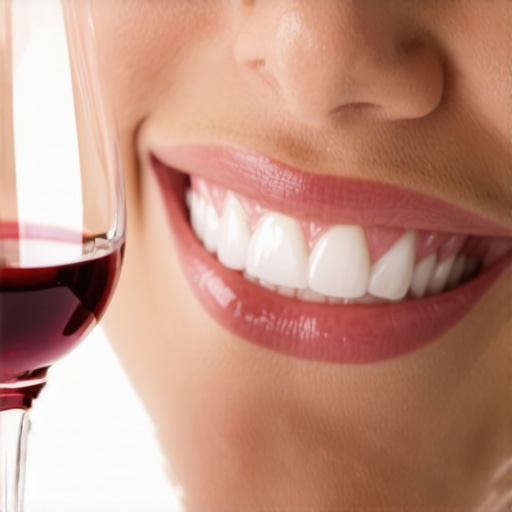
Kill the Plaque Magnet Before Your First Sip
The reason wine stains your teeth isn’t usually the porcelain itself—it’s the ‘fuzz’ on top. Have you ever noticed why your teeth feel fuzzy only hours after cleaning them? That fuzz is a biofilm of bacteria and protein. When you drink red wine, the tannins grab onto that protein layer like velcro. I learned this the hard way at a high-stakes dinner party. I had skipped my afternoon brush, and by the time the main course arrived, I looked like I had been chewing on purple markers. Now, I make it a rule to brush and floss thoroughly about thirty minutes before I head out. By removing the ‘velcro’ (the plaque), the wine has nothing to hold onto, allowing it to slide right off the smooth surface of your veneers.
Stop Treating Porcelain Like Sandpaper-Friendly Pavement
When you get home and see a slight tint, the instinct is to scrub. Stop right there. Using an abrasive toothpaste or a hard-bristled brush is the fastest way to ruin the polished glaze of your cosmetic work. Even if you follow standard family dentistry tips for a lifetime of healthy smiles, you must realize that porcelain requires a softer touch than natural enamel. I once spent a week trying to ‘whiten’ a tiny stain near my gumline with a charcoal paste, only to find I had created a matte spot that attracted even more stains. Instead, use a non-abrasive gel toothpaste and an electric toothbrush with a pressure sensor. This ensures you’re lifting the surface pigment without micro-scratching the material.
Why Regular Polish Beats Emergency Scrubbing
Sometimes, despite our best efforts, the margins where the veneer meets the tooth—the ‘glue lines’—can pick up a bit of color. This is when you need to let the professionals take over. I used to be terrified of the hygienist’s chair, but knowing how to manage tooth sensitivity after your first professional cleaning made the process much easier. A professional polish uses specialized pastes that are designed specifically for porcelain and composite. They can buff out the surface-level staining that a home toothbrush simply cannot reach. If you want to maintain that ‘day one’ look, you should revisit the transform your smile with veneers expert tips for perfect results to understand why a professional maintenance schedule is non-negotiable for red wine lovers.While we’ve been obsessing over red wine stains, there is a much bigger ‘invisible’ mistake people make during a veneers transformation. Most patients walk into the office demanding the whitest shade on the chart, usually a Bleach BL1. We’ve been conditioned to think that ‘whiter equals healthier,’ but that’s a total myth in the world of high-end cosmetic dentistry. In reality, the most beautiful teeth are not solid blocks of stark white; they are multi-dimensional. If you go too white, you lose the depth that makes a smile look human.
Stop Aiming for the Whitest Shade on the Chart
The biggest nuance that pros know—and beginners miss—is the concept of incisal translucency. Look closely at why your child’s permanent teeth look translucent at the edges; that slight ‘clear’ look at the bottom of the tooth is what mimics real enamel. When you choose a shade that is too opaque, you fall into the mistake that makes porcelain veneers look like piano keys. A study published in the Journal of Prosthetic Dentistry confirms that ‘shade mapping’—using different colors for the neck, body, and biting edge of the tooth—is the only way to achieve true facial harmony. Without this, your teeth look like they are sitting on top of your face rather than being part of it. 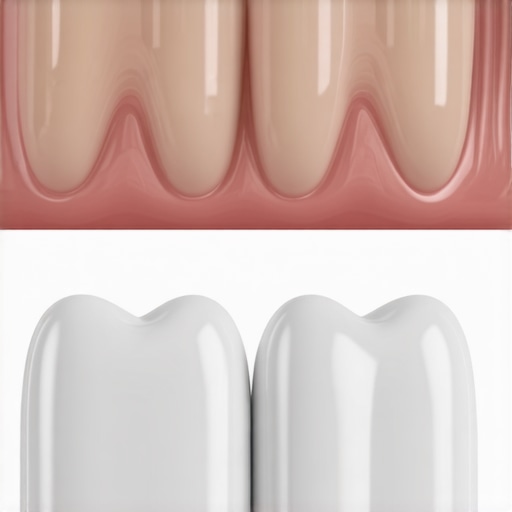
Does Your New Smile Pass the Sunlight Test?
Many people find that their teeth look great in the dentist’s chair but look ‘glowy’ or purple in a park or a restaurant. This happens because of metamerism. There is a specific reason your veneers look different in sunlight versus indoors: the way porcelain reflects UV light can differ from natural enamel. To avoid this trap, I always tell people to check their temporary veneers in multiple lighting environments before committing to the final porcelain. Have you ever fallen into this trap where your teeth looked ‘off’ in certain photos? Let me know in the comments.
How do I know if my cosmetic work will actually last twenty years?
Longevity isn’t just about the porcelain; it’s about the foundation. Many patients think getting dental implants in 2025 is a ‘set it and forget it’ solution. However, the ‘oops’ factor here is ignoring the soft tissue. Even with the best family dentistry tips for a lifetime of healthy smiles, if your gum health isn’t pristine, you can face peri-implantitis. Understanding how dental implants reshape your oral health in 2025 means recognizing that the metal post requires even more meticulous gum care than a natural root because it lacks the same immune-response barriers as a natural tooth ligament. Don’t let a lack of maintenance turn your investment into a liability.
Since we just talked about the metal post and the delicate foundation of your jaw, let’s get into the actual tools that keep that foundation from crumbling. I used to be a string-floss purist until I realized that trying to navigate around a dental implant or the tight margins of a porcelain veneer with wax-coated string is like trying to detail a luxury car engine with a dirty rag. You just can’t reach the nooks where bacteria love to hide, and if you’re too aggressive, you risk irritating the very tissue that’s holding your smile together.
Put Down the String Floss and Get a Water Flosser Instead
The absolute game-changer for my routine was switching to a high-quality water flosser. But here is the thing: most people use them on the highest setting and then wonder why your gums bleed only when you use a water flosser. You have to treat the tissue around an implant or a veneer margin with extreme respect. According to a study in the Journal of Clinical Periodontology, water flossing is up to 50% more effective at reducing gingivitis compared to traditional string floss, especially around prosthetic work. The key is to aim at a 90-degree angle to the tooth and use lukewarm water—cold water on a fresh veneer or crown can cause a jolt you won’t soon forget. If you are struggling with a specific spot, you need to learn how to safely clean a dental implant without scratching the post, because even a tiny micro-scratch on that titanium can become a breeding ground for future plaque colonies.
How can I keep my smile looking new for decades?
Maintenance isn’t just about the ten minutes you spend in front of the sink every day; it’s about protecting the structural integrity of the porcelain from your own habits. If you’ve invested in cosmetic dentistry secrets to boost your confidence, the last thing you want is to crack a veneer while you’re dreaming. I’m a chronic jaw-clencher, especially when I’m stressed about work. I realized that my beautiful new teeth were under constant siege at 2 AM. Now, I never go to sleep without a custom-fit night guard. It’s a small price to pay for peace of mind, though you do have to stay on top of the hygiene of the guard itself. I’ve found that removing the smell from your plastic night guard at home is as easy as a quick soak in distilled water and white vinegar, which keeps harmful bacteria from transferring back onto your gums and causing inflammation.
#IMAGE_PLACE_HOLDER_D#
Where We’re Heading with Smart Teeth and Bio-Materials
Looking toward the next decade, the tech in the dental world is getting even wilder. We are moving toward a world where ‘smart’ dental implants will be able to monitor pH levels in your mouth and alert your phone if it detects the early chemical signs of infection before you ever feel pain. I suspect the future of dental implants will also include bio-active glass coatings that actually encourage bone regrowth and fight off bacteria on their own. We’re not quite at ‘self-cleaning’ teeth yet, but the gap between artificial and natural is closing fast. For now, the best strategy is to stick to the basics of family dentistry tips for a lifetime of healthy smiles while layering on these high-tech tools. My biggest piece of advice? Don’t wait for a chip or a stain to take action. Start the ‘swish and swallow’ method tonight to keep those wine stains at bay, and if you haven’t yet, swap your manual brush for a sonic one with a pressure sensor. Your future self—and your bank account—will thank you for it.
The Hard Truths I Discovered While Protecting My New Smile
The biggest realization I had was that the wine itself isn’t the enemy; it’s the invisible film on my teeth. I used to think my porcelain was failing when I saw a tint, but it was actually just plaque acting like a sponge for pigments. Another major lesson was that aggressive cleaning is often more damaging than the stain itself. If you notice why your gums look receding even though you dont have gum disease, it might be because you’ve been scrubbing too hard in a panic to remove a surface stain. Finally, I learned that the reason your veneers look different in sunlight versus indoors often comes down to the quality of the glaze, which you must protect with gentle care rather than abrasive hacks.
A Wine-Lover’s Dental Survival Kit
To keep your smile pristine without giving up your favorite Cabernet, I recommend building a routine around a few high-value habits. First, a high-quality water flosser is non-negotiable for flushing out tannins from the hard-to-reach gumline. Second, swap any abrasive charcoal or baking soda pastes for a non-whitening, pH-balanced gel that won’t scratch the polished surface of your dental work. Third, keep a bottle of water nearby for the ‘swish and swallow’ technique after every few sips of wine. If you ever have concerns about the seal of your porcelain work, don’t hesitate to contact us for a professional check-up and polish.
Own Your Confidence Without the Fear
Your veneers transformation was meant to give you a life free from dental insecurity, not one where you’re afraid of a dinner party toast. By understanding that cosmetic dentistry is a partnership between professional craft and smart daily habits, you can enjoy life’s pleasures with total peace of mind. Your smile is your greatest asset—treat it with a little kindness, and it will stay bright for decades. Have you ever panicked after a spill and reached for a risky DIY whitening hack, or do you have a secret tip for keeping your smile bright? Let me know below!