I remember sitting down with a massive bowl of rocky road ice cream three weeks after my last cavity was filled, thinking I was finally in the clear. I took one generous bite and a bolt of lightning shot from my lower molar straight to my brain. I actually dropped the spoon. It was visceral, frustrating, and honestly, a little scary. I felt like I had done everything right—I followed the family dentistry tips for a lifetime of healthy smiles that my dentist always harps on, yet here I was, nursing a jaw that felt like it was plugged into an electrical outlet. If you are currently staring at a cup of coffee wondering why your ‘fixed’ tooth is acting like a spoiled toddler, I have been exactly where you are. Today, we are going to get to the bottom of that nagging ache and figure out when you can actually relax.
Stop Wondering If Your Dentist Messed Up
The biggest mistake I made early on was trying to ‘tough it out.’ I figured if I just kept drinking cold water, I would somehow desensitize the tooth through sheer willpower. It turns out that is the dental equivalent of running on a sprained ankle. I was just keeping the nerve in a state of constant alarm. We often hear about how to manage tooth sensitivity after your first professional cleaning, but lingering pain weeks after a filling is a different beast entirely. It usually boils down to a few hidden culprits: an inflamed nerve, a filling that is just a fraction of a millimeter too high, or even a reaction to the bonding material itself. The American Dental Association confirms that ‘pulpitis,’ or inflammation of the tooth pulp, is a common reaction to the heat and vibration of dental drills, and while it usually resolves, it can sometimes be a stubborn houseguest. Have you ever felt like your tooth was actually worse off after the dentist ‘fixed’ it? I would love to hear if you are stuck in that same frustrating loop right now.
Is this sensitivity actually worth the worry?
Many of us fear that a sensitive filling means the whole procedure failed or that a dreaded root canal is next on the menu. While that is rarely the case, ignoring the signs can lead to more trouble. Sometimes the issue is purely mechanical, such as why your tooth hurts only when you release a bite, which usually points to a high spot on the filling that needs a simple adjustment. I spent a month chewing on one side of my mouth before I realized a two-minute office visit could have fixed everything. If things do not feel right, don’t wait—you can always contact us to get a professional opinion before the discomfort ruins your next meal. Setting the stage for a pain-free smile starts with admitting that ‘wait and see’ isn’t always the best strategy.
Check for High Spots Before You Suffer
Imagine placing a tiny pebble in your shoe and trying to walk a marathon. That is exactly what happens when a filling is even a fraction of a millimeter too high. Your jaw exerts hundreds of pounds of pressure, and if all that force hits one single spot first, the nerve underneath takes a direct hit every time you close your mouth. I once spent two weeks trying to ‘adapt’ to a new composite filling in my lower left molar, thinking my bite would eventually wear it down. It didn’t. I couldn’t even talk without a sharp twinge. When I finally went back, my dentist used a tiny strip of articulating paper to find the high point and polished it away in ten seconds. The relief was instantaneous. If you notice that why your tooth hurts only when you release a bite is becoming your new normal, do not wait for it to fix itself. Mechanical issues require mechanical fixes. 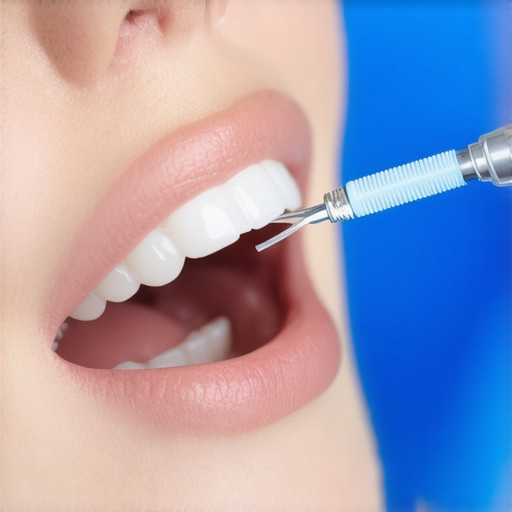
Give Your Nerves a Chance to Cool Down
Sometimes the pain isn’t mechanical; it’s chemical or thermal. The process of removing decay and bonding a filling is essentially a minor surgery on a living organ—your tooth. This can leave the pulp (the nerve and blood vessels) in a state of ‘reversible pulpitis,’ which is just a fancy way of saying your tooth is having a temper tantrum. During this phase, you need to treat your mouth like a recovery zone. Start by switching to a potassium nitrate-based toothpaste and learn the best way to brush when you have sensitive gums to avoid further irritating the area. Think of it like putting an ice pack on a bruised muscle; you are trying to lower the internal temperature of that nerve so it can stop sending SOS signals to your brain.
Watch for These Red Flags of Deep Inflammation
Not every ache is a simple adjustment. You need to distinguish between a tooth that is ‘adjusting’ and one that is ‘failing.’ If your pain is spontaneous—meaning it starts throbbing while you are just sitting there watching TV—that is a sign the inflammation has moved from reversible to irreversible. At this point, even the most diligent family dentistry tips for a lifetime of healthy smiles won’t save the nerve. You should also check the surrounding tissue; if you need to how to tell if your dental crown is loose or just sensitive, look for swelling or a persistent metallic taste. If the ache becomes a deep, rhythmic thrum, you may need to look into how to manage throbbing pain while waiting for a root canal, because that nerve might be past the point of no return. Be honest with yourself about the level of discomfort; if it’s keeping you up at night, the ‘wait and see’ period is officially over.
Stop Treating Your Dental Implants Like Plastic
The biggest myth in modern dentistry is that a titanium post and a porcelain crown are invincible. I often hear people say, ‘Once I get my implant, I never have to worry about cavities again.’ While technically true—titanium doesn’t decay—this mindset is a dangerous trap. You can’t get a cavity, but you can get peri-implantitis, a specific type of gum disease that eats away at the bone supporting the metal. In fact, a study published in the Journal of Periodontology notes that nearly 25% of patients may experience inflammatory issues around their implants over a decade. If you ignore the gumline because you think the ‘tooth’ is fake, you are essentially building a house on sinking sand. It is critical to understand the impact of smoking on your dental implant success rate and how lifestyle choices affect the underlying bone. Have you ever fallen into this trap of thinking your dental work was indestructible? Let me know in the comments.
Why Your New Smile Looks Fake Under Sunlight
When people dive into cosmetic dentistry secrets to boost your confidence, they often make the ‘High-Definition Mistake.’ They want the whitest shade on the chart, thinking it looks ‘clean.’ However, natural teeth have translucency—light passes through the enamel and reflects off the dentin. If you choose an opaque, monolithic white, your teeth will look like piano keys or pieces of gum stuck to your ridge. I’ve seen patients devastated because their expensive smile makeover looks like a flat, plastic mask in natural light. This is why learning how to pick the right shade for your new porcelain veneers is an art form, not just a selection process. Avoid the mistake that makes porcelain veneers look like piano keys by insisting on a shade that mimics the natural gradients of your own teeth. 
What happens when your jaw bone forgets how to hold an implant?
A sophisticated concern many advanced patients ask about is ‘bone resorption’ after the procedure. Your jawbone needs the stimulation of a tooth root to stay dense. While an implant mimics this, if the placement isn’t precise, the bone can still recede. This is why ‘discount’ implants are often a nightmare; they may lack the surface engineering required for long-term osseointegration. Beyond just the hardware, you have to consider the long-term biological ‘fit.’ For those weighing their options, understanding the truth about the durability of composite vs porcelain veneers or implants involves looking at how your body interacts with these materials over twenty years, not just two. In family dentistry, we also see this play out when parents wonder why your childs permanent teeth look yellow compared to baby teeth—it’s because the internal structure of adult teeth is denser and more complex. Expertise isn’t just about the ‘fix’; it’s about managing the living environment around the fix.
Keep Your New Teeth for Decades with the Right Gear
When I first got my dental work, I thought a standard toothbrush was enough. I was wrong. If you want these restorations to last, you need to think like a mechanic maintaining a high-performance engine. I personally made the switch to a high-end sonic toothbrush because the micro-vibrations do the heavy lifting without me having to scrub like a maniac, which is one of the best family dentistry tips for a lifetime of healthy smiles. But the real game-changer for me was the water flosser. According to a 2023 study in the Journal of Clinical Periodontology, specialized oral irrigators can reduce peri-implant bleeding by nearly 29% compared to traditional string floss. I use mine every single night because it flushes out the ‘biofilm’ that builds up in the hard-to-reach pockets where titanium meets tissue. Learning the benefit of using a water flosser with your braces or implants isn’t just about comfort; it’s about preventing bone loss before it starts.
Choose Tools That Respect Your Gums
Stop using medium or hard bristles immediately. You are basically sandpapering your gumline. I only recommend extra-soft, tapered bristles that can slide under the margin of a veneer or crown without scratching the material. This is crucial for how to safely clean a dental implant without scratching the post. If you scratch that titanium abutment, you create a microscopic playground for bacteria to hide. I also keep a stash of interdental brushes in my car. They are far more effective at mechanically dislodging debris than floss ever was for me, especially around the back molars. 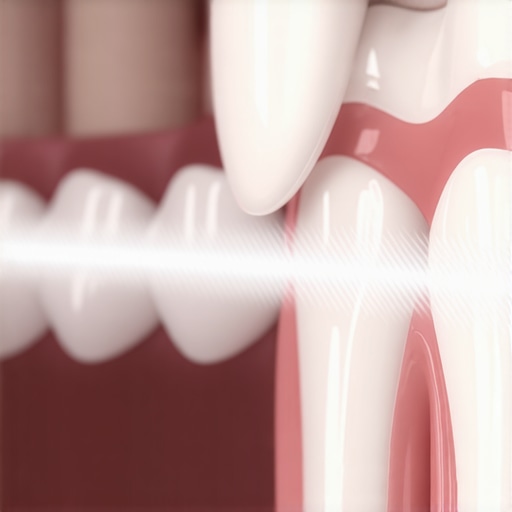
How do I maintain my dental implants and veneers over time?
The secret to scaling your results is consistency and professional oversight. You can’t just ‘set it and forget it.’ I recommend a professional ‘buff and polish’ every six months to keep the surface of your veneers from picking up micro-stains. If you are a coffee lover, you will need to know how to keep your teeth white while drinking black coffee daily without using abrasive charcoal pastes that can destroy your porcelain glaze. Looking ahead, dental implants 2025 innovations that redefine comfort and durability suggest we are moving toward smart-implants that can alert your dentist to inflammation via a smartphone app. Until that tech hits your local office, you are the first line of defense. I challenge you to replace your manual floss with a high-powered water flosser for just two weeks; your gums will stop bleeding, and that ‘heavy’ feeling around your implants will likely vanish. If you are still feeling unsure about your current routine, you can always contact us for a personalized maintenance plan.
The Real Price of Cutting Corners on Your Smile
After years of navigating my own dental journey, I’ve realized that the ‘cheapest’ option is almost always the most expensive in the long run. When you look at the truth about the durability of composite vs porcelain veneers, it becomes clear that quality materials are an investment in your peace of mind, not just your appearance. Choosing the right material isn’t just about the bill; it’s about how your body accepts the new addition. Here are a few lightbulb moments I wish I had sooner:
- Quality is a shield: High-grade porcelain resists stains and chips far better than lower-tier composites, meaning fewer trips back to the chair.
- Natural over ‘Perfect’: Striving for a look that mimics real tooth translucency is the secret to a smile that never goes out of style.
- Listen to your body: If a tooth doesn’t feel right after the standard adjustment period, it usually isn’t.
Gear That Actually Earned a Spot in My Bathroom Cabinet
Maintaining a healthy mouth requires more than just a quick brush before bed; it requires the right tools for the job. I personally swear by a high-powered water flosser. It’s not just for people with hardware; the benefit of using a water flosser with your braces or implants is that it flushes out the biofilm and debris that manual tools simply cannot reach. #IMAGE_PLACEHOLDER_E#
I also recommend taking the time to truly study shade guides. Before you commit to a permanent change, learn how to pick the right shade for your new porcelain veneers to ensure your investment looks great in natural sunlight and indoor lighting alike. Finally, nothing replaces a trusted professional’s eye—if something feels off, you should contact us to catch issues while they are small and manageable.
Take the First Step Toward a Pain-Free Smile
Don’t let the fear of a lingering ache or the complexity of new procedures hold you back from a confident life. The world of family dentistry is evolving faster than ever, and with dental implants 2025 innovations that redefine comfort and durability, we are entering an era where dental work feels more like a natural extension of your body than a foreign object. You have the power to protect your smile for decades—start by treating it with the respect and maintenance it deserves. Have you ever felt like a dental procedure didn’t quite ‘take’ at first, or did you have an instant success story? Let me know in the comments below!