I stood in front of the bathroom mirror, fresh out of bed, and reached for my retainer case. I’d done everything right—or so I thought. I brushed, I flossed, and I never missed a night. But the moment I opened that case, a scent wafted out that I can only describe as “gym locker meets old cheese.” I was mortified. I had spent years and a small fortune on cosmetic dentistry secrets to boost your confidence, yet here I was, struggling with a piece of equipment that smelled like a science experiment. If you’ve ever wondered why your breath smells bad even after using expensive mouthwash, you know the frustration. You’re doing the work, but the results are… well, pungent. Today, I’m going to explain why your daily rinse is failing you and how to actually get that retainer clean without ruining it. Have you ever been genuinely embarrassed to take your retainer out in public because of the smell?
The Daily Rinse Is a Total Lie
Most of us are taught that a quick splash under the faucet is enough to keep things fresh. I believed that for months. I even made the rookie mistake of thinking extra heat would help, so I soaked my retainer in near-boiling water once. Big mistake. I ended up with a warped piece of plastic that didn’t fit and an expensive replacement bill. The reality is that how to stop your teeth from shifting after your braces come off depends on a retainer you actually want to wear. If it’s gross, you won’t wear it. The reason water alone doesn’t work is biological. According to research cited by the American Association of Orthodontists (AAO), oral bacteria create a “biofilm”—a sticky, invisible layer that acts like a microscopic suit of armor, protecting bacteria from a simple rinse.
Is my mouth just naturally grosser than everyone else’s?
It’s a common fear, but I promise you’re not a dental outlier. Everyone has these bacteria. The problem is that clear aligners and retainers are porous on a microscopic level. They absorb odors and trap that biofilm in tiny crevices you can’t even see. I spent way too long trying to safely clean a stained clear aligner at home with the wrong tools before I realized that friction and specific cleaners are the only way to break that bond. If you just rinse, you’re essentially trying to clean a greasy frying pan with cold water and no soap—it just doesn’t work. [image_placeholder]
Stop treating your retainer like a normal tooth
Breaking the biofilm requires a two-pronged attack: physical agitation and chemical neutralization. Think of your retainer like a high-end camera lens. You wouldn’t scrub a lens with a scouring pad, and you shouldn’t scrub your retainer with standard toothpaste. When you notice why your teeth feel fuzzy only hours after cleaning them, it’s usually because bacteria have already recolonized. The same happens to your retainer.
Skip the toothpaste to avoid micro-scratches
I learned the hard way that “cleaning” doesn’t mean “scouring.” I once thought I’d be clever and use my heavy-duty whitening paste on my Essix retainer to keep it sparkling. Within three days, the plastic was cloudy. It looked like I was wearing a piece of frosted glass over my teeth. It turns out that the danger of using baking soda to whiten your teeth at home applies to plastic too—abrasives create microscopic scratches that actually give bacteria even more places to hide. This is a common pitfall when people are how to safely clean a stained clear aligner at home. Instead, use a soft-bristled toothbrush and lukewarm water. If you need a booster, a drop of clear, unscented dish soap is your best friend because it cuts through the oils and proteins in your saliva without scratching the surface.
The deep soak strategy that actually kills biofilm
While brushing removes the bulk of the gunk, a soak reaches the microscopic pores. If you’ve ever noticed why your mouth feels dry while wearing clear aligners, you know that stagnant environment is a breeding ground for sulfur-producing bacteria. 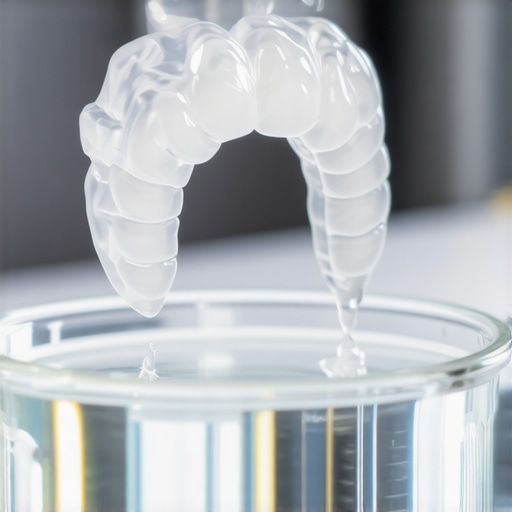
The white vinegar soak that breaks down mineral buildup
Once a week, I submerge my retainer in a mixture of one part white distilled vinegar to three parts water. It smells like a salad for a minute, but vinegar is an acetic acid that dissolves the hard calcium deposits, also known as tartar, that a brush can’t touch. If you’ve ever wondered why your breath smells like vinegar and how to fix it, usually it is a sign of a pH imbalance, but here, we are using that acidity to our advantage to break the bacterial bond. Soak it for 15-20 minutes, then rinse thoroughly. If you have a fixed wire, the process is different, and you’ll need to master how to clean under a permanent retainer without breaking it to avoid gum inflammation. In my journey through family dentistry tips for a lifetime of healthy smiles, I’ve found that this simple weekly habit prevents that locker room smell from ever returning. It’s a much more sustainable approach than the aggressive scrubbing that eventually leads people to consider veneers vs crowns choosing the best option for your smile because they’ve neglected their natural tooth alignment and basic hygiene.
When we talk about upgrading a smile, most people assume the hard part is just writing the check and sitting through the procedure. In my experience, the real challenge starts with the choices you make before the dentist even picks up a tool. Everyone says that once you get a crown or a bridge, your dental worries are over, but that is a dangerous oversimplification. I have seen far too many people invest in high-end work only to find themselves frantically searching for how to properly store a dental bridge if it falls out at home because they didn’t understand the structural foundation required. The truth is, cosmetic dentistry is only as good as the health of your gums and the precision of the fit.
Why veneers often end up looking like piano keys
One of the most common mistakes I see—and a huge red flag for anyone looking for a natural result—is the ‘monolith’ look. This happens when the shade and translucency are ignored in favor of ‘super white.’ If you aren’t careful, you fall into the mistake that makes porcelain veneers look like piano keys. Real teeth have a natural gradient; they are slightly more opaque at the gum line and more translucent at the biting edge. When this is ignored, the result looks like a strip of white plastic. It is also why many patients complain about the reason your veneers look different in sunlight versus indoors. If the material choice doesn’t mimic natural light refraction, your smile will look great in the bathroom mirror but flat and artificial at a backyard barbecue.

Can you actually skip the alignment phase before going cosmetic?
I get asked this constantly by people who want a ‘quick fix’ for crooked teeth using porcelain. Here is the nuance: while you can technically mask minor crowding with veneers, you often end up with a structural ‘oops’ factor. To make crooked teeth look straight with porcelain, the dentist sometimes has to remove more enamel than is healthy, or you end up wondering why your new veneers feel bulky against your lips. According to the American Academy of Cosmetic Dentistry (AACD), the long-term success of any aesthetic enhancement is inextricably linked to the underlying bite alignment. If your bite is off, you will eventually chip that expensive porcelain just like you did your natural teeth. This is why understanding veneers vs crowns which is right for your smile is about more than just looks; it is about the mechanics of how you chew.
The foundation matters more than the finish
We need to stop treating dental implants and veneers like they are indestructible. Even with dental implants 2025 innovations that redefine comfort and durability, the titanium post still relies on your jawbone and gum health. I’ve seen patients neglect their basic hygiene because they think ‘it’s not a real tooth, so it can’t get a cavity.’ While the implant itself won’t decay, the surrounding tissue can develop peri-implantitis, which is essentially gum disease on steroids. This is where family dentistry tips for a lifetime of healthy smiles come back into play. You have to maintain the environment around the dental work with even more vigor than you did your original teeth. Have you ever fallen into this trap of thinking expensive dental work meant you could relax on your hygiene? Let me know in the comments.
I’ve spent a lot of time talking about what can go wrong, but I want to provide the blueprint for what goes right. Keeping your investment intact requires more than just a standard toothbrush from the grocery store. I personally switched to a high-end sonic toothbrush with a pressure sensor because I realized I was scrubbing my gum line into oblivion. If you don’t adjust your technique, you’ll eventually notice the reason your gums are receding around one specific tooth is actually your own hand. For anyone with a bridge or implants, a water flosser is my ‘holy grail’ tool. I use it every night on the ‘pulse’ setting because it reaches the areas where traditional floss just shreds. Understanding the benefit of using a water flosser with your braces or implants is about protecting that delicate seal between the restoration and your gum tissue.
Why your manual floss is failing your implants
Standard floss is great for natural teeth, but when you have a post and a crown, you have to be more surgical. I recommend using specialized ‘super floss’ or interproximal brushes that are plastic-coated. Metal-core brushes can actually scratch the titanium post of an implant, leading to more bacteria buildup. Learning how to safely clean a dental implant without scratching the post is the difference between a restoration that lasts five years and one that lasts twenty. If you have a permanent wire, you also need to master the secret to flossing when you have a permanent wire retainer to ensure plaque doesn’t calcify into tartar right behind your front teeth.
How do I maintain these high-end restorations for a decade?
Consistency is your only defense against failure. I often talk about family dentistry tips for a lifetime of healthy smiles, and for adults with cosmetic work, that means professional cleanings every four months rather than six. According to a study published in the Journal of Clinical Periodontology, patients with dental implants who adhere to a strict maintenance schedule have a significantly higher success rate than those who only visit when something feels wrong. This proactive approach prevents the ‘silent’ bone loss that often precedes a loose implant. You should also be aware of why your dental implant feels loose but looks fine, as it is often a sign of a screw loosening rather than the implant failing.
The tech that predicts a failed bridge before it happens
In the next few years, I predict we will see a massive shift toward ‘smart’ restorations. We are already seeing the future of dental implants cutting-edge techniques in cosmetic dentistry involve 3D-printed scaffolds that encourage faster bone growth. Soon, your veneers might even have embedded sensors to alert you if your bite alignment shifts or if you are grinding your teeth too hard at night. This kind of tech will integrate with dental implants 2025 innovations that redefine comfort and durability, making the ‘oops’ factor almost non-existent. My challenge for you: tonight, try using your water flosser with a 50/50 mix of lukewarm water and a non-alcohol antimicrobial rinse—it is a total game-changer for that ‘fresh’ feeling and gum health.
Three Truths My Dentist Didn’t Mention Until After the Procedure
After years of navigating the world of aesthetic enhancements, I realized that transforming your smile with veneers isn’t just about the day you walk out of the office; it’s about the decades that follow. First, you have to acknowledge that even the best work can feel foreign for a few weeks—don’t panic if your tongue keeps checking the edges. Second, your gums are the silent partner in this deal. If you ignore them, even the most expensive dental implants reshaping your oral health will eventually fail because the foundation is weak. Finally, remember that stain-resistant doesn’t mean stain-proof; the margins where the porcelain meets the tooth can still pick up pigments if you aren’t careful.
Tools to Keep Your Investment Looking Brand New
I’ve curated a list of items that I personally believe are non-negotiable for anyone who has invested in their smile. I swear by a sonic toothbrush with a pressure sensor because it prevents the aggressive scrubbing that leads to recession. I also highly recommend looking into how to pick the right shade for your new porcelain veneers if you are still in the planning phase, as getting the color right is the most important tool for a natural result. Lastly, a water flosser is your best friend for reaching the nooks and crannies around bridges and implants where traditional floss often fails to clear away debris.
The Best Version of Your Smile Starts Tonight
Investing in your teeth is one of the most rewarding things you can do for your confidence, but it requires a commitment to a new way of living. Whether you are currently undergoing a veneers transformation or just starting your research, remember that the goal is long-term health, not just instant perfection. Don’t be afraid to take that first step and reach out to a professional if you’re ready to make a change. If you have questions or want to see if you’re a candidate for these procedures, you can always contact us to get the conversation started. Use this guide to ensure your cosmetic dentistry remains a source of pride for years to come.
Have you ever noticed your gums feeling sensitive or different after a big dental procedure? Let me know in the comments below!