I remember the exact sound—that sickening thud followed by a metallic taste—when a stray elbow caught me square in the mouth during a neighborhood basketball game. The game stopped, but my heart didn’t. I spent the next ten minutes in the car, obsessively poking my front tooth with my tongue, terrified I had just bought myself a very expensive gap in my grin. It is a gut-wrenching feeling when you realize your smile isn’t quite as rock-solid as it was five minutes ago. If you are reading this because you just took a hit to the face, take a deep breath. I have been in that exact spot, panicking about whether I would need dental implants before my thirties. Today, I am going to walk you through exactly why that tooth is shimmying and how we can save it without jumping straight to the worst-case scenario.
Stop Wiggling and Listen to Your Jaw
Most of us think if the tooth hasn’t fallen out, we are in the clear, but that slight give can be incredibly deceptive. When you take a hard hit, the ligaments that act as tiny shock absorbers for your teeth get stretched or bruised. I made the mistake of constantly testing the looseness with my finger, which only irritated the area more. You have to treat it like a sprained ankle; you wouldn’t keep jumping on a sprained ankle to see if it still hurts, right? If you’re worried about the long-term look, you might eventually look into veneers transformation, but right now, the priority is stability.
Do You Really Need to Call a Dentist Right This Second?
You might be wondering if you can just wait and see if it firms up on its own. I tried the wait and see approach once with a different injury, and let me tell you, waiting just turned a simple fix into a weekend-long throbbing nightmare. According to the American Association of Endodontists, a tooth that is moved out of position or loosened requires an evaluation within a few hours to ensure the blood supply and nerves stay intact. Whether it is a minor concussion of the periodontal ligament or a more serious luxation, you need a professional to tell you if a splint is necessary. Have you ever felt that terrifying wiggle after a collision, or are you currently staring in the mirror wondering if it is just your imagination? Knowing how to protect your teeth while playing high-impact sports is vital for the future, but for now, let’s dive into what is actually happening beneath your gum line.
Keep Your Fingers Out of Your Mouth
The absolute first thing you must do—and I cannot stress this enough—is resist the urge to wiggle it. It is human nature to probe an injury, but every time you nudge that tooth to see if it is still loose, you are tearing the microscopic healing fibers that are trying to re-anchor it. I remember the time I took a hit during a pickup game and spent the whole night pushing the tooth back and forth with my tongue just to ‘check’ it. By morning, the area was twice as swollen and the ache was unbearable. If you also have soft tissue damage, you need to know how to treat a cut on your tongue or cheek while keeping the pressure off the actual tooth. Treat that tooth like it is held in place by wet cement; any movement now will result in a permanent misalignment or, worse, the death of the tooth.
Why You Need a Professional Look at the Root
You might think the tooth is just ‘shaken up,’ but a dentist needs to determine if the pulp—the live part inside—has been compromised. When I finally went in for my injury, I learned that a tooth can suffer from something called ‘concussion’ or ‘subluxation.’ It’s like a light switch that’s been flicked halfway; the power might still be on, but the connection is flickering. The dentist will use specialized tools to check for fractures and might perform a test to see why your tooth hurts only when you release a bite, which is a classic sign of a cracked root. This isn’t just about the tooth you see; it’s about the family dentistry principles of preserving your long-term oral health before a small wobble turns into a systemic infection.
The Cast That Saves Your Smile
If the tooth is significantly loose, your dentist will likely ‘splint’ it. Think of a splint as a tiny, invisible cast for your tooth. They will use a thin, flexible wire or a composite resin to bond the loose tooth to the stable ones next to it. This takes the pressure off the injured ligaments so they can tighten back up. During this time, you have to be incredibly careful. If you have ever had to handle a loose orthodontic bracket over the weekend, you know the delicate dance of eating soft foods and avoiding anything crunchy. 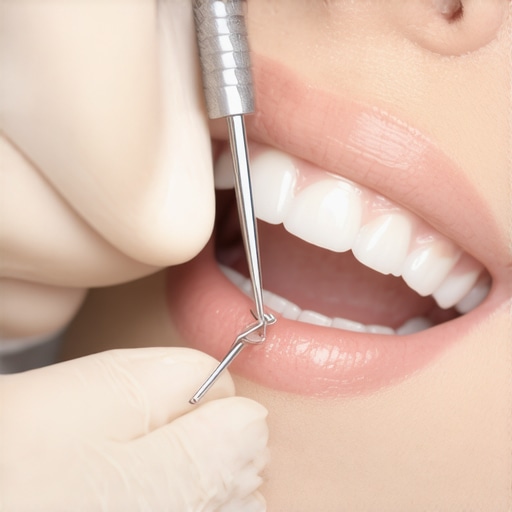 I once tried to eat a toasted bagel three days after a collision, thinking I was in the clear. One bite in, and I felt a sharp, jabbing sensation that nearly brought me to my knees because I hadn’t let the splint do its job.
What Happens if the Tooth Won’t Set
Sometimes, despite the best splinting and the softest diet, the tooth simply doesn’t survive. The blood supply can be severed permanently, causing the tooth to darken over time. This is where modern technology steps in to save your confidence. If the tooth eventually fails and needs to be removed, exploring the future of dental implants is your best bet for a permanent replacement that feels and looks real. These aren’t the clunky dentures of the past; they are titanium anchors that actually integrate with your bone. Understanding how dental implants reshape your oral health in 2025 shows just how far we have come—going from a traumatic injury to a smile that is even stronger than the original. Whether it’s a simple splint or a more complex restoration, the goal is always to keep your jawbone healthy and your smile intact.Most people think that once the pain stops, the crisis is over. But here is the truth: the most dangerous time for your smile is actually the three months after the initial impact. I see so many people rush into a quick fix because they can’t stand the look of a slightly chipped or discolored tooth. They want the immediate gratification of a cosmetic patch-up, but if you jump the gun on cosmetic dentistry secrets to boost your confidence before the periodontal ligament has fully re-anchored, you are essentially building a skyscraper on a swamp. The hidden nuance here is the ‘biological width.’ According to research published in the Journal of Clinical Periodontology, encroaching on this microscopic space between the gum and the bone before the area is stable leads to chronic inflammation and eventual failure. You have to be patient, even when it is hard.
The One Mistake That Makes New Teeth Look Like Piano Keys
The most common ‘oops’ factor in restoration is over-correcting for a trauma. People often think that getting the whitest, thickest material will make their smile look ‘fixed’ and healthy. In reality, this leads to the dreaded ‘chiclet’ look where the teeth have no translucency. I’ve seen patients insist on high-opacity materials only to realize that the truth about the durability of composite vs porcelain veneers often involves a trade-off between strength and natural light reflection. If you rush, you might find why your veneers feel bulkier than your natural teeth; it is usually because the dentist didn’t have enough stable tooth structure to work with, forcing a thicker application.
Why does my new tooth look great inside but weird in the sun?
This is the ultimate test of professional artistry. Natural teeth are semi-translucent; they allow light to pass through and bounce off the dentin underneath. If your restoration is too opaque, it will look fine under bathroom LEDs but turn a flat, chalky white when you step outdoors. Understanding the reason your veneers look different in sunlight versus indoors is crucial before you sign off on the final bonding. This is why I always tell people to take a hand mirror and walk over to a window during their shade-matching appointment. Don’t let the office lights fool you into a permanent mistake.
Don’t Ignore the Shadow Near the Gum Line
When dealing with the aftermath of a hit, many people focus solely on the tooth itself and ignore the color of the gums. If you eventually move toward a replacement, you must be aware of why your dental implant is showing a tiny dark line. This usually happens when the tissue is too thin or the implant was placed without considering the long-term gum recession that follows trauma. It isn’t just about the ‘fake tooth’; it is about how that tooth interacts with the living tissue around it. In my experience, people who prioritize the ‘quick fix’ over the ‘stable foundation’ end up back in the chair three years later. Have you ever fallen into the trap of wanting a fast solution only to realize it didn’t look quite right in the light? Let me know in the comments below, because sharing these ‘oops’ moments is exactly how we help each other avoid them.
The Two Tools I Swear By for Longevity
I personally use a Waterpik Aquarius on the ‘Floss’ setting every single night—not because I am lazy, but because mechanical flossing around a dental implant is a hidden minefield. Standard string floss can actually shred and leave tiny fibers behind, which according to a study in the Journal of Periodontal Research, can lead to peri-implantitis (inflammation around the implant). Using a water flosser allows you to flush out the sulcus without mechanical trauma. It is about longevity, not just convenience. If you have braces or a permanent wire, the benefit of using a water flosser with your braces is even more pronounced because it gets where brushes simply cannot reach.
How do I maintain my dental work over time?
The secret isn’t just brushing; it is managing the environment of your mouth. I tell everyone that once you have invested in expert tips for perfect results, you have to protect that investment from your own jaw muscles. Most people do not realize they clench their teeth at night until they see a chip in a porcelain restoration. I use a custom-fabricated night guard from my dentist. Please, do not buy the ‘boil and bite’ ones from the drugstore; they are too soft and can actually encourage your jaw to chew more, leading to muscle fatigue. A hard acrylic guard keeps your bite stable and prevents sensitivity to cold drinks caused by micro-fractures in the bond.
Stop Grinding Your Investment Away
It is not just about the teeth; it is about the mechanics of the jaw. If you are noticing any changes, like why your dental implant feels loose but looks fine, it might be a simple screw loosening rather than a failure of the bone. My advanced tip: every time you go for a cleaning, ask your hygienist to check the ‘occlusal clearance’ of your veneers. This ensures that when you bite down, you are not putting uneven pressure on the porcelain. This is part of the family dentistry tips for a lifetime of healthy smiles that most people overlook until something breaks.
A Glimpse into the Future of Smart Teeth
Looking ahead, I predict we are going to see ‘smart’ restorations become the standard. Imagine an implant that sends a notification to your phone if it detects a specific type of bacterial biofilm or excessive force before you ever feel a twinge of pain. This is where innovations that redefine comfort and durability are headed. We will not just be reacting to trauma; we will be preventing it through real-time data. If you haven’t had a check-up in six months to verify your alignment, contact us today to schedule a maintenance scan and ensure your work stays rock-solid.
What I Discovered While Waiting for My Front Tooth to Tighten
The biggest lightbulb moment for me was realizing that a tooth isn’t just a static object; it’s a living part of your body that needs time to ‘re-home’ itself after a shock. I learned that discoloration isn’t always the end of the world—it’s often just a sign that the pulp is stressed and needs monitoring rather than immediate removal. I also realized that expert tips for perfect results are only effective if you respect the biological healing timeline first. You simply cannot rush the body’s natural response to trauma. Lastly, the way your teeth meet when you bite—your occlusion—is the most critical factor in whether a loose tooth survives or eventually requires a veneers transformation to restore its appearance.
My Essential Checklist for Long-Term Maintenance
I no longer leave my oral health to chance. Here are the three tools I trust implicitly: First, a custom-fitted night guard, which is the only way to stop nocturnal grinding from causing sensitivity to cold drinks or cracking a weakened tooth. Second, the trauma guides from the American Association of Endodontists, which provide clear steps for any dental emergency. Third, a high-quality water flosser, an indispensable part of family dentistry routines that keeps gums healthy without the abrasive friction of traditional string floss on a sore area.
#IMAGE_PLACEHOLDER_E#
Your Smile Is More Durable Than You Think
Taking a hit to the face is a gut-wrenching experience, but it doesn’t have to be the end of your confident smile. Between the body’s innate ability to repair itself and the incredible advancements in the future of dental implants, you have more paths to a full recovery than ever before. Whether your tooth tightens up naturally or you eventually decide to upgrade your look, remember that patience is your best ally. Have you ever had a dental ‘close call’ that made you rethink how you protect your teeth? Let me know in the comments below!