I remember the exact moment I realized my mouth had a mind of its own. It was a Tuesday afternoon, and I had just walked out of a professional cleaning. You know the feeling—that glass-smooth, high-gloss sensation where your tongue just glides over your teeth. I felt like a superstar. But then, exactly four hours later while sitting in a meeting, I ran my tongue along the back of my front teeth. The smoothness was gone. In its place was a weird, velvet-like coating. It felt like my teeth had grown tiny sweaters. I panicked, thinking my hygienist had missed a spot or that I was somehow cursed with ‘sticky’ enamel. I even started looking into cosmetic dentistry secrets to see if there was a permanent fix for this. The reality is that your mouth is a 24/7 construction site for bacteria, and that ‘fuzz’ is the first sign of their progress. Today, we are going to dive into the science of why this happens and how you can keep that fresh-from-the-dentist feeling for much longer.
Your Mouth is a Fast-Moving Plaque Factory
It’s a bit of a blow to the ego, but the second you stop rinsing with that minty office mouthwash, the bacteria in your saliva start a land grab. This isn’t a sign that you have bad hygiene; it’s a sign that your biological ecosystem is functioning exactly as it should—for better or worse. Early in my journey of obsessive family dentistry research, I made the massive mistake of trying to ‘scrub’ this fuzz away with a hard-bristled brush. I thought I could out-muscle the biology. Instead, I ended up learning the signs your receding gums are caused by your toothbrush the hard way. Aggression isn’t the solution to a natural bacterial process. According to research from the American Society for Microbiology, a complex layer of proteins called the pellicle forms on your teeth within seconds of cleaning, which then acts as the ‘glue’ for bacteria to latch onto.
Does a fuzzy feeling mean your dentist missed something?
It’s easy to get skeptical when you spend money on a cleaning only to feel why your teeth feel sticky by dinner time. You might wonder if you need more drastic measures, like veneers or crowns, thinking they might be more resistant to buildup. But even the highest-quality dental work is subject to the same oral environment. The truth is that while the hygienist removes the hardened tartar, they can’t stop the constant flow of saliva that feeds the soft plaque. Have you ever felt that frustrating grit return to your teeth before the day was even over? If so, you aren’t alone, and it doesn’t mean your professional cleaning was a waste of money. It just means we need to look closer at what you’re eating and how your saliva is protecting—or failing—your smile.
Forcefully Break the Bacterial Bond
Think of plaque like wet cement. In its early stages—that velvet fuzz you feel with your tongue—it is incredibly easy to disrupt. However, once it sits for 24 hours, it begins to calcify into tartar, and at that point, no amount of home brushing will budge it. To win this race, you must disrupt the mechanical bond bacteria are trying to form every few hours. I used to rely solely on a manual toothbrush, thinking if I just brushed harder, I’d keep the smooth feeling longer. I was wrong. I eventually discovered the benefit of using a water flosser to flush out the microscopic debris that my toothbrush bristles were simply sliding over. I remember my first time using one; I didn’t realize you had to keep your mouth slightly closed, and I ended up power-washing my bathroom mirror and my cat in the process. It was a mess, but once I mastered the technique, that midday ‘sticky’ sensation vanished because I was finally reaching the areas where the ‘fuzz’ factory actually starts.
Master the Art of Saliva Stimulation
Your saliva is essentially a high-tech, self-cleaning fluid packed with minerals that neutralize harmful acids. If your mouth is dry, the bacteria have a literal party on your enamel. This is a common hurdle for people who realize why your mouth feels dry while wearing clear aligners or those taking certain medications. Without a constant flow of saliva, the pellicle—that thin protein layer on your teeth—becomes a thick, sticky mat. To fix this, don’t just drink more water; stimulate the flow. Using xylitol-based mints or gum after a meal triggers your salivary glands to produce a ‘rinse cycle’ that naturally buffers your teeth against buildup. 
Protect the Margins of Your Cosmetic Work
If you have invested in your smile, the return of that gritty feeling can be even more frustrating. You might notice why your porcelain veneers feel gritty to your tongue and worry the porcelain is failing. In reality, while porcelain is less porous than natural enamel, the ‘margin’—the microscopic line where the veneer meets your natural tooth—is a magnet for bacterial colonies. It is like the transition strip on a hardwood floor; if there is a tiny gap, dust will find it. This principle applies even to the most advanced dental implants and 2025 innovations. The execution here requires ‘interproximal’ cleaning. Use a dedicated tiny brush or a specialized floss to clear the base of your restorations. When I finally started focusing on the gumline rather than just the flat surface of my teeth, the gritty texture stopped appearing altogether.
How to Cut Off the Bacteria’s Fuel Supply
What you eat determines the ‘stickiness’ of your plaque. Simple carbohydrates and liquid sugars act as high-octane fuel for oral bacteria, allowing them to produce the sticky glues (extracellular polysaccharides) that make plaque adhere so tightly to your enamel. If you cannot brush immediately after a meal, you must at least rinse vigorously with plain water. This is a vital part of how to maintain your white smile after a coffee habit or a sugary snack. By diluting the sugars, you are essentially cutting off the supply line for the bacterial construction crew that is trying to build that velvet coat on your teeth before you even get home from work.
We often see marketing that suggests high-end dental work is a ‘one-and-done’ solution to a perfect smile. But here is the contrarian truth: the more advanced your dental work, the more specialized your maintenance routine must become. I have seen countless people invest in a veneers transformation only to treat those new surfaces exactly like their old teeth. This is a massive ‘oops’ factor that leads to premature failure. Porcelain and titanium do not decay like natural enamel, but they are subject to different, more subtle threats. If you use a highly abrasive whitening toothpaste on your new work, you are actually micro-scratching the glaze, which is exactly why your porcelain veneers feel gritty to your tongue over time. Once that smooth factory finish is gone, the bacterial ‘fuzz’ we discussed earlier has a thousand new microscopic canyons to hide in.
Can your biological tissue actually reject a perfectly placed implant?
Many patients assume that if an implant is placed correctly, the job is finished. However, advanced research, such as studies found in the Journal of Oral Implantology, emphasizes that the long-term success of dental implants in 2025 depends almost entirely on the ‘perimucosal seal.’ This is the way your living gum tissue attaches to the prosthetic post. Unlike a natural tooth, which has a complex ligament system to act as a barrier, an implant relies on a much more delicate connection. If you allow plaque to sit at the base of an implant, the inflammation happens faster and deeper than with a natural tooth. This is why you must learn the red flags that your dental implant is being rejected, such as subtle changes in gum color or a ‘tight’ sensation that doesn’t go away.
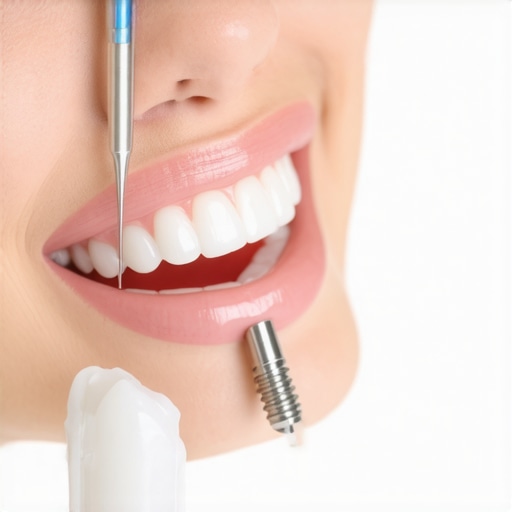
Another nuance most people miss is the ’emergence profile’—the specific angle at which your new tooth comes out of the gum. When you are looking for cosmetic dentistry secrets to keep your smile looking natural, the secret is actually in the cleaning. If you have a wider emergence profile, standard floss will simply skip over the most critical area. You need to use ‘super-floss’ or an interproximal brush to ensure you are hugging the base of the restoration. This is especially true when navigating the choice of veneers vs crowns; crowns have a 360-degree margin that requires even more diligence than a veneer. When I finally adjusted my technique to focus on these hidden margins, the ‘fuzz’ stopped coming back, and my gum health stabilized. Have you ever fallen into the ‘set it and forget it’ trap with your dental work? Let me know in the comments. We are all here to learn the best ways to protect our investments while following family dentistry tips that actually work for the long haul.
I certainly did, and it cost me an extra visit to the chair to realign my habits. Now, I rely on a combination of ‘active’ and ‘passive’ maintenance. My active tool of choice is a sonic toothbrush with a built-in pressure sensor. This isn’t just about the gadgets; it is about protecting the bond. According to research published in the Journal of Clinical Periodontology, the non-contact biofilm disruption caused by sonic vibrations can reach up to 4mm beyond where the bristles actually touch. This is one of those cosmetic dentistry secrets that keeps the ‘fuzz’ from ever getting a foothold at the gumline. If you are scrubbing back and forth with a manual brush, you are likely missing these microscopic colonies that eventually lead to staining and inflammation.
The Specific Gadgets That Actually Stop Plaque
Beyond the toothbrush, the water flosser is my non-negotiable. I use it at a medium setting to specifically target the areas where dental implants in 2025 will be most vulnerable. I’ve found that the benefit of using a water flosser extends far beyond just braces; it is the only way to effectively irrigate the ‘sulcus’—that tiny pocket of gum around your teeth. When I use a standard string floss, I often feel like I am just moving the debris around. The pressurized water actually flushes the bacteria out of the ecosystem entirely. For those who have gone through a veneers transformation, this tool is the best insurance policy you can buy. It keeps the porcelain margins pristine without the risk of physical abrasion.
How do I maintain my cosmetic dental work over several decades?
Longevity is the name of the game. Dr. Bill Dorfman, a world-renowned figure in aesthetic dentistry, often emphasizes that even the most beautiful restorations require a ‘defensive’ lifestyle. This means using a night guard to prevent micro-fractures in the porcelain and avoiding highly acidic drinks that can etch the natural tooth structure surrounding your work. I personally use a custom-fitted guard every single night. If you notice why your porcelain veneers feel gritty to your tongue, it might actually be ‘bruxing’ or grinding that is wearing down the glaze. Using these expert tips for perfect results, you can ensure that your smile looks as fresh in ten years as it does today.
Your Toothbrush Might Soon Be Smarter Than Your Phone
Looking ahead, I predict a massive shift toward bio-integrated monitoring. We are already seeing the future of dental implants moving toward smart-abutments that can detect early signs of bone loss or infection via Bluetooth. Imagine a world where your bathroom mirror tells you exactly where your saliva pH is off, or where a ‘smart-enamel’ coating alerts you to plaque buildup before you can even feel the fuzz. This isn’t science fiction; it’s the natural progression of family dentistry tips evolving into precision medicine.
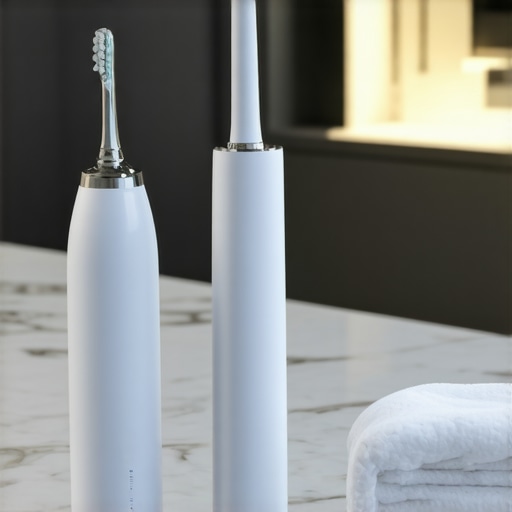
My best advice for you today is to stop treating your oral health as a chore and start treating it as asset management. Try this one advanced tip tonight: instead of just brushing, spend thirty seconds specifically ‘massaging’ the gumline where your teeth meet the soft tissue at a 45-degree angle. This simple mechanical disruption is the single most effective way to prevent the bacterial construction crew from setting up shop. If you’re ready to take the next step in your smile journey, feel free to contact us for a personalized assessment.
The Secret Vulnerability of Your Perfect Smile
I used to think that once I invested in my teeth, the hard work was over. But the hardest lesson I learned is that dental health is a dynamic project, not a stationary goal. When you go through a veneers transformation, you aren’t just buying a new look; you’re managing a new oral environment. Here are three insights I’ve gathered: First, the ‘margin’ where your restoration meets your gum is your primary defense line. Second, chemical mouthwashes are just perfume if you haven’t mechanically disrupted the plaque first. Finally, your saliva’s pH matters more for your long-term success than the price of your toothbrush. Understanding these nuances changed everything for me.
Tools That Keep My Smile Glass-Smooth
To maintain that fresh-from-the-chair feeling, I’ve narrowed my toolkit down to the essentials that actually move the needle. I swear by a pressure-sensing sonic toothbrush because it prevents the damage mentioned in the signs your receding gums are caused by your toothbrush. For anyone with advanced dental work, a high-quality water flosser is non-negotiable for cleaning around dental implants in 2025. Lastly, I always keep xylitol-based products nearby to stimulate saliva flow when I’m on the go and can’t reach a sink. These simple additions act as insurance for your smile.
#IMAGE_PLACEHOLDER_E#
Don’t Let the Fuzz Win
Your smile is one of your greatest assets, and keeping it smooth isn’t about scrubbing harder—it’s about brushing smarter. By applying these cosmetic dentistry secrets and staying consistent with proven family dentistry tips, you can keep that velvet feeling at bay forever. You’ve done the work to get the smile you want; now use these habits to protect it for the decades to come. If you ever feel like your routine isn’t quite cutting it, don’t hesitate to contact us for a professional assessment. Have you ever noticed that ‘fuzz’ returning faster after eating certain types of carbohydrates? Let me know in the comments below!