I sat bolt upright in bed, heart hammering, and poked at my jaw. It felt… wrong. Not loose, but tight. Like my new tooth was two sizes too big for the socket I had just spent months (and a small fortune) preparing. I was convinced I was one of the unlucky few whose body was literally trying to eject the titanium post. I have been there, staring at the bathroom mirror at 6:00 AM, wondering if I should call my dentist on their emergency line or just accept that I had made a massive mistake. My biggest blunder early on was trying to ‘test’ the implant by wiggling it with my tongue, which only made the area more irritated. If you are experiencing that weird, localized pressure only in the morning, I want to put your mind at ease. Today, we are going to break down why this happens, how to differentiate it from actual failure, and the simple steps you can take to wake up feeling normal again. Have you ever felt that strange ‘clamping’ sensation the moment you opened your eyes?
That Sudden Morning Pressure Does Not Mean You Are Losing the Tooth
Most of us assume that a dental implant should feel exactly like a natural tooth from day one. But here is the reality: your implant is fused directly to the bone, whereas a natural tooth has a tiny ligament that acts as a shock absorber. When I first started my journey with family dentistry experts, I did not realize that any nighttime clenching is felt much more intensely on an implant. If you are grinding your teeth at night, that implant has zero ‘give.’ It is basically a titanium pillar in your jaw, and the surrounding tissues can feel incredibly compressed by morning.
Is this tightness a sign my implant is failing?
This is the fear that keeps most people up at night. In the vast majority of cases, tightness is actually a sign of grinding your teeth rather than an infection or rejection. According to research published in the Journal of Oral Rehabilitation, sleep bruxism affects up to 15% of the adult population and can exert up to 250 pounds of force on your restorations. While you might worry about why your dental implant is showing a tiny dark line or other visual issues, the physical sensation of tightness is usually just muscle and tissue fatigue. Unlike when your dental implant feels loose but looks fine, morning tightness often fades within an hour of waking up. If it persists all day, that is when we need to look closer. To manage this, many people find that learning how to clean your night guard and wearing it consistently is the ‘magic bullet’ for eliminating that morning squeeze. Now, let’s look at the physiological reasons your gums might be reacting this way while you sleep.
Adjust the Pressure Before It Damages Your Restoration
Think of your dental implant as a steel support beam in a modern skyscraper. While your natural teeth are like older buildings on a flexible foundation, the titanium post has zero ‘give.’ If your bite is even a fraction of a millimeter off, your jaw muscles will try to ‘grind’ that high spot down all night long. I remember a week where I woke up with a dull throb that felt like someone was trying to unscrew my tooth. I was terrified the titanium was failing. It turned out my crown was just slightly taller than my other teeth. My dentist used a thin strip of articulating paper—basically a high-tech version of carbon paper—to find the ‘heavy’ contact point. After two minutes of polishing the porcelain, the morning tightness vanished. If you are debating veneers vs crowns for your other teeth, remember that alignment is the most critical factor for comfort.
Wear a Barrier to Protect Your Investment
The most effective tool in your arsenal is a custom-fitted night guard. This isn’t just a piece of plastic; it is a shock absorber that redistributes those 250 pounds of nocturnal force. When I finally committed to wearing mine, the ‘clamping’ sensation stopped within forty-eight hours. However, a dirty guard can lead to gum irritation that mimics implant pain, so make sure you know how to clean your night guard to keep bacteria at bay. 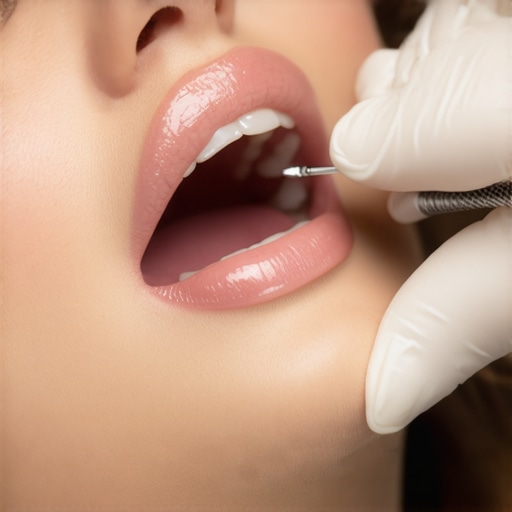
Spot the Difference Between Tightness and Actual Trouble
You need to distinguish between ‘mechanical’ pressure and ‘biological’ failure. Tightness that dissipates after your first cup of coffee is usually a sign of bruxism or muscle fatigue. If your jaw feels tired or stiff, you are likely clenching. On the other hand, if that tightness is accompanied by a warm sensation or a throbbing pulse, it might indicate that your dental implant site feels warm due to an underlying inflammatory response.
Check for Bone Stability and Soft Tissue Health
Sometimes the tightness stems from how the surrounding bone responded to the initial surgery. If your dental implant surgery requires a bone graft, the increased density in that area can make the integration feel ‘heavier’ than a standard extraction site. Modern innovations that redefine comfort and durability have made these sensations less common, but the physiological reality of titanium in bone remains the same. If the tightness feels like it is radiating from the gums specifically, look for redness. A healthy implant should be surrounded by firm, pink tissue. Any deep red or purple hue near the base suggests that the pressure might be coming from food debris trapped under the crown rather than clenching.While we often focus on the physical sensation of tightness, there is an even deeper layer of expertise required to keep your smile looking—and feeling—authentic. A common myth in family dentistry is that the strongest material is always the best choice for a restoration. In my experience, if you choose a crown material that is significantly harder than your natural teeth, like certain high-strength zirconias, you may end up causing microscopic trauma to the opposing jaw. This is a classic ‘oops’ factor: selecting a restoration so durable it actually damages the rest of your mouth. When weighing veneers vs crowns, we have to look at the biomechanics of your entire bite, not just the single tooth.
The Translucency Trap and the Chiclet Effect
Another trap is the ‘Chiclet’ effect. Many patients demand the brightest white available, but the mistake that makes your teeth look too white and fake is ignoring the natural translucency of enamel. Real teeth have a subtle color gradient and a ‘halo’ at the edges. If your implant crown is one solid opaque color, it will look like a piece of plastic under different lighting environments. This is precisely the reason your veneers look different in sunlight versus the fluorescent bulbs of your office. A study published in Clinical Oral Implants Research highlights that ‘pink aesthetics’—the way your gums frame the tooth—are just as vital for patient satisfaction as the ‘white’ aesthetics. If the gum tissue is not managed correctly during the initial healing, even the most expensive veneers transformation can end up looking unnatural because of poor gum architecture. 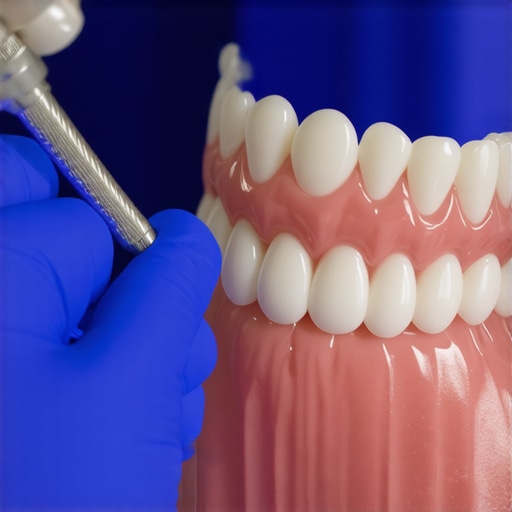
Why do some implants feel ‘heavy’ while others feel invisible?
It often comes down to the crown-to-root ratio and the specific angle of the abutment. If the angle isn’t perfectly aligned with your natural chewing path, your brain receives constant ‘proprioceptive’ signals that something is wrong, even if the X-ray looks perfect. This is where the future of dental implants lies: using digital planning and CBCT scans to ensure the tooth doesn’t just fit into a gap, but functions in harmony with your nervous system.
Your Implant is Not a ‘Set and Forget’ Device
Many patients believe that because an implant cannot get a cavity, they can relax their hygiene routine. This is the biggest misconception regarding how dental implants reshape your oral health in 2025. While the titanium itself won’t decay, the bone supporting it is highly susceptible to peri-implantitis—a silent, inflammatory condition that can lead to total implant loss without you ever feeling a bit of pain until it is too late. Cosmetic dentistry secrets for longevity always include specialized flossing techniques and regular professional check-ups to monitor bone levels. Chasing a ‘perfect’ smile requires balancing the durability of the materials with the biological reality of your living tissue. Have you ever fallen into this trap of choosing aesthetics over function? Let me know in the comments.
I learned the hard way that you cannot treat a high-end restoration like a standard tooth. After my initial procedure, I thought a quick brush and a prayer would suffice, but my dentist quickly corrected that notion. To keep these ‘super-teeth’ functioning, you need a specific toolkit. I switched to a high-quality water flosser because traditional string can occasionally shred on the tiny metallic edges of an abutment or get caught in the tight gaps of a veneers transformation. Even if you originally read about the benefit of using a water flosser with your braces, the same logic applies here: high-pressure water clears out the ‘biofilm’ that manual brushing misses. I personally use the Waterpik Aquarius because it has a specialized ‘Plaque Seeker’ tip designed specifically for implants.
Ditch the String Floss for Targeted Water Pressure
The goal is to prevent the gum line from receding, which is one of the most common ways an implant starts to look ‘fake’ or becomes vulnerable to infection. If you are worried about how dental implants reshape your oral health in 2025, you have to realize that the shape of the gum is the foundation of everything. I also started using interproximal brushes—those tiny little ‘Christmas tree’ brushes—to get into the nooks that a standard toothbrush simply cannot reach. This isn’t just about hygiene; it is about preserving the investment you made in your cosmetic dentistry secrets for a better smile. 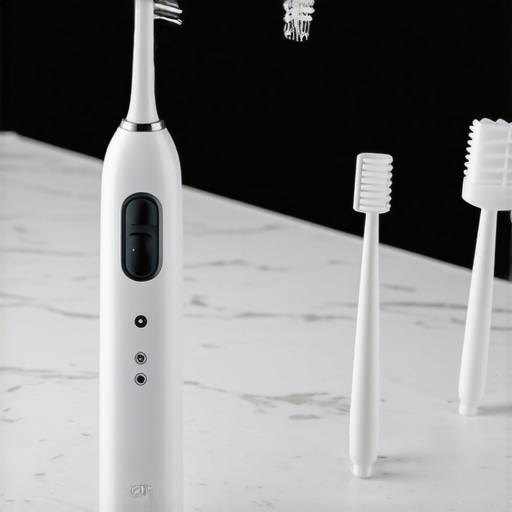
How do I maintain my dental implants over the next decade?
Long-term success isn’t just about what you do at home; it is about the data your dentist collects. Once a year, I ensure my clinic performs a deep-scan. This is the reason your culpeper dentist uses cbct-scans instead of regular x-rays—it allows them to see the bone density around the titanium post in 3D. A study published in the International Journal of Implant Dentistry (2021) found that patients who underwent regular mechanical debridement and 3D radiographic monitoring had a significantly lower incidence of late-stage implant failure. I predict that in the next few years, we will see AI-driven apps that connect to your electric toothbrush to alert you if the gum tissue around your implant is showing early signs of inflammation before you even feel it.
Look into the Future of Digital Smile Design
We are moving toward a world where your restorations are constantly monitored by ‘smart’ sensors. Until then, you are the first line of defense. When choosing between veneers vs crowns or maintaining an existing implant, the focus must remain on the seal between the restoration and the tissue. I always tell people that if you want expert tips for perfect results, you have to be obsessive about the hardware. Check out innovations that redefine comfort and durability to see how materials are changing to be even more bio-compatible. My advanced tip for you today: grab a dedicated interproximal brush and use it tonight—you will be shocked at what your standard brush left behind.
The Hardest Lesson I Learned About Titanium Teeth
After years of navigating the world of restorative dentistry, I realized that the physical sensation of an implant is only half the battle; the mental adjustment is just as significant. First, stop treating your implant like a biological tooth. It is a precision-engineered tool. One lightbulb moment for me was realizing that my morning tightness was often linked to my hydration levels; dehydrated tissues can feel more constricted around the metal post. Also, pay attention to the seasons. You might notice why your dental implant area is sensitive to cold weather because titanium conducts temperature differently than dentin. Finally, remember that your jaw is an emotional barometer. If you are stressed at work, your implant will be the first thing to ‘tell’ you by feeling tight because of nocturnal clenching. Recognizing these cosmetic dentistry secrets helped me stop panicking every time I felt a little pressure.
The Three Gadgets That Actually Protect Your Investment
You don’t need a cabinet full of products, but you do need the right ones. I rely on three specific items to keep my smile stable. First, a high-quality water flosser is non-negotiable for anyone who has undergone a veneers transformation or implant surgery. Second, avoid abrasive ‘whitening’ trends; I learned the hard way about the truth about charcoal toothpaste and your tooth enamel—it can scratch the surface of your expensive crowns. Third, keep a digital log of your symptoms. This data is invaluable when you visit your provider for family dentistry check-ups, as it helps them distinguish between routine ‘settling’ and actual mechanical issues. #IMAGE_PLACEHOLDER_E#
Take the Squeeze Out of Your Morning Routine
Waking up with a tight jaw shouldn’t be your ‘new normal.’ By implementing a solid nighttime routine and staying proactive with your hygiene, you can ensure your dental implants feel as natural as the teeth you were born with. The technology behind innovations that redefine comfort and durability is better than ever, but it still requires a partner—you—to succeed. Don’t let a little morning pressure discourage you from the incredible confidence a restored smile provides. If you are still feeling unsure about your bite alignment, contact us today to get a professional assessment. Have you ever felt that strange, localized ‘clamping’ sensation when you first wake up, or did your tightness go away on its own?