I’ll never forget the morning I stared into my bathroom mirror, pulled back my lip, and felt a cold jolt of genuine fear. My front tooth looked abnormally long, and there was a tiny, yellowish notch right at the gum line. In my head, I was already hearing the sound of a periodontist’s scalpel. I spent years in family dentistry waiting rooms, but I never thought I’d be the one facing a gum graft. For a week, I panicked, convinced I was losing my teeth. But here is the thing: I didn’t need a surgical overhaul. I just needed to stop making the same amateur mistakes that were literally pushing my gums away from my teeth.
Is it Too Late to Save Your Smile?
If you have noticed that your gums are receding around one specific tooth, you probably feel like the clock is ticking. It is. But that doesn’t mean surgery is the only exit on this highway. We are going to dive into how you can halt this process in its tracks by changing your daily habits and using a few helpful secrets I’ve picked up over the years. We are talking about saving your natural smile without the downtime of a painful graft. [image placeholder]
Can Gums Actually Grow Back on Their Own?
This is the biggest question I get, and I’ll be honest with you—once gum tissue is gone, it doesn’t just sprout back like a lawn. According to the American Academy of Periodontology, nearly 50% of adults over 30 have some form of periodontal disease, which is the primary driver of recession. However, you can absolutely tighten the existing tissue and stop further loss, which is often enough to avoid the dentist’s chair entirely. Have you ever looked in the mirror and realized your gums looked a bit lower than they did last year? Drop a comment below; I want to know I’m not the only one who had that ‘oh no’ moment.
Stop the Scrubbing Before the Damage Gets Worse
My biggest mistake? I thought clean meant scrubbed. I used a medium-bristle brush and treated my teeth like I was trying to get a stain out of a concrete driveway. It turns out, you can actually tell if your gum recession is caused by brushing too hard just by looking at the wear patterns near the root. If you are using anything other than a soft-bristled brush, you are basically sanding down your smile. It’s a hard pill to swallow, especially when you are trying to be proactive about your oral health. We also have to consider external factors; for instance, the impact of pregnancy on your gum health and sensitivity can make everything more delicate than usual. Whether it is hormonal or just bad habits, the first step to recovery is putting down the heavy-duty brush and learning the massage technique instead of the scrub.
Aim for the 45-Degree Sweet Spot
To stop recession, you have to change your physical relationship with your toothbrush. Most people approach their teeth at a 90-degree angle, which hits the enamel but slams the gum tissue. Instead, tilt your brush to a 45-degree angle toward the gum line. This allows the bristles to slide slightly under the gum margin—the ‘pocket’—where bacteria hide. Think of it like detailing a classic car; you aren’t trying to scrape off the paint, you are gently lifting the dust from the crevices. I remember when I first tried this, I was so used to the ‘scrub’ that I felt like I wasn’t even cleaning. I ended up pressing harder to compensate, and my gums actually turned a bright, angry red for three days. It was a messy learning curve, but once I lightened my touch, the bleeding stopped completely within a week. If you find that you are struggling with sensitivity during this transition, you might want to look into cosmetic dentistry secrets to boost your confidence and understand how professional sealants can protect those exposed roots while you heal. 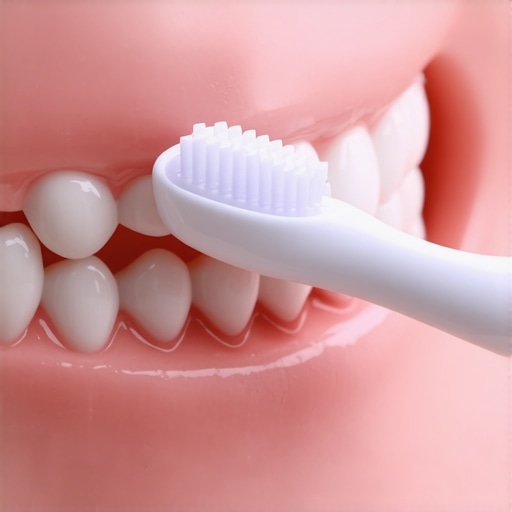
Let the Brush Do the Heavy Lifting
If you are still using a manual brush, you are playing a dangerous game with your hand-eye coordination. An electric toothbrush with a built-in pressure sensor is the single best investment for someone with receding gums. These devices vibrate or rotate at thousands of strokes per minute, meaning you only need to guide the brush, not move it. When I switched to a high-end electric model, the handle would flash a bright red warning every time I pushed too hard. It was humbling to realize that my ‘normal’ pressure was actually a destructive force. This is often why your gums bleed every time you try a new electric toothbrush—not because the brush is bad, but because it is finally telling you the truth about your heavy-handed habits. Use the smallest amount of pressure possible, just enough to keep the bristles in contact with the tooth.
Stop Grinding Your Progress Away
Recession isn’t always about what you do while you are awake; it is often about what you do while you are asleep. Bruxisim, or teeth grinding, puts lateral pressure on the teeth that can actually cause the gum tissue to ‘pop’ away from the root. If you wake up with a dull ache in your jaw, you might be undoing all your hard work. There is a strong connection between frequent headaches and grinding your teeth, and this constant trauma is a silent killer for gum health.
Guard Your Smile While You Sleep
The solution is a custom-fitted night guard. This creates a physical barrier that absorbs the force of your jaw muscles. It won’t stop the grinding habit, but it will stop the physical destruction of your gum attachment. Just remember that once you have one, you need to learn how to clean your night guard without damaging the material to avoid introducing new bacteria to your mouth every night. You can also practice stress-reduction techniques and learn how to stop clenching your jaw during the workday to give your gums a fighting chance to stabilize. Think of your gums like the foundation of a house; even the best family dentistry can’t save a structure if the ground underneath is constantly being shaken by an earthquake.
Your New Implant Isn’t Actually Invincible
Most people assume that once they trade a failing root for titanium, their days of worrying about gum disease are over. It’s a common belief that ‘fake teeth can’t rot,’ so the pressure is off. In my experience, this is the most dangerous trap you can fall into. While the implant itself won’t get a cavity, the tissue surrounding it is actually more vulnerable than the tissue around a natural tooth. Natural teeth are attached to the bone via the periodontal ligament, which acts as a sensory alarm and a blood-supply highway. Implants lack this ligament, meaning infections can travel to the bone much faster. A study published in the Journal of Periodontology found that peri-implantitis—the implant version of gum disease—can affect a significant percentage of patients who neglect specialized hygiene. If you are exploring the truth about getting dental implants if you have existing bone loss, you must realize that the surgery is only half the battle; the real work is the hyper-vigilant maintenance that follows. Have you ever fallen into the ‘set it and forget it’ trap with your dental work? Let me know in the comments.
The Fluorescent Mistake You Will Regret in Real Light
When people transition from saving their gums to enhancing their smile with veneers, they often fall victim to the ‘Hollywood White’ syndrome. In the dentist’s chair, under bright LED lights, a bleach-white shade looks amazing. But step outside into the Culpeper sun, and suddenly your teeth look like glowing piano keys. This is the mistake that makes your teeth look too white and fake. The secret to high-end cosmetic dentistry is translucency. Natural teeth aren’t opaque; they allow light to filter through the edges. If your veneers are too thick or too white, they lose that life-like depth. This is also why your veneers feel bulkier than your natural teeth—if the lab doesn’t account for the natural contour and light play, you end up with a ‘denture look’ that sits on top of your personality rather than reflecting it. Knowing how to pick the right shade for your new porcelain veneers involves looking at the whites of your eyes; your teeth should never be whiter than your sclera. 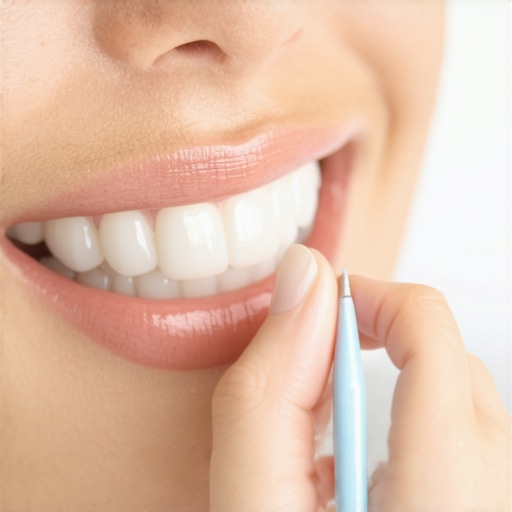
Why Does Your Titanium Root Feel Like It’s Vibrating?
This is a question I see from patients who are further along in their journey, and it catches many by surprise. If you’ve noticed that your dental implant feels like it is vibrating slightly when you talk or chew, don’t panic. This is often a nuance of ‘osseoperception.’ Because the implant is fused directly to your jawbone, it conducts sound and vibration differently than a natural tooth cushioned by a ligament. It’s an advanced sensory phenomenon where your brain is still trying to figure out how to ‘feel’ through a metal post. However, you have to be careful; if that vibration is accompanied by movement, it could mean your dental implant crown feels slightly wiggly when you bite, which is usually just a loose screw and not a failing implant. Understanding these nuances is what separates a successful long-term recovery from a frantic emergency visit. Always remember that even the most advanced family dentistry requires you to be an active participant in your own healing process. Don’t just watch for the big problems; listen to the subtle shifts in how your mouth feels.If you want to keep that titanium root and those porcelain shells looking like a million bucks, you have to move beyond the drugstore basics. I personally use a water flosser with a specialized ‘Plaque Seeker’ tip—this is non-negotiable for my implants. Standard floss can actually shred and leave tiny fibers caught in the rough surface of the implant post, which is a recipe for disaster. Using the water flosser allows me to flush out the sulcus without mechanical trauma. It is one of those expert tips for perfect results that most people ignore until they see a red gum line. 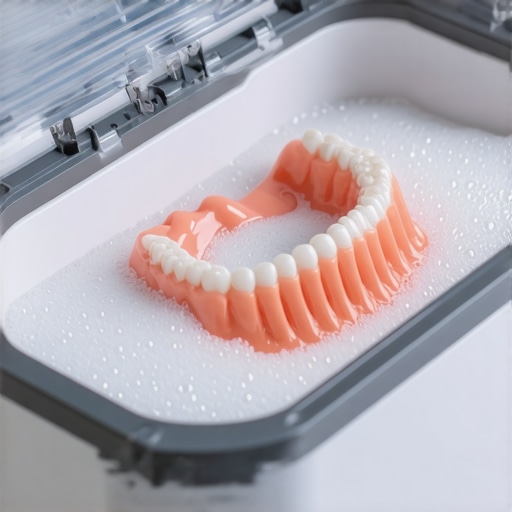
Your Night Guard Deserves a Spa Day Too
If you are wearing a guard to stop the grinding I mentioned earlier, you can’t just rinse it in tap water and call it a day. I use an ultrasonic cleaner—the same kind jewelers use—to shake the microscopic biofilm off the plastic. According to technical documentation from the American College of Prosthodontists, manual scrubbing with abrasive pastes can create micro-scratches that harbor bacteria and eventually degrade the polish of your restorative work. If you have been wondering how to clean your night guard without damaging the material, this is the gold standard. It’s about precision, not force. This same mindset applies to maintaining veneers transformation results; you are protecting a high-end surface, not just a tooth.
How do I maintain my dental implants and veneers over time?
The secret is a ‘low-abrasion’ lifestyle. This means using non-abrasive gels instead of gritty toothpastes and scheduling ‘implant-specific’ cleanings where the hygienist uses plastic or resin scalers instead of metal ones. Metal tools can scratch your implant, creating a playground for bacteria. Looking ahead, I see cutting-edge techniques in cosmetic dentistry moving toward ‘smart’ implants that can actually detect pH changes in your mouth and alert your phone if an infection is brewing. In the meantime, we have to rely on innovations that redefine comfort and durability to bridge the gap and keep our smiles functional.
Don’t Let the Future Catch You Unprepared
By 2025, we will likely see more biological integration where the line between synthetic and natural tissue blurs, potentially allowing for better gum re-attachment to ceramic posts. But for now, you need to be the primary investigator of your own mouth. If you feel even a slight change in the fit of your bite or the texture of your gums, don’t wait. Reach out and contact us to catch small issues before they become five-figure problems. My challenge to you today: swap your regular floss for a high-powered water flosser for one week and watch how much more ‘pink’ and healthy your gums look around your dental work. You’ll be surprised how much gunk a standard string misses.I’ll never forget the morning I stared into my bathroom mirror, pulled back my lip, and felt a cold jolt of genuine fear. My front tooth looked abnormally long, and there was a tiny, yellowish notch right at the gum line. In my head, I was already hearing the sound of a periodontist’s scalpel. I spent years in family dentistry waiting rooms, but I never thought I’d be the one facing a gum graft. For a week, I panicked, convinced I was losing my teeth. But here is the thing: I didn’t need a surgical overhaul. I just needed to stop making the same amateur mistakes that were literally pushing my gums away from my teeth.
Is it Too Late to Save Your Smile?
If you have noticed that your gums are receding around one specific tooth, you probably feel like the clock is ticking. It is. But that doesn’t mean surgery is the only exit on this highway. We are going to dive into how you can halt this process in its tracks by changing your daily habits and using a few helpful secrets I’ve picked up over the years. We are talking about saving your natural smile without the downtime of a painful graft. [image placeholder]
Can Gums Actually Grow Back on Their Own?
This is the biggest question I get, and I’ll be honest with you—once gum tissue is gone, it doesn’t just sprout back like a lawn. According to the American Academy of Periodontology, nearly 50% of adults over 30 have some form of periodontal disease, which is the primary driver of recession. However, you can absolutely tighten the existing tissue and stop further loss, which is often enough to avoid the dentist’s chair entirely. Have you ever looked in the mirror and realized your gums looked a bit lower than they did last year? Drop a comment below; I want to know I’m not the only one who had that ‘oh no’ moment.
Stop the Scrubbing Before the Damage Gets Worse
My biggest mistake? I thought clean meant scrubbed. I used a medium-bristle brush and treated my teeth like I was trying to get a stain out of a concrete driveway. It turns out, you can actually tell if your gum recession is caused by brushing too hard just by looking at the wear patterns near the root. If you are using anything other than a soft-bristled brush, you are basically sanding down your smile. It’s a hard pill to swallow, especially when you are trying to be proactive about your oral health. We also have to consider external factors; for instance, the impact of pregnancy on your gum health and sensitivity can make everything more delicate than usual. Whether it is hormonal or just bad habits, the first step to recovery is putting down the heavy-duty brush and learning the massage technique instead of the scrub.
Aim for the 45-Degree Sweet Spot
To stop recession, you have to change your physical relationship with your toothbrush. Most people approach their teeth at a 90-degree angle, which hits the enamel but slams the gum tissue. Instead, tilt your brush to a 45-degree angle toward the gum line. This allows the bristles to slide slightly under the gum margin—the ‘pocket’—where bacteria hide. Think of it like detailing a classic car; you aren’t trying to scrape off the paint, you are gently lifting the dust from the crevices. I remember when I first tried this, I was so used to the ‘scrub’ that I felt like I wasn’t even cleaning. I ended up pressing harder to compensate, and my gums actually turned a bright, angry red for three days. It was a messy learning curve, but once I lightened my touch, the bleeding stopped completely within a week. If you find that you are struggling with sensitivity during this transition, you might want to look into cosmetic dentistry secrets to boost your confidence and understand how professional sealants can protect those exposed roots while you heal.
Let the Brush Do the Heavy Lifting
If you are still using a manual brush, you are playing a dangerous game with your hand-eye coordination. An electric toothbrush with a built-in pressure sensor is the single best investment for someone with receding gums. These devices vibrate or rotate at thousands of strokes per minute, meaning you only need to guide the brush, not move it. When I switched to a high-end electric model, the handle would flash a bright red warning every time I pushed too hard. It was humbling to realize that my ‘normal’ pressure was actually a destructive force. This is often why your gums bleed every time you try a new electric toothbrush—not because the brush is bad, but because it is finally telling you the truth about your heavy-handed habits. Use the smallest amount of pressure possible, just enough to keep the bristles in contact with the tooth.
Stop Grinding Your Progress Away
Recession isn’t always about what you do while you are awake; it is often about what you do while you are asleep. Bruxisim, or teeth grinding, puts lateral pressure on the teeth that can actually cause the gum tissue to ‘pop’ away from the root. If you wake up with a dull ache in your jaw, you might be undoing all your hard work. There is a strong connection between frequent headaches and grinding your teeth, and this constant trauma is a silent killer for gum health.
Guard Your Smile While You Sleep
The solution is a custom-fitted night guard. This creates a physical barrier that absorbs the force of your jaw muscles. It won’t stop the grinding habit, but it will stop the physical destruction of your gum attachment. Just remember that once you have one, you need to learn how to clean your night guard without damaging the material to avoid introducing new bacteria to your mouth every night. You can also practice stress-reduction techniques and learn how to stop clenching your jaw during the workday to give your gums a fighting chance to stabilize. Think of your gums like the foundation of a house; even the best family dentistry can’t save a structure if the ground underneath is constantly being shaken by an earthquake.
Your New Implant Isn’t Actually Invincible
Most people assume that once they trade a failing root for titanium, their days of worrying about gum disease are over. It’s a common belief that ‘fake teeth can’t rot,’ so the pressure is off. In my experience, this is the most dangerous trap you can fall into. While the implant itself won’t get a cavity, the tissue surrounding it is actually more vulnerable than the tissue around a natural tooth. Natural teeth are attached to the bone via the periodontal ligament, which acts as a sensory alarm and a blood-supply highway. Implants lack this ligament, meaning infections can travel to the bone much faster. A study published in the Journal of Periodontology found that peri-implantitis—the implant version of gum disease—can affect a significant percentage of patients who neglect specialized hygiene. If you are exploring the truth about getting dental implants if you have existing bone loss, you must realize that the surgery is only half the battle; the real work is the hyper-vigilant maintenance that follows. Have you ever fallen into the ‘set it and forget it’ trap with your dental work? Let me know in the comments.
The Fluorescent Mistake You Will Regret in Real Light
When people transition from saving their gums to enhancing their smile with veneers, they often fall victim to the ‘Hollywood White’ syndrome. In the dentist’s chair, under bright LED lights, a bleach-white shade looks amazing. But step outside into the Culpeper sun, and suddenly your teeth look like glowing piano keys. This is the mistake that makes your teeth look too white and fake. The secret to high-end cosmetic dentistry is translucency. Natural teeth aren’t opaque; they allow light to filter through the edges. If your veneers are too thick or too white, they lose that life-like depth. This is also why your veneers feel bulkier than your natural teeth—if the lab doesn’t account for the natural contour and light play, you end up with a ‘denture look’ that sits on top of your personality rather than reflecting it. Knowing how to pick the right shade for your new porcelain veneers involves looking at the whites of your eyes; your teeth should never be whiter than your sclera.
Why Does Your Titanium Root Feel Like It’s Vibrating?
This is a question I see from patients who are further along in their journey, and it catches many by surprise. If you’ve noticed that your dental implant feels like it is vibrating slightly when you talk or chew, don’t panic. This is often a nuance of ‘osseoperception.’ Because the implant is fused directly to your jawbone, it conducts sound and vibration differently than a natural tooth cushioned by a ligament. It’s an advanced sensory phenomenon where your brain is still trying to figure out how to ‘feel’ through a metal post. However, you have to be careful; if that vibration is accompanied by movement, it could mean your dental implant crown feels slightly wiggly when you bite, which is usually just a loose screw and not a failing implant. Understanding these nuances is what separates a successful long-term recovery from a frantic emergency visit. Always remember that even the most advanced family dentistry requires you to be an active participant in your own healing process. Don’t just watch for the big problems; listen to the subtle shifts in how your mouth feels.If you want to keep that titanium root and those porcelain shells looking like a million bucks, you have to move beyond the drugstore basics. I personally use a water flosser with a specialized ‘Plaque Seeker’ tip—this is non-negotiable for my implants. Standard floss can actually shred and leave tiny fibers caught in the rough surface of the implant post, which is a recipe for disaster. Using the water flosser allows me to flush out the sulcus without mechanical trauma. It is one of those expert tips for perfect results that most people ignore until they see a red gum line.
Your Night Guard Deserves a Spa Day Too
If you are wearing a guard to stop the grinding I mentioned earlier, you can’t just rinse it in tap water and call it a day. I use an ultrasonic cleaner—the same kind jewelers use—to shake the microscopic biofilm off the plastic. According to technical documentation from the American College of Prosthodontists, manual scrubbing with abrasive pastes can create micro-scratches that harbor bacteria and eventually degrade the polish of your restorative work. If you have been wondering how to clean your night guard without damaging the material, this is the gold standard. It’s about precision, not force. This same mindset applies to maintaining veneers transformation results; you are protecting a high-end surface, not just a tooth.
How do I maintain my dental implants and veneers over time?
The secret is a ‘low-abrasion’ lifestyle. This means using non-abrasive gels instead of gritty toothpastes and scheduling ‘implant-specific’ cleanings where the hygienist uses plastic or resin scalers instead of metal ones. Metal tools can scratch your implant, creating a playground for bacteria. Looking ahead, I see cutting-edge techniques in cosmetic dentistry moving toward ‘smart’ implants that can actually detect pH changes in your mouth and alert your phone if an infection is brewing. In the meantime, we have to rely on innovations that redefine comfort and durability to bridge the gap and keep our smiles functional.
Don’t Let the Future Catch You Unprepared
By 2025, we will likely see more biological integration where the line between synthetic and natural tissue blurs, potentially allowing for better gum re-attachment to ceramic posts. But for now, you need to be the primary investigator of your own mouth. If you feel even a slight change in the fit of your bite or the texture of your gums, don’t wait. Reach out and contact us to catch small issues before they become five-figure problems. My challenge to you today: swap your regular floss for a high-powered water flosser for one week and watch how much more ‘pink’ and healthy your gums look around your dental work. You’ll be surprised how much gunk a standard string misses.
Why Your Replacement Teeth Need More Love Than the Originals
The hardest lesson I learned wasn’t about the initial surgery; it was about the aftermath. We often think that opting for cutting-edge techniques in cosmetic dentistry means we can finally relax, but the biological bond with a titanium post is actually more fragile than a natural root. I used to believe that once I had my smile ‘fixed,’ the work was finished. In reality, that is exactly when the real stewardship begins. Another major realization? Consistency beats intensity every single time. Gently massaging your gums with a soft brush twice a day is infinitely better for family dentistry outcomes than trying to ‘fix’ a week of neglect with one aggressive scrubbing session.
The Three Tools That Actually Saved My Gums
If you are serious about your long-term oral health, you have to move beyond the basic plastic toothbrush. Here is the toolkit I personally trust: First, an electric brush with a pressure sensor—it’s the only way to objectively know you aren’t over-brushing. Second, a high-powered water flosser. It flushes the pockets around restorations that standard string simply can’t reach, especially if you are weighing veneers vs crowns choosing the best option for your smile. Finally, don’t overlook an ultrasonic cleaner for your night guard to prevent bacteria from sitting against your gum line all night. These aren’t just accessories; they are the insurance policy for your dental investment.
Start Protecting the Smile You Worked So Hard For
Your journey shouldn’t be defined by the fear of losing your teeth, but by the confidence of knowing you are in control of your healing. Whether you are currently exploring dental implants 2025 innovations that redefine comfort and durability or just trying to keep your natural gums healthy, the small changes you make tonight will dictate your smile ten years from now. You have the tools, the knowledge, and the support to maintain a vibrant, healthy mouth for a lifetime. Which part of your dental routine feels the most like a chore right now? Let’s troubleshoot your habits in the comments below!