I remember sitting in my car after my first real scaling and root planing session, desperately trying to rub my gums through my cheeks with my knuckles. It wasn’t a sharp pain, but rather a persistent, maddening tickle that felt like a thousand tiny feathers were brushing against the inside of my jaw. I was convinced something had gone horribly wrong. I actually turned the car around, ready to demand answers because I thought I was having a bizarre allergic reaction to the numbing gel. It turns out, I was just experiencing a very common, albeit incredibly annoying, side effect of the healing process. That itch wasn’t a mistake; it was a signal.
The Real Reason Your Gums Are Throwing a Tantrum
That itchy sensation is usually your body’s way of saying “I am working on it!” When a hygienist performs a deep cleaning, they are essentially performing a minor surgical reset for your mouth. They have cleared out years of built-up tartar and bacteria from deep pockets you probably didn’t even know existed. Now, your gum tissue needs to reattach to the tooth roots. According to the Journal of Periodontology, the inflammatory response during healing involves a surge of histamines and increased blood flow to the area. This is exactly why a healing scab on your arm feels itchy—it is the exact same biological “repair crew” at work in your mouth.
I’ve been there, and I know how tempting it is to poke and prod at the area. Early in my journey with family dentistry, I made the mistake of trying to “brush the itch away.” I took my firm-bristled brush and went to town, thinking I could scrub out the irritation. All I did was cause more inflammation and make my teeth feel extra sensitive for an entire week. If you are feeling that phantom crawly sensation, you have to let the tissue settle without physical interference. Have you ever found yourself scratching your gums with your tongue after a visit, or is it just me?
Does This Mean the Cleaning Was Too Aggressive?
It is easy to get skeptical when you leave a medical appointment feeling more uncomfortable than when you walked in. You might worry that the instruments were too harsh or that your hygienist was a bit too “enthusiastic” with the scaler. But in most cases, the itch is actually a sign of success. It means the deep-seated inflammation is finally subsiding and the blood vessels are bringing in the nutrients needed to seal those pockets back up. While the itch is a nuisance, it is a far better trade-off than letting periodontal disease progress to the point where you need dental implants to replace lost teeth. If you have recently invested in veneers or a deep scaling, your mouth is currently in a state of high-alert recovery. Think of it as your gums waking up after a long, stagnant sleep. It feels weird because it *is* weird, but we are going to walk through the best ways to soothe that fire without causing any damage.
Calm the Fire with a Simple Kitchen Staple
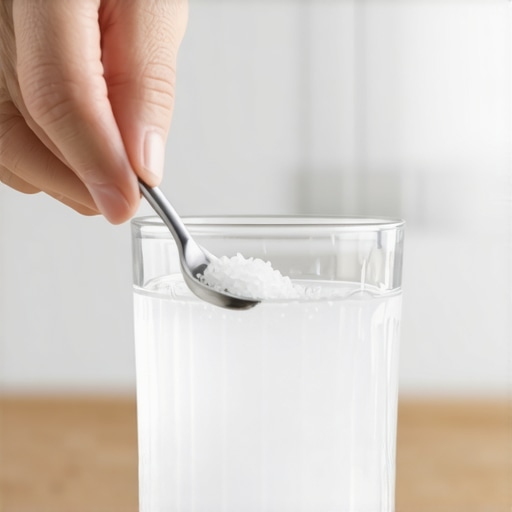
The absolute first thing you should do when the itching becomes unbearable is reach for the sea salt. Think of a saltwater rinse as a gentle “chemical hug” for your wounded gums. When I was dealing with that maddening post-cleaning itch, I used to think I needed some high-tech medical solution, but a teaspoon of salt in a glass of warm water did more than any over-the-counter gel. The salt creates an osmotic effect, pulling excess fluid out of the inflamed tissue. It is the same principle as using a sponge to soak up a spill; it physically reduces the pressure that is triggering your nerves to send that “itch” signal to your brain.
Keep the Water Lukewarm to Avoid Shock
I learned the hard way that temperature matters. I once tried an ice-cold saltwater rinse thinking it would numb the area, but since my teeth feel extra sensitive after a professional cleaning, the cold felt like a lightning bolt hitting my jaw. Use lukewarm water. It is soothing enough to encourage blood flow without causing a sharp pain spike. Swish it gently for 30 seconds and spit. Do not gargle aggressively; you want to bathe the gums, not power-wash them.
Master the Art of the Soft Food Transition
Your gums are currently trying to “re-glue” themselves to your teeth. If you go out and eat a bag of crunchy tortilla chips, you are essentially throwing sand into a fresh coat of wet paint. In the world of family dentistry, we call this the “healing window.” For the first 48 hours, stick to things that require zero grinding. I remember trying to eat a crusty baguette three days after my scaling, and a tiny crumb got lodged right in the gum line. It didn’t just itch; it throbbed. I had to go back to the office just to have them flush out a piece of bread.
Why You Should Skip the Straw
This is a nuance many people miss. Suction is the enemy of healing tissue. Whether you are recovering from a deep cleaning or you have just had dental implants placed, the vacuum created by a straw can pull at the delicate blood clots and new tissue forming in the pockets. Drink directly from the glass. This simple shift prevents unnecessary mechanical stress on the very area trying to settle down.
Upgrade Your Home Care Without Adding Friction
You still need to keep the area clean, but you have to change your technique. If you are someone who likes to “scrub,” you need to retire that habit immediately. Think of your gums like a delicate silk fabric rather than a rug. If you have invested in veneers vs crowns or other high-end cosmetic dentistry, you know that maintenance is about precision, not force.
Switch to an Extra-Soft Bristle for a Week
Even if you usually use a medium brush, go buy a “post-surgical” or extra-soft brush for the next seven days. Use a circular motion rather than a back-and-forth sawing motion. The goal is to remove the film of bacteria without disturbing the biological “velcro” that is currently reattaching your gums to the roots of your teeth. If you see a tiny bit of pink in the sink, don’t panic, but it is a sign to lighten your touch even further. You are a gardener tending to new sprouts right now, not a construction worker clearing a site.
That itchy, healing gum tissue I mentioned earlier isn’t just a side effect of a deep cleaning; it is a vital prerequisite for any advanced work you might be considering. I have seen so many people rush into a veneers transformation thinking they can simply mask underlying issues with porcelain. But here is the contrarian truth: your cosmetic work is only as good as the ‘pink’ (your gums) that surrounds the ‘white’ (your teeth). Everyone tells you to aim for the brightest smile possible, but in my experience, the ‘bleach white’ look is actually the biggest mistake that makes your teeth look too white and fake. Real teeth have natural translucency. According to a study published in the Journal of Esthetic and Restorative Dentistry, the most aesthetically pleasing smiles aren’t monochromatic; they feature subtle gradients of color and light scattering that mimic natural enamel.
The Trap of Ignoring Your Biological Foundation
If you are looking into how dental implants reshape your oral health, do not fall into the trap of thinking titanium is a magic bullet for bone health. A common nuance people miss is that you cannot just ‘plant’ an implant into an area that has been vacant for years without assessing the foundation. I often talk to patients who are surprised to learn about the truth about getting dental implants if you have existing bone loss. If the bone has resorbed, the implant lacks the structural support to handle the thousands of pounds of pressure your jaw generates during a meal. This is where family dentistry becomes a long-game strategy rather than a series of quick fixes. You have to build the site before you build the tooth.
Why Do Your Veneers Look Different in Natural Sunlight?
This is one of the most sophisticated questions I get from patients who have already started their journey. You might look at your smile in the bathroom mirror and love it, then get into your car and realize the reason your veneers look different in sunlight is due to metamerism. This is a phenomenon where the same material looks like a different color under different light sources. High-end cosmetic dentistry accounts for this by using multi-layered porcelain that reacts to UV rays similarly to your natural teeth. If your dentist only uses a single-shade block of porcelain, you might end up with an ‘opaque’ look that stands out for all the wrong reasons. Have you ever fallen into this trap of picking a shade that looked great in the office but felt ‘off’ once you stepped outside? Let me know in the comments below.
The ‘Oops’ Factor of Professional Whitening
Before you commit to a major overhaul, remember that whitening is not a one-size-fits-all solution. A major warning I always give is to check for existing composite fillings in your front teeth. Whitening gels do not change the color of dental resin. If you bleach your natural enamel, those older fillings will suddenly look dark and yellow in comparison. It’s an expensive ‘oops’ that requires you to replace all those fillings to match your new shade. Always plan your shade for your new porcelain veneers or whitening treatments in a comprehensive session to avoid this mismatched outcome. Transitioning your smile is a marathon, not a sprint, and your gums—even that annoying itch—are telling you to take it one step at a time.
I’ve learned the hard way that the most expensive part of a smile isn’t the porcelain itself, but the maintenance you ignore. After I finally achieved my dream smile through a veneers transformation, I thought the hard work was over. I was wrong. The real work is in the infrastructure. Think of your new dental work like a high-performance sports car; you wouldn’t drive a Ferrari and skip the oil changes, yet so many people invest in cosmetic dentistry only to treat their mouth like a junk drawer. If you want those results to last twenty years instead of five, you need a specific toolkit that goes beyond a standard plastic toothbrush.
Stop Treating Your Gums Like a Concrete Slab
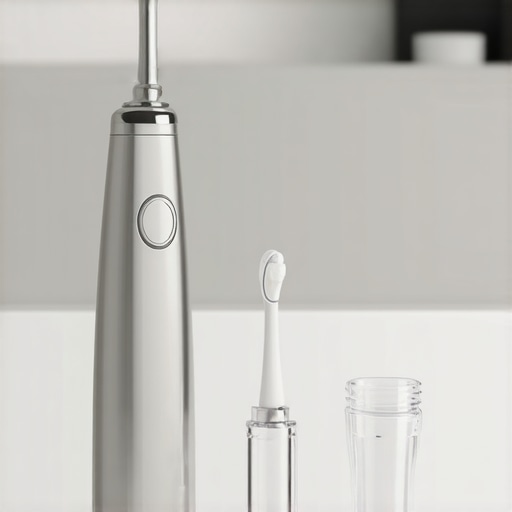
The biggest mistake I see—and one I made myself—is over-brushing to ‘protect’ the investment. This is how you end up wondering if your gum recession is caused by brushing too hard. Instead of mechanical scrubbing, I switched to an ultrasonic cleaner. Specifically, I use the Phillips Sonicare DiamondClean because the fluid dynamics actually reach into the pockets where bacteria hide without me needing to apply any pressure. For anyone with dental implants, a water flosser is non-negotiable. I personally use a Waterpik on the ‘massage’ setting. It flushes the area around the abutment where a traditional string floss might fray or snag, ensuring the ‘pink’ stays as healthy as the ‘white.’
How can I keep my new smile looking fresh for decades?
Maintenance is a daily game of defense. The American Academy of Cosmetic Dentistry (AACD) emphasizes that while modern materials are incredibly durable, the bond between the tooth and the restoration is where the risk lies. This is why I am a stickler for a custom-fabricated occlusal guard. Even if you don’t think you grind your teeth, the microscopic ‘flex’ that happens when you sleep can lead to de-bonding over time. If you have spent time debating the truth about the durability of composite vs porcelain veneers, you know porcelain is stronger, but it’s also more brittle. A night guard acts as a shock absorber for your investment. Just make sure you know how to clean your night guard without damaging the material, or you’ll just be soaking your teeth in bacteria every night.
The Prediction for 2026 and Beyond
Looking ahead, the world of family dentistry is moving toward ‘biometric monitoring.’ We are already seeing the beginning of this with cutting-edge techniques in cosmetic dentistry where 3D scans are used to create a ‘digital twin’ of your mouth. In the very near future, I suspect we will have smart-brushes that don’t just tell you if you missed a spot, but actually analyze the pH level of your saliva to predict decay before it happens. We are moving from a ‘fix it when it breaks’ model to a ‘prevent it before it exists’ reality. For now, my most advanced tip for you is to implement a ‘remineralization’ phase every night. After your final rinse, use a hydroxyapatite paste and don’t rinse it off. It provides a sacrificial layer of minerals that protects your natural tooth structure and your veneers vs crowns from the acidic environment of sleep. Try this for one week, and you’ll notice your teeth feel less sticky and much smoother in the morning.
The One Truth About Cosmetic Work That No One Told Me Early On
Looking back at my transition from simple cleanings to a full veneers transformation, I realized that the “itch” was actually my first lesson in patience. You cannot rush biology. One of the most significant lightbulb moments for me was realizing that your gums are the “soil” for your teeth. If the soil is neglected, even the most expensive porcelain will eventually fail. I also learned that perfection is a trap; aiming for a smile that looks healthy and functional is far more rewarding than chasing an artificial filter look. Finally, never underestimate the power of your family dentistry team—they are your early warning system for everything from minor recession to structural shifts.
My No-Nonsense Maintenance Arsenal
To keep my smile in peak condition, I rely on a few specific tools that I trust explicitly. First, I use a high-quality pH-balanced mouthwash to prevent the acidic spikes that can lead to teeth feeling sensitive. I also keep a stock of G-U-M Soft-Picks; they are much gentler than traditional floss for those days when your gums feel a bit tender. For those who have navigated cutting-edge techniques in cosmetic dentistry, I highly recommend investing in a dedicated storage case for your night guard—one that has UV-sanitizing capabilities to ensure you aren’t re-introducing bacteria to your mouth every night.
#IMAGE_PLACEHOLDER_E#
Move Past the Fear and Into Your Best Smile
Whether you are dealing with a post-cleaning itch or you are in the middle of a full cosmetic dentistry overhaul, remember that discomfort is often just a temporary bridge to a better state of health. Don’t let a few days of sensitivity or a weird sensation stop you from pursuing the smile you deserve. By staying proactive and using the right maintenance techniques, you ensure that your dental implants and natural teeth stay strong for a lifetime. Your smile is the most visible part of your health—treat it with the respect it deserves. Have you ever experienced a “phantom” sensation after a dental visit that made you second-guess the procedure? Let me know in the comments below!