I remember the exact moment I realized I was doing it all wrong. I had just spent a small fortune on a custom-fitted night guard to stop my late-night jaw clenching—something I’ve dealt with since I started my first corporate job—and within three weeks, it looked like I’d found it in a storm drain. It was cloudy, smelled like a gym locker, and had this weird, calcified texture that made me want to gag. My first instinct? I grabbed a bottle of harsh bathroom cleaner. Don’t do that. I spent the next four nights tasting chemicals, and the plastic felt like it was going to snap in half every time I popped it in.
Stop Ruining Your Expensive Oral Appliances
Maintaining that piece of plastic is just as important as family dentistry tips for a lifetime of healthy smiles. If you’ve ever noticed why your clear aligners have turned a cloudy white color, you know the panic of seeing your investment literally fade away. We wear these things to protect our teeth from the damage of grinding, which is especially common in kids; I’ve often wondered why your child is still grinding their teeth at age six and if they’ll end up with the same habits I have. Today, I’m going to show you how to keep that guard crystal clear and bacteria-free without using anything that will degrade the integrity of the material. We’re talking about longevity. You want this thing to last years, not months.
Is simple soap and water actually enough?
You might be thinking that I’m overcomplicating things. Can’t you just rinse it and call it a day? The short answer is no. According to a study published in the Journal of Clinical Periodontology, oral appliances can harbor significant amounts of Staphylococcus aureus and Candida if not disinfected properly. Plain water doesn’t kill that stuff. But neither does the “nuclear option” of boiling water, which I also tried once. It warped my guard so badly it didn’t even fit my molars anymore. Learning how to remove stains from clear aligners without scratching them taught me that the “scrubbing” method is usually the enemy. If you use a hard-bristled brush, you create microscopic scratches. Those scratches are basically luxury condos for bacteria. Have you ever pulled your night guard out in the morning only to be hit with a smell that made you want to skip breakfast? Drop a comment if you have ever tried a “hack” that accidentally melted your dental gear!
Rinse It Immediately to Prevent Biofilm Build-up
The second that guard comes out of your mouth, it needs to hit the water. If you let it sit on the nightstand while you go brew coffee, the saliva and proteins from your mouth will dry and harden into a stubborn layer of plaque. I learned this the hard way during a particularly groggy Monday morning when I left my guard out for three hours. By the time I got back to it, I had to pick off what looked like dried salt with my fingernail. Instead, use lukewarm water to flush away the loose debris. Hot water is the enemy here; it can warp the plastic, turning a custom-fit piece into a painful reminder of why we can’t have nice things. This daily habit is the foundation of family dentistry tips for a lifetime of healthy smiles. 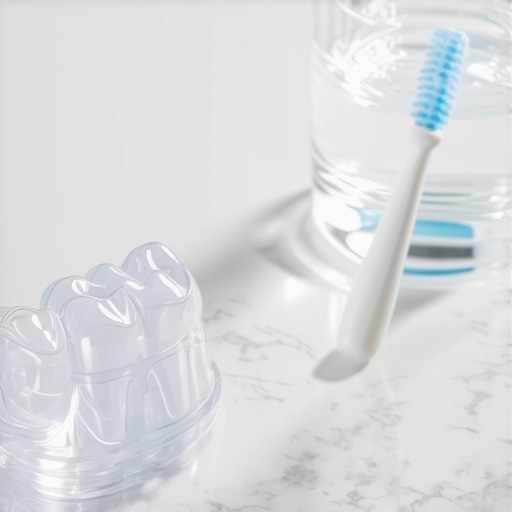
Ditch the Abrasive Paste and Use Mild Soap
Most people think that if toothpaste is good for your teeth, it must be good for your guard. This is a myth that will cost you money. Toothpaste contains tiny abrasives designed to scrub enamel, but those same particles will create microscopic grooves in your night guard or retainers. These grooves become breeding grounds for the bacteria that cause why your mouth feels sticky and dry when you wake up. I once used a whitening toothpaste on my guard, and within a month, the once-clear plastic looked like it had been rubbed with sandpaper. Use a clear, unscented dish soap or a specialized cleanser instead. It cuts through the oils without damaging the surface. This technique is actually very similar to the safest way to clean your dentures at home without scratches, focusing on preservation over power.
The 15-Minute Deep Clean You Need Every Week
Even with daily rinsing, minerals from your saliva will eventually start to build up. This is where the deep soak comes in. Once a week, drop your appliance into a mixture of one part white vinegar to three parts water, or use a dedicated effervescent cleaning tablet. Let it sit for about 15 to 20 minutes. This dissolves the ‘tartar’ that your brush can’t reach. I remember watching a film of white ‘fuzz’ lift off my guard after its first real soak—it was both satisfying and slightly horrifying to realize I’d been putting that in my mouth every night. This level of care is part of the cosmetic dentistry secrets to boost your confidence, as a clean appliance keeps your breath fresh and your smile bright.
Stop Trapping Bacteria in a Wet Storage Case
The biggest mistake you can make is putting a wet guard into a closed case. Think of it like a gym bag; if you leave wet clothes in there, they’re going to smell. Your mouthguard case should have ventilation holes to allow the appliance to air dry completely. I used to keep mine in a solid plastic case because I thought it was ‘cleaner,’ only to find mold spots growing in the corners of the case a week later. Keep the case clean, too! Give it a scrub with soap and water at least once a week. If you’re using these appliances to manage stress-related habits, you might also want to look into how to stop clenching your jaw during the workday to reduce the physical toll on your dental gear.Everyone tells you that high-end dental work is the end of your worries, but that is a dangerous myth. In my experience, upgrading to restorations like porcelain or titanium is actually the start of a more disciplined hygiene phase. If you are already struggling to keep a basic night guard clean, you might find that managing the nuances of cosmetic dentistry requires a total shift in your daily habits. Many people fall into the trap of thinking that because a ceramic surface cannot get a cavity, they can ease up on their flossing routine. While the material itself is immune to decay, the tissue supporting it is more vulnerable than ever. I have seen people invest significant resources into a veneers transformation unlocking your best smile yet, only to treat them like indestructible bionic parts. You must realize that why your porcelain veneers might feel bulky at first is often due to the subtle change in tooth thickness, which creates new, unfamiliar nooks where plaque can congregate. If you do not adjust your brushing angle to accommodate these new margins, you are essentially inviting gum recession to your front door.
The Trap of Assuming Your New Smile is Invincible
The biggest ‘oops’ I see is the neglect of the gum-to-restoration interface. Whether it is a crown or a veneer, the place where the dental work meets your natural tooth is the most critical danger zone. If bacteria infiltrate that tiny microscopic gap, you can develop decay underneath the restoration where no brush can reach. This is why a simple routine isn’t enough; you need precision. 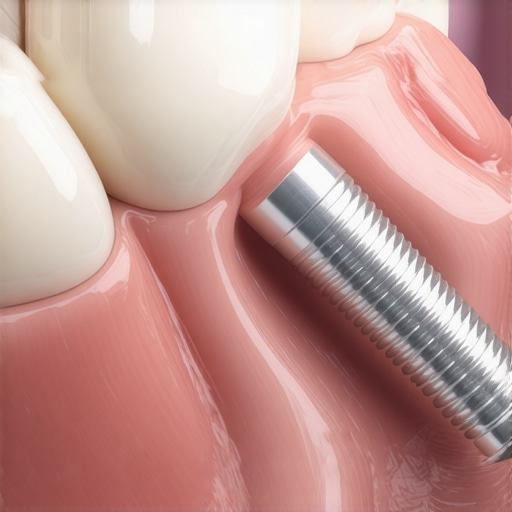
Why does my dental implant feel different when I bite down?
This is the advanced question that separates the beginners from the experts. Natural teeth are suspended by a periodontal ligament (PDL), a specialized soft tissue that acts like a shock absorber and sends feedback to your brain about bite pressure. A dental implant, however, is fused directly to the jawbone. A study in the Journal of Oral Implantology confirms that because implants lack this PDL, they do not have the same ‘tactile sensitivity’ as your original teeth. This is exactly the reason your dental implant feels different than a natural tooth. Because you cannot feel the pressure as easily, you can accidentally bite down with far more force than intended. This mechanical stress is why a night guard is even more vital for implant patients; without that PDL cushion, the bone around the implant can eventually suffer from overload.
Don’t Let ‘Stain-Resistant’ Lull You Into Bad Habits
Another common myth is the total invincibility of porcelain against stains. While it is true that high-quality ceramic is highly resistant to discoloration, the bonding resin used to attach it to your tooth is not. If you are a heavy coffee or red wine drinker, that thin bond line can darken over time, creating a visible ‘seam’ that ruins the aesthetic. Understanding the truth about the lifespan of a dental implant or a veneer involves looking at the foundation and the chemistry of the bond, not just the hard surface. Have you ever fallen into the trap of thinking your dental work was indestructible? Let me know in the comments if you have had a ‘wake-up call’ with your oral hardware! Staying ahead of the curve with dental implants 2025 innovations that redefine comfort and durability is a great step toward a better smile, but even the best tech cannot replace a solid, expert-level maintenance routine. If you have questions about how your specific restoration is holding up, reach out via our contact us page to get a professional assessment.I’ve realized that the ‘set it and forget it’ mentality is the fastest way to flush a significant investment down the toilet. If you want your restorations to last, you need a toolkit that matches the high-end technology currently in your mouth. For me, that meant finally ditching the manual brush. I used to think a vibrating handle was just a gimmick, but then I learned that over-aggressive manual scrubbing is the leading cause of gum recession, which can expose the edges of your expensive dental work. You need a brush with a visible pressure sensor—one that actually flashes red when you push too hard. This is vital because how to tell if your gum recession is caused by brushing too hard is often only possible once the damage is already permanent.
Invest in Tools That Do the Heavy Lifting
My favorite tool for managing the complex gaps around my crowns isn’t actually a standard string floss. I’ve switched to interproximal brushes, which look like tiny little pipe cleaners. They are far more effective at scrubbing the concave surfaces of teeth that string floss simply glides over. If you have a bridge, these are non-negotiable for the best way to remove a stubborn spinach leaf from under your bridge without snagging the porcelain. A study in the Journal of Periodontal Research found that water flossers, when used at a specific medium pressure setting (around 70 PSI), are significantly more effective at reducing peri-implant bleeding than traditional floss. This isn’t just about comfort; it’s about preventing the ‘vibrating’ sensation that can occur when the bone starts to lose its grip on an implant. If you’ve ever wondered why your dental implant feels like its vibrating when you talk, it’s often a sign that the surrounding tissue is inflamed and needs better cleaning. 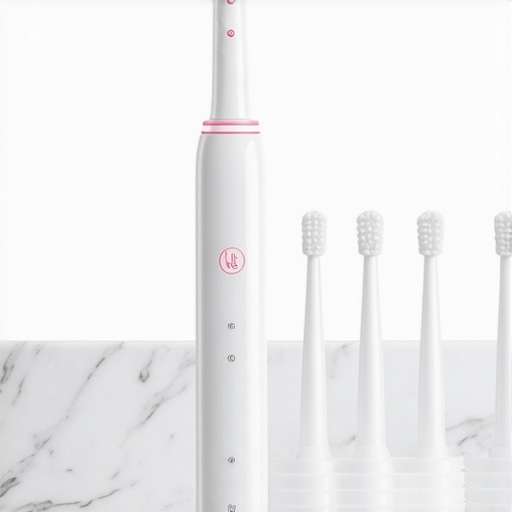
How do I maintain my dental implants over time?
Longevity comes down to the health of the ‘cuff’—the circle of gum tissue that hugs the titanium or ceramic implant post. To keep this area healthy, I recommend a daily rinse with an alcohol-free antimicrobial mouthwash. Alcohol-based versions can dry out your mouth, leading to a situation where why your mouth feels sticky and dry when you wake up becomes a chronic problem, inviting more bacteria to accumulate around your dental work.
The Future of Your Smile is Getting Smarter
We are moving toward an era of ‘smart’ dentistry. I’m already seeing innovations in the future of dental implants cutting edge techniques in cosmetic dentistry that include bioactive coatings that actually fight bacteria at the microscopic level. In the next few years, I suspect we’ll have dental implants that can alert our phones when they detect early-stage inflammation. Until then, you have to be the sensor. If you notice why your dental implant crown feels slightly wiggly when you bite, don’t wait for the technology to tell you something is wrong. That tiny wiggle is a mechanical warning light that requires immediate professional attention.
Put One New Tool to Work Tonight
If you are ready to take this seriously, I want you to try one thing: swap your manual floss for a pack of soft-picks or an interproximal brush for just one week. Pay close attention to the margins where your veneers transformation unlocking your best smile yet meets your gum line. You will likely be shocked at what your standard brush has been leaving behind in those tiny crevices. Keeping everything running smoothly is a team effort between you and your provider, so if you’re unsure about your current ‘fit,’ check out veneers vs crowns choosing the best option for your smile to see if your restorations are still the right match for your oral health needs.
The Hardest Lesson from My Years of Dental Maintenance
Reflecting on my own journey, the biggest shift wasn’t getting the dental work done; it was realizing that I am the primary caretaker of my oral health. High-end restorations are not a shortcut to a maintenance-free life. If you want your transform your smile with veneers expert tips for perfect results to stay as vibrant as the day you walked out of the clinic, you have to treat your mouth with the precision of a high-performance engine. I’ve learned that skipping even one night of deep cleaning is like letting moisture settle on a fine metal instrument—it doesn’t fail overnight, but the degradation is cumulative and often invisible until it’s expensive to fix.
Essential Gear for a Truly Clean Smile
Ditching the basic tools was the best decision I ever made for my longevity. If you want a toolkit that actually protects your investment, consider these essentials:
- Interproximal Brushes: These tiny scrubbers are the best way to remove a stubborn spinach leaf from under your bridge without stressing the delicate margins of your porcelain.
- Pressure-Sensitive Electric Brushes: These ensure you never cross the line into aggressive scrubbing, which is how many people accidentally ruin their gum health.
- Water Flossers: These are non-negotiable for dental implants to prevent that odd sensation where why your dental implant feels like its vibrating when you talk due to underlying tissue irritation.
- Alcohol-Free Rinses: These prevent the chronic dryness that explains why your mouth feels sticky and dry when you wake up, keeping your breath fresh and your restorations safe from bacterial overgrowth.
Your Future Smile Starts Tonight
Ultimately, the goal of any high-end procedure is to provide a lasting improvement to your life. Whether you are using cosmetic dentistry secrets to boost your confidence or relying on family dentistry tips for a lifetime of healthy smiles, the power is in your hands. Don’t wait for a wiggly crown or a stained edge to start being meticulous. Your future self will thank you for the discipline you show tonight. Every rinse and every gentle brush stroke is a deposit into a bank account that pays out in a radiant, pain-free smile for decades to come. Have you ever had a moment where you realized your dental hygiene routine needed a serious upgrade? Share your story in the comments below!